
The Digital Shift: Modernizing Library Collections for the Future
The Digital Shift: Modernizing Library Collections for the Future
Libraries, the long-standing custodians of human knowledge, are undergoing a profound transformation. In an era where information is increasingly accessed online, the digitization of physical collections has become a critical mission. This process involves more than simply scanning pages; it is a meticulous endeavor to preserve fragile materials, broaden public access, and create new opportunities for research and learning. By converting books, manuscripts, maps, and other artifacts into digital formats, libraries ensure that their invaluable resources remain relevant and accessible to a global audience. This report provides a comprehensive overview of the current methods libraries employ for digitizing their collections, exploring the technologies, workflows, partnerships, and challenges that define this complex landscape.
The Digitization Workflow: From Physical Material to Digital Archive
The journey from a physical library item to a searchable digital file follows a structured and multi-stage workflow. This process is designed to ensure the quality of the digital surrogate, the preservation of the original item, and the long-term accessibility of the resulting data.
The Path from Page to Pixel
An illustrative diagram showing the key stages of a library's digitization workflow, from the selection of a physical book to its final availability in a digital archive.
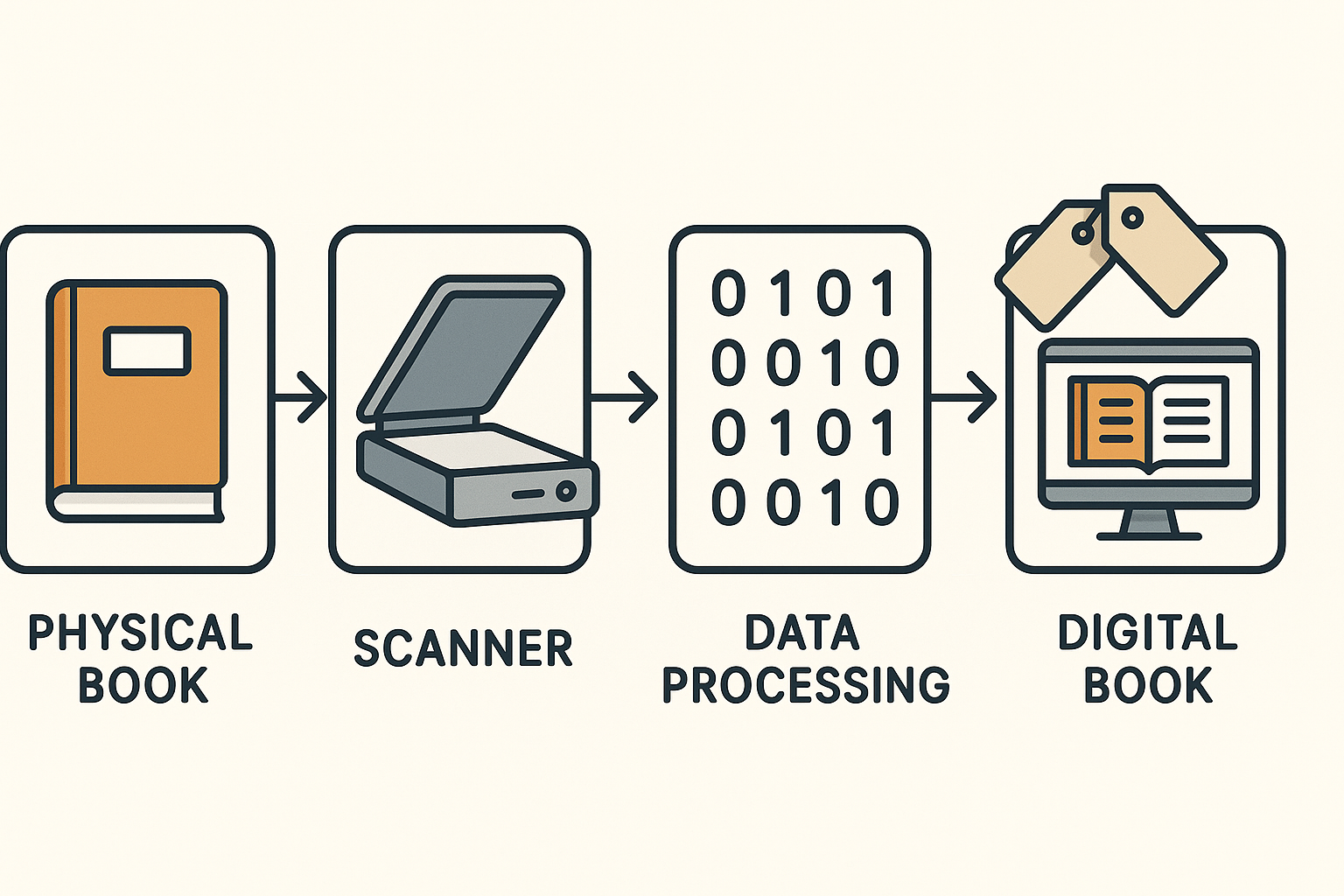
- Planning and Selection: The process begins with a crucial planning phase where institutions define the project's purpose and scope[19][24]. Selection criteria are established to prioritize items based on their condition, rarity, research demand, and copyright status[2][19]. Technical specifications, such as resolution and file naming conventions, are also determined at this stage[24].
- Preparation: Physical materials are carefully prepared for scanning. This may involve removing bindings or paper clips and assessing the item's condition to determine if special handling or conservation is needed before imaging can begin[19][21].
- Scanning and Imaging: Specialized, high-resolution scanning equipment is used to create digital images[3]. Institutions like the Library of Congress follow strict preservation guidelines, using scanners with controlled light and heat exposure and employing book cradles for fragile materials to prevent damage[3]. For large-scale or delicate projects, libraries may contract with specialized document scanning services[4].
- Post-Processing and Quality Assurance: After scanning, Optical Character Recognition (OCR) technology is often applied to convert images into machine-readable, searchable text[19]. This automated step is followed by manual quality assurance checks to correct errors and ensure the digital version is an accurate replica of the original[19].
- Metadata Creation: Rich metadata is assigned to each digital file. This data includes descriptive information like title, author, and date, as well as technical details about the digitization process[19][21]. Robust metadata is essential for indexing the files, making them discoverable through keyword searches within digital asset management systems[5][21].
- Archiving and Preservation: The digital files are securely backed up and archived to prevent data loss or corruption[23]. This involves creating redundant copies and storing them in multiple locations, including cloud-based solutions, as part of a long-term digital preservation strategy[9][23].
- Publication and Access: Finally, the digitized materials are ingested into the library's digital repository or collection platform, making them accessible to the public[22][23]. This not only enhances access for remote users but also helps preserve the original physical items by reducing the need for handling[22].
Core Technologies and Software Platforms
The success of any digitization project hinges on a combination of specialized hardware and sophisticated software. Libraries utilize a wide array of tools to capture high-quality images, manage vast digital collections, and provide user-friendly access.
Specialized Book Scanner in a Library
A high-resolution, overhead planetary scanner used in a library's digitization lab. This type of equipment is designed to safely scan fragile and bound materials without causing damage.
On the hardware side, high-resolution scanners are fundamental. These range from flatbed scanners for documents to specialized book scanners designed to handle fragile and bound volumes with care[13]. Robust storage solutions, such as Network Attached Storage (NAS) and cloud backups, are also essential for managing and preserving the large digital files produced during the process[13]. Digitization service providers often combine conservation-grade handling techniques with high-quality image capture technology to ensure both preservation and production speed[10].
Digital Collection Management Systems
A variety of software platforms are available to help libraries manage, publish, and preserve their digital collections. These systems provide the infrastructure for organizing metadata, hosting files, and delivering content to users. Some common platforms include:
| Platform | Description |
|---|---|
| CONTENTdm | A comprehensive digital collection management system that includes a server, web interface, and hosting services[6]. |
| DSpace | An open-source repository software widely used by academic and research institutions for managing and preserving digital assets[6]. |
| Omeka | A free, open-source content management system specifically designed for creating online digital collections and scholarly exhibits[6]. |
| CollectionBuilder | An open-source tool for generating digital collection websites that are driven by metadata and built with static web technology[6]. |
| LIMB Suite | An integrated software solution that helps manage large-scale digitization projects by supervising workflows, tracking progress with barcodes, and providing real-time reports[7]. |
| KOHA, BiblioteQ, OPALS | Digital library management platforms that provide online access to resources like ebooks, journals, and research papers[8]. |
Emerging trends also show libraries beginning to integrate AI-assisted tools into their digital systems. AI is being used to generate recommendations for users and enhance metadata creation, although it also introduces new needs for updated policy frameworks and cybersecurity measures[12].
Digitization in Action
These videos provide a closer look at the technologies and processes libraries use to digitize their collections, from handling rare books to operating advanced scanning equipment.
Strategic Partnerships and Collaborations
Given the immense scale and cost of digitization, libraries frequently form partnerships to share resources, expertise, and content. These collaborations are essential for achieving large-scale digitization goals that would be unattainable for a single institution.
- Inter-Library Consortia: Academic libraries often collaborate on mass digitization projects[14]. For example, a pilot project led by UC Davis brought together institutions like Cornell and the University of Michigan to select and digitize scholarly content, which was then contributed to the HathiTrust Digital Library, a massive collaborative repository[14].
- Public-Private Partnerships: Government institutions partner with commercial vendors to accelerate digitization. The Library of Congress, for instance, has third-party agreements that allow it to work with commercial partners to scan public domain materials, ensuring both preservation and broad public access[18]. Similarly, the University of Michigan's collaboration with the Google Books Library Project dramatically increased its scanning capacity[16].
- Cultural Heritage Alliances: Libraries, museums, and other cultural organizations form alliances to standardize digitization practices and build shared digital repositories[15]. These consortial efforts help pool technical expertise and enhance the discoverability of collections on a national or international level[17].
These partnerships enable libraries to digitize more efficiently, manage content at scale, and contribute to a growing global digital library that benefits researchers and the public alike[17].
Key Challenges in Library Digitization
Despite its benefits, the process of digitizing library collections is fraught with significant challenges that require careful planning and sustained investment.
- Scale and Complexity: The sheer volume of analog materials in library collections makes conversion a "herculean task"[26]. The process is complex, involving numerous steps from selection and scanning to metadata creation and long-term preservation[26].
- Financial and Resource Constraints: Digitization is expensive. Libraries often face significant budget limitations that affect their ability to acquire necessary digital equipment, hire expert staff, and maintain the required internet infrastructure for access and preservation[27].
- Copyright and Intellectual Property: Navigating copyright law is a major hurdle[27]. Libraries must carefully determine the legal status of materials to avoid infringement, which can be a complex and time-consuming process, especially for modern or unpublished works.
- Digital Format Sustainability: Technology is constantly evolving, which poses a long-term risk to digital files. Libraries must actively manage their digital archives to ensure that files do not become obsolete or inaccessible over time due to changes in file formats or software[25]. This requires ongoing evaluation of what to preserve and the adoption of new tools to support different formats[25].
Standout Examples of Successful Digitization Efforts
Numerous institutions have successfully modernized their collections, setting a high standard for digitization and providing valuable models for others to follow.
- The Library of Congress: As a leader in the field, the Library of Congress has digitized over nine million items from its collections[28][30]. A landmark achievement is the online publication of the complete personal papers of U.S. presidents from George Washington to Calvin Coolidge, making these invaluable historical documents accessible to anyone with an internet connection[28][30].
- University of Michigan and Google: The partnership between the University of Michigan and Google demonstrates the power of collaboration in mass digitization. This program increased the university's scanning rate from about 5,000 volumes per year to as many as 30,000 volumes per week, dramatically accelerating the conversion of its library[29].
- Project Gutenberg and HathiTrust: These large-scale digital library projects are prime examples of successful collaborative efforts[31]. They have made millions of public domain texts available online, establishing a foundation for open-access digital libraries and setting standards for the field[31].
- Preservation-Focused Digitization: Many libraries use digitization as a critical preservation tool. Fragile materials like brittle books and historical newspapers are often microfilmed and then digitized. This dual approach both preserves the original content and significantly increases its accessibility for future generations of researchers[32].
These examples illustrate that successful digitization is not just about technological conversion but also about strategic transformation. Libraries are evolving to create entirely new digital services and enhance their operational agility, ensuring they remain central to knowledge creation and dissemination in the digital age[33].
Conclusion
The digitization of library collections is a multifaceted and essential endeavor in the 21st century. It relies on a well-defined workflow, a combination of specialized hardware and sophisticated software platforms, and strategic partnerships that leverage collective resources. While significant challenges related to cost, copyright, and long-term preservation persist, the successes of pioneering institutions and collaborative projects demonstrate a clear path forward. By transforming physical holdings into accessible digital archives, libraries are not only preserving cultural heritage but also redefining their role in an increasingly connected world, ensuring that knowledge remains open and available for generations to come.
Let's look at alternatives:
- Modify the query.
- Start a new thread.
- Remove sources (if manually added).