How do our memories get stored?
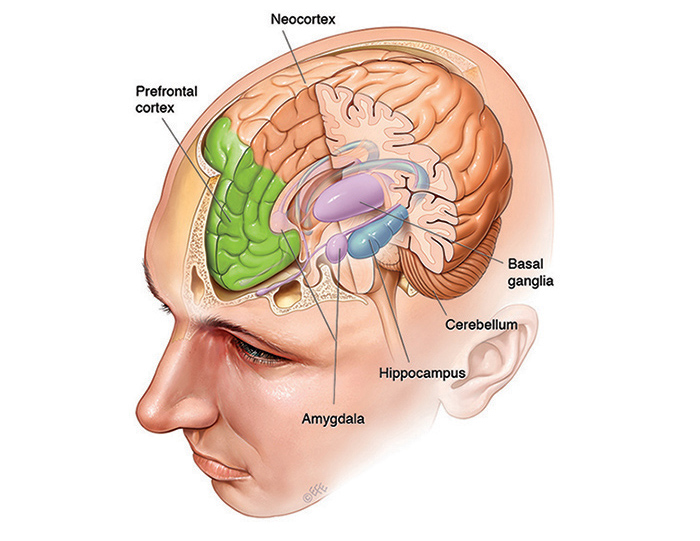
Memories are stored through complex processes involving various brain regions, notably the hippocampus, neocortex, and amygdala.
The hippocampus plays a crucial role in forming episodic memories, allowing us to recall specific events from our past. When a memory is created, information is temporarily stored in the hippocampus before being transferred to the neocortex for long-term storage. This transfer is thought to occur during sleep when the brain consolidates experiences into general knowledge[2].
The amygdala is involved in attaching emotional significance to memories, especially those that are strong or related to fear[2]. Emotional memories are often retained more effectively due to heightened neurotransmitter activity during emotional experiences, which strengthens memory circuits[5].
The process of memory formation also highlights changes in the connections between neurons, known as synapses. When a memory is formed, the brain reshapes itself by strengthening existing connections or creating new synapses, as well as losing others[6]. This dynamic pattern of synaptic change is fundamental to the encoding and retrieval of memories[5].
Different types of memory, like short-term and long-term memory, rely on various brain regions. Short-term memory primarily utilizes the prefrontal cortex, while procedural and implicit memories involve the basal ganglia and cerebellum[3].
Get more accurate answers with Super Pandi, upload files, personalized discovery feed, save searches and contribute to the PandiPedia.
Let's look at alternatives:
- Modify the query.
- Start a new thread.
- Remove sources (if manually added).
 Curated by Joan