What types of memory does the brain have?
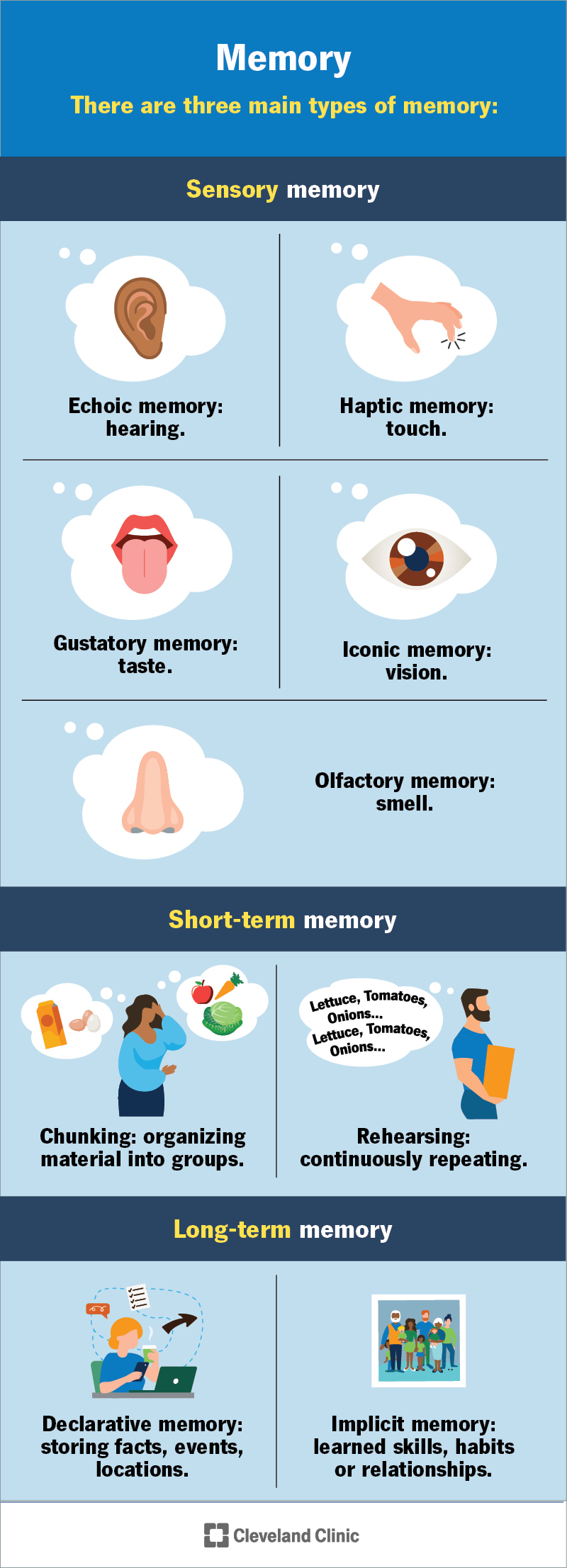
The brain has several types of memory, which can be classified into different categories:
Sensory Memory: This is the initial stage of memory where information from the senses (hearing, touch, smell, taste, and vision) is briefly held for a very short duration, typically just a few seconds. Sensory memory is highly detailed but is out of conscious control[1].
Short-term Memory (Working Memory): This type of memory allows individuals to hold and manipulate information for a short period, generally from a few seconds to a minute. It has a limited capacity, often considered to be around 7±2 items, and is closely related to working memory, which emphasizes the active manipulation of information[1][2][6].
Long-term Memory: This storage space is designed to hold information for a longer duration, potentially for years. Long-term memory can be subdivided into two main categories:
- Explicit Memory (Declarative Memory): This includes memories that require conscious thought, such as recalling facts and events. It can further be broken down into:- Episodic Memory: Related to personal experiences and specific events in time and context.
- Semantic Memory: Encompasses general knowledge about the world and facts[1][6].
- Implicit Memory (Non-declarative Memory): This type does not require conscious thought and includes procedural memories, such as skills and tasks learned through repetition (e.g., riding a bike)[2][6].
Overall, memory involves complex processes that encompass different types and functions, each associated with various brain regions responsible for encoding, storage, and retrieval of information.
Create your account to keep this answer and continue from it later.
Let's look at alternatives:
- Modify the query.
- Start a new thread.
- Remove sources (if manually added).