Descubre Pandipedia
Un directorio creciente de respuestas útiles seleccionadas por la comunidad de Pandi. Busca en la colección o explora los últimos descubrimientos.
2312 entradas disponibles

Five climate-fintech numbers: money, impact, and what the sources do not yet
Veamos alternativas:
- Modifica la consulta.
- Inicia un nuevo hilo.
- Eliminar fuentes (si se han agregado manualmente).
From Punched Cards to Factory Robots

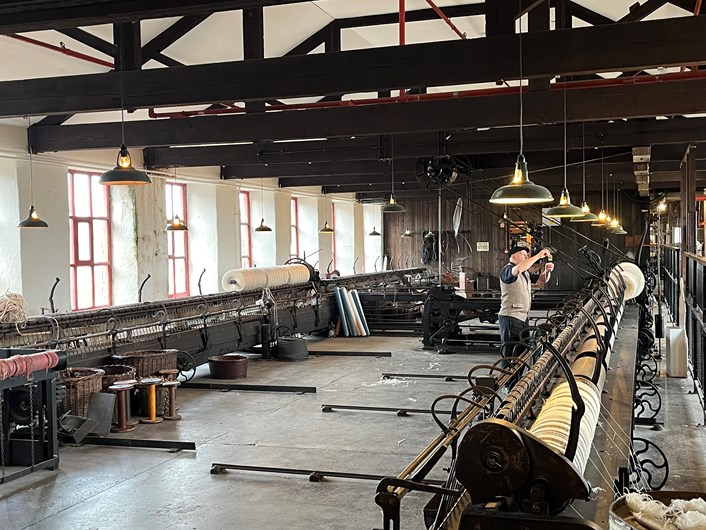
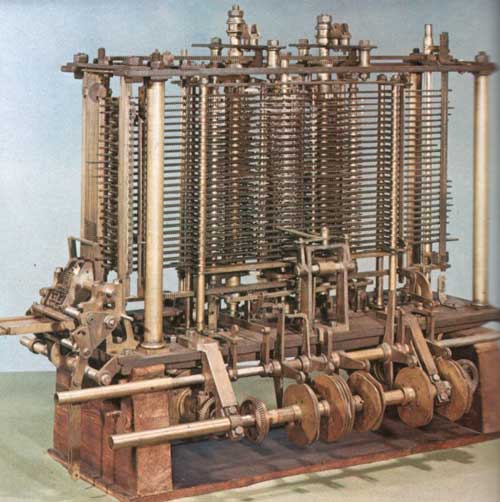


Veamos alternativas:
- Modifica la consulta.
- Inicia un nuevo hilo.
- Eliminar fuentes (si se han agregado manualmente).
What role do micro-influencers play in spreading disinformation?

Micro-influencers, defined as creators with 25,000 followers or fewer, are increasingly utilized by political and commercial groups to spread false narratives, political messages, and disinformation[1]. Because traditional methods like bots or fake profiles are easily spotted, campaigns rely on these creators to give messaging the illusion of authenticity and a personal nature[2].
These creators are effective seeders of false information for several key reasons:
* Parasocial Trust: Followers build close, one-sided relationships with influencers over time, making them far less likely to question claims made by someone who feels like a trusted friend[3][4].
* Scope Creep and Lifestyle Integration: Influencers in spaces like health, wellness, and outdoor lifestyle often pivot into medical or political claims, weaving false narratives or unverified product endorsements directly into their daily content[5][6].
* Plausible Deniability: Operating outside traditional news organizations, influencers can utter outrageous claims under the guise of personal opinion or simply "asking questions," while third-party backers and creators often deny any coordination[7].
For brand and public vigilance, experts emphasize monitoring narrative velocity and early warning signs rather than just raw mention volume[8]. Key indicators of coordinated disinformation include synchronized low-follower account activity, cross-platform spread within a short window, and narrative clustering around specific false claims[9]. Organizations are advised to maintain dedicated misinformation watchlists, track acceleration patterns rather than waiting for mainstream media pickup, and carefully document evidence trails with timestamps and URLs before taking action[10].
Would you also like to know how AI-powered tools detect narrative velocity and clustering before misinformation spreads?Respuesta completa. Hay una opción de seguimiento disponible.
Veamos alternativas:
- Modifica la consulta.
- Inicia un nuevo hilo.
- Eliminar fuentes (si se han agregado manualmente).
Biotech Acronym Match: Test Your Regulatory Know-How
Veamos alternativas:
- Modifica la consulta.
- Inicia un nuevo hilo.
- Eliminar fuentes (si se han agregado manualmente).
Name the largest floating solar farm by capacity as of 2024
Veamos alternativas:
- Modifica la consulta.
- Inicia un nuevo hilo.
- Eliminar fuentes (si se han agregado manualmente).
Future of Work: AI–Human Relationships

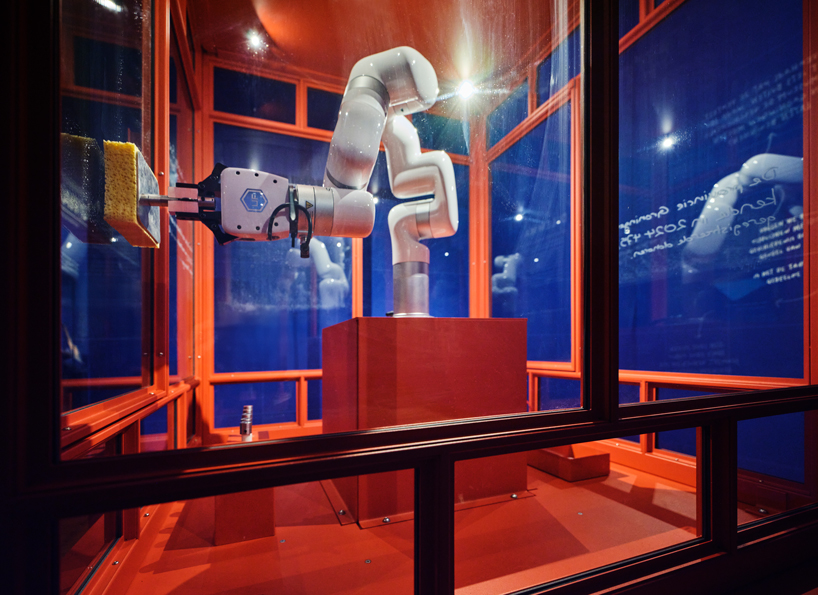
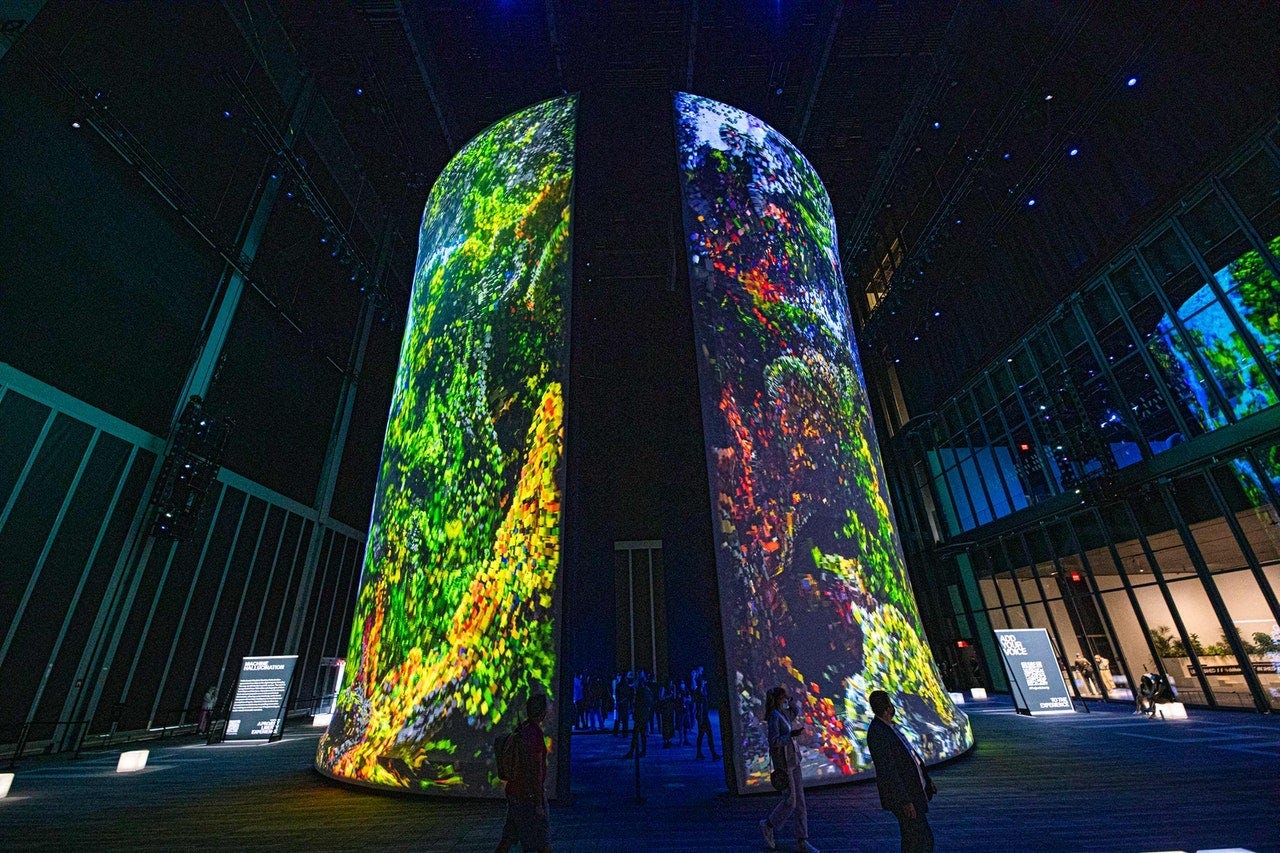


Veamos alternativas:
- Modifica la consulta.
- Inicia un nuevo hilo.
- Eliminar fuentes (si se han agregado manualmente).
How an animal grows a microscopic anchor
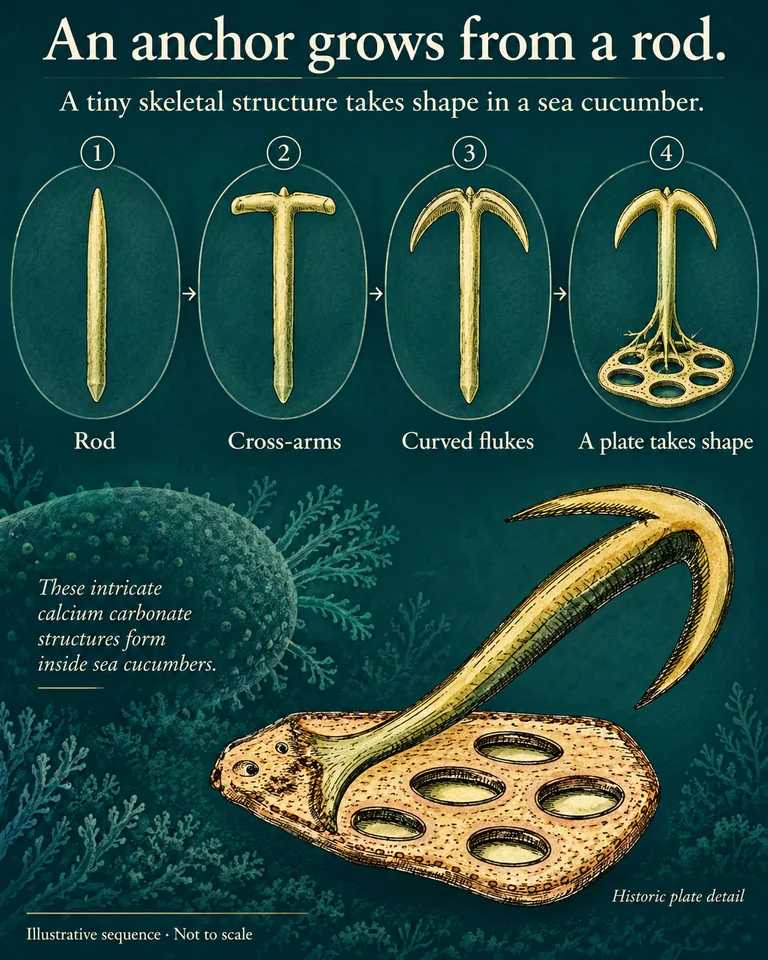
Veamos alternativas:
- Modifica la consulta.
- Inicia un nuevo hilo.
- Eliminar fuentes (si se han agregado manualmente).
The crab’s snorkel changes direction
A masked crab can disappear beneath sand while keeping a route to the water above. Its two long, bristled antennae meet to form a breathing conduit. The conduit carries water to its gills; it is not an air tube.[1][2]
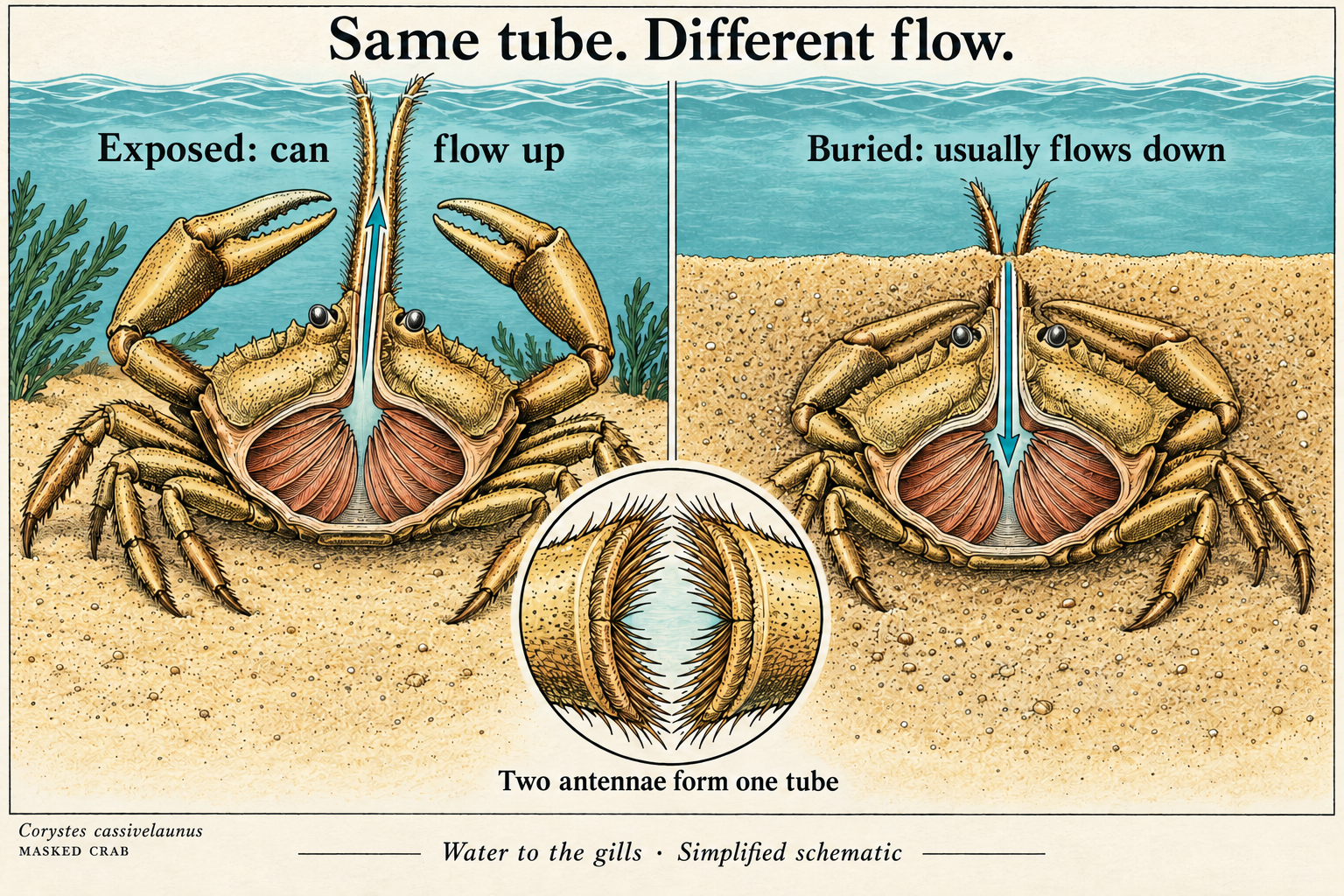
AI-generated explanatory illustration. Historical scenes are reconstructions; microscopic details are schematic. · Source
Gosse saw something surprising in exposed aquarium crabs: water flowed upward between the antennae. He inferred that the same arrangement carried used water out of a buried crab. His observation was useful, but the inference needed a closer look.[3][4]
Later work distinguished the two conditions. In unburied crabs the current can run in the direction Gosse observed. When buried, it runs in the reverse direction for most of the time: water is drawn down the antennal tube toward the gills.[5][6]
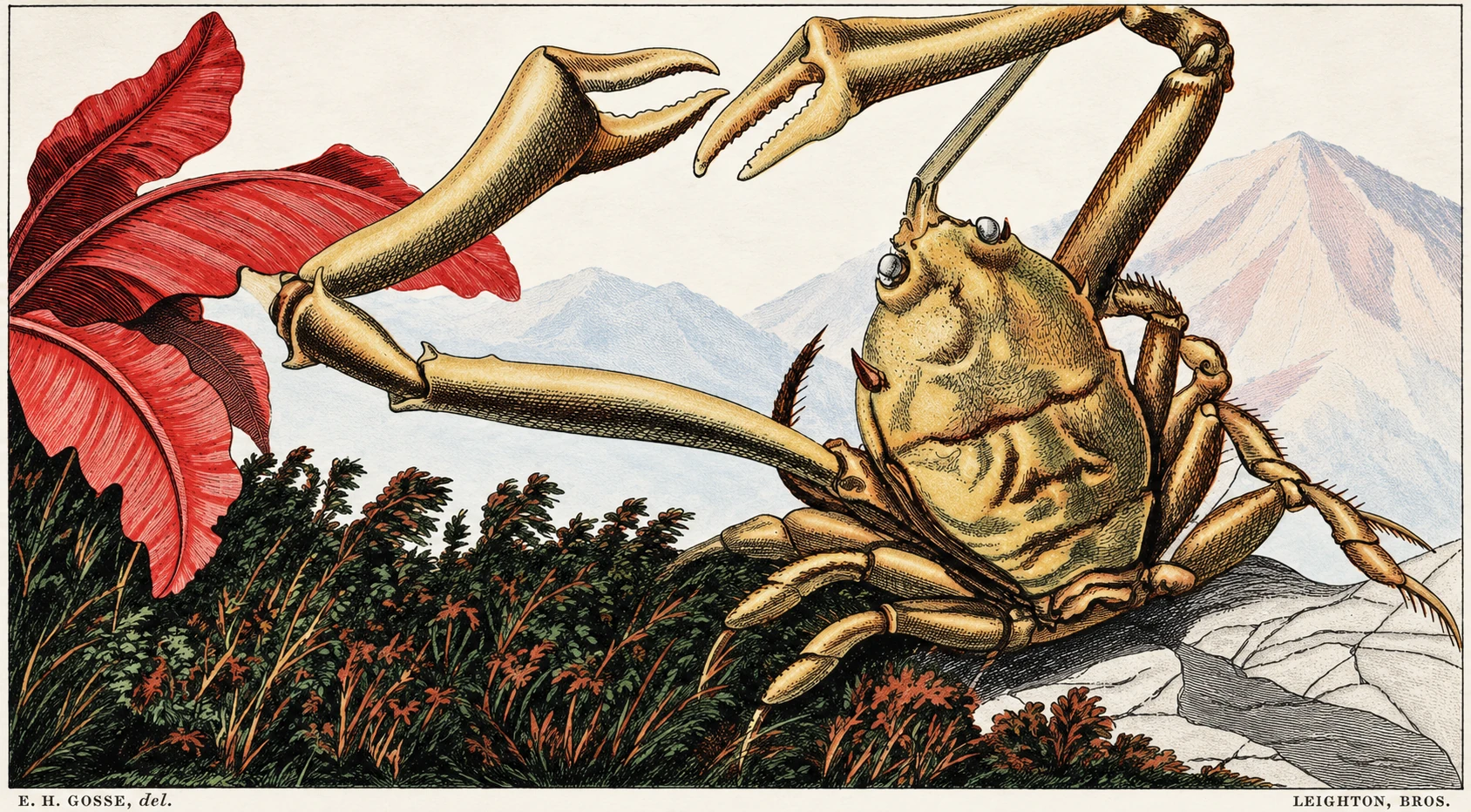
Historical book illustration, AI-assisted colour remaster. Colours are interpretive. · Source
The small hairs matter as much as the long stalks. Gosse describes curved bristles on each antenna meeting those on the other to make the conduit. Modern descriptions add the filters that keep incoming particles away from the gills. The animal’s position and the direction of flow belong in the same explanation.[7][8]
Veamos alternativas:
- Modifica la consulta.
- Inicia un nuevo hilo.
- Eliminar fuentes (si se han agregado manualmente).
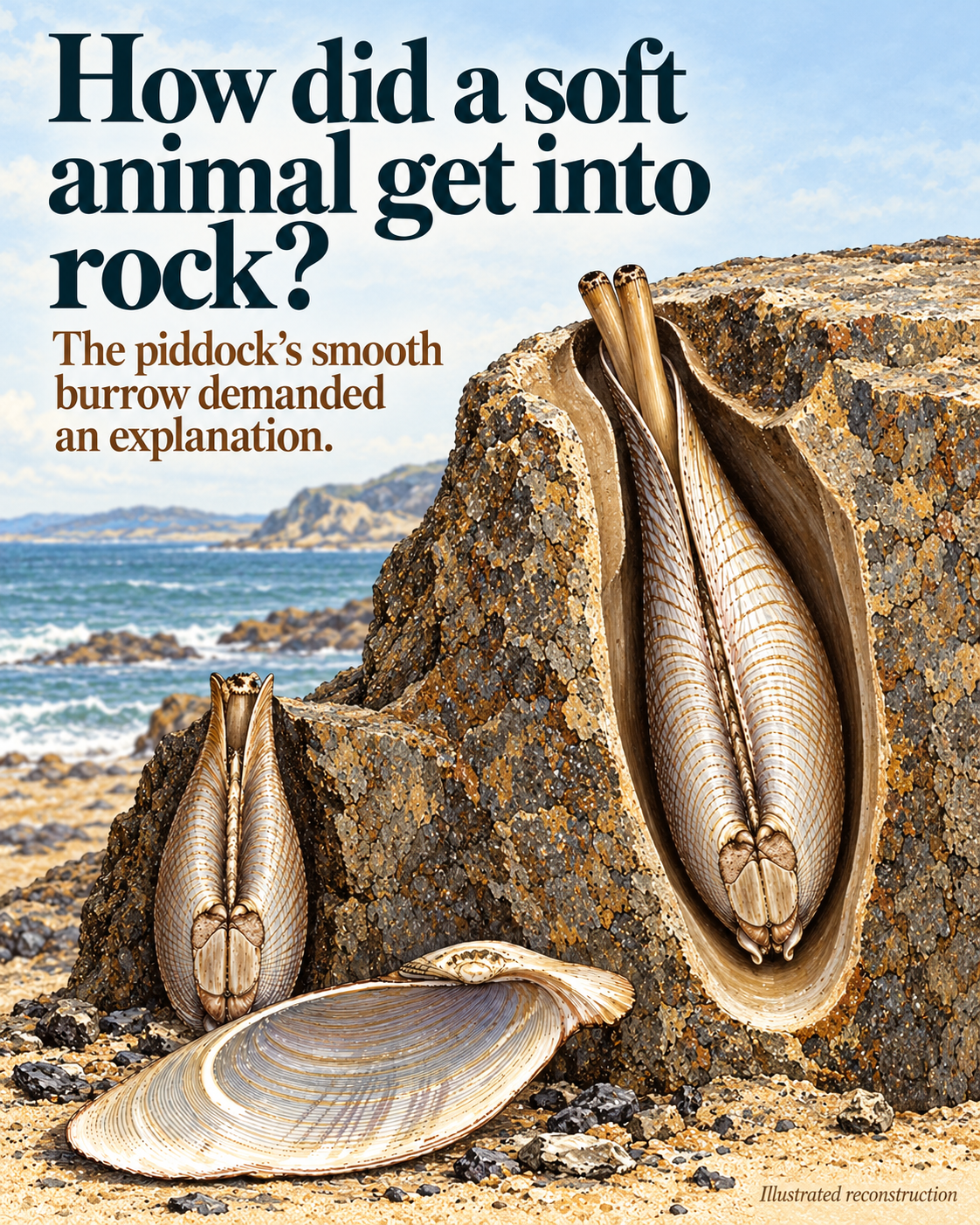
The clam once suspected of owning a battery
 1/4
1/4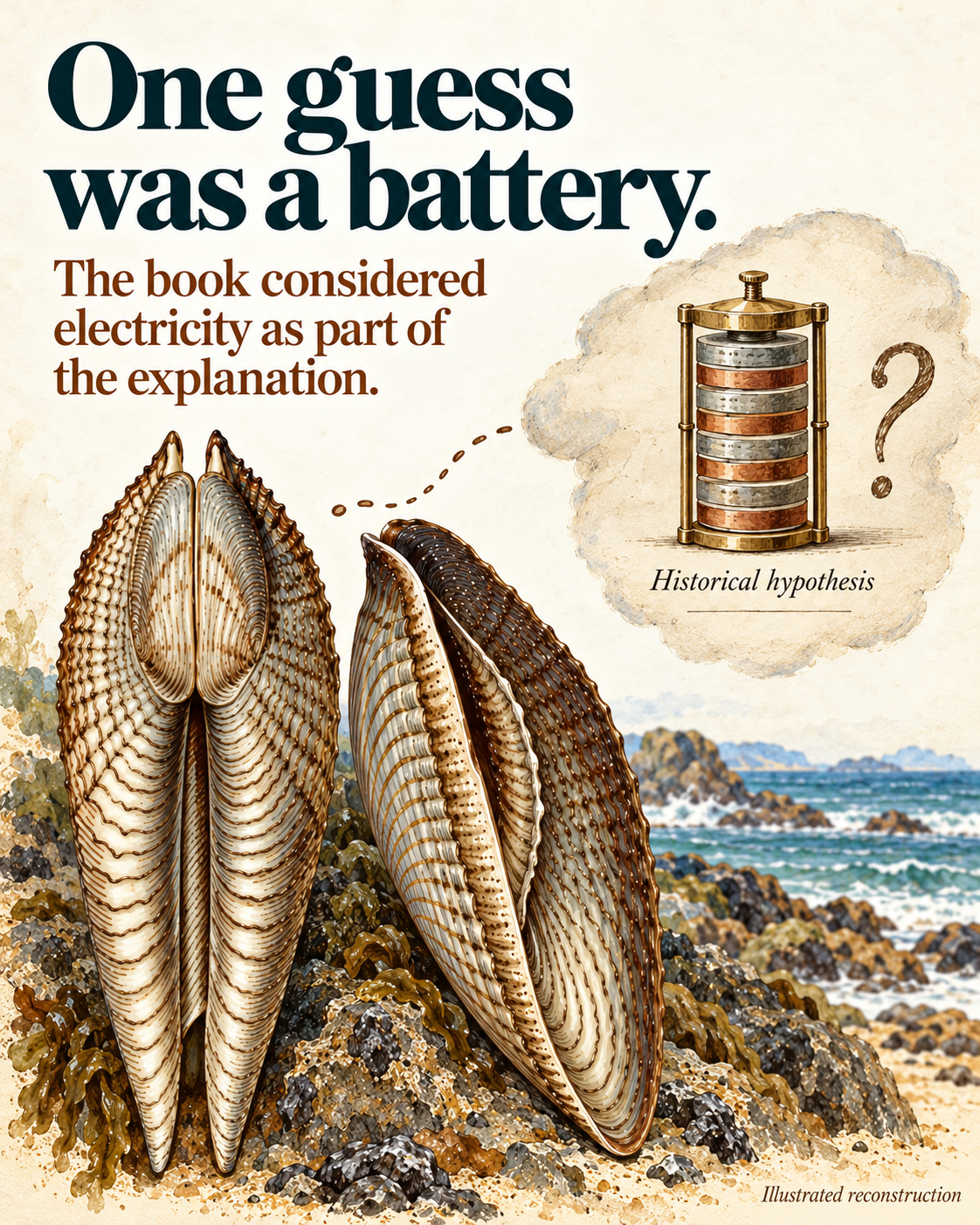
Leer el texto de las diapositivas
- How did a soft animal get into rock?
The piddock’s smooth burrow demanded an explanation.
- One guess was a battery.
The book considered electricity as part of the explanation.
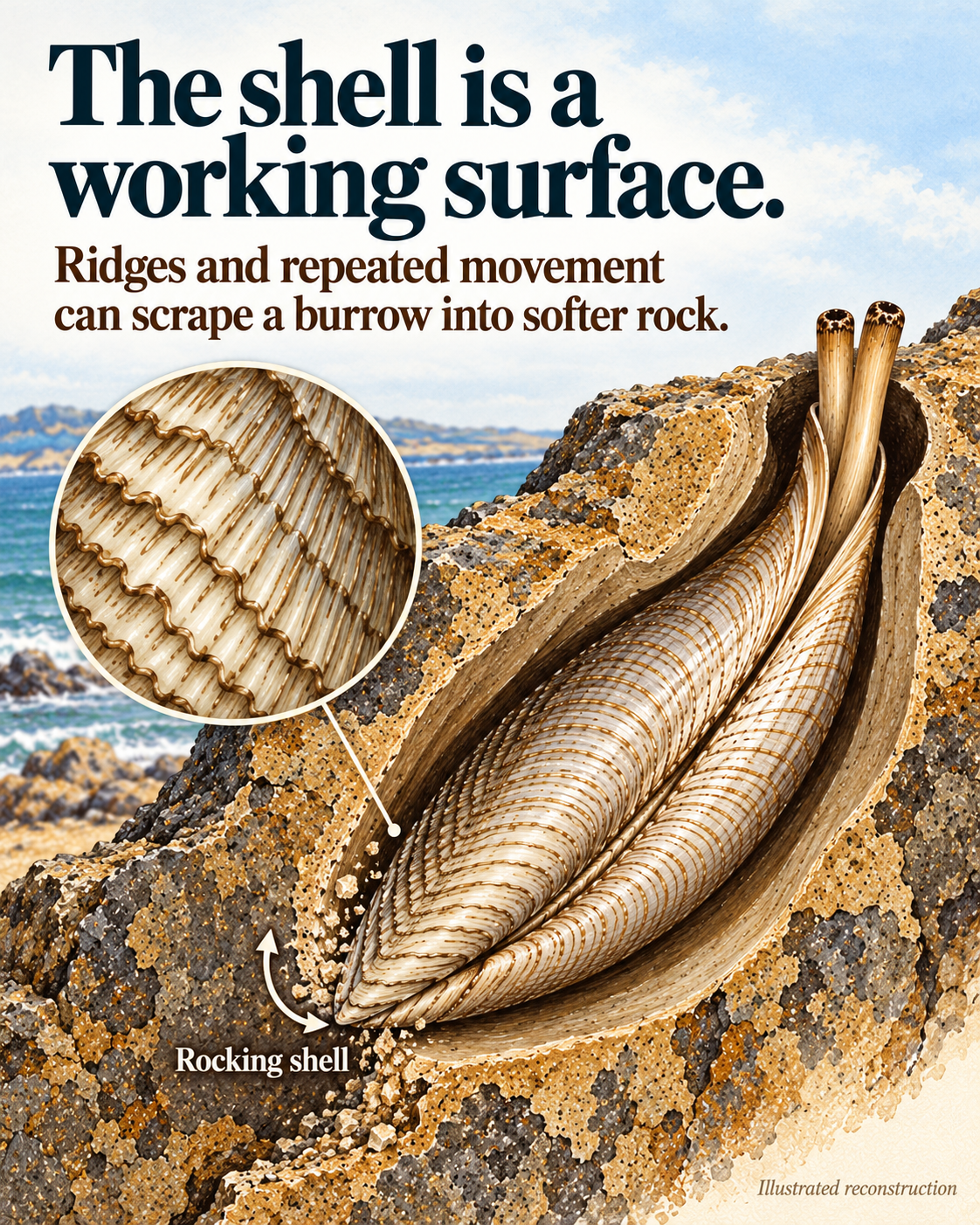
- The shell is a working surface.
Ridges and repeated movement can scrape a burrow into softer rock.
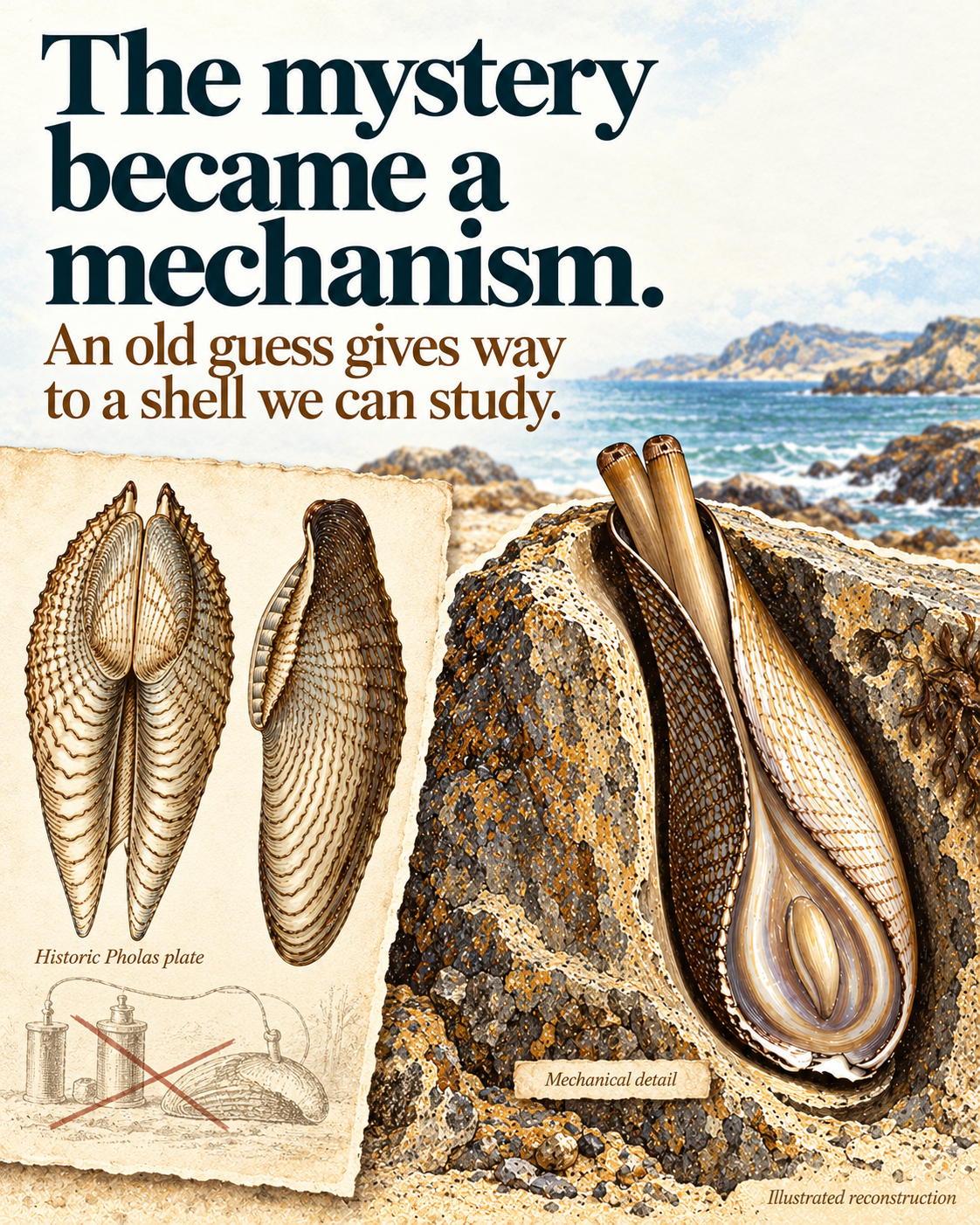
- The mystery became a mechanism.
An old guess gives way to a shell we can study.
Veamos alternativas:
- Modifica la consulta.
- Inicia un nuevo hilo.
- Eliminar fuentes (si se han agregado manualmente).
This flower serves its pollen in shifts
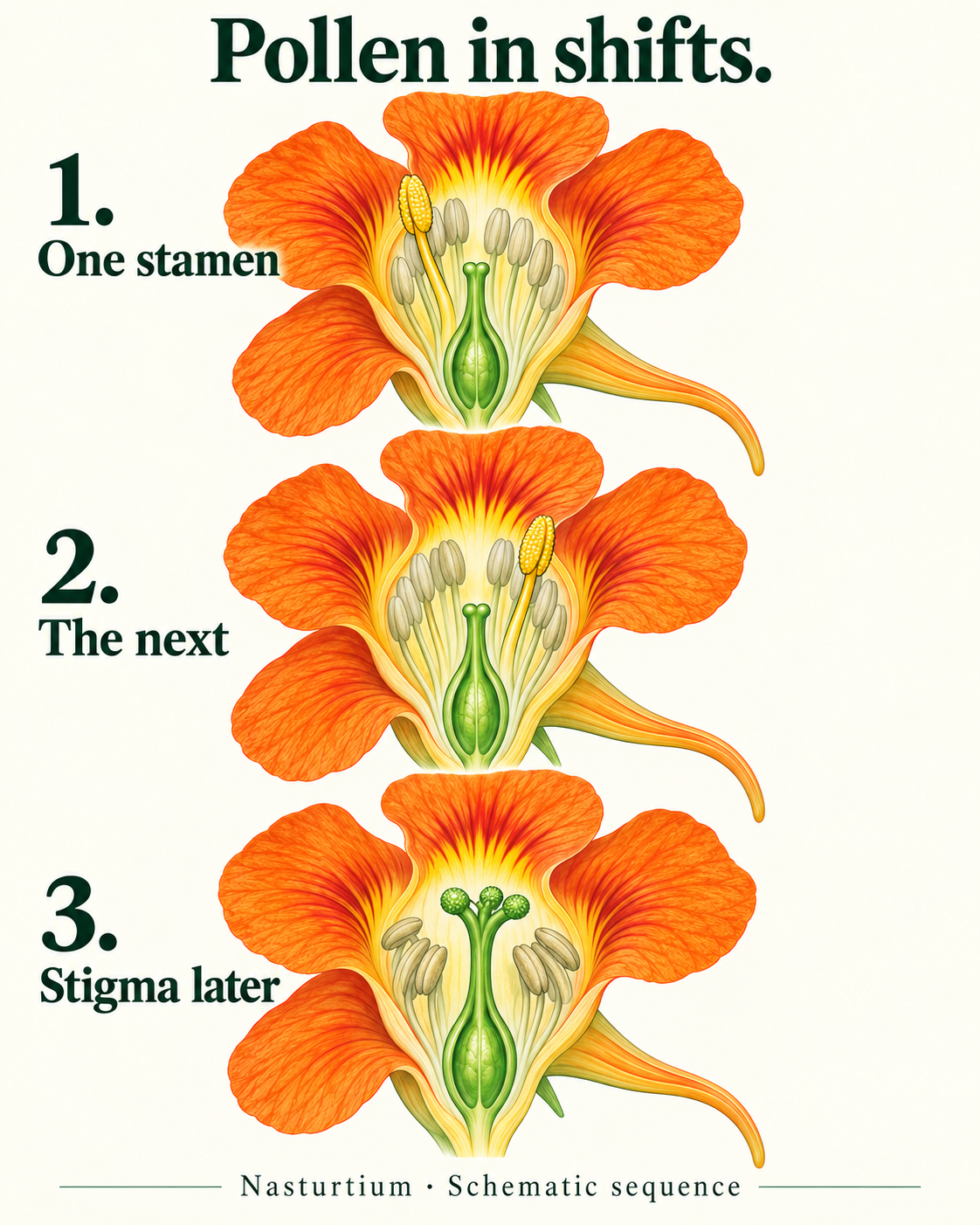
A nasturtium can look perfectly still while its flower is changing position inside. Its stamens—the slender structures carrying pollen—move into place one at a time, presenting pollen to visitors in succession.[1][2]
AI-generated explanatory illustration. Historical scenes are reconstructions; microscopic details are schematic. · Source
That creates a sequence of pollen presentations rather than one crowded moment. Later, the stigma becomes receptive to incoming pollen. Buckley describes the nasturtium’s progression in The Fairy-Land of Science; modern botanical literature also records its one-by-one stamen movements.[3][4]
The book puts it beside a useful comparison: geranium’s stamens take their turns in groups. The remastered blue-flower plate below shows that other plant. Similar timing problems can be solved by different floral arrangements.[5][6]
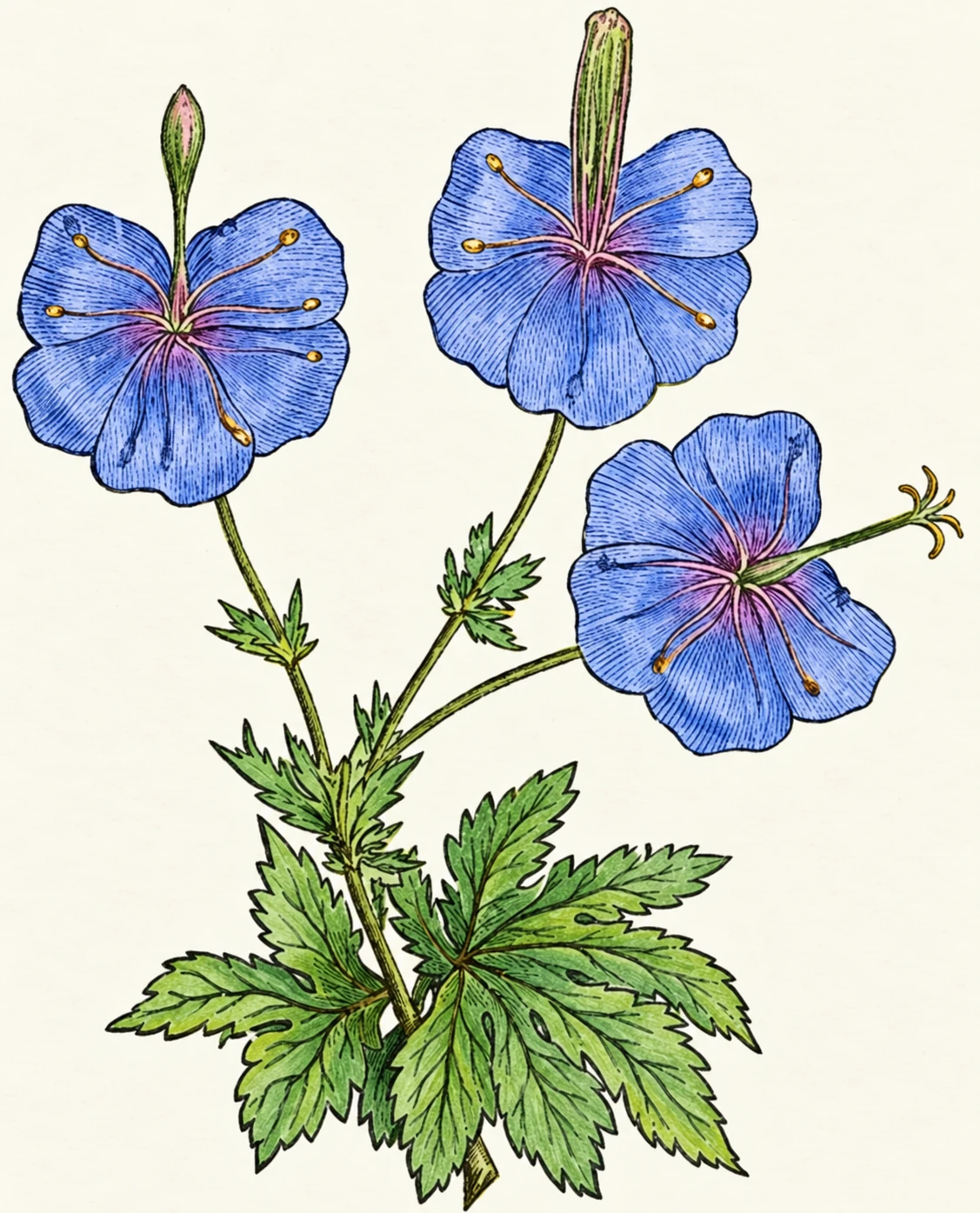
Historical book illustration, AI-assisted colour remaster. Colours are interpretive. · Source
Timing can separate pollen release from pollen reception and reduce interference between floral organs. It supports cross-pollination, although a flower’s complete mating system depends on more than this sequence alone. The modern study cited here experimentally examines Geranium pratense and discusses nasturtium as a related example; it is not an experiment on nasturtium itself.[7]
Veamos alternativas:
- Modifica la consulta.
- Inicia un nuevo hilo.
- Eliminar fuentes (si se han agregado manualmente).