
This flower serves its pollen in shifts
A nasturtium can look perfectly still while its flower is changing position inside. Its stamens—the slender structures carrying pollen—move into place one at a time, presenting pollen to visitors in succession.[1][2]
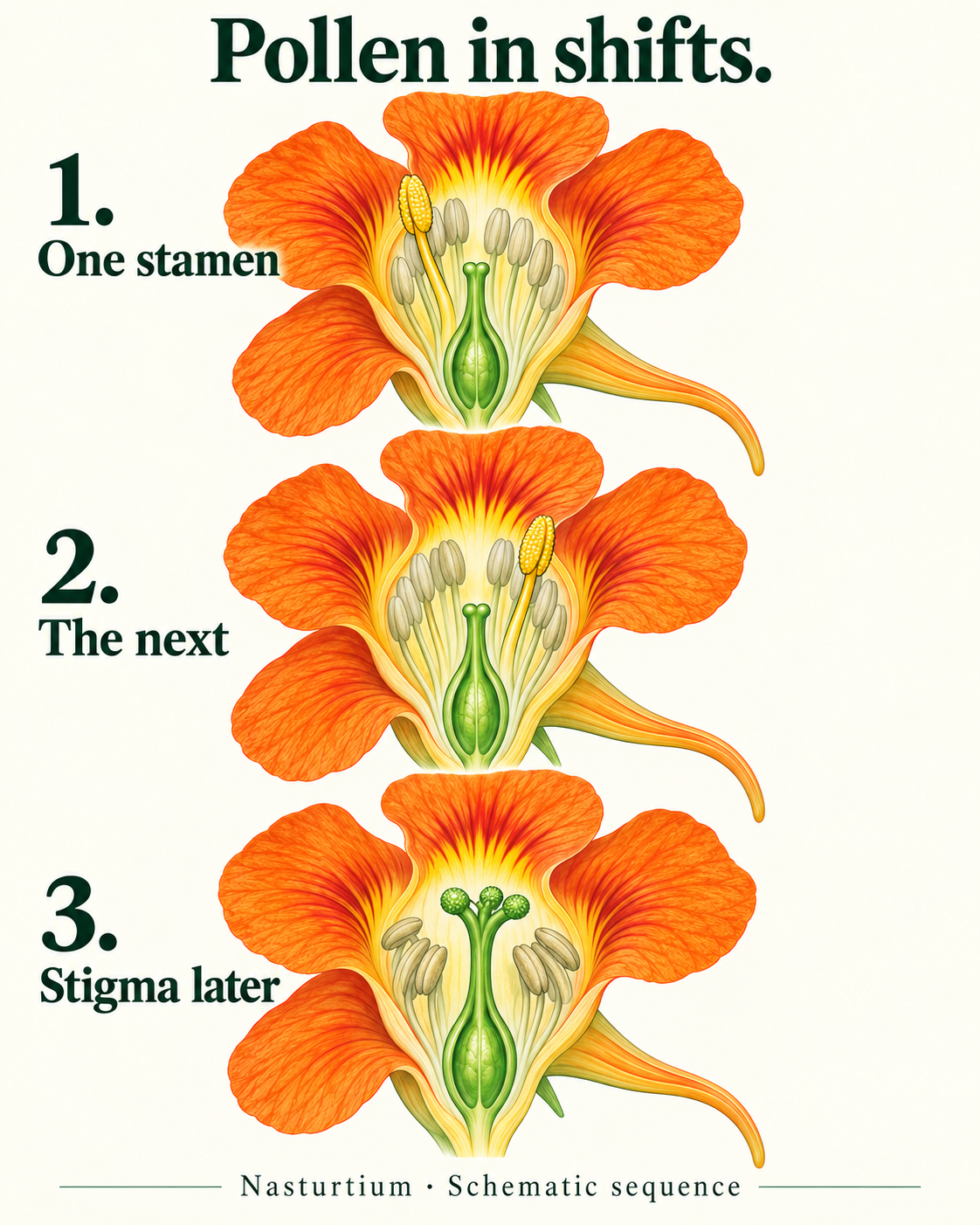
AI-generated explanatory illustration. Historical scenes are reconstructions; microscopic details are schematic. · Source
That creates a sequence of pollen presentations rather than one crowded moment. Later, the stigma becomes receptive to incoming pollen. Buckley describes the nasturtium’s progression in The Fairy-Land of Science; modern botanical literature also records its one-by-one stamen movements.[3][4]
The book puts it beside a useful comparison: geranium’s stamens take their turns in groups. The remastered blue-flower plate below shows that other plant. Similar timing problems can be solved by different floral arrangements.[5][6]
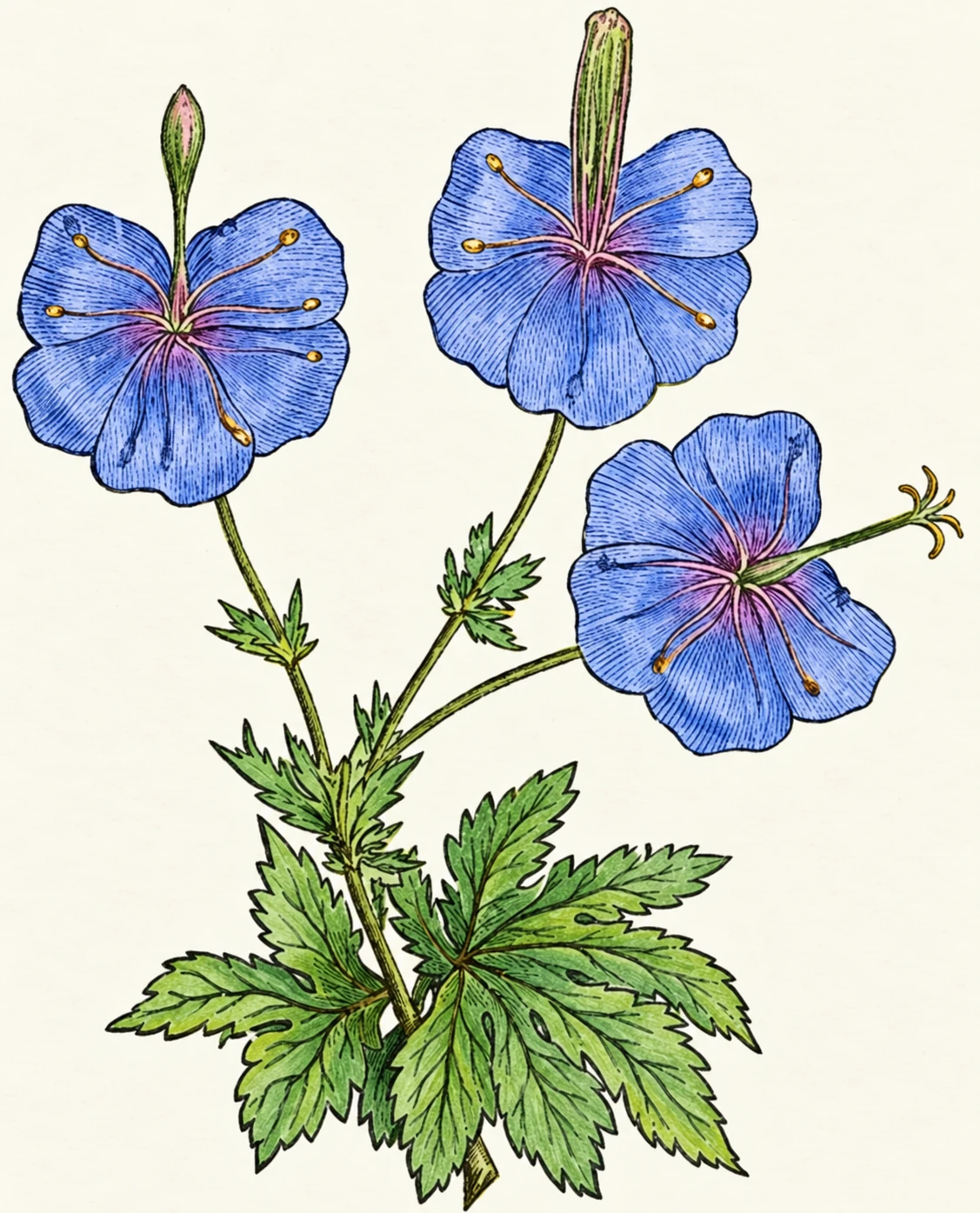
Historical book illustration, AI-assisted colour remaster. Colours are interpretive. · Source
Timing can separate pollen release from pollen reception and reduce interference between floral organs. It supports cross-pollination, although a flower’s complete mating system depends on more than this sequence alone. The modern study cited here experimentally examines Geranium pratense and discusses nasturtium as a related example; it is not an experiment on nasturtium itself.[7]
Let's look at alternatives:
- Modify the query.
- Start a new thread.
- Remove sources (if manually added).