
The crab’s snorkel changes direction
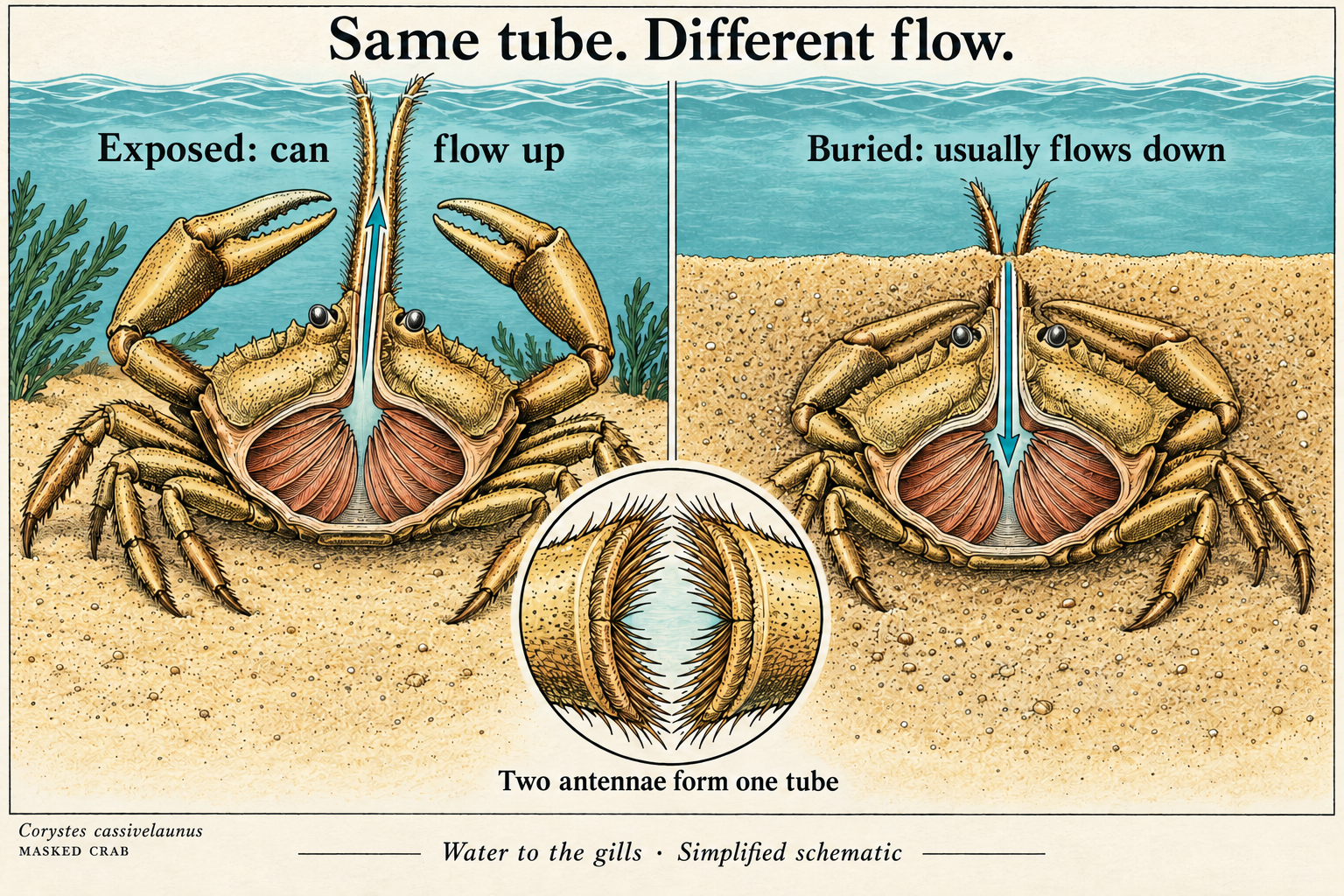
A masked crab can disappear beneath sand while keeping a route to the water above. Its two long, bristled antennae meet to form a breathing conduit. The conduit carries water to its gills; it is not an air tube.[1][2]
AI-generated explanatory illustration. Historical scenes are reconstructions; microscopic details are schematic. · Source
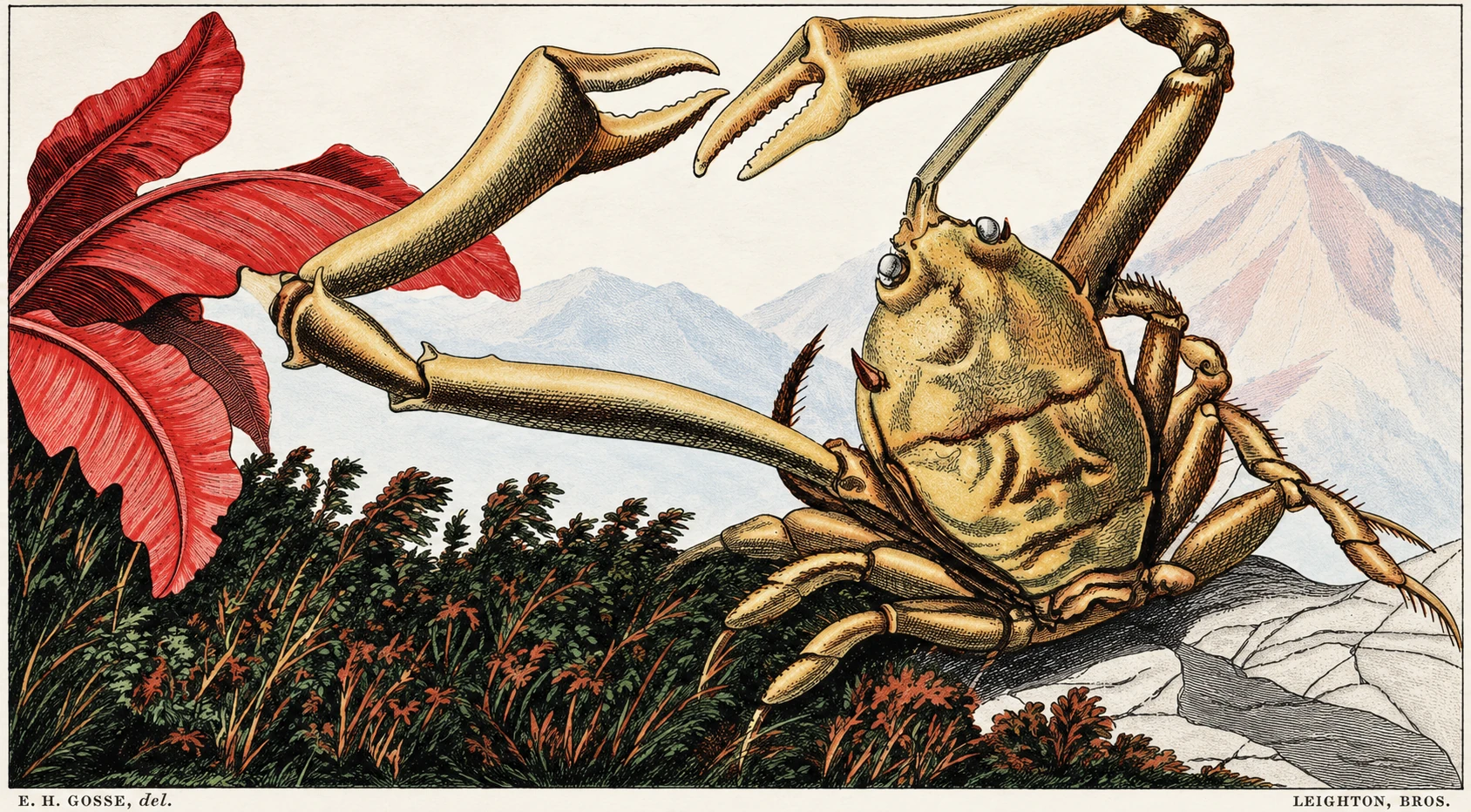
Gosse saw something surprising in exposed aquarium crabs: water flowed upward between the antennae. He inferred that the same arrangement carried used water out of a buried crab. His observation was useful, but the inference needed a closer look.[3][4]
Later work distinguished the two conditions. In unburied crabs the current can run in the direction Gosse observed. When buried, it runs in the reverse direction for most of the time: water is drawn down the antennal tube toward the gills.[5][6]
Historical book illustration, AI-assisted colour remaster. Colours are interpretive. · Source
The small hairs matter as much as the long stalks. Gosse describes curved bristles on each antenna meeting those on the other to make the conduit. Modern descriptions add the filters that keep incoming particles away from the gills. The animal’s position and the direction of flow belong in the same explanation.[7][8]
Let's look at alternatives:
- Modify the query.
- Start a new thread.
- Remove sources (if manually added).