Descubre Pandipedia
Un directorio creciente de respuestas útiles seleccionadas por la comunidad de Pandi. Busca en la colección o explora los últimos descubrimientos.
Directorio de Pandipedia
Has AI proved the Riemann hypothesis? Every big AI maths claim since August, and who has checked it
Not confirmed yet, but every machine check so far says the proof holds, and no human understands it yet. On 20 November Levent Alpöge, a mathematician at Anthropic, released a proof made with Claude, as Lean code only[1]. Every independent check reported so far has passed, and one final check was still running on 21 November[2]. It follows a run of AI-assisted claims on famous problems since August, and each has been checked to a different depth.
Last updated 21 November 2026. Status changes daily; dates are 2026.
| Claim | Machine-checked? | Expert view so far |
|---|---|---|
| Riemann hypothesis (Alpöge, with Claude) | Every check so far passes; one still running | Outside checkers see nothing wrong; no human-readable proof yet |
| Navier–Stokes, no force (Alpöge, Buckmaster) | Lean proof out; key certificate not yet | Strategy clear; needs a proper write-up |
| Navier–Stokes, with a force (OpenAI) | Lean proof out; its match to the paper is disputed | Meets the prize wording; experts call the force a loophole |
| Quasi-Riemann hypothesis (OpenAI) | Yes, for the 199-page version | Largely accepted |
| GRH (Masullo, no AI) | No | Problems reported within hours |
What we know
- The Riemann proof is huge and machine-only. Alpöge says he and Claude also formalised the argument without assumptions, and chose to post only Lean rather than an unreadable document[3]. The code runs to 17.4 million lines[4].
- "GRH" here is narrower than the name. It covers Dirichlet L-functions only, not every L-function the generalised hypothesis is usually stated for[5].
- Navier–Stokes now has two answers. OpenAI's September proof used an applied force, which the official problem allows[6]. The new Alpöge–Buckmaster paper claims blow-up without one[7].
- A human proof appeared the same day and is already in trouble. Masullo's all-human GRH draft drew reports of problems within hours[8].
The ledger, claim by claim
One row per claim. Each status comes from the people checking the work, not from the people who made the claim.
| Date and claim | What was released | Status on 21 November |
|---|---|---|
| 10 Aug. Anthropic: Claude raises the share of zeta zeros proved to sit on the critical line from 41.6% to 67.2%[9] | Paper, a short note by two Anthropic mathematicians and a formal proof[10] | Two outside experts, Brian Conrey and Dan Goldston, examined the paper. Anthropic says the method will not lead to a proof of the hypothesis itself[11] |
| 8 Sep. Alpöge and Buckmaster: blow-up, with a smooth applied force, for 3D Euler and two related fluid equations[12] | Papers and Lean proofs, built on a programme by Diego Córdoba and Luis Martínez-Zoroa[13] | Buckmaster called the Euler write-up poor in quality and apologised for it[14] |
| 8 Sep. OpenAI: Navier–Stokes can blow up, with a smooth applied force (option C of the official problem)[15] | Paper and Lean proof. OpenAI says it does not intend to claim the prize[16] | Clay said the problem "has apparently been settled"[17]. Experts say the force is a loophole[18]. A preprint argues the Lean proof does not match the paper's proof[19] |
| 30 Sep. to 6 Oct. OpenAI: the quasi-Riemann hypothesis, that all nontrivial zeros lie between 1/8 and 7/8[20] | A 199-page paper with a Lean proof, then a 49-page weaker version without one[21] | Experts largely agree it is correct; they mostly study the shorter version[22] |
| 20 Nov. Alpöge, Buckmaster and Coiculescu: blow-up for 3D Euler with no force[23] | A human-readable paper and a Lean proof[24] | The most digested of the three 20 November results, per Terence Tao[25] |
| 20 Nov. Alpöge and Buckmaster: blow-up for Navier–Stokes with no force[26] | A 79-page paper and a Lean proof. The numerical certificate the proof relies on is not released, and its interval-arithmetic check sits outside Lean[27] | Tao: strategy "broadly clear" but needs a proper write-up[28]. A patch to the Lean package was not rebuilt before release[29] |
| 20 Nov. Alpöge, working with Claude: the Riemann hypothesis, and GRH for Dirichlet L-functions[30][31] | Lean code only: 17.4 million lines in 175,187 files[32]. No paper yet[33] | Every independent check reported so far passes; the end-to-end comparator run was still going at 12:55 UTC[34] |
| 20 Nov. Alessandro Masullo: GRH, written without AI[35] | A draft posted by Ravi Vakil; Brian Conrad had read it for months[36] | Within about eight hours, several people reported problems, found with AI help[37] |
How far the Riemann proof has been checked
A Lean proof can fail in two ways. The code may not really prove anything, or it may prove a statement that is not the one advertised. As Kevin Buzzard of Imperial College put it, the first question is what the Lean theorem says and whether it matches the real one[38]. Here is where the checks stood, from MIT's status page at 12:55 UTC and a second independent build[39][40].
| Check on the Riemann proof | Result |
|---|---|
| Compiles with no errors | Pass, all 175,187 modules[41] |
| Rests only on Lean's three standard axioms | Pass, all 5 headline theorems[42][43] |
No shortcuts such as sorry or extra axioms | None found in a scan of every file[44] |
| Lean kernel replay of every module | Pass, in two separate builds[45][46] |
| Two independently written checkers | Both accept; one checked 1,484,729 declarations[47][48] |
| Statements match Mathlib's own definitions | An independent comparison accepts all five[49] |
| Official end-to-end comparator run | Still running at 12:55 UTC[50] |
Andrew Sutherland of MIT, who ran many of these checks, told Scientific American that "the chance that anything is fishy here is approximately zero"[51]. Scott Aaronson notes that no AI result with a Lean certificate has yet needed to be retracted, while several without one have[52].
Why "checked" is not the same as "settled"
Lean proves what it is told to prove. For OpenAI's Navier–Stokes result, a preprint argues that the Lean proof does not correspond to the paper's proof[53]. Experts also say the applied force makes the result less interesting. Luis Silvestre told Scientific American: "The Clay problem is settled, but the main problem for the Navier-Stokes equations is not"[54].
Some pieces sit outside Lean. The new Navier–Stokes proof relies on a numerical certificate, checked with interval arithmetic outside the formal proof, and the certificate has not been released[55].
Humans still have to understand it. Tao expects digesting the Riemann proof to "take some time"[56]. Alpöge says he intends to write it up properly[57]. Aaronson expects that distilling the ideas will probably take years[58].
The prize clock has not started. The Clay Institute considers a solution only after it is published in a qualifying outlet, two years have passed and it has general acceptance[59]. Its September statement called the process "deliberately unhurried"[60].
What is still unknown
- Whether the end-to-end comparator run on the Riemann proof passes, with Lean's default and paranoid kernels[61].
- How the Riemann proof works. No human-readable account exists yet[62][63].
- Whether the unforced Navier–Stokes certificate checks out once it is released[64].
- Whether Masullo's draft can be repaired[65].
What would settle it
- A finished comparator run, posted on MIT's status page or the Lean community's verification notes[66].
- A written proof of the Riemann hypothesis that number theorists can read and check, then journal publication[67].
- Release of the Navier–Stokes certificate and an independent rerun of its interval-arithmetic check[68].
How this page was made
We read each claim at source: the authors' own notes, papers and repositories, and OpenAI's and Anthropic's posts. We took verification status from the checkers' own published logs, and computed the counts with a script over those saved files. This page was drafted with help from Claude, the Anthropic model named in two of these claims. For that reason, every status rests on outside checkers, not on Anthropic's or OpenAI's statements. A published critique of Masullo's draft would not load, so we left it out.
Veamos alternativas:
- Modifica la consulta.
- Inicia un nuevo hilo.
- Eliminar fuentes (si se han agregado manualmente).
How a spinning disk built an early TV picture
Transcripción
One turn makes a picture
Watch it build an eye, one line at a time.[4]
Each hole scans one line
The holes form a spiral. Each crosses the window at a different height.[5]
The lamp varies in brightness
A lamp behind the disk brightens and dims with the signal. That draws light and dark along each line.[6]
The disks stay in step
The transmitter and receiver scan in step. That puts the lines back in order, and the picture repeats.[7]
Veamos alternativas:
- Modifica la consulta.
- Inicia un nuevo hilo.
- Eliminar fuentes (si se han agregado manualmente).
Can you read the scorecard from Sydney Thunder’s record chase?
Respuestas y explicaciones
- Brisbane’s innings is written as 3–225. What does that mean?
225 runs for three wickets[3]
The first number is wickets lost and the second is runs scored. Brisbane made 225 while losing three wickets. [4] - Brisbane made 225. What total did Sydney need to win the chase outright?
226[5]
Sydney needed one more run than Brisbane. The Thunder reached 226 for four with four balls remaining. [6] - Laura Harris reached fifty in 15 balls and finished her innings after facing 20. How many more balls did she face after the fifty milestone?
5[7]
She faced five more balls, because 20 minus 15 is five. Cricket Australia reported the 15-ball fifty as the WBBL record. She finished with 63 not out from 20 balls. [8]
Veamos alternativas:
- Modifica la consulta.
- Inicia un nuevo hilo.
- Eliminar fuentes (si se han agregado manualmente).
How Luna 3 imaged the Moon’s far side
Luna 3’s Yenisey imaging unit used a film camera with two lenses, 200 mm and 500 mm, that took pictures simultaneously. The different focal lengths gave it two views of the same scene[1].
The images then had to be returned without bringing the film home. Siddiqi describes a later system as “somewhat similar” to Luna 3’s: it developed, fixed (chemically stabilized), and dried exposed film aboard the spacecraft, then scanned the images for transmission to Earth. The supplied passage also identifies a slow scanning mode for Luna 3’s Yenisey II unit[2][3].
Seventeen images were usable. They revealed parts of the Moon’s far side never before seen by human eyes; the broader photographic coverage showed fewer mare, or dark plains, there than on the near side, prompting scientists to reconsider lunar-evolution theories[4][5]. The supplied excerpt does not state the requested 7 October 1959 imaging date or 29-picture total, so it cannot verify those two details.
Veamos alternativas:
- Modifica la consulta.
- Inicia un nuevo hilo.
- Eliminar fuentes (si se han agregado manualmente).

Rechargeable book lights for reading in bed

Veamos alternativas:
- Modifica la consulta.
- Inicia un nuevo hilo.
- Eliminar fuentes (si se han agregado manualmente).
Inside BlinkenCity's radio-controlled streetlight research
Veamos alternativas:
- Modifica la consulta.
- Inicia un nuevo hilo.
- Eliminar fuentes (si se han agregado manualmente).
A renter-friendly fix for drafts

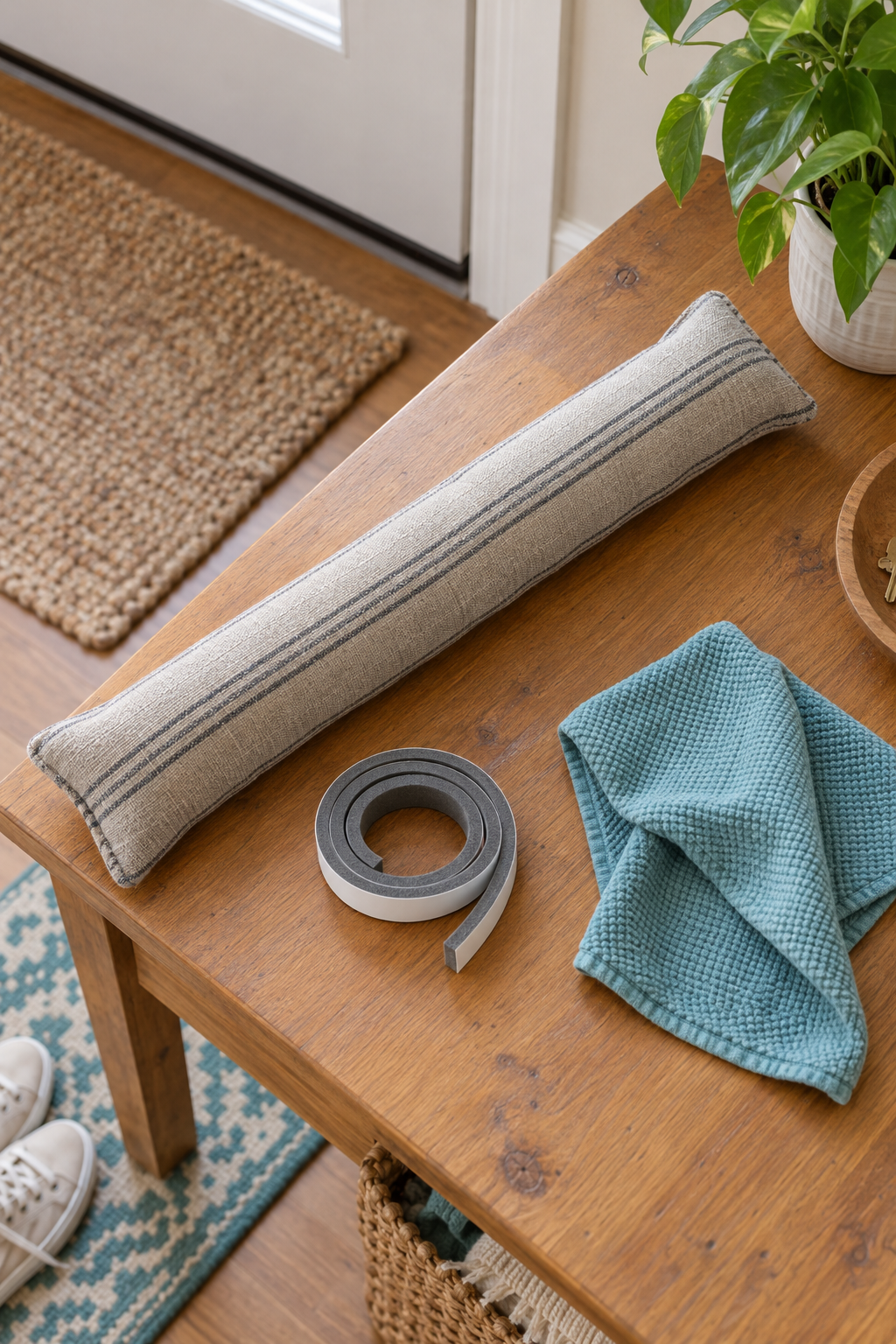


Veamos alternativas:
- Modifica la consulta.
- Inicia un nuevo hilo.
- Eliminar fuentes (si se han agregado manualmente).
Why India uses two numbers to classify a micro-enterprise
Veamos alternativas:
- Modifica la consulta.
- Inicia un nuevo hilo.
- Eliminar fuentes (si se han agregado manualmente).
Why two spacecraft appear in this Apollo 12 photo
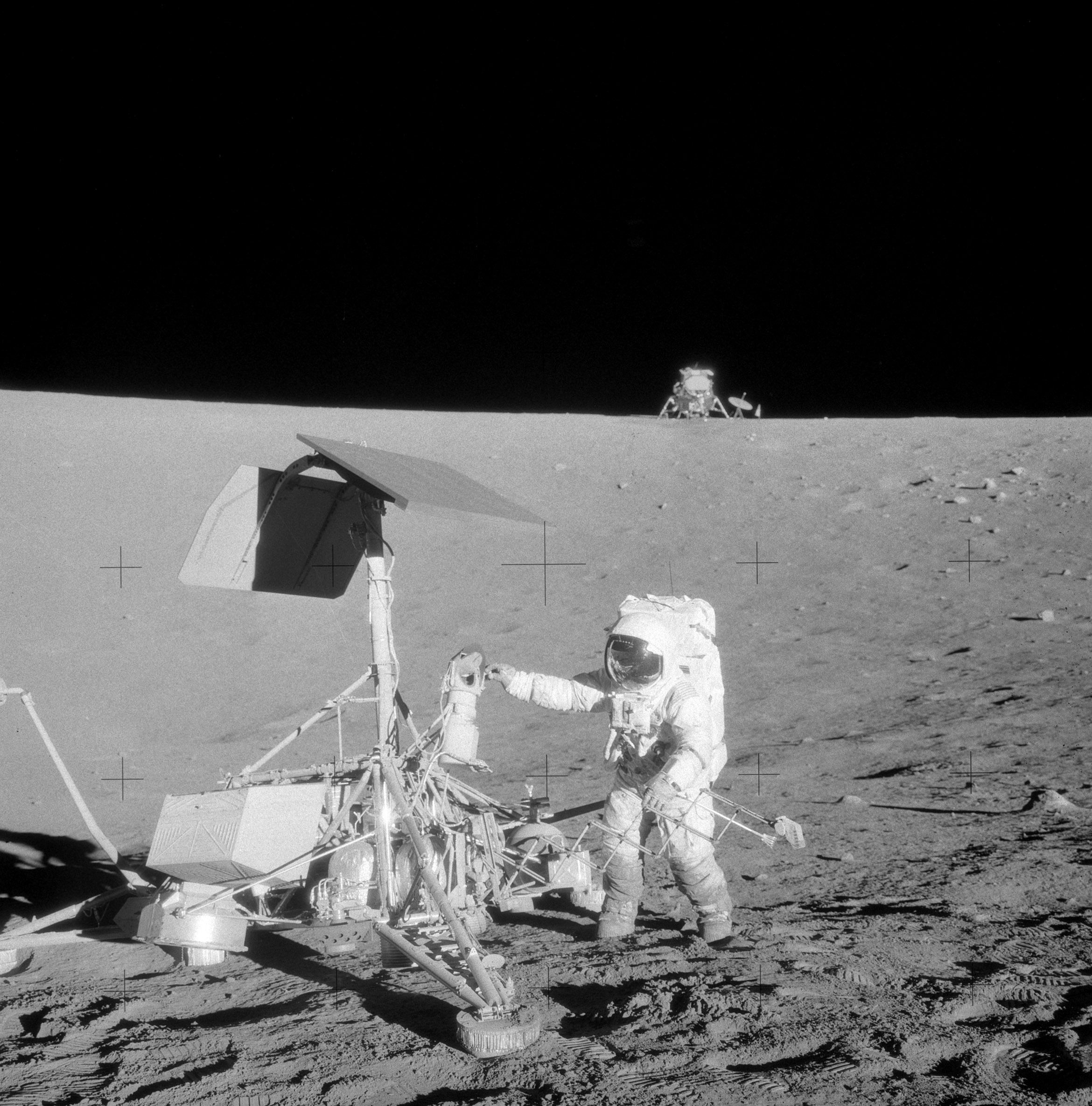
Veamos alternativas:
- Modifica la consulta.
- Inicia un nuevo hilo.
- Eliminar fuentes (si se han agregado manualmente).
The Lion and His Keeper
Transcripción
In this turn-of-the-century book anecdote, a carpenter rapidly repairs the lower part of Danco’s cage while the keeper sleeps beside the lion. The carpenter calls out, waking Danco. The book reports that the lion stared at him furiously, then placed a paw on the keeper’s chest and lay down again. At the close, the keeper calmly shook the lion by the paw and led him back to his usual place. It is a reported historical story, not proof of how lions behave.
Veamos alternativas:
- Modifica la consulta.
- Inicia un nuevo hilo.
- Eliminar fuentes (si se han agregado manualmente).