space and science facts that sound fake but are real for social media 2024 2025
Here are some space and science facts that sound fake but are real for 2024–2025 social posts:
Scientists found what may be the strongest evidence yet of life on another planet in 2025, but it was still only a signal, not actual aliens. The James Webb Space Telescope data from K2-18b showed possible signs of dimethyl sulfide and dimethyl disulfide, gases that on Earth are produced by living things.[23][26][25]
An interstellar comet called 3I/ATLAS passed through our solar system in 2025, and it was only the third object ever confirmed to come from another star system. Scientists studied it with Hubble, JWST, Mars spacecraft, and ground telescopes as it raced by at about 137,000 miles per hour.[23][26][25]
Astronomers in 2025 said the Milky Way and Andromeda might not collide after all. New simulations gave the two galaxies about a 50-50 chance of missing each other in the next 10 billion years.[23]
The second-shortest day in history was recorded in 2025. Earth spun just 1.34 milliseconds faster than usual on July 22, and the planet’s rotation changes because of things like the Moon’s pull and movement inside Earth itself.[22]
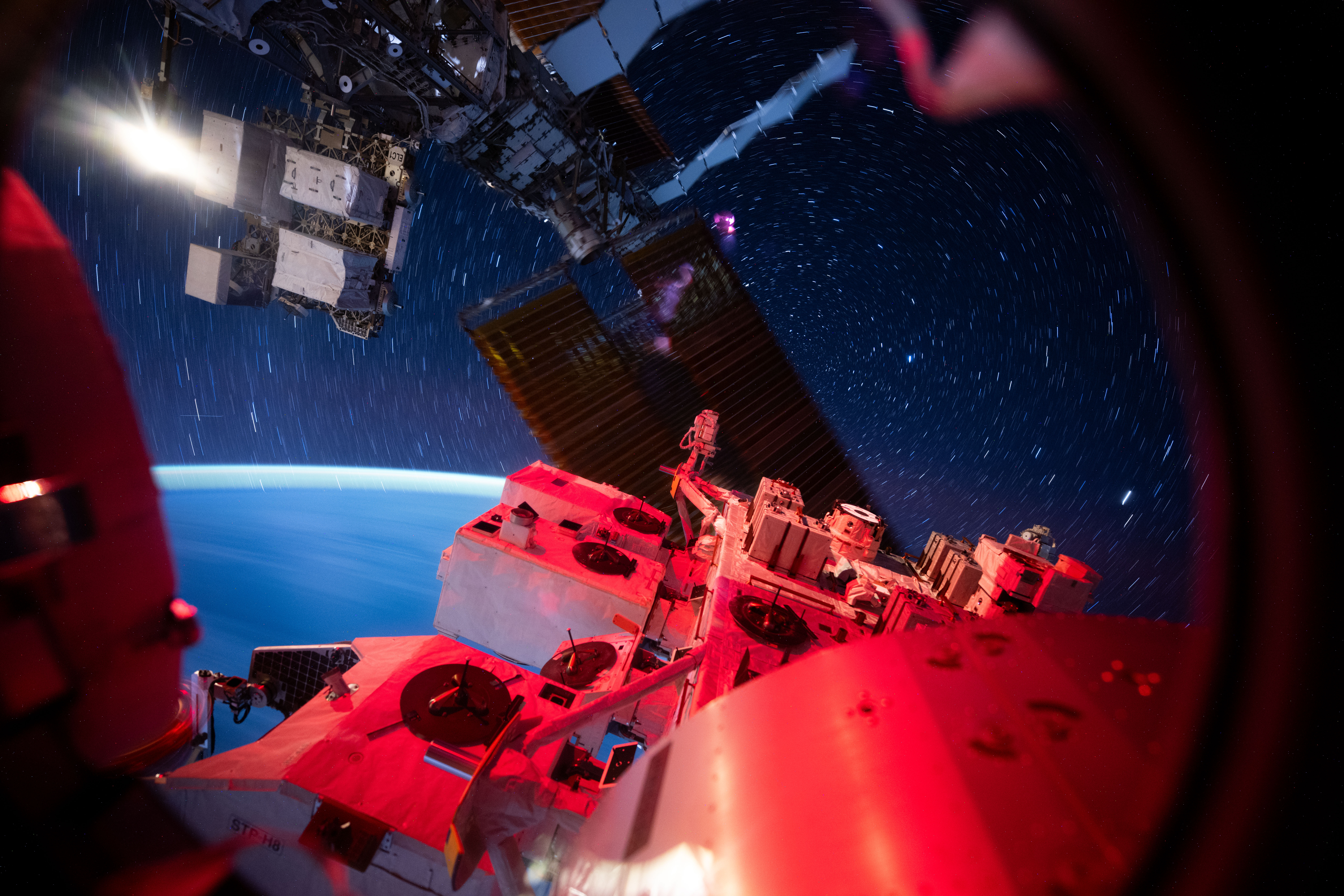
NASA said the International Space Station hosted more than 750 experiments in 2025. Those included robotic surgery tests in microgravity, magnetic 3D bioprinting, battery studies, and materials exposure experiments for future Moon and Mars missions.[20][24]
A tiny robotic system was tested for surgery in space, and accuracy stayed strong even with communication delays. NASA said the timing slowed procedures, but the robot’s precision was barely affected.[20]
A battery pack left in space for 434 days showed stable electrical behavior and only a 2% loss in capacity. That’s wild because it was tested under vacuum, radiation, and extreme temperature swings.[20]
Saturn got 128 new moons in 2025, bringing its total to 274. Many of them are only a few miles wide, but they still count as moons if they have trackable orbits.[25]
Researchers found the oldest known proteins in 2025, from a rhino tooth that was 21 to 24 million years old. That pushed the protein record back by roughly 20 million years.[21][26]
A gray wolf in British Columbia was recorded dragging a crab trap ashore and eating the bait inside, possibly the first known tool use by a canid. Scientists still debated whether it counted as true tool use, but the behavior was definitely clever.[21][26]
If you want, I can turn these into:
1. a viral X thread,
2. 10 punchy caption lines, or
3. a carousel with hooks and slide text.
Get more accurate answers with Super Pandi, upload files, personalized discovery feed, save searches and contribute to the PandiPedia.
Let's look at alternatives:
- Modify the query.
- Start a new thread.
- Remove sources (if manually added).