64
trending space colonization myths and retro-futurism facts for social media
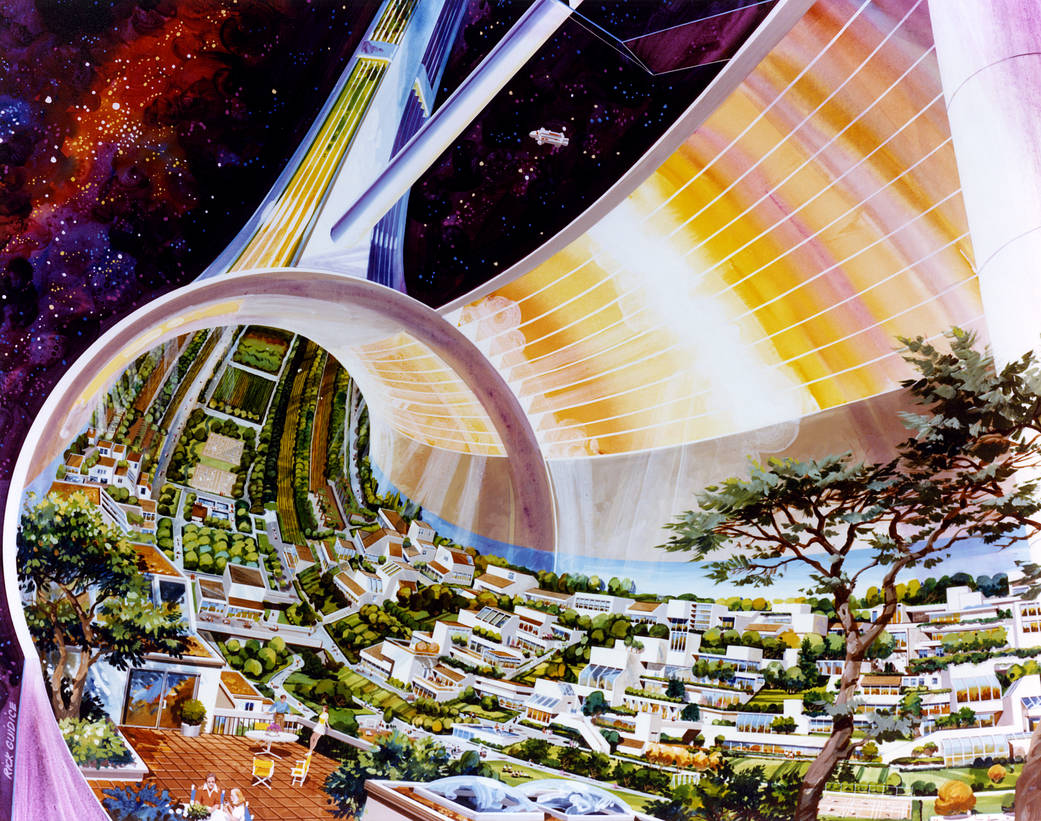
Here are some source-backed angles that fit space colonization myths and retro-futurism facts for social media:
- Myth: The Stanford torus was just a one-off sci-fi sketch. In fact, it came from NASA’s 1975 summer study, and the design was meant to house about 10,000 permanent residents[8][5].
- Fact: NASA’s Ames Research Center ran three separate space-colony studies in the 1970s, including toroidal, cylindrical, and Bernal Sphere concepts[3][5].
- Fact: NASA’s 1977 study on space settlements was written to be understandable to the educated public as well as specialists, which helps explain why these ideas still travel well on social media today[6].
- Myth: Space colonies were imagined as empty metal tubes with no agriculture. The 1970s studies explicitly included agricultural modules and controlled-environment agriculture, plus regenerative life-support systems[7][5].
- Fact: In the Stanford torus design, half the ring’s sections were planned for agriculture and half for housing, with sunlight brought in by mirrors[8].
- Fact: The torus was also meant to support a wider colonization system, not just one isolated habitat, with residents helping build solar power stations and new colonies[8].
- Retro-futurism hook: NASA’s retrofuturistic space art shows how 1970s artists turned these colony studies into dramatic visuals that still look fresh now[3][4].
- Retro-futurism fact: The Public Domain Review notes that Gerard K. O’Neill imagined habitable cylinders where fresh vegetables and fruit would be grown year-round, and where life in space would feel more like an engineered garden than a barren outpost[4].
- Retro-futurism fact: The 1970s colony art included interiors with clouds, vegetation, suspension bridges, and human-powered flight, which gives it that classic “future that never happened” feel[5][9].
- Social media angle: These images sit right at the intersection of utopia and practicality, because they pair dreamy retro style with serious engineering questions about food, oxygen, water, and materials[7][10].
If you want, I can turn this into:
1. 10 short-form hooks,
2. a carousel script, or
3. a myth-vs-fact thread.
Sign Up To Try Advanced Features
Get more accurate answers with Super Pandi, upload files, personalized discovery feed, save searches and contribute to the PandiPedia.
Sorry, Pandi could not find an answer.
Let's look at alternatives:
- Modify the query.
- Start a new thread.
- Remove sources (if manually added).
Related Content From The Pandipedia
What are popular "weird history" or "forgotten space tech" topics currently trending on social media for space enthusiasts?space and science facts that sound fake but are real for social media 2024 2025Myth vs fact: The ‘sci‑fi’ Stanford Torus was a detailed NASA baseline in 1977what are the silliest laws ever made?innovators on the future of space tourismtrending trivia and curiosity topics for Gen Z and Millennials on social media 2024 2025Strategies for Effective Decision Makingaudience demand for space agriculture and closed-loop life support systems 2024-2025NASA’s 1977 plan for a city in spaceLatest news on Thursday, 4th of December 2025Write a Twitter thread (X thread) about the very latest AI news, formatted as follows:
1. **First tweet (hook):**
* Spark curiosity with a provocative question or surprising statement about AI today.
* Tease that you'll share several must-know developments in the thread.
* Keep it ≤280 characters and avoid hashtags.
2. **Subsequent tweets (one per news item):** For each:
* **Headline/Context (concise):** A short phrase identifying the development (e.g., “Major breakthrough in multimodal models”).
* **Key insight:** State the single most important takeaway or implication (“It can now generate lifelike videos from text prompts, potentially transforming content creation.”).
* **Why it matters / curiosity angle:** A brief note on impact or a rhetorical question that encourages engagement (“Could this replace human editors?”).
* **Brevity:** Stay within 280 characters total.
* **Tone:** Informational yet conversational and shareable—use an emoji or casual phrasinImplications of the Latest Space Exploration Missions