
How NASA will build the Artemis moon base?
Building the Artemis Base Camp: NASA's Blueprint for a Sustained Lunar Presence
NASA's Artemis Base Camp represents a monumental shift in space exploration, transitioning from brief lunar visits to a sustained human presence on the Moon. The objective is to establish a permanent, expandable foothold that will support scientific discovery, resource utilization, and future crewed missions to Mars. This long-term outpost will be built incrementally through repeated missions, robotic precursors, and advanced surface infrastructure.
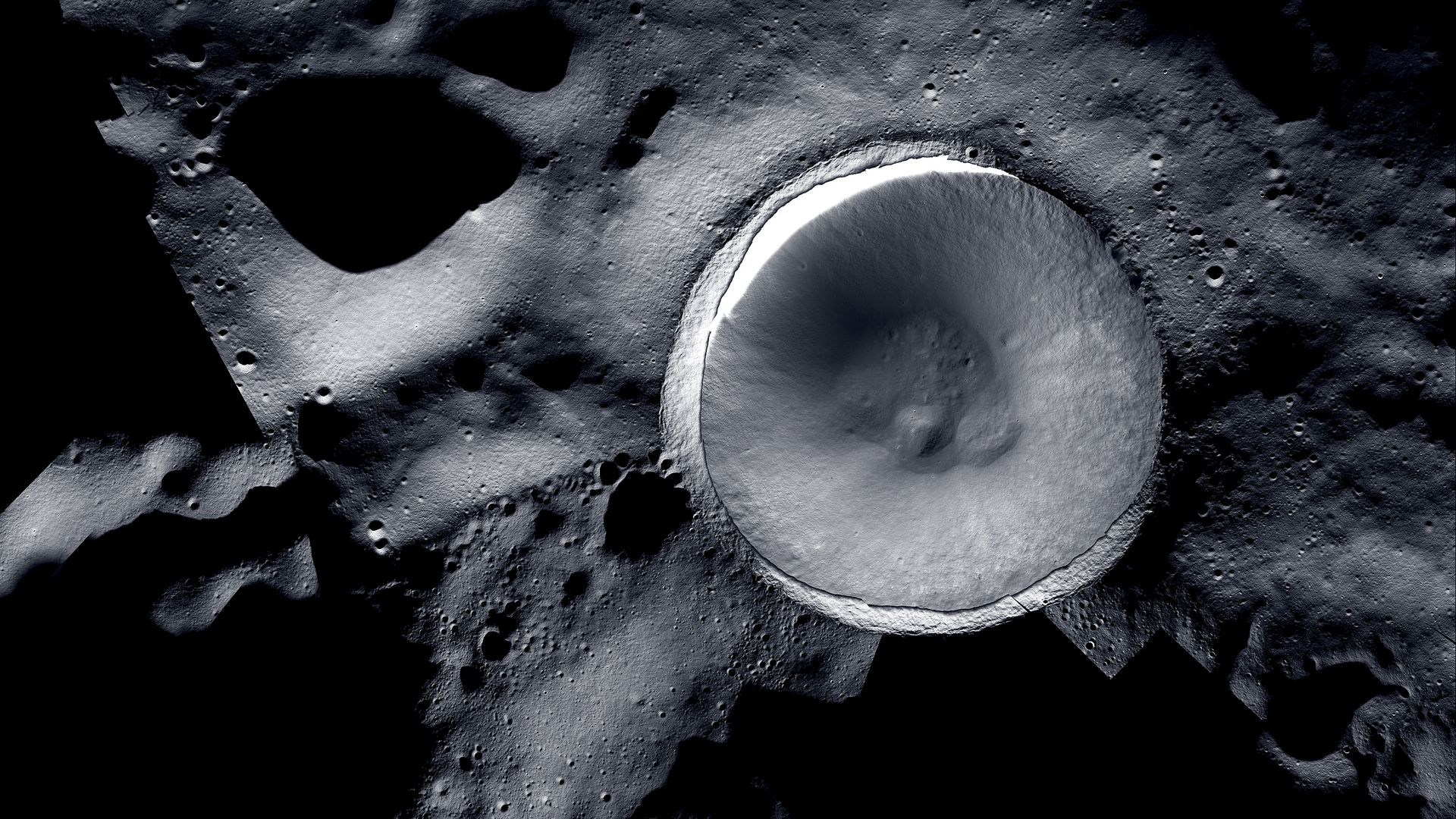
Lunar South Pole
The rugged, cratered terrain of the lunar south pole, the planned location for the Artemis Base Camp.


Core Components of the Base Camp
The architecture of the Artemis Base Camp centers on three primary elements designed to expand exploration capabilities and support long-duration stays[10].
- Lunar Terrain Vehicle (LTV): An unpressurized rover intended for crewed operations beginning around Artemis V, allowing astronauts to travel far beyond walking distance.
- Habitable Mobility Platform: A pressurized rover delivered later to extend exploration ranges by tens of kilometers and support missions lasting 30 to 45 days.
- Foundation Surface Habitat: The core living quarters, designed as a hybrid structure with a metallic base and inflatable upper levels. It will initially support two crew members for 30 days, with the capacity to accommodate up to four astronauts as the base expands.
Location and Power Infrastructure
NASA has selected the lunar south polar region as the site for the Artemis Base Camp, specifically targeting areas near the Shackleton and de Gerlache craters. This location provides a strategic combination of near-continuous sunlight for power generation, manageable terrain for landing, and access to permanently shadowed craters that may contain valuable water ice[3].
To support this infrastructure, NASA is developing an integrated lunar power grid that combines solar and nuclear technologies. Vertical, self-leveling solar arrays will capture sunlight in illuminated areas, while Fission Surface Power systems will provide continuous, predictable electricity[28][30]. These compact nuclear reactors are expected to supply at least 40 kilowatts of power, ensuring the base remains operational through the frigid, weeks-long lunar night and in darker regions[28].
Autonomous Construction and 3D Printing
Rather than relying solely on prebuilt modules transported from Earth, NASA plans to utilize in-situ resource utilization (ISRU) and autonomous robotics to construct the base[19]. Large-scale 3D printing using lunar regolith will serve as the primary construction method.
Through the Moon to Mars Planetary Autonomous Construction Technology (MMPACT) project, NASA is testing how to transform local soil into infrastructure such as landing pads, roads, and radiation shielding[49]. Collaborations with commercial partners like ICON have led to the Olympus system, which uses high-powered lasers to melt regolith into a durable, ceramic-like building material[15]. Other techniques include regolith-polymer 3D printing and Contour Crafting, which extrude mixtures layer by layer to build protective structures.
Site preparation will be handled by a fleet of specialized robots. Systems like CraterGrader will smooth the terrain, while robotic excavators such as the ISRU Pilot Excavator (IPEx) and cooperative multi-rover teams will dig and transport materials[52][53]. In addition, NASA is utilizing technologies like the Cooperative Autonomous Distributed Robotic Exploration (CADRE) system to enable multiple rovers to work together seamlessly[4]. Precision navigation tools, such as the Ranger camera-based localization system and robotic total stations, will provide millimeter-level accuracy for site preparation and module assembly[53][55].
NASA Lunar Construction Technologies
Videos demonstrating NASA's plans for 3D printing and robotic construction on the Moon.
Logistics, Delivery, and Assembly Sequence
The assembly of the Artemis Base Camp will follow a phased, evolutionary cadence[57]. The sequence begins with robotic precursor missions, including the VIPER rover and Commercial Lunar Payload Services (CLPS) deliveries, to scout terrain and resources.
Heavy infrastructure will be delivered by cargo variants of commercial human landers, such as SpaceX's Starship Cargo and Blue Origin's Blue Moon Cargo[43][46]. These vehicles can transport tens of metric tons of equipment to the surface, enabling the deployment of large habitats and rovers[46][47].
| Mission | Primary Delivery Element |
|---|---|
| Artemis V | Lunar Terrain Vehicle (LTV) |
| Artemis VI | Habitable Mobility Platform |
| Artemis VII | Foundation Surface Habitat |
According to the 2024 Moon to Mars Architecture update, the delivery sequence targets specific missions for major components, as outlined in the table above[64].
International and Commercial Partnerships
Building the Artemis Base Camp is a global endeavor led by the United States but heavily supported by international and commercial partners. The European Space Agency (ESA) is a major contributor, providing the European Service Module for the Orion spacecraft and key Gateway elements like I-Hab and Lunar View. Other nations are also playing vital roles. Italy has expressed interest in developing lunar surface habitats, while Canada is contributing external robotics, communications satellites, and lunar rovers. Japan and the United Arab Emirates have also made significant commitments to the Artemis coalition, ensuring a diverse and collaborative approach to lunar exploration.
Overcoming Lunar Dust
One of the most significant environmental challenges is lunar dust, which can degrade equipment and pose severe health risks to astronauts[36][41]. NASA is implementing a layered dust mitigation strategy that combines passive and active technologies[41].
During construction, rocket plumes can sandblast nearby equipment, making stabilized landing pads a critical early priority[35]. For operations, the agency is developing electrodynamic dust shields, dust-tolerant connectors, and specialized coatings to repel regolith from sensitive surfaces like solar panels and spacesuits.
Inside the habitat, contamination control zones, HEPA filtration, and suitport-airlocks will prevent dust from entering the main living areas[37][41]. Advanced wearable respiratory devices are also being studied to protect crew members from airborne particles inside the base[38].
Lunar Dust Mitigation Concept
An artistic illustration of astronauts using advanced airlocks and electrodynamic shields to repel lunar dust from their suits and habitat.

Conclusion
The Artemis Base Camp is not just a destination; it is a dynamic, evolving facility that will test the limits of human ingenuity. By combining international cooperation, commercial partnerships, autonomous robotics, and innovative resource utilization, NASA is laying the groundwork for a permanent human legacy on the Moon and preparing for the next giant leap to Mars[57].
Let's look at alternatives:
- Modify the query.
- Start a new thread.
- Remove sources (if manually added).