How does Nested Learning differ from traditional deep learning architectures?
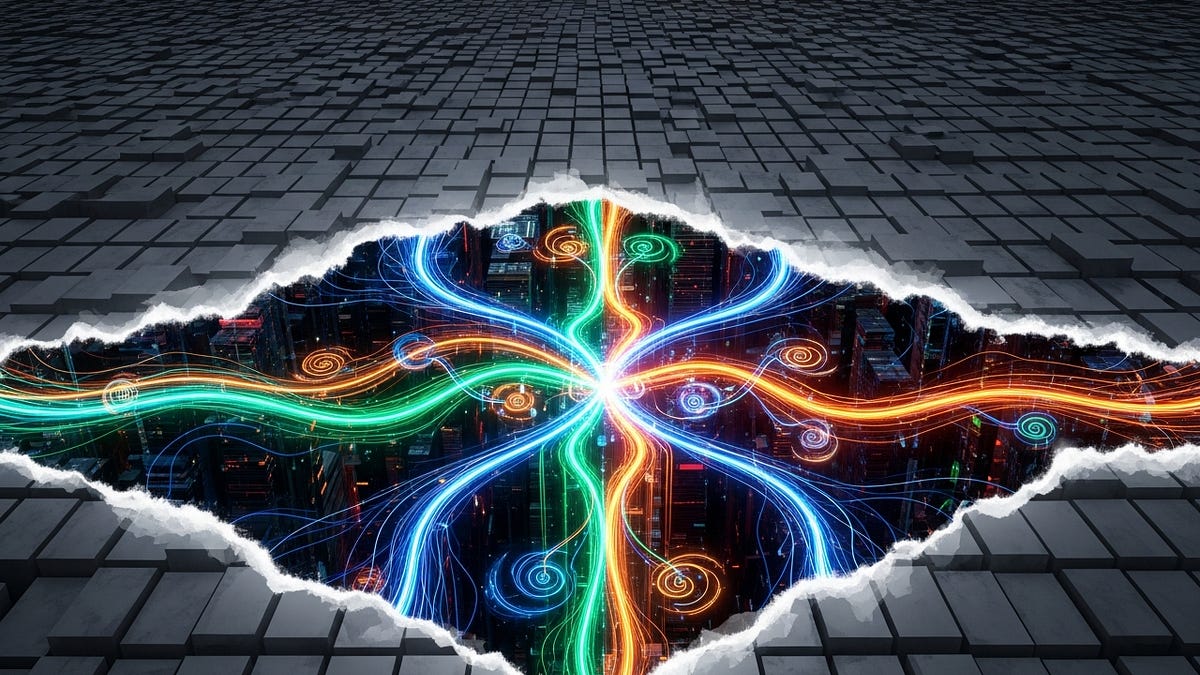
Nested Learning (NL) fundamentally differs from traditional deep learning architectures by reframing how machine learning models learn and operate[1][2][3][4][5].
Here are the key distinctions:
* Nature of the Model and Learning Process: Traditional deep learning views models as static structures, where learning occurs during a separate training phase, after which the model is considered complete and performs fixed computations during inference[2][6]. Nested Learning, however, represents a model as a coherent system of nested, multi-level, and/or parallel optimization problems, each with its own 'context flow' and update frequency[1][3][4][5]. It argues that learning happens inside learning, across multiple levels and speeds, even during inference[2][6].
* Source of Intelligence: Traditional architectural thinking assumes intelligence emerges primarily from architectural depth, such as stacking more layers[6]. NL challenges this, proposing that intelligence arises from how learning itself is organized across multiple levels, time scales, and memory systems[6]. It suggests that many successes attributed to deep architectures are better understood as 'learning-within-learning' hidden inside optimization, memory updates, and inference-time adaptation[6].
* Role of Optimizers: In traditional deep learning, optimizers like SGD or Adam are treated as external algorithms used merely to adjust weights during training[6]. NL reinterprets these gradient-based optimizers as associative memory modules that aim to compress gradients[1][3][4][5]. From the NL viewpoint, optimizers are learning systems themselves, storing knowledge about the loss landscape and influencing how parameters evolve[4][6].
* Memory System: Traditional models often imply a clear distinction between 'long-term' and 'short-term' memory residing in distinct brain structures[3][4]. NL introduces the 'Continuum Memory System' (CMS), which generalizes this traditional viewpoint by seeing memory as a distributed, interconnected system with a spectrum of frequency updates[1][3][4][5]. Higher-frequency components adapt quickly, while lower-frequency components integrate information over longer periods[2].
* Continual Learning and Adaptation: Large Language Models (LLMs) in traditional deep learning are largely static after pre-training, unable to continually acquire new capabilities beyond their immediate context, akin to 'anterograde amnesia'[2][3][4]. NL provides a mathematical blueprint for designing models capable of continual learning, self-improvement, and higher-order in-context reasoning by explicitly engineering multi-timescale memory systems[2].
* Computational Depth: While traditional deep learning measures depth by the number of layers, NL introduces a new dimension to deep learning by stacking more 'levels' of learning, resulting in higher-order in-context learning abilities and enhanced computational depth[1][3][4][5][6].
* In-Context Learning: NL reveals that existing deep learning methods learn from data through compressing their own context flow, and explains how in-context learning emerges in large models[1][3][4][5]. From the NL perspective, in-context learning is a direct consequence of having multiple nested levels, rather than an emergent characteristic[3][4].
* Architectural Uniformity: NL suggests that modern deep learning architectures are fundamentally uniform, consisting of feedforward layers (linear or deep MLPs), with differences arising from their level, objective, and learning update rule[3][4]. The apparent heterogeneity is an 'illusion' caused by viewing only the final solution of optimization problems[3][4].
Get more accurate answers with Super Pandi, upload files, personalized discovery feed, save searches and contribute to the PandiPedia.
Let's look at alternatives:
- Modify the query.
- Start a new thread.
- Remove sources (if manually added).
 Curated by Joan