Why is the circulatory system more than a set of pipes?
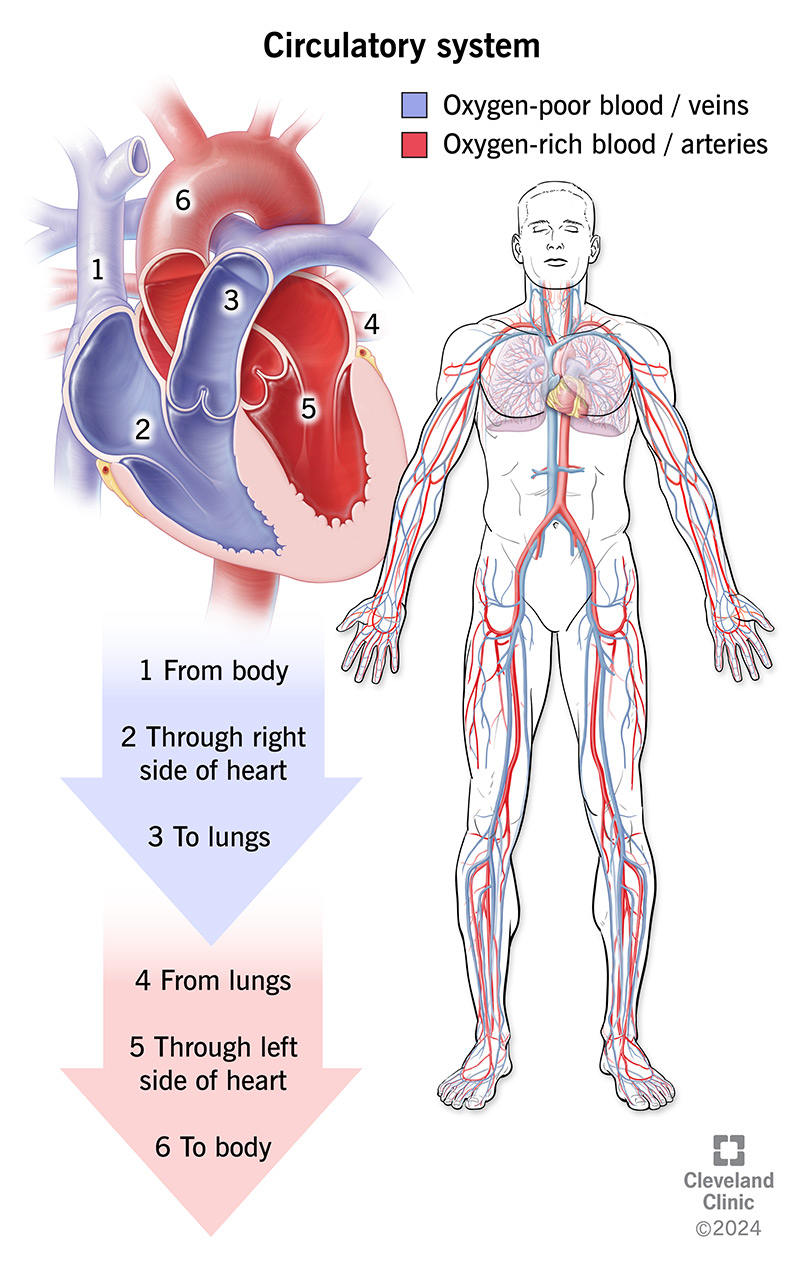
The circulatory system is more than a passive set of pipes because it functions as an active, coordinated delivery network where the heart, blood vessels, blood, and cells continuously interact[1][2]. Think of it like city logistics: the heart acts as the central pumping station, sending transport vehicles (blood) filled with cargo along major highway arteries that branch into smaller streets and alleyways[3][4]. Oxygen reaches individual cells when this cargo travels through tiny capillary networks, where materials are exchanged through thin walls directly with the tissues[5][6]. Coordination matters because this system dynamically adapts to the body's demands, ensuring that vital organs like the brain receive a continuous, uninterrupted supply of oxygen while simultaneously hauling away waste[7][8].
Would you also like to know how blood vessels change width to control blood pressure?
Create your account to keep this answer and continue from it later.
Let's look at alternatives:
- Modify the query.
- Start a new thread.
- Remove sources (if manually added).