100

Why lithium-ion batteries run away

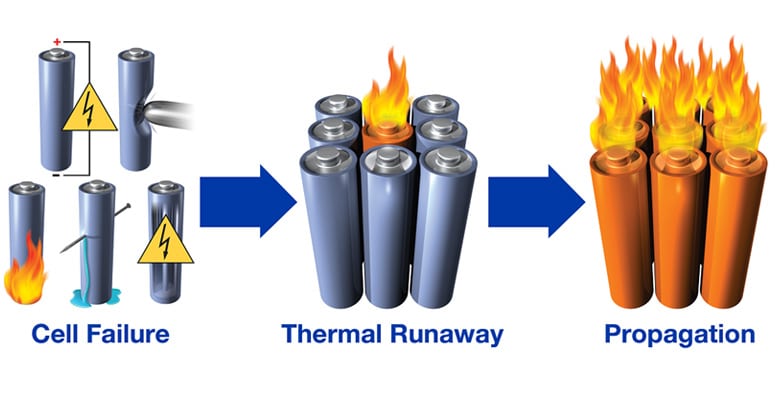
A lithium-ion battery can go from normal to dangerous in a feedback loop: heat speeds up reactions, the reactions make more heat, and the cell can end up venting gas, smoke, or fire[2][3].

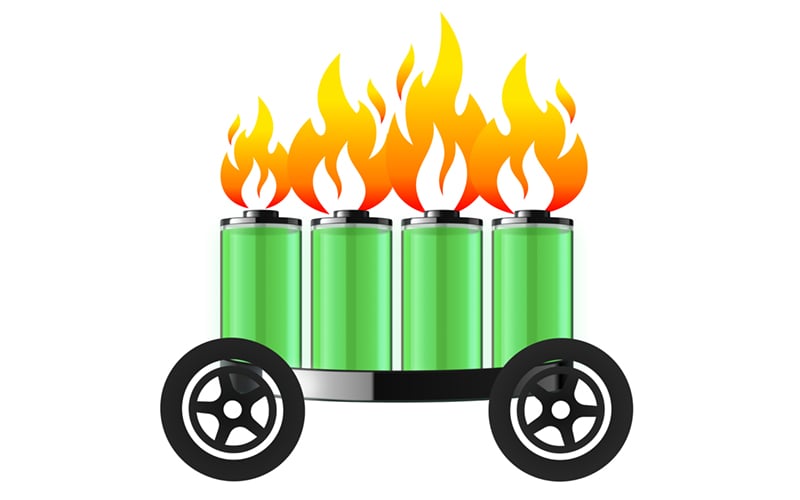
  • Battery Cell Thermal Runaway
  • Block battery on fire with smoke and debris.
🧵 1/5

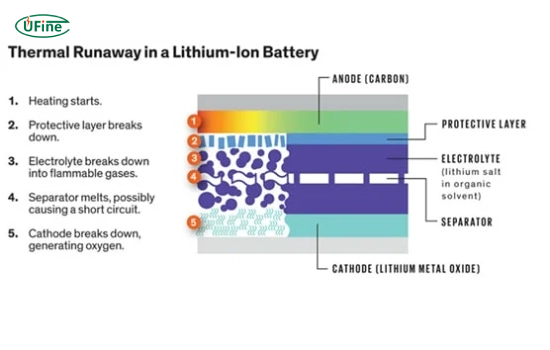
That self-heating state is thermal runaway: the cell generates heat faster than it can get rid of it, so temperature and chemical reactions keep accelerating[2][3].

  • lithium-ion batteries - Thermal Runaway in EV’s
  • Fig. 3. Simplified thermal runaway mechanism
🧵 2/5

One common trigger is an internal short circuit. If a defect damages the separator between the anode and cathode, the cell can short internally and start runaway, especially in lower-quality cells[3].

  • Fig. 1. Factors contributing to the initiation of thermal runaway
  • Lithium-ion battery thermal runaway diagram showing heat buildup and failure process
🧵 3/5

Battery management systems help prevent it by watching voltage, current, and temperature, then disconnecting the battery when conditions turn unsafe[2][3]. Charging limits matter too: overcharge or repeated overdischarge followed by charging can trigger runaway[3].

  • Fig. 1. Temperature monitoring in a battery pack by using shared surface temperature…
  • diagram of a diagram showing different types of metal
🧵 4/5

Good designs add layers beyond software: thermal barriers, fire-resistant enclosures, smaller isolated sections, and ventilation for cells that vent gas[2][6][3].

  • Picture after EticaAG's 20 Cell Lithium-Ion Battery Cell thermal runaway Propagation Test
🧵 5/5