100

How the power grid stays perfectly in sync
Ever wonder how an entire continent's power grid stays perfectly synchronized, down to the millisecond? It's a massive, real-time balancing act where a tiny slip in frequency can trigger a catastrophe. Here’s how it works, and why it sometimes fails.

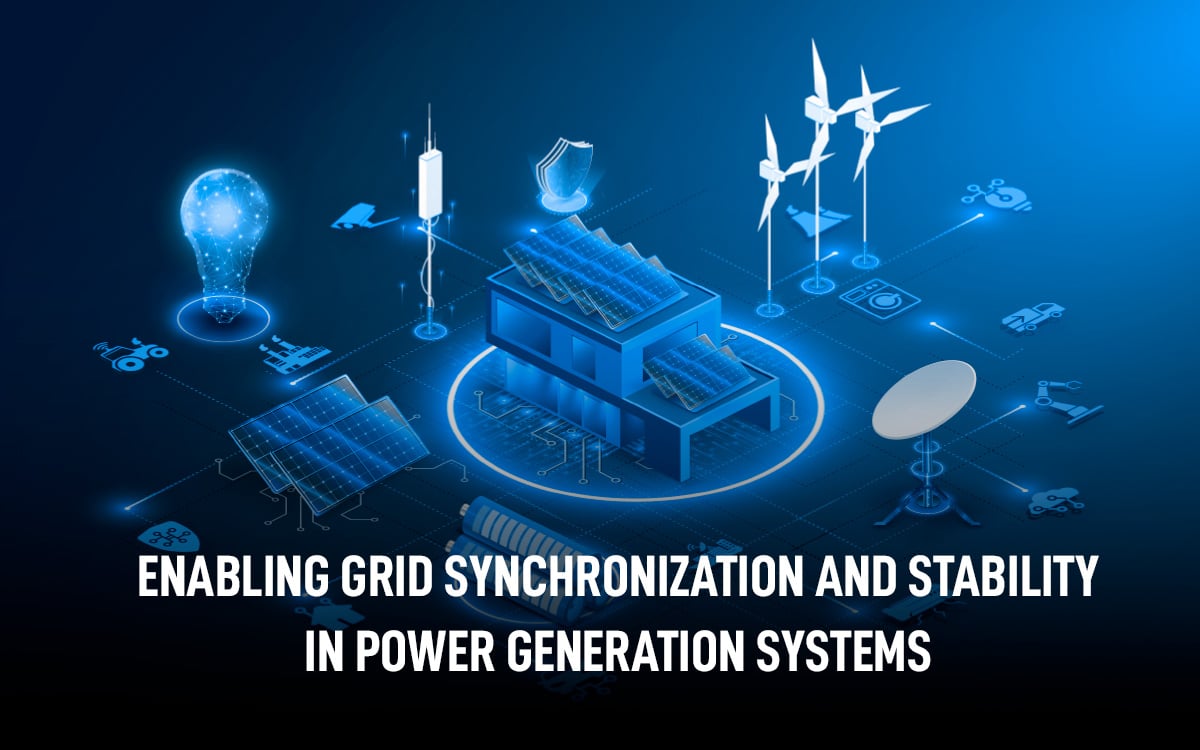
  • enabling grid synchronization and stability in power generation systems
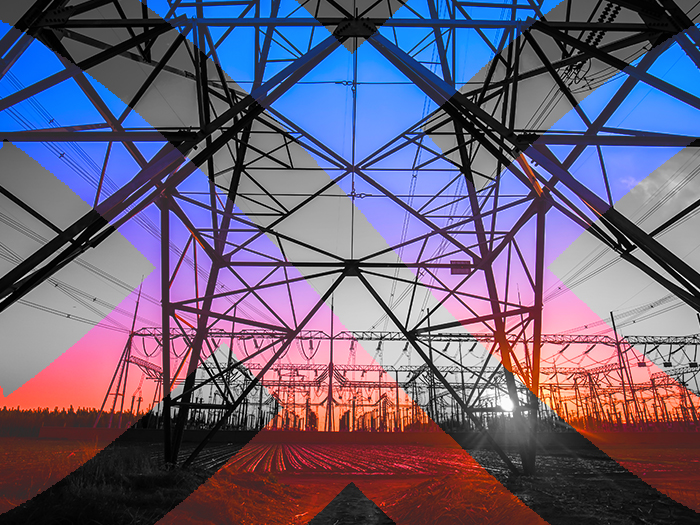
  • energy infrastructure - pylons at sunset
🧵 1/7

1. The Grid's Heartbeat Grid frequency is the rate at which alternating current (AC) changes direction, typically 50 or 60 times per second (Hz)[1][13]. It's a vital sign for the grid's health, reflecting the real-time balance between power generation and consumption[15].

  • Grid Frequency Regulation
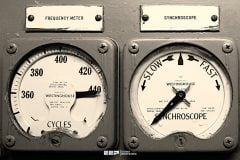
  • Utility frequency - Wikipedia
🧵 2/7

2. The Synchronization Dance Every generator connecting to the grid must perfectly match its frequency, voltage, and phase angle[8]. Once connected, all generators spin in sync, locked together by powerful electromagnetic forces, forming a single massive rotating system[12].

  • Synchronization and Reactive Power Control in Power System
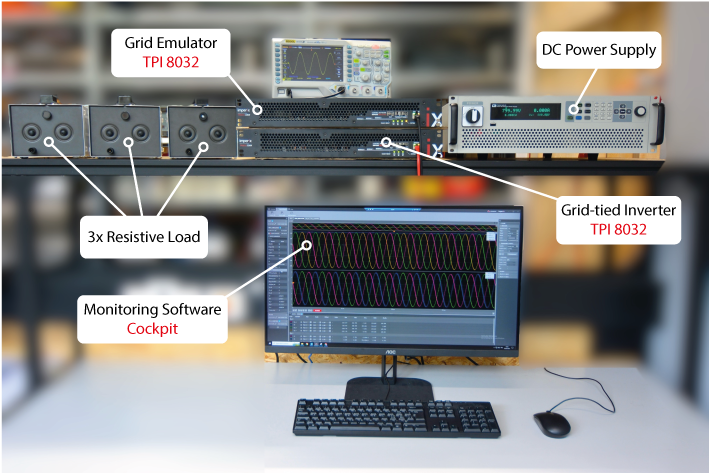
  • Grid synchronization experimental setup
🧵 3/7

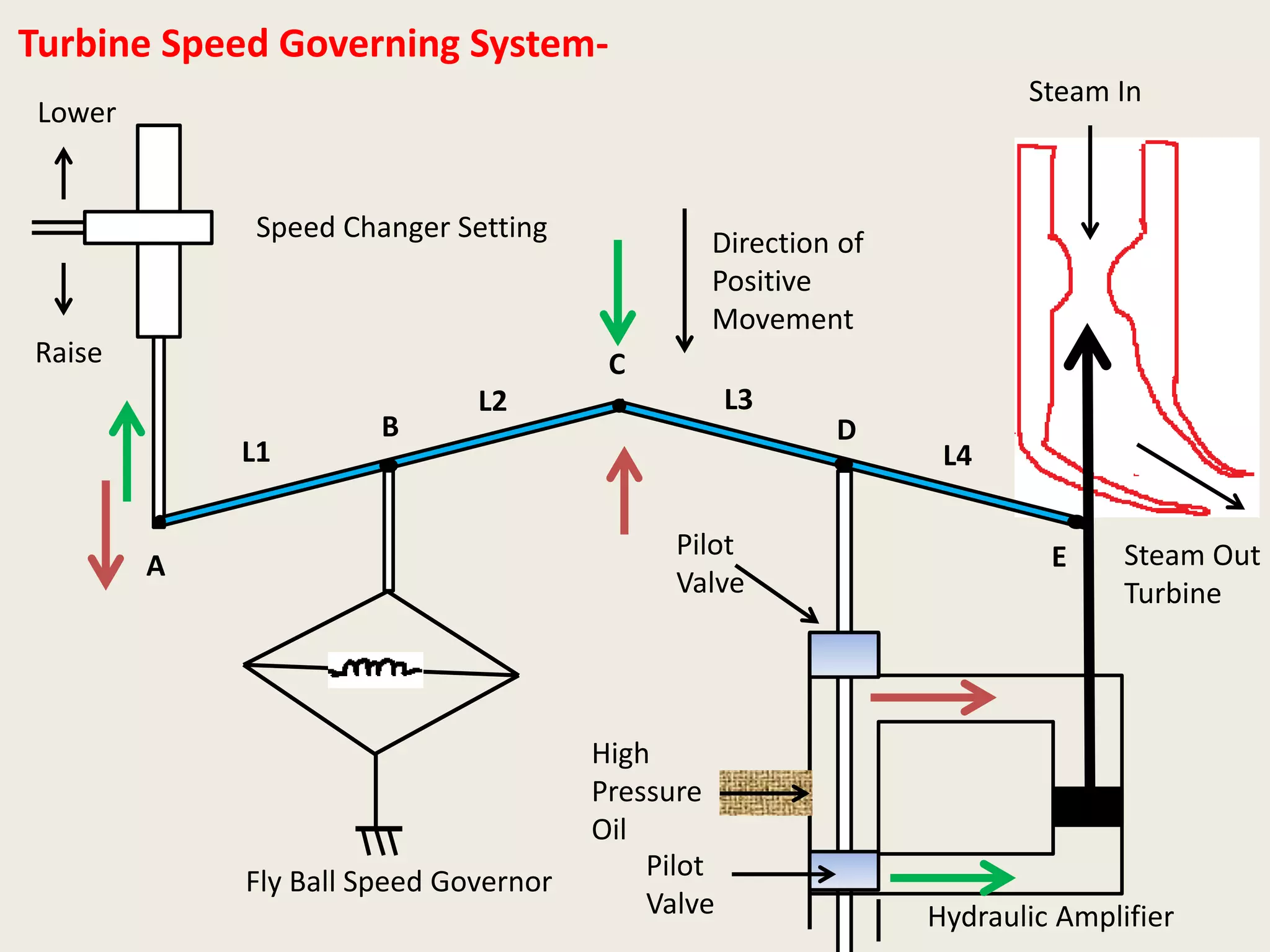
3. The First Line of Defense: Inertia When you turn on an appliance, demand slightly outweighs supply, and the entire grid's frequency begins to drop[4]. The kinetic energy stored in the massive rotating turbines of traditional generators—called inertia—acts as a buffer, slowing this change and buying operators precious seconds to respond[5].

  • Turbine Speed Governing System-
Lower
Raise
Speed Changer Setting
Fly Ball Speed Governor
High
Pressure
Oil
A
B
C
D
Pilot
Valve
Pilot
Valve
Direction of
Positive
Movement
E Steam Out
Turbine
Steam In
L1
L2 L3
L4
Hydraulic Amplifier
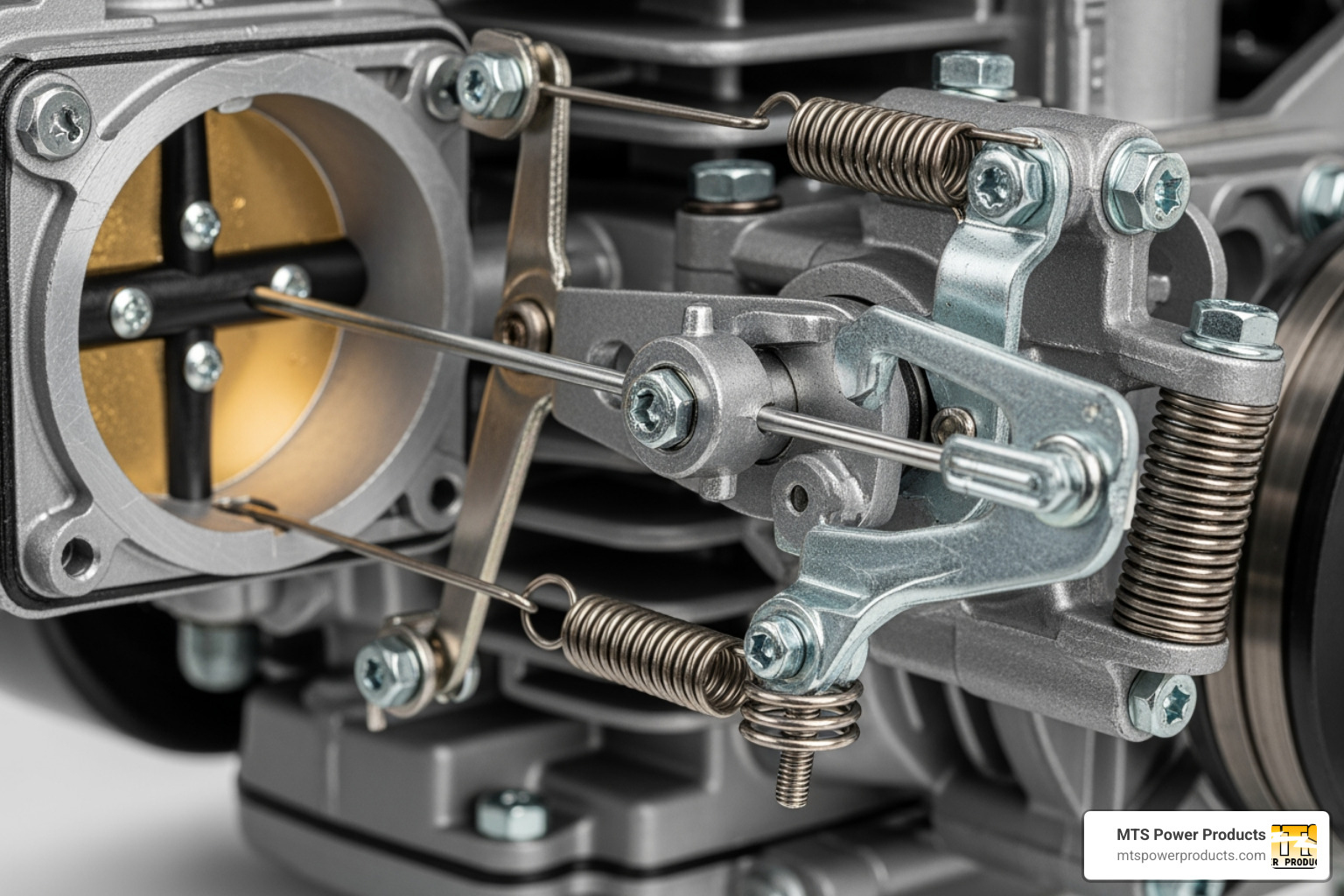
  • adjusting tecumseh governor
🧵 4/7

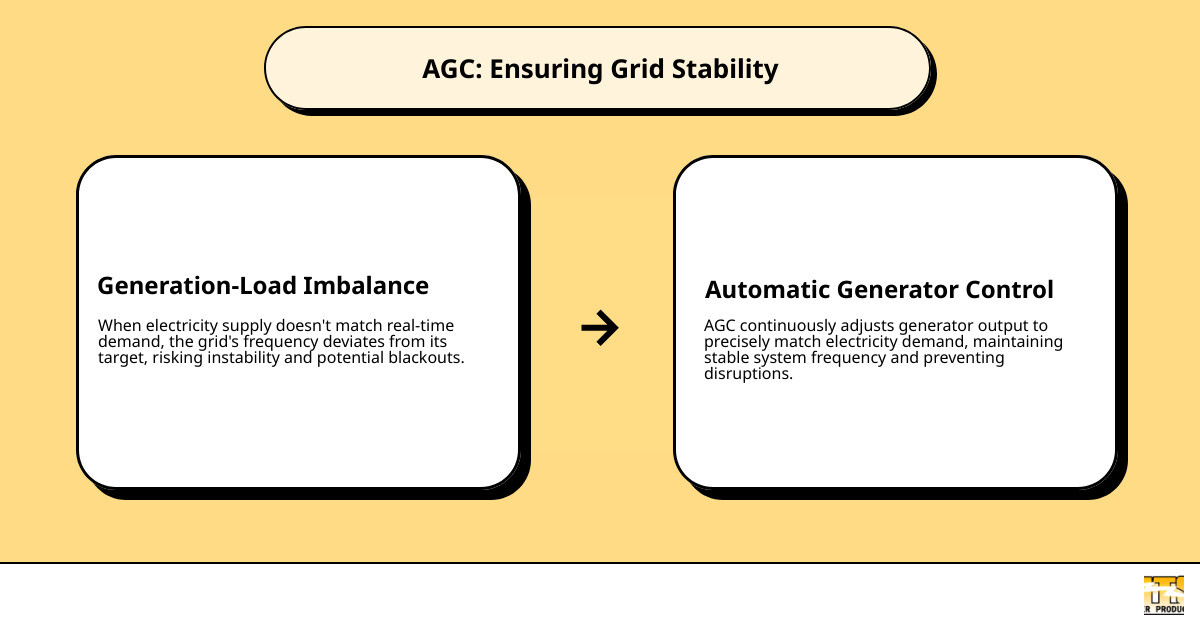
4. The Control System: AGC Automatic Generation Control (AGC) is the brain of the operation[30]. It constantly measures frequency and tells generators to ramp their power output up or down within seconds to restore balance and keep the frequency stable[20][27].

  • Infographic showing how automatic generator control balances power generation and demand using a scale, with generators on one side and electrical load on the other, connected by frequency measurement in the center showing 60 Hz target - automatic generator control infographic cause_effect_text
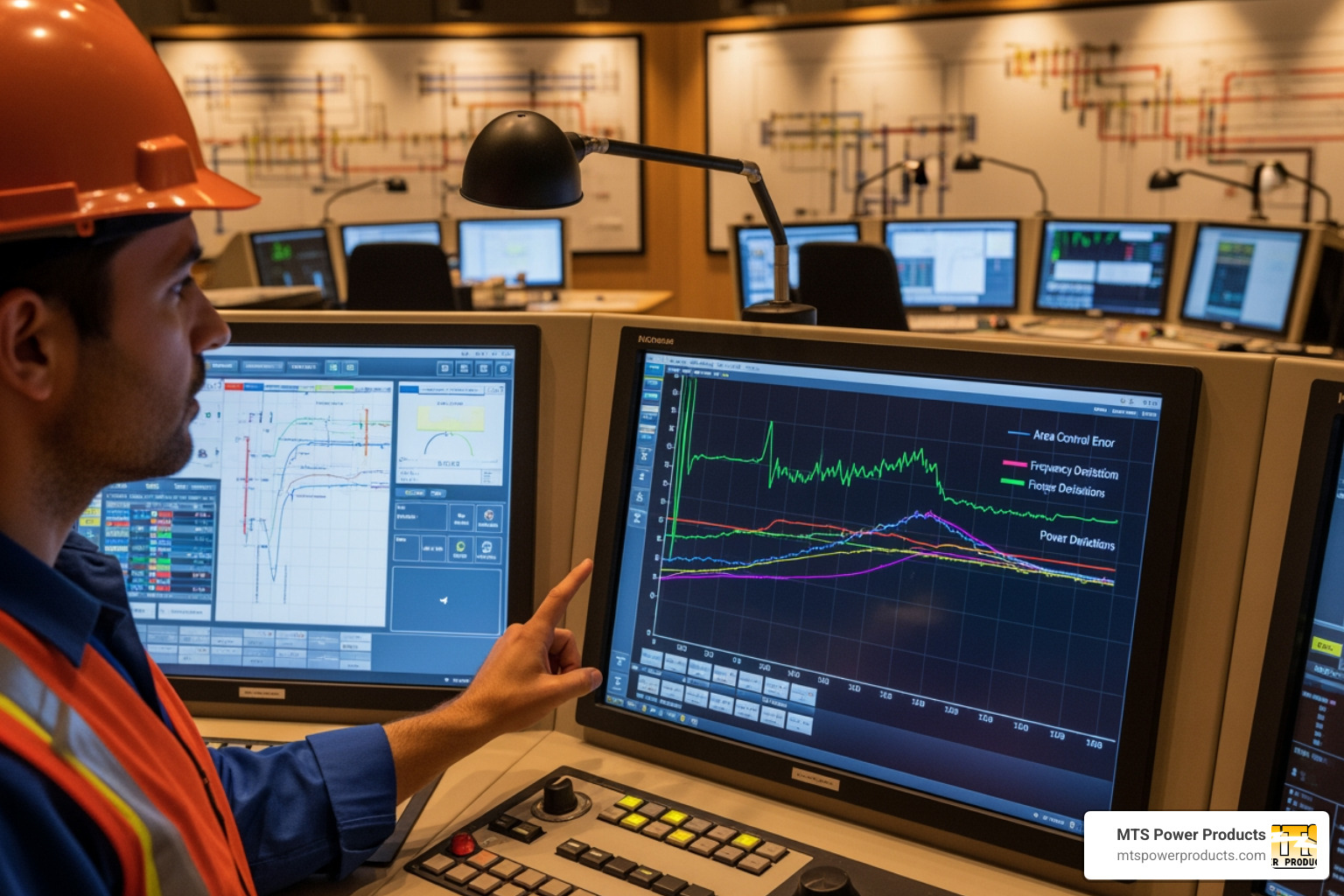
  • Technician examining a control panel with an Area Control Error (ACE) graph displaying frequency and power deviations - automatic generator control
🧵 5/7

5. Why Blackouts Cascade If a major power line or generator fails, its load is instantly shifted to neighboring lines. If they can't handle the surge, their protective relays trip them offline, pushing an even bigger load onto the next lines in a domino effect that can cause a regional blackout in minutes[36].

  • Why do power grid crashes and total blackouts happen?
  • Cascading failure - Wikipedia
🧵 6/7

At home, you'd rarely notice these constant adjustments. But during a major grid disturbance, you might see lights flicker or dim as the system struggles to rebalance before a potential outage. What part of this massive electrical dance surprised you the most?

  • what causes power outages
🧵 7/7