AI Comedians: Adapting to Audiences in Real-Time
Tailoring Performances with AI
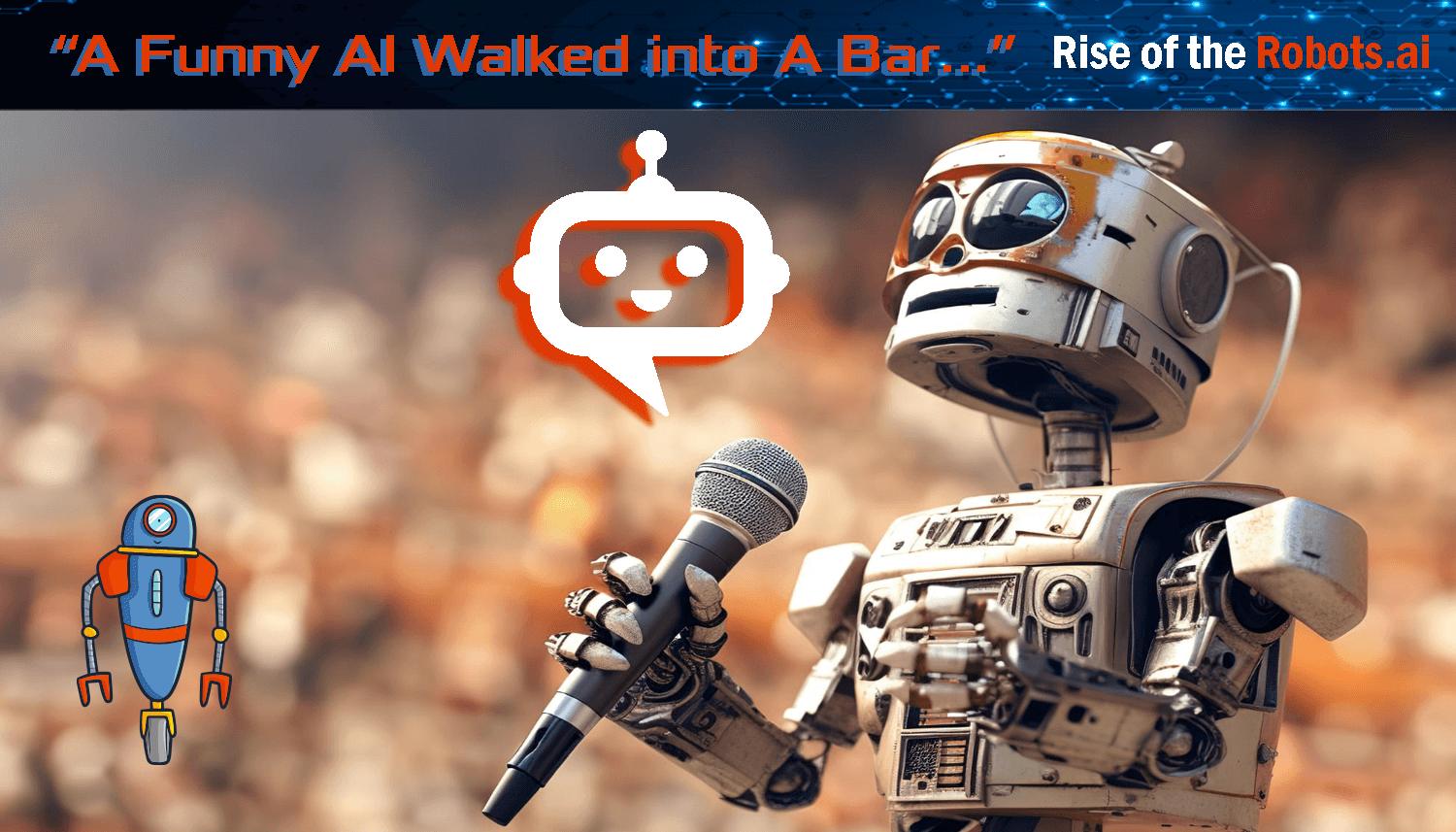
AI comedians are shaking up the stand-up scene with their ability to tailor performances to the audience[1]. By analyzing audience demographics, interests, and even facial expressions, these robo-comedians can adapt their material in real-time to maximize laughter[1]. This level of customization is unparalleled in traditional stand-up comedy, opening doors for highly interactive comedic experiences[1].
Techniques for Live Adaptation

Robo-comedians use several AI techniques to adapt live[1]. These include:
* Natural Language Processing (NLP): Advanced NLP techniques, such as transformer-based language models like GPT-3, enable AI to generate coherent and humorous text[1].
* Speech Synthesis: AI uses speech synthesis to deliver jokes with the right intonation and pacing[1].
* Facial Expression Generation: AI models generate facial expressions to match the comedic content[1].
* Body Language Modeling: AI considers body language for effective delivery[1].
Challenges in Achieving Human-Like Adaptability
Despite advancements, AI still struggles to fully grasp the nuances of live comedy[16]. Key challenges include:
* Understanding subtle cultural contexts: Recognizing what makes specific audiences laugh requires understanding subtle cultural contexts, which is difficult for AI[6][16].
* Lived embodied experience: AI lacks the lived experiences to which humans relate, which often forms the basis of comedy[6].
* Originality: While AI can produce passable, formulaic material by recognizing patterns, truly original and pathbreaking comedy remains beyond its capabilities[16].
* Nuance and Subtlety: Capturing the details and contextual dependencies that make humor effective is difficult for machines[3].
* Cultural and Contextual Details: Humor is inherently connected to cultural and contextual details, posing challenges for AI[3].
AI's Role in Enhancing Human Performances

AI can also assist human comedians in improving their acts[3][16]. By analyzing past performances and audience reactions, AI can:
* Measure laughter levels to assess the effectiveness of jokes[6][16].
* Help create new joke ideas[16].
* Assist with improving performance techniques, such as timing and body language[16].
* Suggest humorous lines or entire scenes, helping writers overcome creative blocks[1].
Tools and Systems for AI Humor Generation
Several AI systems and tools are being developed to generate and refine humor[2][1]. HumorSkills, for example, is a system that uses visual detail extraction, narrative and conflict extrapolation, and fine-tuning to generate humorous image captions[2]. The process involves:
-
Visual Detail Extraction: AI describes the image in detail[2].
-
Visual Humor Ideation: AI identifies potential humorous elements in the image[2].
-
Narrative and Conflict Extrapolation: AI generates a narrative and conflict framework based on relatable experiences[2].
-
Humorous Caption Generation: AI generates captions focused on visual humor or external narratives[2].
-
Caption Ranking: An AI agent ranks captions based on humor, relatability, and alignment with the image and narrative[2].
The Importance of Data and Algorithms
The quality and quantity of data play a crucial role in the performance of AI humor models[1][3]. Datasets can be sourced from joke websites, comedy shows, and social media platforms[1]. Key algorithms include:
* Recurrent Neural Networks (RNNs): Models like Long Short-Term Memory (LSTM) networks capture the structure of jokes[1].
* Transformer-Based Models: Models like GPT (Generative Pre-trained Transformer) capture complex patterns and dependencies in the input text[1].
* Generative Adversarial Networks (GANs): GANs consist of a generator and a discriminator that refine AI-generated humor through iterative feedback[1].
Evaluation of AI-Generated Humor
Evaluating AI-generated humor poses unique challenges, as humor is subjective and context-dependent[1]. Evaluation methods include:
* Turing Test of Comedy: Human judges rate the funniness of jokes without knowing whether they were generated by an AI or a human[1].
* Metrics: Precision, recall, and F1-score evaluate model performance, along with human ratings of funniness, surprise, and coherence[1].
* Intrinsic Evaluation Methods: Perplexity and BLEU score measure the fluency and similarity of the generated text to reference text[1].
* Humor Detection Metrics: Employing scoring methods like fuzzy string matching, sentence embeddings, and subspace similarity to assess LLMs performance in extracting humor from stand-up comedy transcripts[4].
Ethical Considerations

As AI-generated humor becomes more prevalent, ethical considerations must be addressed[15][13]. These include:
* Impact on Human Comedians: Addressing concerns about job displacement by adopting hybrid models that combine AI and human strengths[1].
* Inclusive and Non-Offensive Humor: Ensuring that AI models are trained on datasets free of biased or offensive content[1].
* Intellectual Property and Joke Ownership: Addressing the complexities of IP and joke ownership as AI-generated humor gains prominence[1].
Future Directions and the Blending of Human and Artificial Wit
The future of AI in comedy involves a blend of technological advancement and human collaboration[14][17]. Key areas of exploration include:
* Virtual and Augmented Reality (VR/AR): Creating innovative and engaging comedic experiences in immersive environments[1].
* Fostering Creativity: Using AI-generated jokes as inspiration for human comedians[1].
* Democratizing Comedy: Lowering barriers to entry for aspiring comedians by providing access to jokes and comedic material[1].
As AI continues to evolve, the ability to create and appreciate humor will provide unique insights into machine intelligence and its relationship with human culture[5][7][8][9][10][11][12].
Get more accurate answers with Super Pandi, upload files, personalized discovery feed, save searches and contribute to the PandiPedia.
Let's look at alternatives:
- Modify the query.
- Start a new thread.
- Remove sources (if manually added).