Let's look at alternatives:
- Modify the query.
- Start a new thread.
- Remove sources (if manually added).
 Curated by Joan


Science can amuse and fascinate us all, but it is engineering that changes the world.
Isaac Asimov[1]

The engineer has been, and is, a maker of history.
James Kip Finch[1]
Scientists study the world as it is; engineers create the world that has never been.
Theodore von Karman[5]

Strive for perfection in everything you do. Take the best that exists and make it better.
Sir Henry Royce[1]

Innovation is the creation of the new or the rearranging of the old in a new way.
Michael Vance[5]
Let's look at alternatives:
- Modify the query.
- Start a new thread.
- Remove sources (if manually added).


Get more accurate answers with Super Pandi, upload files, personalised discovery feed, save searches and contribute to the PandiPedia.









Let's look at alternatives:
- Modify the query.
- Start a new thread.
- Remove sources (if manually added).


In the name of all Indians... we reclaim this island for our Indian nations.
Richard Oakes[2]
This is our land! All of it!
Unknown[1]
We will purchase said Alcatraz Island for $24 in glass beads and red cloth.
Richard Oakes[6]
We fear that the old Indian ways may be lost.
LaNada Means[5]
We will become an international outlet worldwide for authentic Indian art.
LaNada Means[1]
Let's look at alternatives:
- Modify the query.
- Start a new thread.
- Remove sources (if manually added).



The depth and layering in Frutiger Aero visuals create an ethereal sense of space and transparency, essential to the aesthetic. This is achieved through a deliberate mix of materials, such as frosted glass combined with high-gloss finishes, which adds tactile richness and visual interest. The use of ambient lighting, including hidden LED strips, enhances the floating quality by casting soft reflections and creating dynamic zones within a space[3].
Additionally, the incorporation of biomorphic curves in furniture and design elements contributes to a fluid, organic feel. Layering these curved, glossy surfaces produces a harmonious balance, inviting interaction while maintaining the high-tech aesthetic that Frutiger Aero embodies[3].
Let's look at alternatives:
- Modify the query.
- Start a new thread.
- Remove sources (if manually added).

Let's look at alternatives:
- Modify the query.
- Start a new thread.
- Remove sources (if manually added).
Get more accurate answers with Super Pandi, upload files, personalised discovery feed, save searches and contribute to the PandiPedia.
Let's look at alternatives:
- Modify the query.
- Start a new thread.
- Remove sources (if manually added).




Modernist literature, which arose in the late 19th and early 20th centuries, is distinguished by a significant departure from traditional narrative methods and forms. This experimental movement aimed to capture the complexities of modern life and the human psyche by innovating both form and content.
Key Characteristics
Experimental Forms and Techniques
Modernist literature is marked by its experimental forms and narrative techniques. Writers like James Joyce and Virginia Woolf pioneered the use of stream-of-consciousness, a narrative device that attempts to capture the character's thought processes in a flowing, uninterrupted manner as opposed to linear storytelling. This method often results in fragmented and non-linear narratives that mimic the inner workings of the human mind[1][2][4][6].
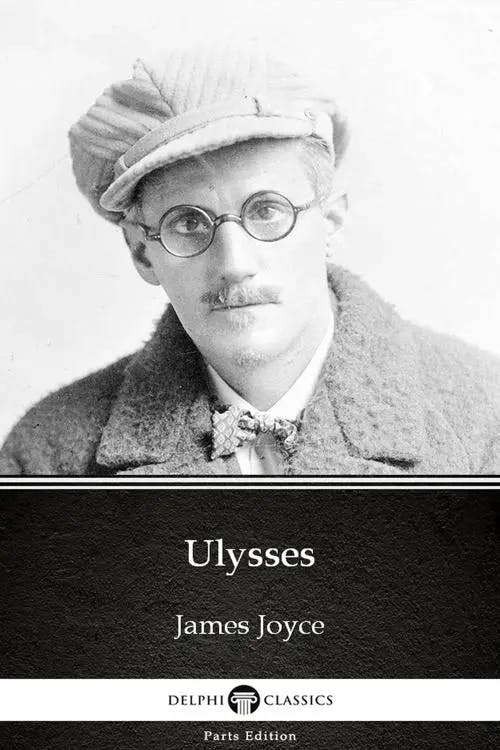
Virginia Woolf's novels, such as 'Mrs. Dalloway' and 'To the Lighthouse,' are notable examples of this technique, where the focus is on the character's internal experiences rather than external action[1][2][4]. Similarly, James Joyce's 'Ulysses' employs a complex narrative structure to depict the protagonist's experiences across a single day[1][3][4].
Rejection of Traditional Plot Structures
Modernists frequently rejected traditional plot structures and embraced a fragmented form that reflected the chaotic nature of modern existence. The narrative might shift in time, perspective, and even reality, leaving readers with an ambiguous or open-ended conclusion. This can be seen in T. S. Eliot's 'The Waste Land,' which uses a fragmented structure to depict the disillusionment and disorder of the post-World War I era[1][2][4].
Focus on Subjectivity and Inner Experience
Another defining feature of modernist literature is its focus on subjectivity and inner experience. Modernist writers explored the depths of individual consciousness, often highlighting the multiplicity of perspectives within a single narrative. This is demonstrated in the works of Woolf and Joyce, where the inner lives of characters are presented as fragmented and multifaceted[1][2][4].
Themes of Disillusionment and Alienation
Modernist literature often grapples with themes of disillusionment and alienation, reflecting the socio-political upheaval and the impact of World War I. Writers like Franz Kafka depicted individuals trapped in oppressive, absurd realities, as seen in 'The Metamorphosis' and 'The Trial'[1][4][5]. Similarly, Eliot's 'The Waste Land' presents a bleak vision of a disintegrated world, mirroring the pervasive sense of futility and despair[1][4][7].
Disruption of Time and Space
Reflecting the impact of theories such as Einstein’s relativity, modernist literature frequently disrupts traditional notions of time and space, presenting them as fluid and subjective. Narratives move freely between past, present, and future, often blending these temporal states into a single moment. This can be seen in Marcel Proust's 'In Search of Lost Time,' where involuntary memory triggers, such as the taste of madeleine dipped in tea, collapse chronological time into a single experience[2][4].
Use of Myth and Symbols
Many modernist works employ mythological and symbolic references to convey deeper meanings and connect contemporary themes with historic and universal human experiences. T. S. Eliot's 'The Waste Land' uses allusions to works from various cultures and religions to create a complex web of meanings, thereby enriching the modern context with historical depth[1][3][7].
Language and Form
Modernist writers experimented with language, often highlighting its limitations and ambiguities. This is exemplified by the use of fragmented syntax, varying narrative voices, and the blending of poetic and prose forms. Gertrude Stein's abstract writing, for example, strips language to its bare essentials, challenging readers to derive meaning from unconventional structures[1][2][3].
Urban and Technological Modernity
Modernist literature often reflects the rapid changes brought about by urbanization and technological advancements. The city serves as a central setting and a symbol of modern life’s alienation and fragmentation. Authors like Eliot and Kafka explore how industrialization and urban living reshape human experience and relationships. The portrayal of the city as a complex, multifaceted environment exemplifies modernist concerns with the new socio-economic realities[1][4][6].
Mistrust of Institutions
A profound mistrust of institutions such as government, religion, and traditional social norms is another hallmark of modernist literature. Modernist writers frequently questioned and critiqued these structures, representing them as oppressive or irrelevant in the face of modern realities. This is seen in the works of authors like Kafka, who portrayed bureaucratic systems as alienating and absurd[1][4][6].
Notable Modernist Writers and Their Contributions
Several key figures stand out in the modernist movement, each contributing uniquely to its development. Ezra Pound's call to 'Make it new' encapsulates the modernist ethos of innovation and experimentation[1][2][5]. Virginia Woolf and James Joyce explored stream-of-consciousness techniques to delve into the intricacies of human thought and experience[1][2][4]. T. S. Eliot’s poetry, including 'The Waste Land,' and Franz Kafka’s existential explorations in 'The Metamorphosis' and 'The Trial' exemplify modernist themes of disillusionment and alienation[1][4][6].
Conclusion
Modernist literature represents a radical break from past conventions, embracing experimentation, fragmentation, and a focus on subjective experience to portray the complexities of modern life. Its themes of alienation, disillusionment, and skepticism of traditional institutions have left a lasting impact on the literary world, challenging readers to engage with texts in new and profound ways.
Let's look at alternatives:
- Modify the query.
- Start a new thread.
- Remove sources (if manually added).
 Curated by Joan


Elon Musk aims to simulate software companies using only AI.
Macrohard is a tongue-in-cheek reference to Microsoft.
Musk's AI startup xAI is developing Macrohard.
Macrohard aims to integrate AI into coding and management tasks.
Musk has a history of building innovative companies.
Let's look at alternatives:
- Modify the query.
- Start a new thread.
- Remove sources (if manually added).





Let's look at alternatives:
- Modify the query.
- Start a new thread.
- Remove sources (if manually added).