Discover Pandipedia
A growing directory of useful answers selected by the Pandi community. Search the collection or browse the latest discoveries.
3439 entries available
Generate a short, engaging audio clip from the provided text. First, summarize the main idea in one or two sentences, making sure it's clear and easy to understand. Next, highlight one or two interesting details or facts, presenting them in a conversational and engaging tone. Finally, end with a thought-provoking question or a fun fact to spark curiosity!
Transcript
Did you know that Google is constantly enhancing its search quality to better serve users? Since the launch of RankBrain in 2015, search has dramatically improved, making you wonder what it will be like in another ten years. Plus, Google's interaction with users helps it learn and evolve—ever had that feeling when Google seems to read your mind? With every search, it's piecing together knowledge to provide the best results. Interestingly, Google pays Apple billions to remain the default search engine on Safari, a move that raises questions about competition in the market. And while Google does show ads, research indicates that users actually prefer well-matched ads when they're looking for deals. Can you imagine what the future holds for search engines and online advertising?
Let's look at alternatives:
- Modify the query.
- Start a new thread.
- Remove sources (if manually added).
What is bing's #1 search term?
According to the document, the number one search term on Bing is Google. As stated in the text, 'The number one search term on Bing is Google.'
Let's look at alternatives:
- Modify the query.
- Start a new thread.
- Remove sources (if manually added).
Create your account to shape this feed around what you search for and enjoy.
The Early Audience of Google: Academic Researchers and Students

The first users of Google were primarily academic and research-focused individuals, particularly at Stanford University, where it was developed. Larry Page and Sergey Brin, the co-founders, were PhD students who initially created the search engine for their own use and other university-related projects. As they tested their algorithm, the search engine quickly attracted fellow students and faculty at Stanford, who were interested in its innovative capabilities compared to other existing search engines like Yahoo! and Bing[1][2][3].
By late 1998, Google was processing searches not just for academic purposes but for a growing number of users attracted by its simplicity and effectiveness. The early user base largely consisted of tech-savvy individuals involved in research and academia[4][5].
Let's look at alternatives:
- Modify the query.
- Start a new thread.
- Remove sources (if manually added).

What are the main USP of the getliner app?

The main unique selling propositions (USPs) of the Liner app include its capability to provide precise, line-by-line accurate search results and summaries of web pages, PDFs, and videos, making complex information easier to digest[1][3]. Liner is specifically designed for professionals and researchers, offering features like Scholar Mode, which focuses on delivering answers from academic sources only, thereby enhancing the reliability of information[3].
Additionally, Liner integrates GPT-4 technology to facilitate deep research, including instant answers to queries and the ability to manage extensive documents efficiently[1][2]. Its user-centric design streamlines the research process, saving users valuable time while ensuring they access credible sources[3].
Let's look at alternatives:
- Modify the query.
- Start a new thread.
- Remove sources (if manually added).
Summarize the contribution of- Wessel, L., Baiyere, A., Ologeanu-Taddei, R., Cha, J., & Blegind Jensen, T. (2020). Unpacking the difference between digital transformation and IT-enabled organizational transformation. Journal of the Association for Information Systems, 22(1). https://doi.org/10.17705/1jais.00655
The study by Wessel et al. (2020) contributes to the understanding of digital transformation by distinguishing it from IT-enabled organizational transformation. They integrate literature from organization science and information systems with longitudinal case studies to develop a conceptualization that highlights two key differences: first, digital transformation activities leverage digital technology to (re)define an organization’s value proposition, while IT-enabled transformation supports the existing value proposition.
Second, digital transformation leads to the emergence of a new organizational identity, whereas IT-enabled transformation enhances an existing identity. The authors synthesize these differences into a process model, providing a framework for understanding various types of transformations and suggesting avenues for future research[1].
Let's look at alternatives:
- Modify the query.
- Start a new thread.
- Remove sources (if manually added).
Why do we feel hungry after waking up from a nap?

Feeling hungry after waking up from a nap can be attributed to several factors involving hormones and sleep quality. While you sleep, your hormone levels shift; for example, growth hormone, which increases during naps, signals the body to seek more energy intake through food for repair[2]. Additionally, inadequate sleep can elevate ghrelin, the hunger hormone, and lower levels of leptin, which suppresses appetite[1][2].
Moreover, low blood sugar levels, caused by factors like skipping meals or stress, can lead to increased feelings of hunger post-nap. As your body tries to stabilize blood sugar, it may send hunger signals even after a short sleep[2][3][4].
Let's look at alternatives:
- Modify the query.
- Start a new thread.
- Remove sources (if manually added).
Create your account to shape this feed around what you search for and enjoy.
Why do people use Google instead of others?
People use Google instead of other search engines for several reasons, primarily its reputation for providing relevant and reliable results. Google has built a significant level of trust among users, making it synonymous with online searching, where the term “Google” itself has become a verb for searching the web[1]. Its minimalist design and user-friendly interface allow users to focus on their searches without distractions, enhancing the overall experience[2].
Moreover, Google continually updates its algorithms to improve search accuracy, processing around 20 petabytes of data daily, which contributes to users receiving precise and relevant information quickly[2]. This efficiency and consistency foster a strong preference for Google over competitors like Bing or Yahoo, which may have less straightforward functionalities and interface designs[1][2].
Let's look at alternatives:
- Modify the query.
- Start a new thread.
- Remove sources (if manually added).
The Potential of AI in Mental Healthcare: A Comprehensive Analysis
AI as a Complement, Not a Replacement, for Human Therapists


AI in therapy is not designed to replace human counseling or in-person treatment offered by certified therapists but to effectively supplement traditional therapy[4]. AI has numerous benefits that can supplement the work of human therapists and other professionals[4]. The quality of the therapeutic relationship and recovery outcomes for patients are significantly affected by humanistic care[9]. AI is envisioned not as a replacement for human therapists but as a powerful tool that extends the reach of mental health services[2]. By augmenting traditional mental health care, AI can offer scalable and cost-effective solutions that reduce barriers such as cost, stigma, and logistical challenges[2]. The integration of AI in Psychotherapy promises transformative advancements in mental health care, each highlighted by recent research; however, it emphasizes the need for stringent ethical standards[2]. Ethical and practical considerations underscore the importance of using AI responsibly in mental health care[6]. While AI offers exciting possibilities, it must be implemented with caution, guided by comprehensive ethical standards and regulatory oversight to protect users and uphold the integrity of mental health care[6].
The Strengths of AI in Mental Health Support
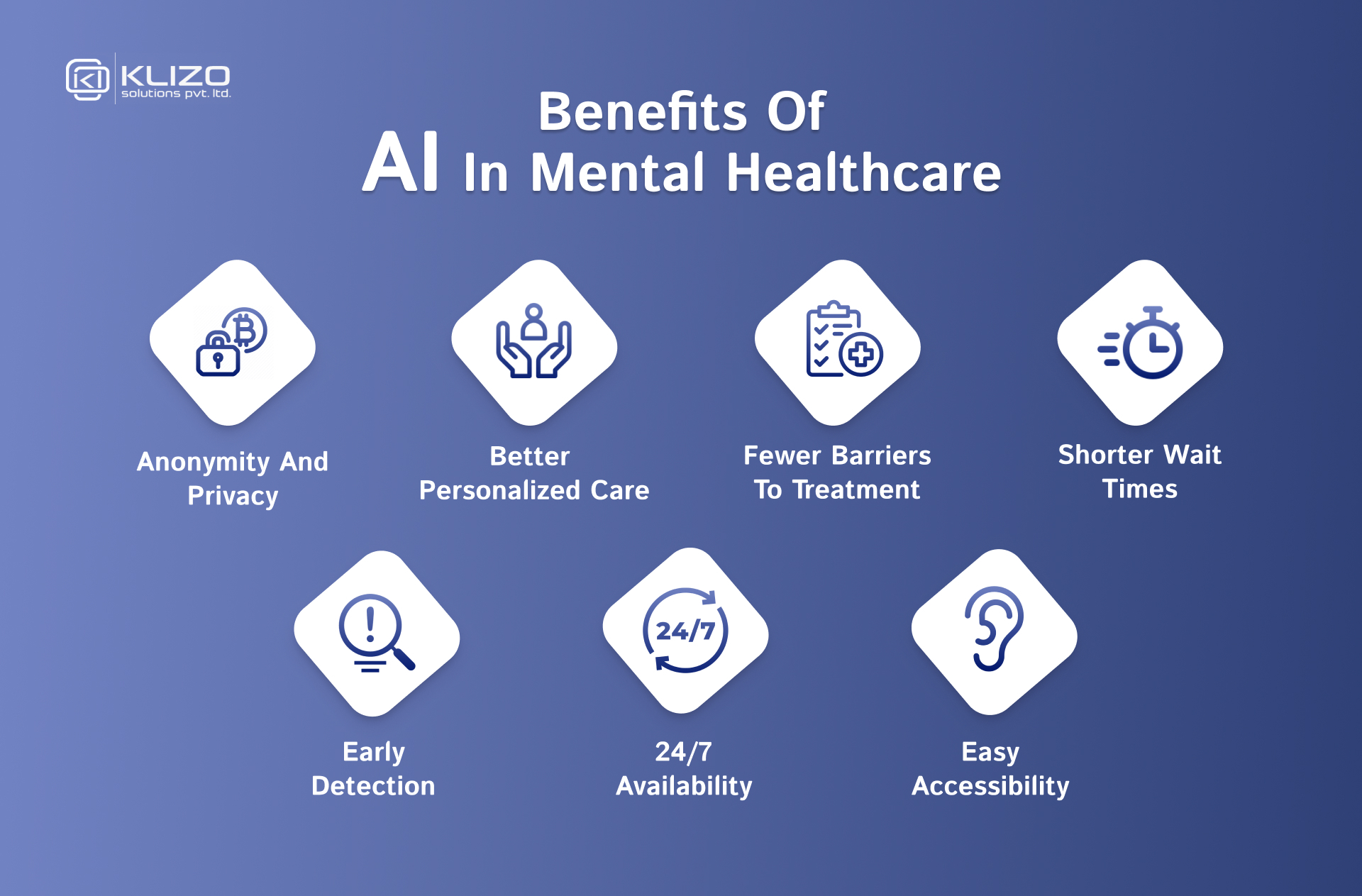

AI offers strengths in mental health care, including accessible, data-driven support[6]. One of AI's advantages is its 24/7 availability[6]. AI-driven therapy leverages advanced algorithms and data analysis to provide mental health support[1]. Platforms utilize mood tracking, journaling, and AI-powered chatbots to offer guidance and support[1]. Some of the boons of AI include data-driven insights, non-judgmental support, convenience, affordability, and immediate support[1]. AI algorithms can analyze large amounts of data, including patient history, symptoms, and other relevant information, to identify patterns that may not be evident to a human clinician[7].
AI-driven interventions can reduce healthcare costs, making mental health care more affordable and accessible[2]. Studies have shown that individuals are sometimes more willing to disclose sensitive information to AI systems due to the perceived non-judgmental nature of machines[2]. This phenomenon can lead to more honest exchanges during therapy sessions, allowing for more accurate assessments and potentially more effective treatment[2]. Also, AI systems offer a level of consistency in mental health care delivery that human practitioners can find challenging to achieve due to natural variations in mood, fatigue, and personal bias[2]. These systems can be programmed to ignore irrelevant factors such as race, gender, or socio-economic status, promoting a more equitable healthcare environment[2].
Limitations Preventing AI from Replacing Human Therapists

AI has significant limitations that prevent it from fully replacing human therapists[6]. One major limitation is AI's lack of genuine empathy, cultural sensitivity, and deep understanding[6]. AI systems lack genuine empathy and the ability to form deep emotional connections with patients[2]. Human therapists use their own emotional understanding to build trust and rapport, which is fundamental in therapy[2]. AI cannot authentically replicate this emotional resonance, as it does not experience emotions[2]. The design and implementation of AI in healthcare must prioritize ethical considerations, including strategies to mitigate bias, ensure transparency, and maintain patient trust[2]. Algorithmic bias is a critical concern in the application of AI to mental health care[2].
AI systems still face significant challenges with long-term memory retention and integration[2]. Algorithmic bias is a critical concern in the application of AI to mental health care[2]. Studies have indicated that the initial benefits of AI-driven interventions often diminish over time, with no significant long-term improvements observed[2]. Moreover, AI may not fully grasp cultural nuances, potentially leading to misunderstandings[2].
Ethical Considerations and the Future of AI in Mental Health

Integrating AI into mental health care brings about ethical and practical considerations. As AI tools play a more active role, issues around informed consent, data use, and boundary-setting become crucial[6]. Users may not fully understand the extent to which their personal information is collected, analyzed, or shared by AI systems[6]. There is a pressing need for regulation, transparency, and standardized guidelines to govern the use of AI in mental health care[6]. The development and deployment of AI technologies in mental health must adhere to ethical principles that respect the dignity and autonomy of patients[7].
As AI becomes integrated into mental health care, it is essential to recognize and address its limitations[2]. Challenges related to memory retention, algorithmic bias, and ethical considerations underscore the need for a balanced approach[2]. The integration of AI into mental health services offers promising avenues for enhancing care delivery and improving treatment efficacy and efficiency[2]. By augmenting traditional mental health care, AI can offer scalable and cost-effective solutions that reduce barriers such as cost, stigma, and logistical challenges[2]. Ethical concerns include potential harm to the public, perpetuating bias, data protection and privacy concerns, and questions around transparency, accountability, and liability[5]. Integration of AI into mental healthcare and mental health therapy represents a promising frontier in healthcare[3]. While AI holds the potential to revolutionize mental healthcare, responsible and ethical implementation is essential[3].
Blending AI and Human Expertise for Enhanced Care
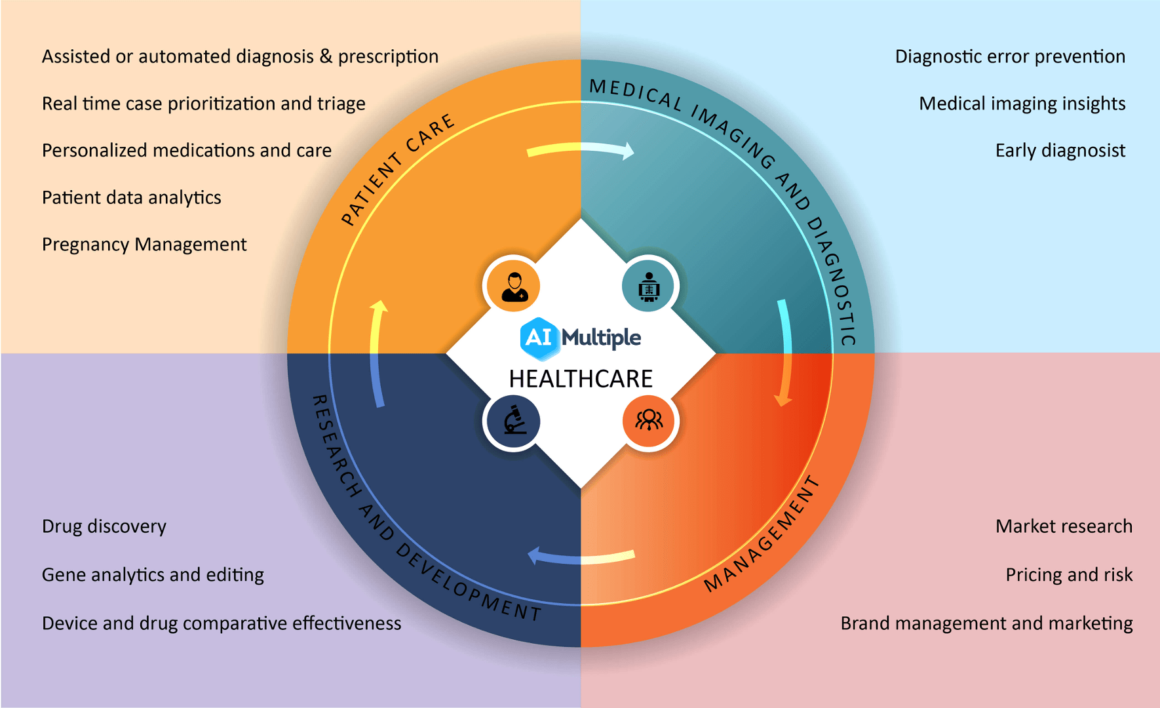

AI may play an important role in supporting psychotherapy, particularly in addressing the global mental health service gap where access to trained professionals is limited[2]. AI is envisioned not as a replacement for human therapists but as a powerful tool that extends the reach of mental health services[2]. Ultimately, AI has an important role in the future of mental health, but it’s a complementary one[6]. By working alongside therapists, AI can serve as a valuable tool to enhance mental health support[6]. AI brings an element of anonymity and safety, and it can act like a stepping stone for patients who are perhaps uneasy about getting traditional therapy[8].
In this emerging paradigm, AI is envisioned not as a replacement for human therapists but as a powerful tool that extends the reach of mental health services[2]. In this way, AI has immense potential as a supportive tool in mental health, offering accessible resources and data-driven insights to complement traditional therapy[6]. Authentic empathy, relational dynamics, and the deep personal connection between client and therapist are at the heart of effective therapy, which AI cannot replicate[6].
Let's look at alternatives:
- Modify the query.
- Start a new thread.
- Remove sources (if manually added).
The application for a 5-year multiple entry UAE tourist visa requires the applicant to demonstrate financial stability through a bank statement. Specifically, the applicant must provide proof of a minimum balance of 4,000 USD or its equivalent in other currencies over the last six months.This rule means that at any point during these six months, the average balance should not drop below this amount. Therefore, contrary to potential misinterpretation, it is not necessary to maintain exactly 4,000 USD per month but rather ensure that the total over the period shows consistent financial stability around this threshold.

The visa requirement means that when you apply for the 5‐year multiple entry UAE tourist visa, you must provide a bank statement covering the last six months that shows you consistently have at least USD 4,000 (or its equivalent in another currency) in your account. In other words, it is not required that you strictly maintain exactly USD 4,000 every month; instead, your overall financial record during those six months should demonstrate stable funds around this threshold without significant dips below that level[1][2][3][4].
Let's look at alternatives:
- Modify the query.
- Start a new thread.
- Remove sources (if manually added).
Time Travel Among the Stars?
Let's look at alternatives:
- Modify the query.
- Start a new thread.
- Remove sources (if manually added).