Discover Pandipedia
A growing directory of useful answers selected by the Pandi community. Search the collection or browse the latest discoveries.
3437 entries available
What is the Eddystone Lighthouse?
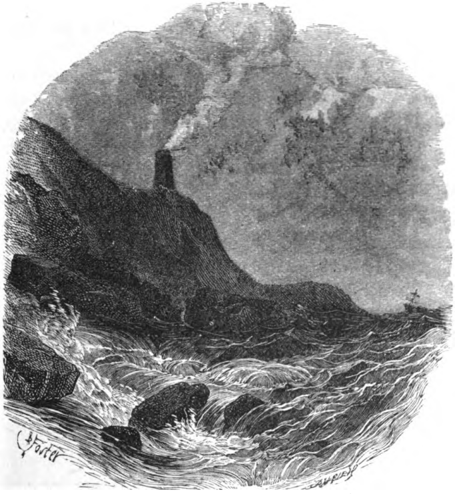
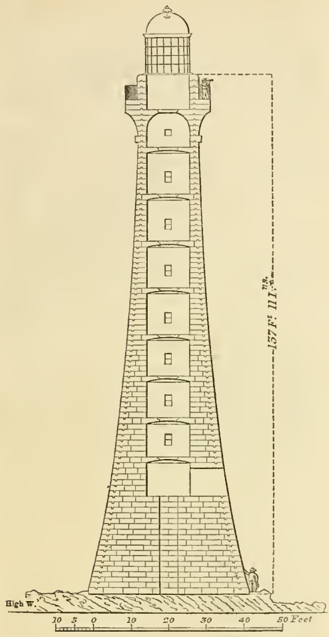
The Eddystone rocks, lying about 14 miles off the harbour of Plymouth, are fully exposed to the south-western seas[1]. In 1696, Mr. Henry Winstanley undertook to erect a tower on the Eddystone[1]. On the 26th of November 1703, during the greatest British storm of which we have any record, the structure disappeared[1].
In 1706, a lease of 99 years was given by the Trinity House of London to a Captain Lovet, who was to erect another tower on this rock[1]. In August 1756, Smeaton commenced building a stone tower, adopting dovetailed joints for the stones[1].
Let's look at alternatives:
- Modify the query.
- Start a new thread.
- Remove sources (if manually added).
Quiz on technological innovations in lighthouse illumination
Let's look at alternatives:
- Modify the query.
- Start a new thread.
- Remove sources (if manually added).
Create your account to shape this feed around what you search for and enjoy.
What duties are critical for lighthouse keepers' daily routine?
The daily routine of lighthouse keepers involves several critical duties. They cleanse and prepare the apparatus for nocturnal illumination[1]. Also, they must mount guard alternately after the light is exhibited[1]. The most important part of lighthouse keeper's duty is to 'light the lamps every evening at sun-set-ting, and keep them constantly burning, bright and clear, till sun-rising'[1].
Lighthouse keepers are instructed to acquire a thorough knowledge of the equipment used such as lamps, oil, wicks, lighting apparatus, and revolving machinery[1]. Cleanliness is extremely important, and all parts of the apparatus must be carefully freed from dust[1]. Two keepers are to be on duty, and there must be no excuse for disobeying this regulation[1].
Let's look at alternatives:
- Modify the query.
- Start a new thread.
- Remove sources (if manually added).
Quotes about dedication and life of lighthouse keepers

But it may reasonably be doubted whether the general public have any correct idea of its completeness...or of the engineering skill which has been so successfully exercised.W.H.Davenport Adams[1]

It isthepharos which attracts oursteps, and induces ustoascend thesteep acclivity.W.H.Davenport Adams[1]

In their indolence to search out thetruth, they accept atonce allthefables andexaggerations forced upon their notice.Thucydides[1]

Men receive with indifference from oneanother ,andwithout examination ,thetraditions of past events .Thucydides[1]
TheRhodes isthecolossal statue oftheSun, placed ona marble column, with achariot drawn byfour horses .Lucius Ampellius[1]
Let's look at alternatives:
- Modify the query.
- Start a new thread.
- Remove sources (if manually added).
Latest Tech Gadgets of 2025
Let's look at alternatives:
- Modify the query.
- Start a new thread.
- Remove sources (if manually added).

Food Allergy Scanner Apps
Let's look at alternatives:
- Modify the query.
- Start a new thread.
- Remove sources (if manually added).
Create your account to shape this feed around what you search for and enjoy.
Engineering legends: Quotes from the Stevenson family
The first lighthouse of modern days which merits attention is the Tour de Corduan.Alan Stevenson[1]
The Eddystone lighthouse was a work of very great difficulty.Alan Stevenson[1]
The dangerous reef called the Inch Cape was well known to the earliest navigators of Scotland.Alan Stevenson[1]
The Bell-Rock Tower is 100 feet in height.Alan Stevenson[1]
The advantages of a light on the Eddystone have long been known and acknowledged by seamen.Alan Stevenson[1]
Let's look at alternatives:
- Modify the query.
- Start a new thread.
- Remove sources (if manually added).
How does a parabolic reflector improve lighthouse illumination?
A parabolic reflector improves lighthouse illumination by effectively concentrating and directing light beams from a light source. The parabolic shape allows all lines incident on its surface to project light in parallel directions, creating a powerful beam that is directed toward the horizon. This ability to focus light enhances visibility for mariners, ensuring that the lighthouse is seen from greater distances.
Furthermore, the reflector's design increases the total amount of light that reaches the observer by reflecting a larger portion of the light emitted from the flame in a controlled manner, thus making the lighthouse light significantly brighter and more distinguishable[1].
Let's look at alternatives:
- Modify the query.
- Start a new thread.
- Remove sources (if manually added).
Quotes on the genius of Fresnel and lighthouse science
The introduction of a revolving frame proved a valuable source of distinction amongst lights.Alan Stevenson[1]
To Fresnel belongs the additional merit of having first followed up his invention by the construction of a lens.Alan Stevenson[1]
The dioptric system has been adopted to the complete exclusion of the catoptric.Alan Stevenson[1]
His labors will be felt and acknowledged wherever maritime intercourse prevails.Alan Stevenson[1]
Fresnel has produced many ingenious combinations of dioptric instruments for lighthouses.Alan Stevenson[1]
Let's look at alternatives:
- Modify the query.
- Start a new thread.
- Remove sources (if manually added).
What role did Fresnel lenses play in lighthouse technology?
Fresnel lenses played a crucial role in advancing lighthouse technology by significantly improving the intensity and range of light emitted from lighthouses. These lenses allowed for the effective projecting of rays from a point source, enhancing visibility for mariners. Fresnel’s innovations made it possible to create lighter and more compact lenses that could be positioned closer to the light source, thereby increasing their efficiency compared to traditional methods ([1]).
Fresnel's optical systems combined the principles of refraction and total reflection, rendering the lights brighter and more effective over greater distances. This transformation was instrumental in the shift from catoptric (reflective) to dioptric (refractive) lighthouse systems, establishing a standard for modern light signaling ([1]).
Let's look at alternatives:
- Modify the query.
- Start a new thread.
- Remove sources (if manually added).