Discover Pandipedia
A growing directory of useful answers selected by the Pandi community. Search the collection or browse the latest discoveries.
3444 entries available
Surprising stats on skill bootcamp ROI
Let's look at alternatives:
- Modify the query.
- Start a new thread.
- Remove sources (if manually added).

What year did Apple introduce the Screen Time feature?
Let's look at alternatives:
- Modify the query.
- Start a new thread.
- Remove sources (if manually added).
Create your account to shape this feed around what you search for and enjoy.
What is the name of the ISO standard governing AI risk management published in 2023?
Let's look at alternatives:
- Modify the query.
- Start a new thread.
- Remove sources (if manually added).
Giant's Causeway: The Hexagon Enigma
Let's look at alternatives:
- Modify the query.
- Start a new thread.
- Remove sources (if manually added).

Why do castrated men (eunuchs) live longer?

Castrated men, known as eunuchs, tend to live longer than their uncastrated counterparts due to several factors. A Korean study found that eunuchs lived an average of 70 years, around 15 years longer than intact men from similar social statuses[3][6]. The absence of testosterone, a hormone linked to various health issues, is believed to contribute to this increased longevity[6]. Lower testosterone levels may help reduce risks of cardiovascular diseases and certain cancers, leading to a healthier and longer life[4][6].
Castration also prevents the physiological changes associated with puberty, which can impact health in ways that contribute to shorter lifespans in men[6]. Eunuchs often experienced different lifestyles, and their roles in society were primarily non-aggressive and focused on service, which may also have influenced their longevity[6].
Let's look at alternatives:
- Modify the query.
- Start a new thread.
- Remove sources (if manually added).
Understanding EMU Video: A Breakthrough in Text-to-Video Generation
Introduction to EMU Video
Recent advancements in AI have led to the development of 'EMU Video,' a novel approach to synthesizing high-quality videos based on text prompts. Traditional methods for generating videos, known as text-to-video (T2V), often struggle with maintaining visual coherence and quality. EMU Video aims to address these challenges by incorporating explicit image conditioning, enabling it to generate videos that are not only visually appealing but also temporally consistent with the input text.
How EMU Video Works

EMU Video separates the video generation process into two key steps. First, it generates an image conditioned on the text prompt. Second, it utilizes this generated image as a reference to create a sequence of frames for the final video output. This two-step approach allows the model to leverage strong visual representations while ensuring the generated content adheres closely to the textual description provided.
The paper states, 'We hypothesize that strengthening the conditioning signal is also important for high-quality video generation,' emphasizing the model's reliance on both text and image conditioning to achieve superior results[1].
Key Advantages of EMU Video
High Quality and Consistency
One of the standout features of EMU Video is its ability to produce videos that are rated highly for quality and faithfulness to the original text prompts. The system operates at a resolution of 512px and can generate videos at 30 frames per second, with experiments showing average win rates of 91.8% in terms of image quality and 86.6% in terms of text fidelity, outperforming prior methods[1].
Enhanced Video Generation Process

The success of EMU Video can be attributed to its innovative use of diffusion models. Diffusion models generate video frames autoregressively, predicting each frame based on previously generated frames while conditioned on the combined inputs of text and image. This method significantly improves both the sharpness and movement within the videos. The report states, 'Our generated videos are strongly preferred in quality compared to all prior work'[1].
Human Evaluation and Performance

To further validate its effectiveness, the developers conducted extensive human evaluations. Judges compared videos generated by EMU Video to those produced by other state-of-the-art models. The findings indicated that EMU Video consistently generated videos with higher pixel sharpness, more plausible object motion, and overall improved visual consistency.
The study employed a qualitative evaluation system known as JUICE, which involved asking human evaluators to justify their choices between different generated videos. This method enhanced the reliability of the assessments, leading to a marked increase in evaluations categorized as 'complete agreement' among multiple judges[1].
Comparison with Other Models

Compared to previous models like Make-A-Video, Align Your Latents, and PIKA Labs, EMU Video demonstrated notable improvements. For example, when tasked with generating videos of varying complexity and length, EMU Video surpassed its competitors in texture quality and dynamic consistency, showcasing its versatility across different prompts.
In a direct examination, EMU Video’s outputs were rated significantly superior to those produced by its predecessors, validating the effectiveness of its two-step generation process, and demonstrating its advantage in producing high-quality content rapidly[1].
Conclusion: The Future of Video Generation

The advancements in video generation technology exemplified by EMU Video highlight a significant leap forward in the capabilities of text-to-video synthesis. By applying a method that factors in both image and text conditions during video generation, EMU Video paves the way for future innovations in creative AI applications. The model’s impressive results and methodologies may inspire further research into enhancing multimedia generation and contributing to applications that require high levels of realism and fidelity in generated content.
As the authors conclude, 'EMU Video effectively generates high quality videos for both natural prompts and fantastical prompts,' reflecting the model's broad applicability across various creative domains[1]. This breakthrough opens exciting avenues in AI-driven storytelling, content creation, and visual effects across digital media platforms.
Let's look at alternatives:
- Modify the query.
- Start a new thread.
- Remove sources (if manually added).
Create your account to shape this feed around what you search for and enjoy.
What are the implications of quantum encryption for data security?
The Implications of Quantum Encryption for Data Security

Understanding Quantum Encryption
Quantum encryption, fundamentally different from traditional encryption methods, employs the principles of quantum mechanics to secure data. It offers techniques that promise greater security against various forms of cyber threats, especially those posed by the emerging capabilities of quantum computers. Quantum cryptography methods, particularly Quantum Key Distribution (QKD), have been developed to make eavesdropping virtually impossible. According to[1], QKD utilizes a series of photons to transmit a random secret sequence, with any attempted interception altering the quantum state of the photons, thus revealing the presence of an eavesdropper.
Vulnerabilities of Traditional Encryption

Current encryption methods, such as RSA, rely heavily on the difficulty of mathematical problems, such as factoring large integers. While these methods have served well, they are at risk due to the capabilities of quantum computers. Peter Shor’s algorithm, initially published in 1994, highlights how quantum computers could efficiently break the encryption systems that protect today’s digital communications. As described in[1], Shor’s theoretical approach could dismantle RSA encryption, which is critical for securing everything from online transactions to sensitive data exchanges.
The potential for quantum computers to compromise traditional cryptographic algorithms represents a significant existential threat to data security. Many governments and organizations rely on the assumption that current encryption methods will remain unbreakable for the foreseeable future. However, with predictions indicating that robust quantum computing capabilities may become available within the next couple of decades, the urgency to implement quantum-safe alternatives is rising[4][9].
Transition to Quantum-Safe Cryptography

As the threat posed by quantum computing becomes more tangible, many organizations are transitioning to post-quantum cryptography (PQC) to safeguard their data against potential future breaches. The National Institute of Standards and Technology (NIST) has been instrumental in this evolution, engaging in a standardization project aimed at developing encryption algorithms resilient to both quantum and classical computing attacks. NIST finalized its principal set of encryption algorithms designed to withstand cyberattacks from quantum computers, providing immediate options for organizations seeking to enhance their security protocols[4].
Major tech companies, recognizing the impending risks, are already adopting PQC methods. Apple, for instance, has introduced a groundbreaking post-quantum cryptographic protocol known as 'PQ3' for its iMessage platform, specifically designed to protect against sophisticated quantum attacks[2]. Similarly, Google is developing and implementing post-quantum security protocols for its internal communications, acknowledging the inherent risks associated with migrating to new cryptographic systems[2].
Challenges in Implementing Quantum-Safe Solutions
While the transition to quantum-safe cryptography is essential, it presents several challenges. Existing systems must be upgraded to incorporate these new algorithms, and comprehensive risk assessments are required to identify vulnerabilities in current infrastructures. A survey indicated that a significant portion of organizations recognize the need for improvements in their cybersecurity approaches to prepare for quantum threats, highlighting a gap between awareness and actionable strategy[6][7].
Moreover, practical infrastructure issues complicate the widespread adoption of quantum cryptography. QKD, while theoretically secure, faces logistical barriers, such as the degradation of photons over long distances, which can limit its effectiveness[3]. Organizations must also combat potential vulnerabilities that arise not just from quantum attacks but from human error, which historically accounts for many breaches in security systems[5].
The Future Landscape of Cybersecurity
The integration of quantum-safe cryptography into cybersecurity is viewed not only as a defensive measure against quantum threats but as an opportunity to enhance the overall robustness of data protection mechanisms. Organizations are encouraged to adopt a proactive stance in evaluating their cybersecurity posture and integrating quantum-resilient protocols[11]. By doing so, they will not only protect against anticipated future threats but also improve their resilience against current cyber risks.
As quantum computing technology continues to advance, creating new applications and solutions across various sectors, including finance and healthcare, the implications for data protection are profound. Understanding and preparing for these changes is crucial for maintaining trust and security in digital communications[6][10]. Organizations need to prioritize the transition to quantum-safe methods to mitigate the risks posed by quantum technology and to ensure that sensitive information remains secure in an increasingly complex digital landscape.
In conclusion, the implications of quantum encryption for data security are deeply interwoven with the evolution of computing technologies. As organizations begin to adopt and integrate quantum-safe algorithms, they will play a vital role in redefining cybersecurity for the quantum era.
Let's look at alternatives:
- Modify the query.
- Start a new thread.
- Remove sources (if manually added).

Understanding Large Language Models: Research Advances and Applications
Introduction to Large Language Models
Large Language Models (LLMs) have revolutionized the landscape of natural language processing (NLP), enabling diverse applications that extend beyond mere text generation. Pretraining on vast amounts of web-scale data has provided these models with a foundational understanding. Researchers are increasingly focusing on post-training techniques to refine LLMs, improve accuracy, and align responses more closely with human expectations. Post-training consists of methodologies such as fine-tuning, reinforcement learning, and test-time scaling, all aimed at enhancing the overall performance of LLMs in real-world settings[1].
Categories of Post-training Techniques
Post-training techniques can be categorized broadly into three main strategies: Fine-tuning, Reinforcement Learning (RL), and Test-Time Strategies. Fine-tuning adjusts LLMs to specific tasks using supervised learning on labeled datasets, significantly enhancing performance while maintaining lower computational costs. Moreover, reinforcement learning enables LLMs to learn from interaction with their environment, improving adaptability and decision-making capabilities. Test-time strategies focus on optimizing the inference process, further refining model performance through techniques such as dynamic adjustment of computational resources[1].
The Role of Reinforcement Learning

Reinforcement Learning (RL) is pivotal in advancing LLMs as it encourages them to adapt through feedback from their outputs. Methods like Reinforcement Learning from Human Feedback (RLHF) leverage human annotations to guide model updates and improve alignment with user intentions. This approach helps minimize issues of reliability and ethical considerations, making LLMs more robust in generating competent and contextually appropriate responses[1].
Fine-tuning for Enhanced Accuracy
Fine-tuning LLMs involves adapting them to specific datasets and objectives to improve their performance. This stage incorporates supervised instruction using high-quality, human-annotated examples to ensure the models better align with user expectations and reduce biases. This process yields more accurate and contextually relevant outputs, as fine-tuning allows LLMs to shift focus and prioritize relevant features of input data[1].
Challenges in Post-training Strategies
Despite the substantial advances, researchers face challenges such as catastrophic forgetting during fine-tuning. This occurs when models lose previously learned capabilities upon updating with new data. Additionally, ensuring LLMs maintain their reasoning capabilities while adapting to new tasks is critical. Finding a balance between generalization and specialization remains an area of active research aimed at improving LLM versatility[1].
Dynamic Test-Time Strategies
Test-Time Scaling (TTS) has emerged as a formidable strategy in optimizing LLM performance during inference. By dynamically allocating computational resources based on the complexity of a given query, TTS allows models to allocate more processing power to challenging tasks while conserving resources for simpler inquiries. Techniques like Beam Search and Chain-of-Thought prompting further enhance the reasoning capabilities of LLMs, enabling them to process complex queries more effectively. These strategies have shown promising results, improving model performance on nuanced tasks significantly[1].
Applications of Advanced LLM Techniques
Recent studies highlight the use of advanced LLM techniques in various domains such as healthcare, finance, and education. LLMs can assist in automating document processing, summarizing vast amounts of information, and even aiding in medical diagnostics. As these models become more refined through post-training techniques, their capacity to handle domain-specific language tasks will continue to expand, making them invaluable tools in various sectors[1].
Future Directions for LLM Research
Looking ahead, the future of LLM research appears promising with the potential for further refinement through techniques like continual learning and improved reward modeling. Adaptation strategies that focus on privacy and personal user experiences are becoming increasingly critical as data security and ethical considerations drive model development. Enhanced collaboration between LLMs and human feedback mechanisms may lead to more effective solutions in interactive applications, allowing for a more tailored user experience[1].
Conclusion

In conclusion, Large Language Models are fundamentally transforming how we interact with technology. As research advances in fine-tuning, reinforcement learning, and dynamic test-time strategies, LLMs are poised to achieve even greater levels of accuracy, adaptability, and efficiency in their various applications. The ongoing challenges present exciting opportunities for innovation aimed at enhancing these models' capabilities in real-world settings, ultimately leading to more beneficial human-computer interactions[1].
Let's look at alternatives:
- Modify the query.
- Start a new thread.
- Remove sources (if manually added).
Understanding ScreenAI: A Vision-Language Model for UI and Infographics
Introduction to ScreenAI
ScreenAI is an innovative vision-language model designed to enhance the understanding of user interfaces (UIs) and infographics. As technology evolves, the ability to seamlessly interpret and interact with various visual formats becomes crucial. This model builds upon the principles shared between UIs and infographics, facilitating improved human-computer interaction.
Key Features of ScreenAI
Vision-Language Integration

ScreenAI leverages a modal architecture that combines visual inputs with natural language processing. This architecture is based on a unique mixture of datasets, which allows the model to tackle comprehension tasks related to both UIs and infographics. The system performs multiple functions including question answering, UI navigation, and summarization, all of which contribute significantly to understanding complex screens and infographics[1].
Advanced Task Performance
One of the standout features of ScreenAI is its ability to surpass existing benchmarks in crucial document understanding tasks. For example, during evaluation, ScreenAI achieved state-of-the-art (SoTA) results, especially in tasks that require comprehensive understanding of infographics and UI elements. This advancement is attributed to the model's customizable and adaptable nature, which facilitates its application across various formats and platforms[1].
Multi-Task Learning and Applications
ScreenAI’s architecture supports a multitude of tasks that enhance its usability. It is designed to perform effective screen annotation, facilitate question answering, and provide comprehensive screen summaries.
Screen Annotation

Screen annotation tasks involve detecting and identifying UI elements presented on a screen. The model incorporates a layout annotator to systematically label these elements, which include images, text, and various icons. This process is essential for interpreting data displayed in different formats[1].
Question Answering

In the context of question answering, ScreenAI can respond accurately to inquiries about infographics and UI layouts. For instance, users can pose complex questions regarding visual data, and the model generates explicit answers. This is achieved through an integrated understanding of the visual and textual elements, allowing it to provide concise and relevant information[1].
Summarization Capabilities
Moreover, ScreenAI excels in summarizing content displayed within UIs and infographics. The model is designed to distill essential information from complex visuals, making it easier for users to grasp key messages without sifting through excessive details[1].
Training and Model Architecture
Training Procedures

The training procedures for ScreenAI are grounded in self-supervised learning, allowing the model to learn from vast amounts of unlabeled data. This approach addresses the challenges related to data scarcity and enhances the model’s performance across various tasks by dynamically adjusting to different datasets[1].
Model Architecture
The architecture applies a multimodal encoder that processes both text and images, making it adept at tackling format variations. By integrating feedback mechanisms, the model continually refines its predictions, leading to improved accuracy over time. The vision encoder significantly contributes to understanding the contextual nuances present in different visual scenarios[1].
Evaluation and Results
State-of-the-Art Performance
During extensive evaluations, ScreenAI was benchmarked against several leading models. The results demonstrated that it outperformed existing models by achieving higher accuracy in tasks like screen annotation and question answering. For instance, it was noted that the incorporation of advanced features such as pix2struct patching significantly enhanced its ability to generalize across diverse visual inputs[1].
Diverse Task Adaptation
ScreenAI's ability to adapt to various tasks further underscores its versatility. From analyzing mobile screens to large document layouts, the model maintains a consistent performance level. Its training regimen includes a robust mixture of pre-training and fine-tuning tasks that prepare it for real-world applications, offering insights across multiple domains[1].
Conclusion
ScreenAI represents a significant leap forward in the field of vision-language models, particularly regarding the understanding of user interfaces and infographics. With its advanced architecture, robust training methodologies, and proven state-of-the-art performance, ScreenAI not only enhances the interaction between humans and machines but also sets a new standard for future developments in intelligent visual data comprehension. The integration of various tasks within a unified model showcases its potential to transform how users interact with complex visual information in everyday applications[1].
Let's look at alternatives:
- Modify the query.
- Start a new thread.
- Remove sources (if manually added).
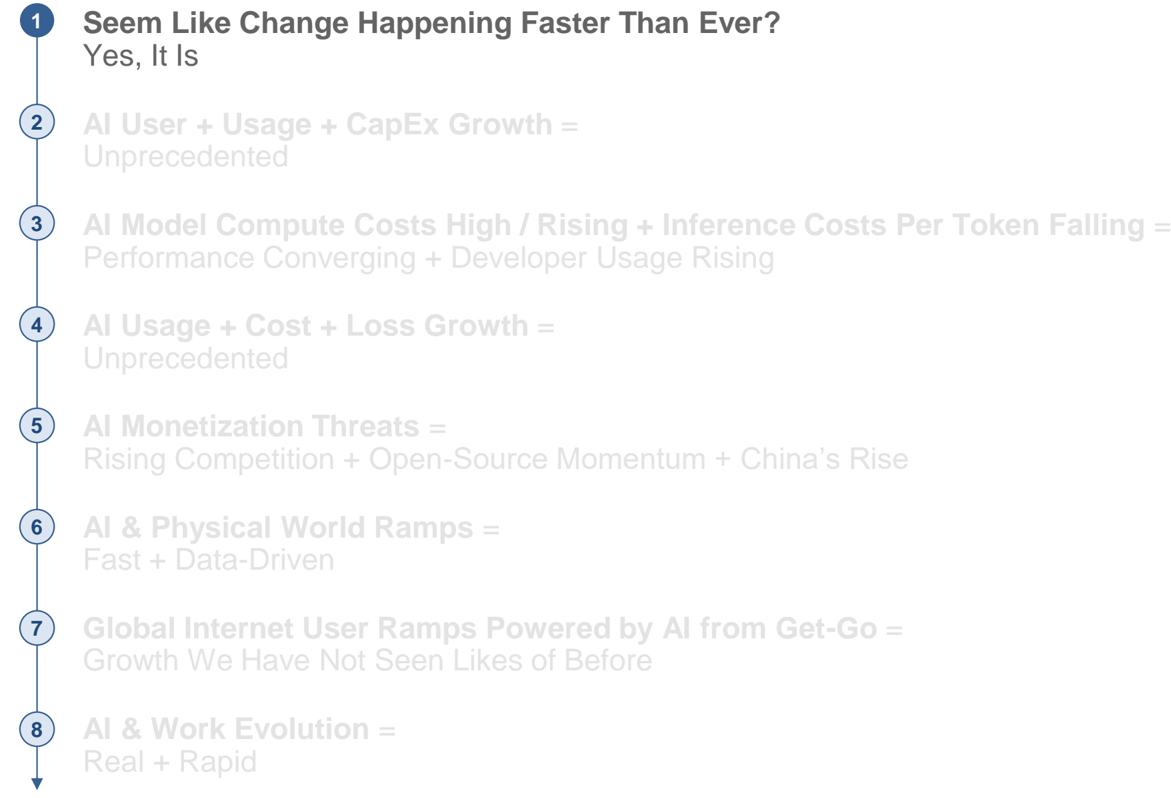
Generate a thread with the 6 most important and curious take aways from these sources. This is for an everyday audience so use an easy to understand tone. Do not use hashtags.


Let's look at alternatives:
- Modify the query.
- Start a new thread.
- Remove sources (if manually added).