Discover Pandipedia
A growing directory of useful answers selected by the Pandi community. Search the collection or browse the latest discoveries.
3444 entries available
The sound of analogue: flipping a vinyl record
Transcript
Imagine the gentle click as you pull out a vinyl record from its sleeve, feeling its cool, smooth edges and the promise of a rich, analog sound. The process of flipping through your collection is more than simply choosing music; it is a sensory journey that engages your sight, touch, and even evokes a familiar, nostalgic smell. As you carefully place the record onto the turntable and lower the needle, you are invited into a slow, deliberate moment of connection with the music—a tactile break from the digital rush of modern life. Every flip and every crackle of the needle on the vinyl rekindles memories of simpler days, reminding you to savor the art of listening and the beauty of physical sound.
Let's look at alternatives:
- Modify the query.
- Start a new thread.
- Remove sources (if manually added).

What is differential privacy and why might it matter in quantum data sharing?

Differential privacy (DP) is a strong mathematical framework that ensures individual data points remain indistinguishable within datasets, thus protecting personal information even when subject to analysis. It is particularly relevant in quantum data sharing, where sensitive information may be processed by quantum algorithms, risking exposure if proper privacy mechanisms are not in place. Integrating DP into quantum computing can leverage unavoidable quantum noise, allowing for privacy preservation in quantum algorithms while achieving efficient performance[2][3].
However, establishing effective differential privacy in quantum environments presents challenges, such as ensuring that quantum algorithms can utilize classical DP mechanisms without compromising quantum advantages or introducing excessive computational overhead[1][5].
Let's look at alternatives:
- Modify the query.
- Start a new thread.
- Remove sources (if manually added).
Create your account to shape this feed around what you search for and enjoy.
5 milestones in holographic display tech
Let's look at alternatives:
- Modify the query.
- Start a new thread.
- Remove sources (if manually added).
Is it true that Greeks portrait women as the devil?

Yes, Greek mythology often portrays women as monstrous figures, embodying male fears about female power and motherhood. Lamia, for example, is depicted as a child-devouring demon whose transformation into a monster follows her grief over losing her children to Hera, suggesting a deep-seated anxiety about women's roles in nurturing and caring for children[1][3].
Additionally, creatures like Gello serve as representations of similar fears, associated with infertility and child mortality[5]. This pattern extends to other figures in mythology, like Medea, who embodies both the nurturing and destructive potential of women, further reinforcing the demonization of powerful female figures in ancient narratives[6].
Let's look at alternatives:
- Modify the query.
- Start a new thread.
- Remove sources (if manually added).
Design and Construction of the Skerryvore Lighthouse
Skerryvore's Design and Environmental Challenges

The Skerryvore Lighthouse project faced significant challenges due to its location on an inhospitable rock exposed to the Atlantic's full fury and surrounded by perpetual surf[1]. The very difficulty of access and the environmental conditions shaped the design and construction approach[1]. Early considerations of expense and uncertainty of success further contributed to delaying the project, even though authorization existed as far back as 1814[1]. The decision to build a wooden barrack on the rock to house workers underscores the commitment to overcoming environmental constraints[1].
Weight Versus Strength in Lighthouse Construction

When it comes to lighthouse construction in exposed locations, a fundamental question arises: should stability depend more on strength or weight[1]? The text favors weight, noting that 'in preferring weight to strength, we more closely follow the course pointed out by the analogy of nature'[1]. It argues that inertia, inherent in a weighty structure, offers a more constant and reliable resistance compared to the potentially compromised strength of lighter materials fixed together[1]. The constant tremor from waves can loosen fixtures, reducing the effectiveness of relying solely on the tensile strength of building materials[1].
Form and Center of Gravity Considerations

The ideal form for a lighthouse combines a low center of gravity with minimal wave resistance. The text suggests a conical shape achieves a low center of gravity, but acknowledges practical difficulties[1]. A cone's base can create an angular space where waves may break violently[1]. The text mentions a non-professional friend suggesting a wedge shape for lighthouses, but that the direction of winds and waves is too variable to guarantee consistent effectiveness[1]. It asserts there seems little reason for any doubt as to the circular section being practically the most suitable for a Tower exposed in every direction to the force of the waves[1].
Evolution of Lighthouse Design: Divergence from Earlier Models

The design of the Skerryvore Lighthouse intentionally diverged from the forms of the Eddystone and Bell Rock Lighthouses[1]. One key difference was to give the tower the Skerryvore such dimensions as would not be widely discordant with these general proportions[1]. This primarily involved making the sides of the tower less concave to the sea[1]. The text explains a preference for a less curved profile writing, 'the more nearly we approach to the perpendicular, the more fully do the stones at the base receive the effect of the pressure of the superincumbent mass'[1]. This vertical pressure is seen as a means of retaining stones and creating a strong bond, contrasting with elaborate dovetailing.
Material Choices and Geological Factors

The text indicates that at the Skerryvore site, geological considerations influenced construction decisions. The rock was a syenitic gneiss, consisting of quartz, felspar, hornblende, and mica[1]. The text states that this rock was 'exceedingly difficult and tedious to excavate'[1]. A dyke of basalt also transected the gneiss[1]. The presence of this basalt and other geological features influenced the location and construction of the tower, necessitating adjustments to avoid undermining its foundations[1].
The Skerryvore, Eddystone, and Bell Rock Lighthouses Compared
The text provides a comparative analysis of the Skerryvore, Eddystone, and Bell Rock Lighthouses: 'In both the Bell Rock and the Eddystone, the thickness of the walls had been reduced to the lowest limits of safety towards the top'[1]. The author sought to avoid the tremors that can result from a heavy cornice and thinner walls[1]. By thickening the walls at the top, the Skerryvore design made a 'near approach to the conic frustum'[1]. This, the author believed, would better ensure 'that the stones at the base receive the effect of the pressure of the superincumbent mass'[1].
Innovations in Joining and Securing Materials


A significant departure from previous designs was in how the stones were united. The text notes, 'In both these Towers the stones were dovetailed throughout the buildings...with the view of preventing the sea from washing away the courses which might be left exposed to the winter storms...'[1]. For the Skerryvore, the author 'entirely dispensed with dovetailing and joggles between the courses' in the lower parts, using common diamond joggles and wooden treenails for temporary fixtures[1]. The decision to de-emphasize dovetailing and joggling reflected a belief that the weight of the structure and the mortar's adhesion would be sufficient to maintain stability[1].
Let's look at alternatives:
- Modify the query.
- Start a new thread.
- Remove sources (if manually added).
why some pistachio creams are green when the actual pistacho doesn't really look green?
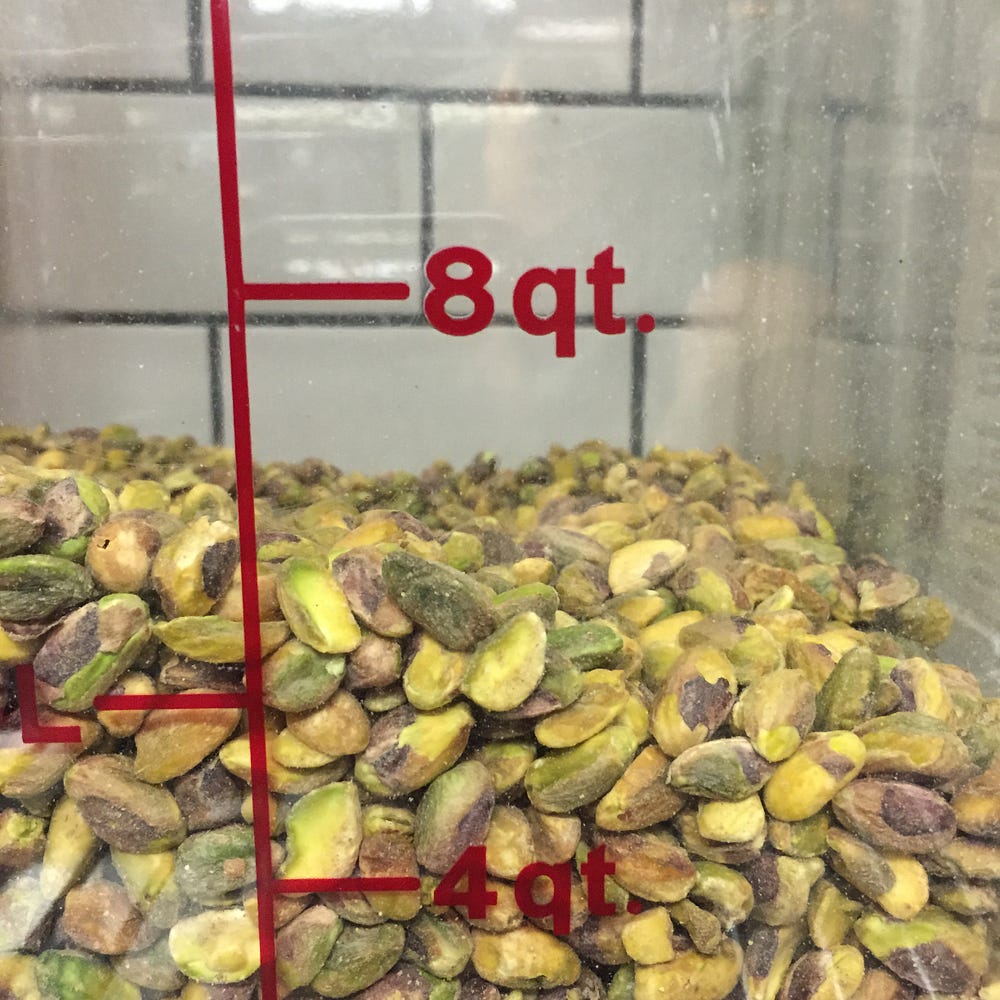
Some pistachio creams appear green due to the addition of food coloring. Although pure pistachio paste, which is made from ground pistachios, tends to have a light brown color with only a slight green hue, suppliers often add chlorophyll to enhance the green color of the product. This practice is driven by consumer expectations, as many associate a bright green color with quality and authenticity, despite it not reflecting the natural color of the nuts[3].
In fact, pure pistachio paste is not vibrant green, and the final color of the creams can vary greatly based on the method of preparation and the mixture of ingredients used[6].
Let's look at alternatives:
- Modify the query.
- Start a new thread.
- Remove sources (if manually added).

Create your account to shape this feed around what you search for and enjoy.
What can educators learn from quest design for classroom projects?

Educators can learn from quest design by incorporating clear objectives, effective feedback loops, and engaging narratives into classroom projects. Clearly defining learning objectives, as highlighted in active pedagogy, allows students to assess their understanding while providing instructors with critical insights into students' learning progress[2]. Quests can incorporate design elements that promote student engagement, such as allowing for exploration and personal choice[5].
Moreover, narrative stakes in quests create a context for students to invest emotionally in their learning while maintaining focus through structured challenges[1]. This blend fosters a rich educational experience that encourages both mastery of material and personal growth.
Let's look at alternatives:
- Modify the query.
- Start a new thread.
- Remove sources (if manually added).
Evaluating Quantum Cloud Services: A Buyer's Guide to Pricing, Performance, and Lock-In Risks
Market Overview and Service Models

Quantum cloud services are rapidly emerging as experimental platforms for both commercial and academic users, offering access to real quantum hardware and high-fidelity simulators through the cloud[1][14]. Major providers in this space offer access to diverse hardware back-ends, ranging from superconducting quantum processors (IBM Quantum, available via both free public and premium plans) to trapped-ion systems (IonQ and Quantinuum) as well as photonic systems (Xanadu), and even specialized annealers (D-Wave) for optimization problems[14]. In many cases, these platforms are introduced as experimental test beds that help define future markets even as their underlying technology continues to mature[1].
Cost Models and Pricing Structures


Pricing in the quantum cloud space varies widely according to the service tier, usage model, and hardware accessed. For instance, some providers charge based on execution time with rates that can range from as little as a few cents per second per qubit to amounts approaching one US dollar per second per qubit for high-fidelity simulations[8]. IBM Quantum's pricing page lists several options including an Open Plan, a Pay-As-You-Go Plan, a Flex Plan pre-purchase model, a Premium Plan with extended minutes, and even an On-Prem option for dedicated hardware access[12]. In contrast, information on Rigetti's Quantum Cloud Services appears to be more limited with general pricing details indicating figures such as $0.08 per hour for some offerings, although detailed pricing breakdowns remain undisclosed[2]. Additionally, patent cost reports indicate that basic experiments via cloud access (for example, on IBM Quantum) may cost between $1 and $10 per experiment, while more complex tasks can scale to thousands of dollars per month if sustained high-performance usage is required[8].
Hardware Back-Ends and SDK Openness
A key criterion in evaluating quantum cloud providers is the diversity and maturity of their hardware back-ends. Providers like IBM offer a broad fleet of superconducting processors (including advanced models such as Eagle and Heron) with public access for experimentation as well as premium tiers for enterprise users[14]. Amazon Braket, part of the AWS ecosystem, acts as a broker by offering access to multiple providers and facilitating hybrid quantum-classical workflows. Microsoft Azure Quantum further emphasizes integrated workflow models that combine classical compute with quantum resources[14].
On the software side, providers typically supply dedicated SDKs; for example, Amazon Braket offers its native SDK while also supporting the popular open-source Qiskit, thereby fostering a more open and interoperable environment[1]. This openness and the availability of standardized programming frameworks are critical for reducing vendor lock-in and ensuring that customers can migrate between platforms or integrate multiple providers as their needs evolve.
Data Egress Fees and Contractual Considerations


While much attention is given to compute pricing and hardware performance, data egress fees and contract terms are equally important. Cloud agreements for quantum services require careful review of the terms that govern data ownership and retrieval upon termination of service. Providers may impose additional fees for transferring data out of their systems, and clear contractual language is necessary to ensure that customers retain uninterrupted access and full control over their stored data[6].
Furthermore, reputable guidance on contract negotiations emphasizes the need for well-defined service level agreements (SLAs), demarcation points for responsibility between provider and customer, and clear policies on intellectual property rights and data security[13]. Such contractual details are key to mitigating hidden costs and avoiding vendor lock-in.
Negotiation Strategies to Minimize Vendor Lock-In

To minimize vendor lock-in and ensure long-term flexibility, it is advisable to approach contract negotiations with clear objectives. Begin by establishing a precise understanding of your application's technical requirements and expected service levels as this can help benchmark the provider's capabilities against your needs[3]. Key negotiation points include:
• Establishing clear data ownership and ensuring provisions for data retrieval in standard formats without excessive egress fees[6].
• Securing SLAs that define uptime, response times, and remedy periods so that both parties share the risk of service outages[13].
• Requesting detailed breakdowns of fees and, where possible, opting for pricing models that offer discounts for reserved or committed use, freeing you from unpredictable cost spikes[9].
• Insisting on contractual flexibility that permits the use of open SDKs and interoperability with other quantum cloud services, which can facilitate a smoother migration if you decide to switch providers in the future[13].
By incorporating these elements in your negotiations, you can secure a more balanced agreement that limits vendor lock-in and protects your organization's interests over the long term.
Conclusion
In summary, evaluating quantum cloud services requires a comprehensive review of not only the cost models and pricing structures but also the underlying hardware, software openness, and contractual safeguards regarding data egress and vendor lock-in. A buyer's guide should combine the experimental nature of the current quantum computing offerings, as highlighted by early platforms like IBM Quantum, Amazon Braket, and Microsoft Azure Quantum, with practical negotiation strategies drawn from contract advice on cloud services. With detailed attention to pricing metrics, the diversity of quantum hardware back-ends, and robust contractual terms that protect data ownership and service availability, organizations can make more informed decisions and mitigate the risks typically associated with emerging technologies. This holistic approach ensures that as quantum cloud services mature, buyers are well-equipped to harness their potential while managing costs and vendor dependencies effectively.
Let's look at alternatives:
- Modify the query.
- Start a new thread.
- Remove sources (if manually added).
Hook: Why game music boosts study focus
Transcript
Welcome to our audio clip. Today we explore why game music boosts study focus. Our brains naturally adjust their rhythm to match steady beats, a process known as brainwave entrainment. Rhythmic sounds help guide our minds into states that are perfect for concentration. Video game soundtracks are carefully chosen to be instrumental and constant, which means they avoid distracting words and instead provide a gentle, continuous pulse. Ambient loops, whether drawn from calming nature sounds or the repetitive scores of popular games, create a soothing background atmosphere. This steady sound pattern has been found to reduce stress and improve memory by stimulating both halves of the brain at the same time. By playing your favorite game music during study, you are inviting your mind to sync with a rhythm that helps keep you alert and focused. Enjoy the melody and let the rhythm enhance your study session.
Let's look at alternatives:
- Modify the query.
- Start a new thread.
- Remove sources (if manually added).
How do browser extension scams hijack personal data?

Malicious browser extensions can hijack personal data through sophisticated techniques. They often disguise themselves as legitimate software, tricking users into installation. Once installed, these extensions can capture sensitive information like cookies, keystrokes, and browsing history by injecting malicious code. This code can monitor user actions, steal passwords, and exfiltrate data to cybercriminals' servers[1][3].
To choose safe add-ons, only download extensions from official sources like the Chrome Web Store or Microsoft Edge Add-on Store. Always check reviews, verify the developer's information, and be cautious of excessive permissions requested during installation[1][6].
Let's look at alternatives:
- Modify the query.
- Start a new thread.
- Remove sources (if manually added).