Descubre Pandipedia
Un directorio creciente de respuestas útiles seleccionadas por la comunidad de Pandi. Busca en la colección o explora los últimos descubrimientos.
2312 entradas disponibles

Sleep stages decoded in 5 fast facts
Veamos alternativas:
- Modifica la consulta.
- Inicia un nuevo hilo.
- Eliminar fuentes (si se han agregado manualmente).
EU AI Act deadlines and new draft rules
Veamos alternativas:
- Modifica la consulta.
- Inicia un nuevo hilo.
- Eliminar fuentes (si se han agregado manualmente).
VR fitness transformations: 50-lb weight loss clip
Veamos alternativas:
- Modifica la consulta.
- Inicia un nuevo hilo.
- Eliminar fuentes (si se han agregado manualmente).
ISO/IEEE 11073 standard links for device interoperability

Veamos alternativas:
- Modifica la consulta.
- Inicia un nuevo hilo.
- Eliminar fuentes (si se han agregado manualmente).
Biotech runway is not cash, it is milestone math
Mesoblast said its cash should cover 12 months, including the BLA process for remestemcel-L. Access to existing loan funds depended on receiving first approval and launching within that period. If approval or launch slipped, the company said it might need other financing. Its filing also cited cash covenants and default risk, and identified the uncertainty as a material going-concern issue.
Veamos alternativas:
- Modifica la consulta.
- Inicia un nuevo hilo.
- Eliminar fuentes (si se han agregado manualmente).
How do you track buyers, suppliers, values, deadlines, and SME status in UK procurement data?. Structure the report around the core jobs: identify the buyer, link suppliers, choose the right date, read contract value and duration, and calculate direct award, single-bid, and SME metrics. Include a compact field-to-use-case table and a final checklist for dashboard builders and proposal teams.
Tracking buyers, suppliers, values, deadlines, and SME status in UK procurement data
The cleanest way to work with UK procurement data is to treat each procurement process as the anchor, then join buyers, suppliers, dates, and contract details back to that process. The attached guidance says the main sheet is the starting point for buyer and procedure analysis, with child sheets linked by `main_ocid` and nested sheets joined with their parent ID fields[1][2].
For award data specifically, the contracts extract says it covers published contract awards from 1 April 2017 onward and includes the buyer, awarded suppliers, contract value, and duration. It also notes the dataset is still incomplete and is updated quarterly[3][4][5].
1) Identify the buyer
Start with the buyer or procedure record in the main sheet, then carry that process forward through the rest of the model using `main_ocid`. That gives you a stable anchor for dashboard filters, pipeline reporting, and cross-sheet joins[6][7].
2) Link suppliers
The guide recommends joining `contracts` to `awardssuppliers` on `mainocid` and `contracts.awardID = awardssuppliers.awardsid`, then linking suppliers to `parties` to inspect fields such as `details_scale` for SME analysis[8].
A key limitation is that some below-threshold contracts do not have declared supplier identifiers, so SME matching is not always complete. The source also warns that a single contract can have multiple suppliers, so you should aggregate back to one contract row before calculating contract-level metrics[9][10].
3) Choose the right date
Use the date that matches the question. The guide says the main-sheet `date` is the latest update date for the procedure, `contracts.dateSigned` is best for contract trends over time, and the first notice publication date can be used as a start date when needed[11].
4) Read contract value and duration
For award-level reporting, the contracts extract explicitly includes contract value and duration, which makes it suitable for spend and term analysis[12]. The guide also points to contract value as the basis for indicators such as total contract value awarded by procurement method, excluding framework agreements[13].
5) Calculate the core metrics
- Direct award: calculate the proportion of direct award procedures and trend it over time using the filtered UKPGA data[14].
- Single-bid: calculate the proportion of lots that received only one bid as a competition indicator[15].
- SME: calculate the proportion of contracts awarded to SMEs by method, after aggregating supplier information back to one contract row[16][17].
Compact field-to-use-case table
| Field or join | Use case | Why it matters |
|---|---|---|
| `main_ocid`[18][19] | Anchor buyer and procedure records across sheets | Keeps one procurement process connected through the full dataset |
| `contracts.awardID = awards_suppliers.awards_id`[20] | Link award records to supplier records | Lets you attach supplier names and attributes to contract awards |
| `parties.details_scale`[21] | SME identification | Supports SME tagging where supplier detail is available |
| `date` in the main sheet[22] | Latest update date for the procedure | Best for current-state reporting and refresh logic |
| `contracts.dateSigned`[23] | Contract trend analysis over time | Best date for signed-award timelines |
| Contract value[24][25] | Spend analysis and value by method | Used for award value reporting and method breakdowns |
| Contract duration[26] | Term and expiry analysis | Supports deadline, renewal, and pipeline views |
| Declared supplier identifiers[27] | Supplier attribution | May be missing for some below-threshold contracts |
Final checklist for dashboard builders and proposal teams
- Use the procurement process as the primary key, with `main_ocid` as the join path[28][29].
- Make buyer filters consistent across main-sheet and contract-level views[30].
- Join suppliers through the award-to-supplier bridge, not by free text names[31].
- Choose dates by question: latest update, signed date, or first notice publication date[32].
- Keep contract value and duration together for spend and deadline analysis[33].
- Aggregate to one row per contract before calculating direct award, single-bid, or SME metrics[34][35].
- Flag missing supplier identifiers and incomplete coverage in any SME view[36][37].
- Treat the dataset as evolving, since coverage is still incomplete and it is updated quarterly[38][39].
Bottom line
If you need one practical rule, it is this: anchor on the procurement process, join suppliers through award tables, pick the date that matches the question, and aggregate to contract level before calculating metrics[40][41][42][43]. That approach fits both dashboarding and proposal work, while staying within the limitations of the published UK data[44][45].
Veamos alternativas:
- Modifica la consulta.
- Inicia un nuevo hilo.
- Eliminar fuentes (si se han agregado manualmente).
UK procurement: the notices that actually warn you before tender
UK procurement notices UK1, UK2 and UK3 are the main signals that an opportunity may be forming before a tender is live. They cover pipeline plans, preliminary market engagement and planned procurement. They show buyer intent and activity, not a guaranteed or imminent recompete. UK4 marks the formal live tender, so it is a later signal, not an early warning.




Veamos alternativas:
- Modifica la consulta.
- Inicia un nuevo hilo.
- Eliminar fuentes (si se han agregado manualmente).
What does the GRI evidence say about financial outcomes?
Veamos alternativas:
- Modifica la consulta.
- Inicia un nuevo hilo.
- Eliminar fuentes (si se han agregado manualmente).
Five UK procurement metrics that can mislead analysis
Veamos alternativas:
- Modifica la consulta.
- Inicia un nuevo hilo.
- Eliminar fuentes (si se han agregado manualmente).
Early ESRS: 3 bottlenecks before comparability
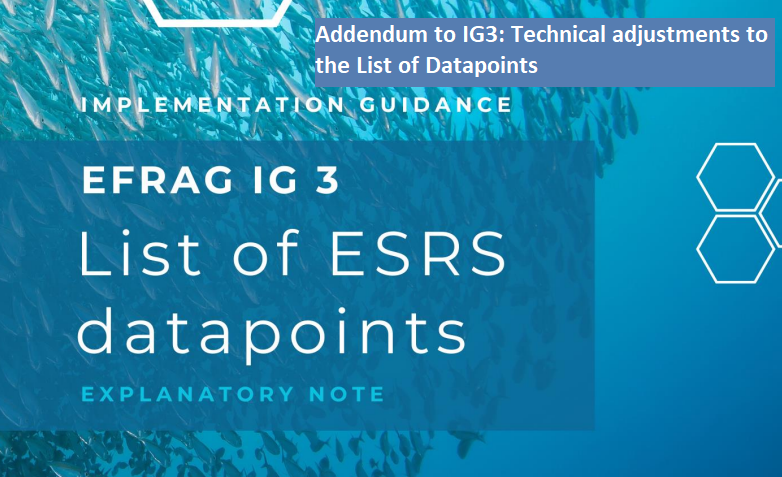
Early ESRS may bring high-level comparability first; datapoint-level comparisons may remain uneven. The challenge is execution: evidence-based double materiality, deciding which datapoints matter, and mapping where value-chain impacts, risks and opportunities sit. EFRAG says its datapoint list is a practical aid, not a full materiality answer. Usable data and expert input are needed early, and broad value-chain labels need a materiality-driven map. Phase-in relief applies where allowed.
Veamos alternativas:
- Modifica la consulta.
- Inicia un nuevo hilo.
- Eliminar fuentes (si se han agregado manualmente).