Discover Pandipedia
A growing directory of useful answers selected by the Pandi community. Search the collection or browse the latest discoveries.
2292 entries available
How did Anthem-Cigna turn contract breach into a causation problem?. Build a multi-section report explaining how the Court of Chancery handled efforts covenants, the no-injunction condition, causation, and the reverse termination fee dispute. Include a short companion section on Zoox to show how the same court polices procedural use of discovery when appraisal litigation resembles a books-and-records workaround.
Anthem-Cigna and Zoox: Two Delaware Chancery Opinions on Contract Remedies and Litigation Procedure
These two opinions show different ways the Court of Chancery manages merger disputes. In Anthem-Cigna, the court treated Cigna’s contractual breaches as real, but ultimately converted the case into a causation problem because the merger would have failed anyway under the No Injunction Condition.[1][2]
In Zoox, the same court addressed a different kind of problem: parties using appraisal discovery like a substitute for books-and-records litigation. There, the court limited discovery to the level that would have been available in a Section 220 proceeding when the appraisal case was really a workaround.[3][4]
How Anthem-Cigna Turned Breach Into Causation
The court held that Anthem proved Cigna breached the Efforts Covenants, but that finding did not end the damages analysis. Cigna carried its burden on causation by showing that the merger would have failed even absent those breaches, because the No Injunction Condition still would not have been satisfied.[5][6]
The opinion describes a two-step causation framework: the plaintiff must show the breach materially contributed to the failure of the No Injunction Condition, and then the breaching party can escape liability by proving the condition would have failed anyway without the breach.[7]
Applying that framework, the court found that Cigna’s conduct made approval less likely, including withdrawal from integration planning, opposition to divestitures, resistance to mediation, and undermining Anthem’s defense. But the court still concluded that the DOJ and the courts would have blocked the merger because of anticompetitive effects in the national accounts market.[8]
Efforts Covenants and the No-Injunction Condition
On Anthem’s side of the case, the court emphasized that Cigna’s breaches mattered, but only as part of a larger contractual chain. The opinion’s practical message is that a proven efforts-covenant breach does not automatically produce expectation damages if the failed closing was independently inevitable.[9][10]
That is why the No Injunction Condition mattered so much. Once the court concluded that the antitrust blockade would have remained in place even without the breaches, the causal link between breach and lost deal value broke, and Anthem could not recover damages for those breaches.[11][12][13]
The Reverse Termination Fee Dispute
The court also rejected Cigna’s reverse termination fee claim. It held that Anthem validly terminated the merger under a different termination right that did not trigger the fee, and because Anthem’s termination came first, Cigna could not recover the reverse termination fee.[20]
So the result was symmetrical in an important sense: Anthem won on the existence of breach, but lost on damages, and Cigna also lost on its fee claim. The opinion leaves neither side with a monetary recovery from the failed merger.[21]
Zoox: Keeping Appraisal Discovery From Becoming a Section 220 Workaround
Zoox addresses a procedural concern rather than a contract-remedy issue. The court said appraisal discovery is broad, but it should not become a substitute for Section 220 when the real objective is pre-suit investigation of possible fiduciary claims.[22]
The court rejected a pure proportionality cut-off based on the petitioners’ small stake, explaining that the appraisal statute makes the “issues at stake” factor especially important.[23]
Instead of proportionality, the court used policy to impose a narrower rule: if an appraisal petition is an obvious replacement for an unavailable Section 220 action, discovery should not exceed what Section 220 would have allowed.[24]
The court applied that idea to the case before it by pointing to the petitioners’ timing, their dismissal of a Section 220 action, their stated desire to get at least the same material through appraisal, and the small economic value of the shares they were pursuing.[25]
Takeaway
Together, the opinions show the Court of Chancery policing two different forms of litigation overreach. In Anthem-Cigna, it refused to let a proven contractual breach become damages where causation failed because the merger would have been blocked anyway. In Zoox, it refused to let appraisal discovery function as a procedural end run around Section 220.[26][27][28][29]
Let's look at alternatives:
- Modify the query.
- Start a new thread.
- Remove sources (if manually added).

What makes trains efficient for cargo transport?
Transcript
Trains are efficient for cargo transport primarily due to their ability to carry larger volumes and heavier loads compared to trucks, which minimizes the number of trips needed. They consume up to nine times less energy per tonne-kilometer traveled and are significantly less polluting, emitting about one-fifth of the greenhouse gases per ton transported compared to road transport. Additionally, rail transport benefits from lower risk of accidents and theft, and a higher degree of punctuality due to regulated timetables[1][2][6][9].
Sources
- The Pros and Cons of Train VS Truck Freight Shipping [Infographic]
- Rail Freight – Pros and Cons of Rail Transport | DHL Freight
- Energy efficiency in transport - Wikipedia
- The Future of Rail – Analysis
- Types of Freight Trains: Definition and Use of Modern Rail Cars
- The potential of high-speed rail freight in Europe: how is a modal shift from road to rail possible for low-density high value cargo? - European Transport Research Review
- Why rail can transport us to a greener future
- Guide to Efficient City Cargo Trains
- Long-distance transport – Energy Efficiency 2020 – Analysis
- Container ships versus trucks and trains
Let's look at alternatives:
- Modify the query.
- Start a new thread.
- Remove sources (if manually added).
5 mind-body practices proven to lower cortisol
Let's look at alternatives:
- Modify the query.
- Start a new thread.
- Remove sources (if manually added).
Why SDG 3.4 NCD monitoring is so hard
Why is SDG 3.4 hard to track? A 2021 review describes a weak chain, from reducing premature deaths to measuring indicators, collecting mortality data and sustaining surveillance. Progress was slow: the chance of dying from four major NCDs between ages 30 and 70 fell only slightly. Just 2 of 10 indicators were met by at least half of the 176 countries that signed the SDGs. Based on literature reviewed in September 2020, this is not a live country update.
Let's look at alternatives:
- Modify the query.
- Start a new thread.
- Remove sources (if manually added).
Why Cardiovascular Monitoring Needs Three Lenses
Transcript
When tracking cardiovascular disease, one number is not enough. Incidence shows how many new cases are appearing, mortality shows how many people are dying, and the mortality to incidence ratio adds a survival lens after accounting for new cases. Together, these measures tell a more complete story than any single metric can on its own. In the Global Burden of Disease study covering 195 countries from 1990 to 2017, incidence and mortality both declined overall, but the mortality to incidence ratio changed only slightly. That pattern suggests survival improved, but more slowly than the fall in new disease and deaths. The study also shows why interpretation has to be cautious. Some regions rely more on estimated rates because country data are incomplete, especially in less developed settings, and that makes burden estimates less certain. The broader lesson is methodological: cardiovascular monitoring should use multiple complementary measures, and it should be read as a careful assessment of burden and survival, not as a single-score verdict.
Let's look at alternatives:
- Modify the query.
- Start a new thread.
- Remove sources (if manually added).
Why SDG health indicators are harder to measure than they look
Let's look at alternatives:
- Modify the query.
- Start a new thread.
- Remove sources (if manually added).
How elevators stop so precisely




Let's look at alternatives:
- Modify the query.
- Start a new thread.
- Remove sources (if manually added).
How do verbal autopsy models estimate the burden of maternal mortality?. Synthesize the InterVA-M validation evidence with the GBD maternal mortality burden findings, separating method, validation, burden estimates, uncertainty, and limitations. Highlight that probabilistic models can approximate cause-specific mortality fractions but also require careful interpretation because case-by-case agreement and data quality constraints affect confidence.
How verbal autopsy models estimate maternal mortality burden
Verbal autopsy models like InterVA-M estimate maternal mortality burden by assigning likely causes of death probabilistically from interview data, rather than relying on a single physician judgment for each case.[1] In the GBD study, maternal mortality burden is then estimated at population level by cause, age, country, and time using standardized modeling and correction methods applied to incomplete mortality data.[2]
Taken together, these studies show that probabilistic models can approximate cause-specific mortality fractions and produce usable burden estimates, but they still need careful interpretation because individual-case agreement is imperfect and the underlying data may be incomplete or poor quality.[3][4]
Method
- InterVA-M: a probabilistic verbal autopsy interpretation model developed and refined with adult female verbal autopsy data, then tested against 258 additional verbal autopsy interviews from Burkina Faso by comparing model-assigned causes with physician-assigned causes.[5]
- GBD 2015 Eastern Mediterranean Region study: a regional burden analysis using Global Burden of Disease methods, with mortality modeled from population-level data and cause-of-death ensemble modeling (CODEm), plus corrections for incompleteness and underestimation.[6]
Validation evidence and burden estimates
For InterVA-M, the main validation signal was that the cause-specific mortality fractions were broadly similar after rationalization between model output and physician interpretation, and case-by-case agreement was about 60% with any reviewing physician, increasing to about 80% when discrepant cases were reviewed by an additional physician.[7]
The GBD paper does not validate a case-level verbal autopsy model; instead, it presents regional burden estimates for maternal mortality and related outcomes, reported with uncertainty intervals for measures such as maternal mortality ratio, deaths, years of life lost, years lived with disability, and disability-adjusted life years.[8]
Uncertainty and limitations
- InterVA-M: disagreement remained for some causes, especially cardiovascular disease, malaria, and pregnancy-related infections, showing that case-level attribution is not fully stable across reviewers or methods.[9]
- InterVA-M data limitation: free-text material did not make an appreciable difference to the model’s output in this assessment, suggesting limited added value from that narrative detail in the validation sample.[10]
- GBD limitation: many countries in the Eastern Mediterranean Region have poor health data and weak vital statistics, so the estimates depend heavily on GBD modeling and garbage-code correction.[11]
- GBD limitation: the paper also notes limited information on unsafe abortion in the region, which constrains how completely maternal mortality can be characterized.[12]
Bottom line
The shared lesson is that probabilistic models such as InterVA-M can help estimate maternal mortality burden when direct measurement is difficult, and they can approximate cause-specific mortality fractions at scale.[13][14] But confidence should remain calibrated: case-by-case agreement is imperfect, and GBD-style burden estimates are only as strong as the source data and correction assumptions behind them.[15][16]
Let's look at alternatives:
- Modify the query.
- Start a new thread.
- Remove sources (if manually added).
From Spin Beams to Qubits
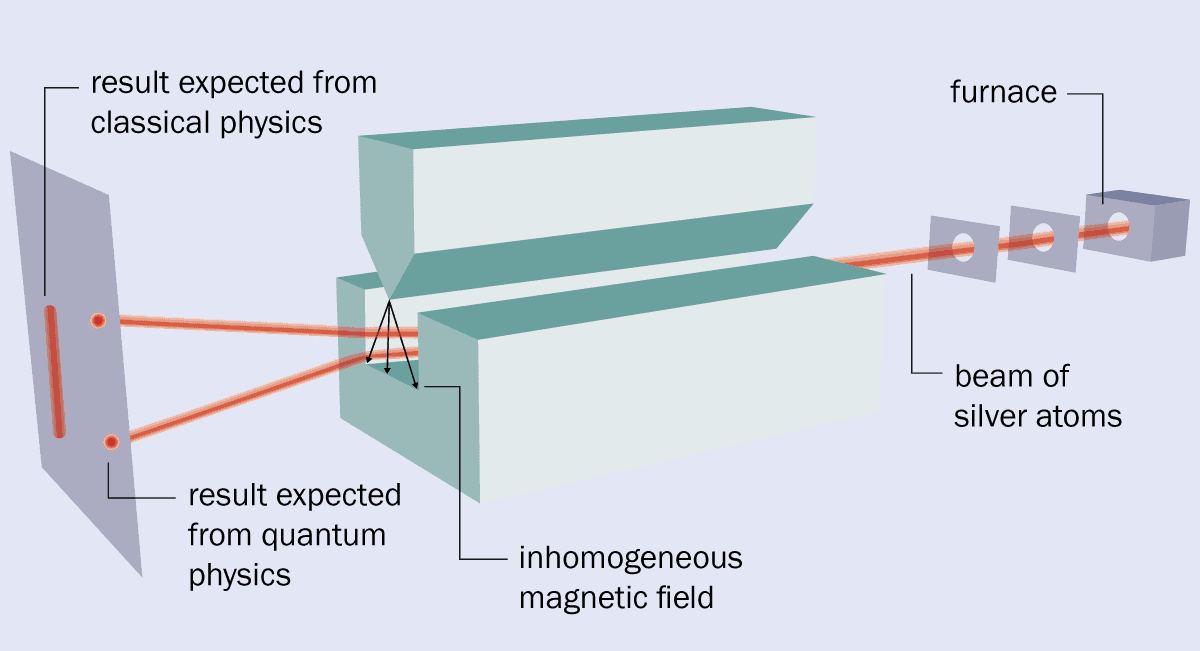


Let's look at alternatives:
- Modify the query.
- Start a new thread.
- Remove sources (if manually added).
Five AI triage tactics to calm wearable alarms
Let's look at alternatives:
- Modify the query.
- Start a new thread.
- Remove sources (if manually added).