The Living Animals of the World, Volume I: Mammals
THE BEAVERS.
The BEAVERS are classed as the last family of the squirrel-like group of the Eodents, and the largest creatures of that order in the northern hemisphere. The value of their fur has caused their destruction in great measure where they were once numerous, and has led to their total extirpation where there is evidence that they existed as a not uncommon animal. They were formerly distributed over the greater part of Europe. In England semi-fossilised remains show that they were not uncommon. In Wales beavers' skins were mentioned in the year 940 in the laws of Howel Dha. and in 1188 Giraldus stated that they were living on the river Teify, in Cardiganshire. Beavers were formerly found in France, especially on the Rhone, where a few are still said to survive, in Germany, Austria, Eussia, Poland, and in Sweden and Norway, on the rivers Dvvina and Petchora, and on the great rivers of Siberia. A few still remain in two districts of
By permission of the Acw Tort Zoological Society. AMERICAN BEAVEE. Norway, and some were known to The engineering feats of the beavers, in damming streams and forming pools, are the ireqiient the Elbe in 18/8. The most remarkable achievements performed by living animals. MoldaU, in Bohemia, is also Credited
BEAVER, ‘The beaver here shi keyt a3 a yet, It was photograp pon a stream in Scotland. The lon; er fur is removed when tke skin is prepared by the furrier.
with a colony; but parts of the Danube are believed to be the chief haunt of the European beaver at the present time. The American beaver, though its range has greatly contracted, is still sufficiently numerous for its fur to be a valuable item in the winter fur-sales. The beaver's tail is flattened like a paddle and covered with scales; its hind feet are webbed between the toes; it has sharp claws, wrhich aid it in scratching up mud, and a thick, close furr with long brown hair above, and a most beautiful and close under- BEAVER. when the long hairsThis is a. photograph of a swimming beaver. Note the advantage which it has taken of the fur, which, eddy in the stream. have all been removed, forms the beaver-fur of which hats were once made, and trimmings for ladies' jackets and men's fur coats are now manufactured. There are two separate lines of interest in connection with the animal political and zoological. The value of the fur was anciently such that, when the first French explorers began to search the Canadian lakes, and later when the Hudson Bay Company succeeded to the French dominion, the history of Canada was largely bound up with beaver-catching and the sale of the skins. In of the North-west was a beaver-skin.the early days of the Company the " standard of trade " For nearly a century the northern territories were organised, both under French and English rule, with a view to the beaver trade. The beaver was, and is, the crest of the Canadian Dominion.
The beavers' engineering feats have for their object to keep up a uniform depth of water in the streams where they live. On large rivers there is always enough water for the beaver to swim in safety from its enemies, and to cover the mouth of the hole which it makes in the bank, just as a water-rat does. But on small streams, especially in Canada, where during the winter the frost prevents the springs from running, there is always the danger that the water may fall so low that the beavers would be left in shallow water, a prey to the wolverine, wolf, lynx, or human enemies. To keep up the water, the beavers make a dyke or dam across the stream. This they go on building up and strengthening until they have ponded back a large pool. In time, as they never seem to stop adding to their dam, the liy Dr. R. W. Shufeldt] [ Washington.pool floods the ground on either Photo MUSK-RAT. side of the stream and makes A small water rodent, a native of the North American rivers. Immense numbers are killed for & small lake. It flows over the the sake of their fur.
The Rodents, or Gnawing Animals 155 parts of the bank where their holes are; these also become filled up, because the beavers carry into them every day fresh quantities of wood-chips to make their beds. The beavers then scrape out the earth on the top, pile sticks over this, plaster the sticks with mud, and so build a dome over their bedroom. In time this is raised higher and higher, the artificial lake rises too, and the complete "beaver-lodge" surrounded with water is seen. The old trappers who found these in situ imagined they were built at once and outright in the water. The experiments and observations at Leonardslee, in Sussex, where Sir E. G. Loder has kept beavers in a stream for ten years, show that the "evolution" of the lodge is gradual and only incidental. But the building of the dyke, the cutting of the trees, and the making of the pool are done with a purpose and definite aim.
What this is, and how done, is explained in the following description of the beaver colony at Leonardslee: "Their first object was to form in the brook a pool, with water maintained at a constant height, to keep the mouth of their burrow in the bank submerged during the droughts of summer. To this end they built a dam, as good a specimen of their work as can be seen even in Canada. Its situation was carefully chosen. A small oak, growing on what appears to have been a projection in the bank, gives support to the work. It may be concluded that this was part of their intention; for though they have cut down every other tree in their enclosure to which they had access, except two or three very large ones, they have left this small tree which supports the dam untouched. (Later, when the dyke was stronger, [Regent's Part:.they cut it down.) Above Photo by W, P. Dando\ this stretches the dam, GAMBIAN POUCHED RAT. some 12 yards wide, and These rats are able to carry food in their cheek-pouches, which are used as pockets. rising 5| feet from the base to the crest. The beavers built it solidly of battens of alder, willow, larch, and other straight-limbed trees, cut into lengths of from 2 to 3 feet. The bark of each was carefully gnawed off for food; and the whole work, constructed of these cut and peeled logs, has a very regular and artificial appearance. Smaller twigs and sticks are jammed in between the battens, and the interstices are stuffed with mud, which the beavers bring up from the bottom of the pool in their mouths, and push in with their feet, making the whole structure as watertight as a wall." This dam converted what was a narrow brook into a long lake, some 50 yards by 15 or 20 yards broad. Later the beavers made another larger dam below this, ; it was a beech,cutting down some more trees. One tree gave them a great deal of trouble till the water rose round it, and then dug40 feet high, and hard to gnaw; so they waited it up. When the large dam was made, quite a considerable lake was formed below the first. They then neglected their first dam, and let the water run out of the top lake into the lower one. At the time of writing there are five old beavers and a family of young ones at Leonardslee. The work -done by these beavers, so few in numbers, shows how large colonies may alter the course of rivers.
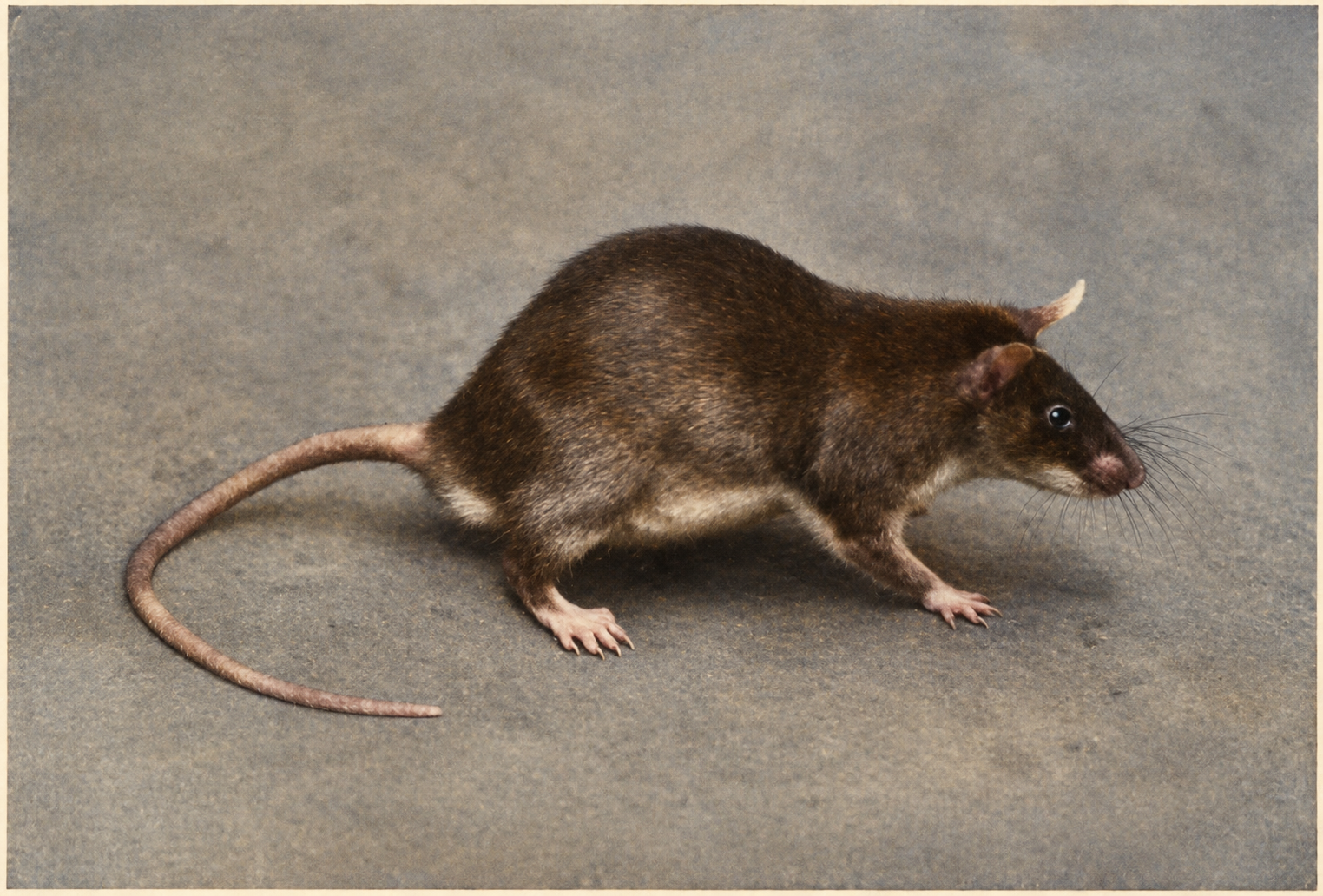

of the World156 The Living Animals
THE DORMICE.
There are a considerable number of animals, even in England, which hibernate. Most of these feed largely on insect food, which in winter is unobtainable in any great quantity. Consequently the hedgehog and the badger, which live largely on snails and worms, go to sleep in the famine months. So does the sleepiest of all the DORMOUSE. This alone would show that this little rodent probably feeds on insects very largely, for if it only ate nuts and berries it could easily store these, and find a good supply also in the winter woods. It has been recently proved that dormice are insectivorous, and will eat aphides, weevils, and caterpillars. But a dormouse hibernates for so long a time that one might imagine its vitality entirely lost; it sleeps for six months at a time, and becomes almost as cold as a dead animal, and breathes very slowly and almost imperceptibly. Mr. Trevor-Battye says that if warmed and made to awaken suddenly in the winter it would die in a minute or two, its heart beating very fast, " like a clock running down." Before their hibernation dormice grow very fat. There is a large species, found in Southern Europe, which the Romans used to eat when in this fat stage. In winter dormice usually seek the nest of some small bird, and use it as a sleeping-place. They pull out arid renew the lining, or add a roof themselves. Into the interior they carry a fresh supply of moss, and sleep there in great comfort. Their great enemy at this time is the weasel. There are two main groups of the dormice, divided by naturalists in reference to the structure of their stomach. The South African GRAPHIURES have short tufted tails. The hibernating habit is confined to the more northern species.
THE MOUSE TRIBE.
This family, which includes the MICE, RATS, and VOLES, contains more than a third of the number of the whole order of Rodents. Some
J'koto by A. S. Rudland & Sons. are arboreal, others aquatic; but most are POCKET-GOPHER. ground-living animals and burrowers. The
The pocket-gophers are almost entirely subterranean. Their number of known species has been estimated at powersburrowing are remarkable. The teeth as well as claws are 330. Among the most marked types are theused to aid them. WATER-MICE of Australia and New Guinea, and of the island of Luzon in the Philippines. The feet of the Australian species are webbed, though those of the Philippine form are not. The GERBILS form another group, mainly inhabitants of desert districts. They have very large eyes, soft fur, and tails of various length and form in different species. They have greatly developed hind legs, and leap like jerboas, and are found in Southern Europe, Asia, and Africa. The PHILIPPINE RATS, large and long-haired, and the TREE-MICE of Africa south of the Sahara, form other groups. A very mischievous race of rodents is represented in Europe by the HAMSTERS, and in the New World by a closely allied group, the WHITE-FOOTED MICE.
THE HAMSTERS.
The HAMSTER is a well-known European species, and represents the group of pouched rats.