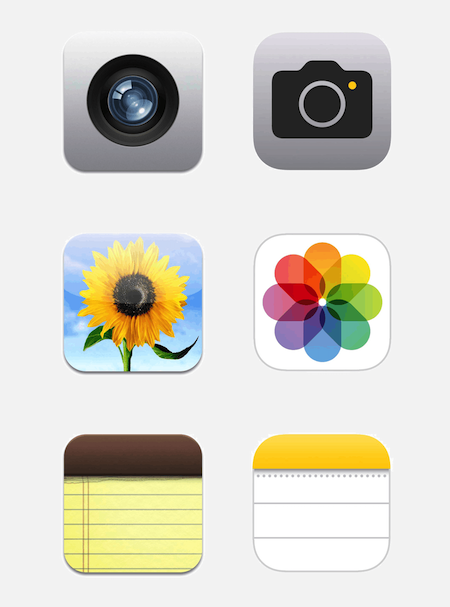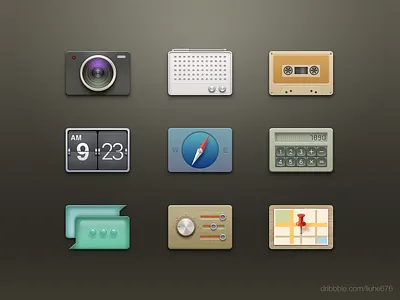
Skeuomorphic UI rose by copying the physical world, faded with flat design, and is now creeping back in softer 3D forms. The big question: why do digital interfaces keep swinging between realism and minimalism?[7][9][22]
🧵 1/6
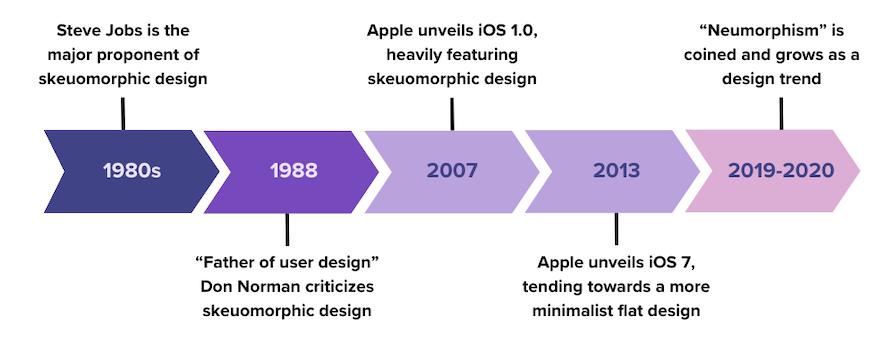
Early GUI design leaned on familiar objects like trash bins, folders, floppy disks, and calendars so new users could learn faster. That is skeuomorphism as a learning aid, not just eye candy.[7][1][9]
🧵 2/6
Apple took it to the max: iOS 6 Notes looked like yellow paper, Newsstand looked like a bookshelf, and Voice Memos used realistic materials. AppleInsider says iOS 7 then stripped that away for a flatter, less literal look.[2][11]
🧵 3/6
The backlash was practical, not just aesthetic. Sources cite clutter, larger screen use, slower load times, and higher cognitive load as reasons skeuomorphism lost favor to flat and material-style systems.[7][8][13]
🧵 4/6
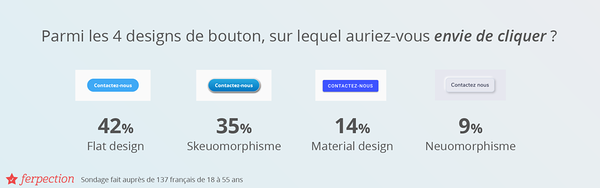
So why is 3D coming back? Not full retro realism, but subtle depth: neumorphism, glassmorphism, and familiar spatial cues in wearables, AR, and VR. Unity-style 3D UI elements show how interfaces are getting physical again.[7][9][12][28]
🧵 5/6
The pattern is clear: interfaces start by teaching, then simplify once users learn, then borrow depth again when new hardware needs new instincts. Which era do you think works best: skeuomorphic, flat, or the 3D comeback?[1][7][22]
🧵 6/6
Sign Up To Try Advanced Features
Get more accurate answers with Super Pandi, upload files, personalized discovery feed, save searches and contribute to the PandiPedia.