100

Why NASA put the first big colony at L5
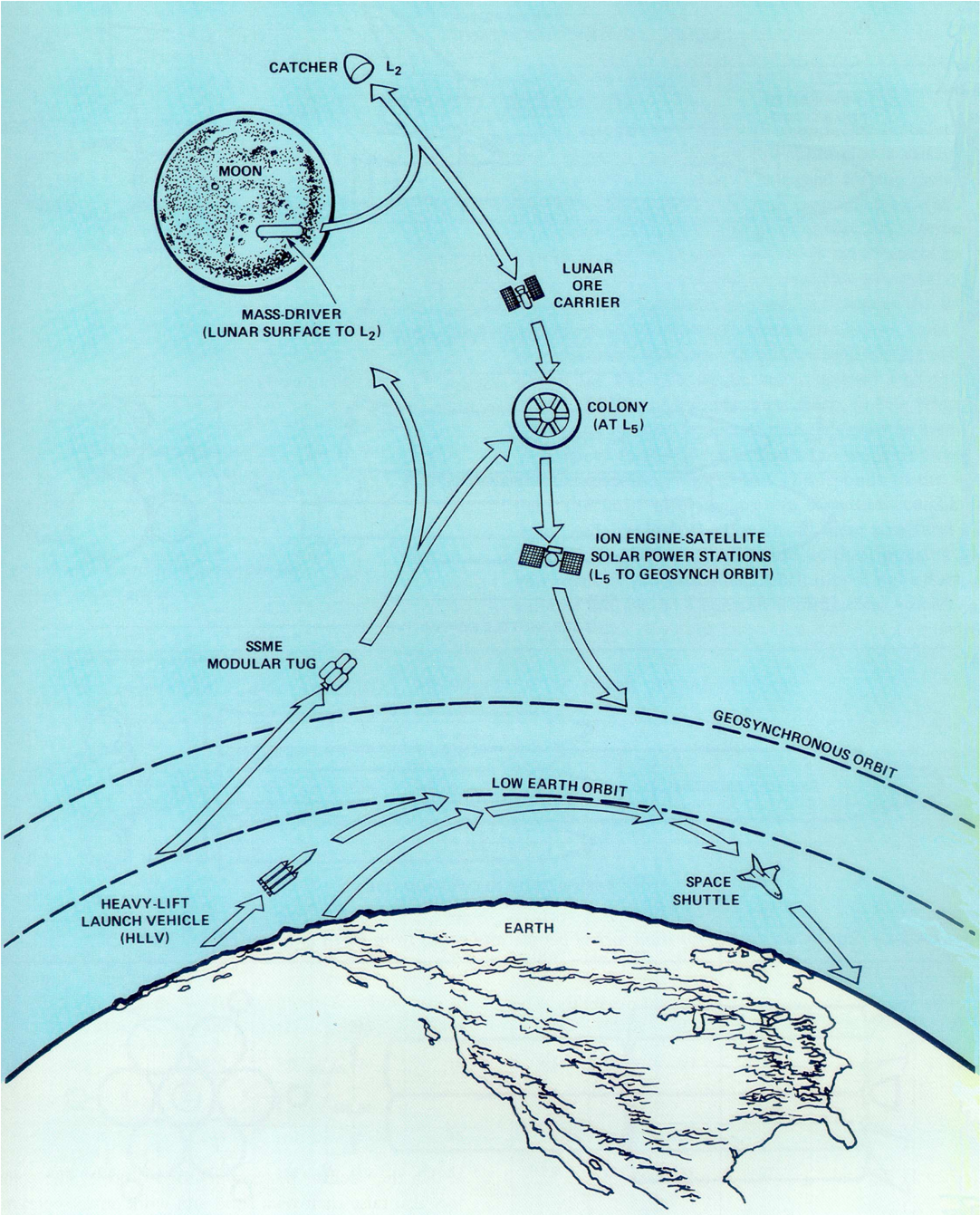
Why did NASA’s 1977 study put the first big habitat at L5 instead of on the Moon? Because it wanted a place that stayed in a stable Earth-Moon position, got sunlight, and sat where moving material cost less propellant than fighting a deep gravity well.[1]

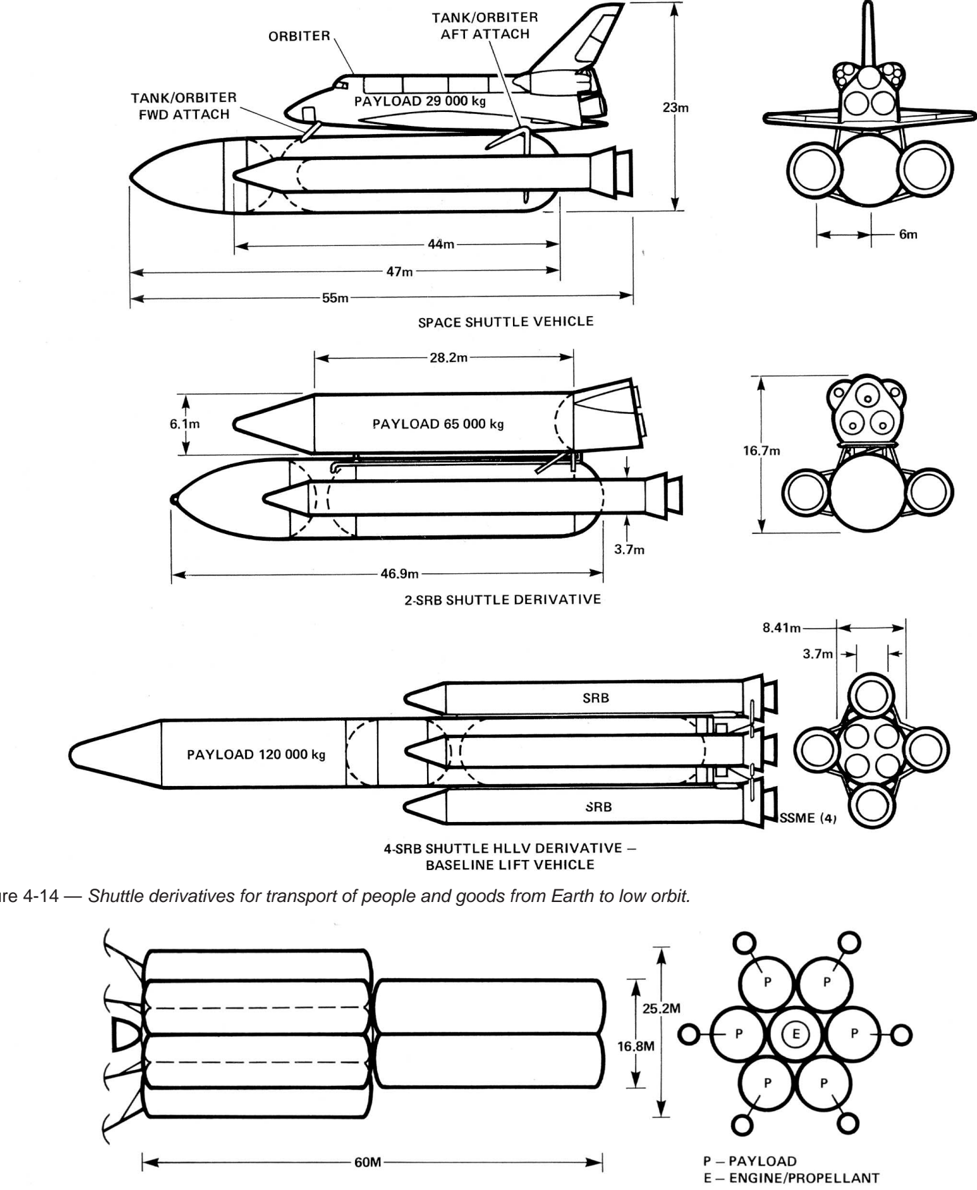
  • Figure 4-13 — Baseline transportation system.
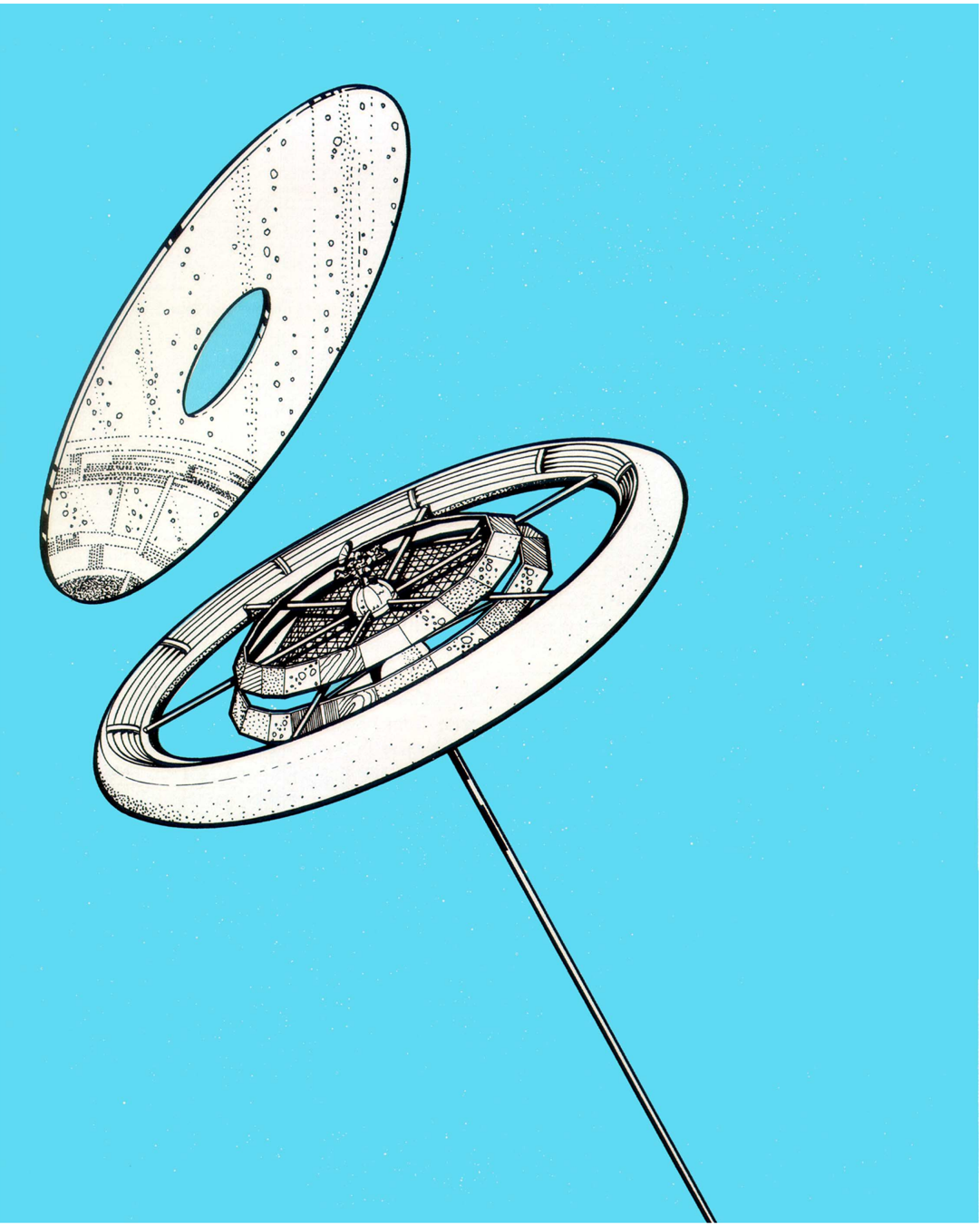
  • Figure 1-1 — The colony at Lagrangian point L5.
🧵 1/6

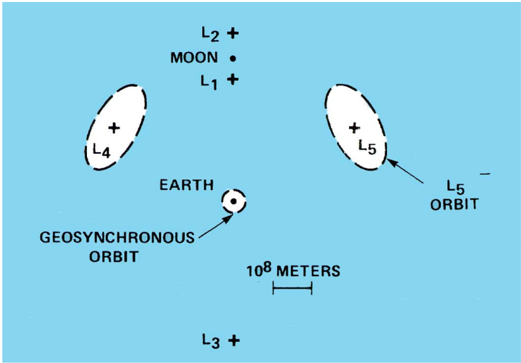
1) Libration-point logic: the study says L4 and L5 are stable, while L1, L2, and L3 are unstable and would need much more station-keeping, so L5 was the low-maintenance choice.[1]

  • Figure 2-1 — Earth-Moon libration points.
🧵 2/6

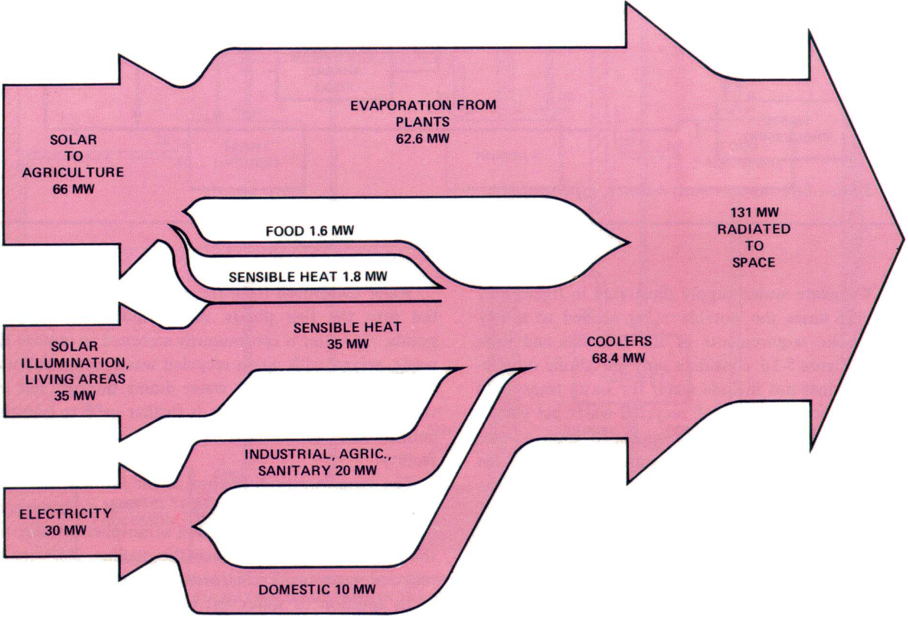
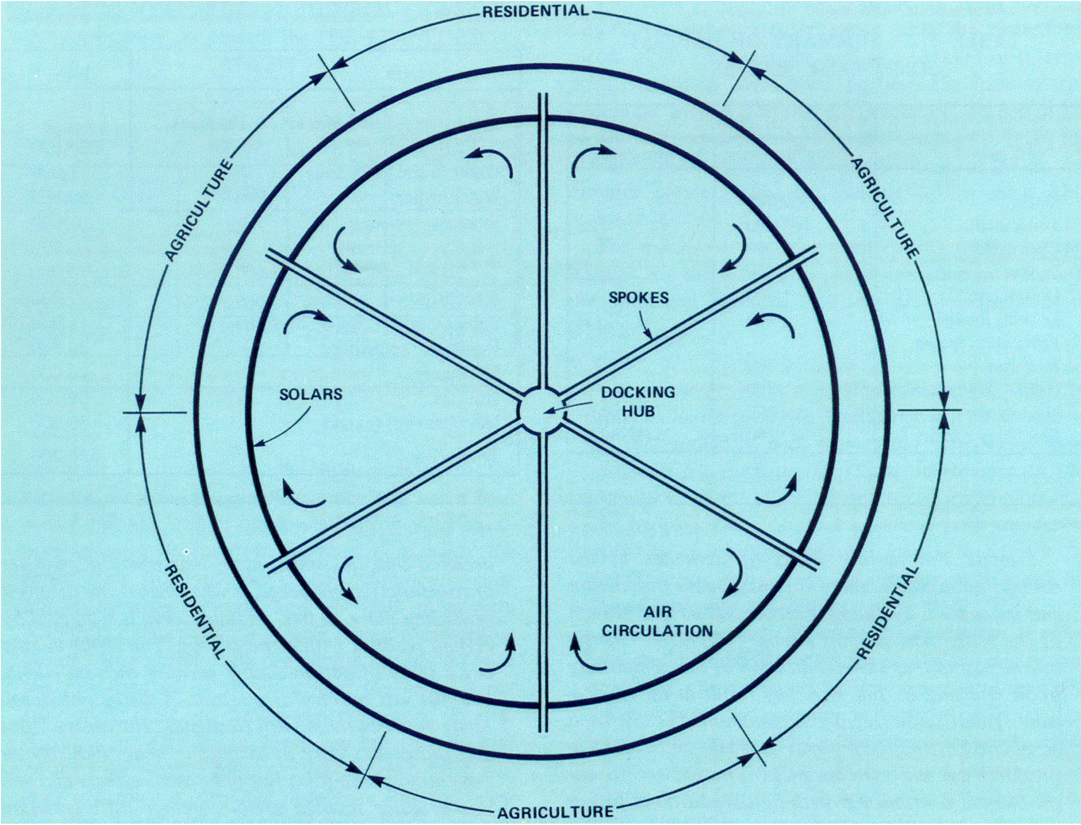
2) Continuous sunlight: in free space the colony could use full sunshine, while a lunar surface site would only get the Sun directly part of the time. That matters because the design tied agriculture and power to steady solar input.[1]

  • Figure 5-18 — Energy flow in the colony.
  • Figure 5-10 — Section showing distribution of residential and agricultural areas.
🧵 3/6

3) Logistics to Moon and GEO: the study chose L5 because it was reasonably accessible from both Earth and Moon, and because lunar materials could be shipped there to build solar power stations for geosynchronous orbit.[1]

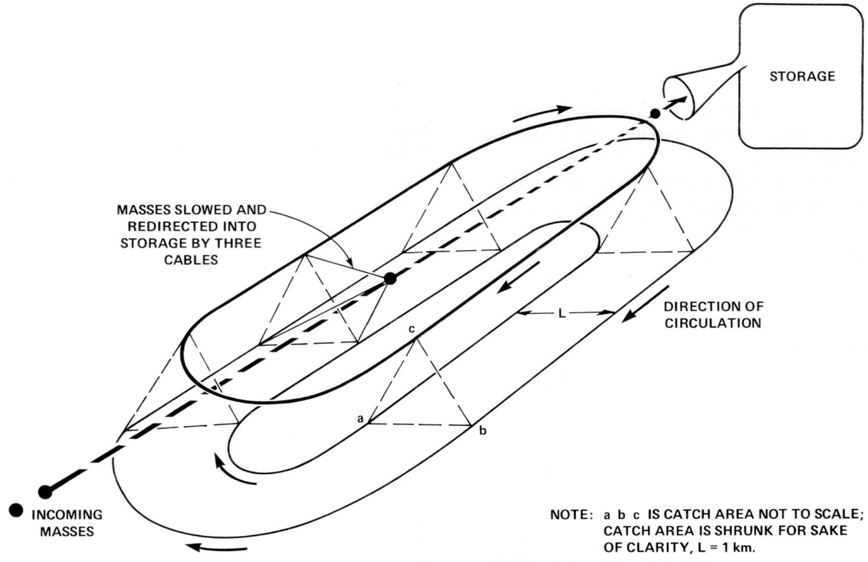
  • Figure 5-20 — The mass catcher.
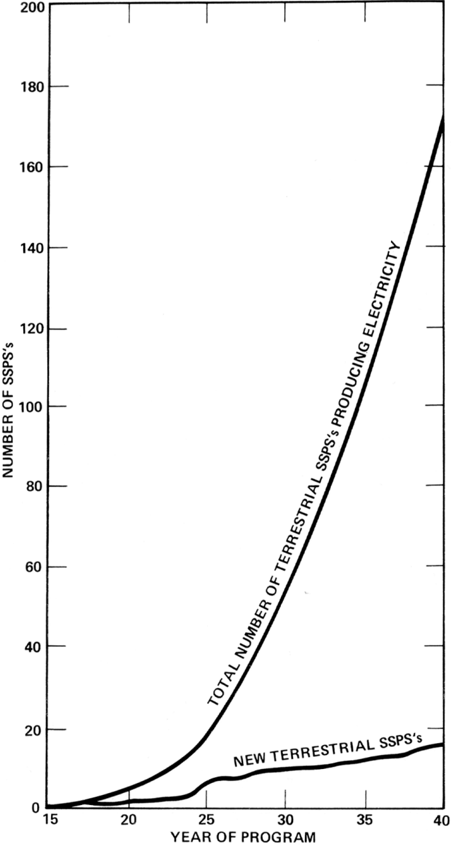
  • Figure 6-3 — The production schedule for terrestrial satellite solar power stations.
🧵 4/6

4) Eclipse avoidance and trade-offs: locations near Earth or the Moon were rejected because eclipses would cut off light and energy. L2 was chosen for the lunar mass stream, but L5 stayed the habitat site; the study also says lunar orbit, Earth or Moon orbits, and other points were considered and set aside.[1]

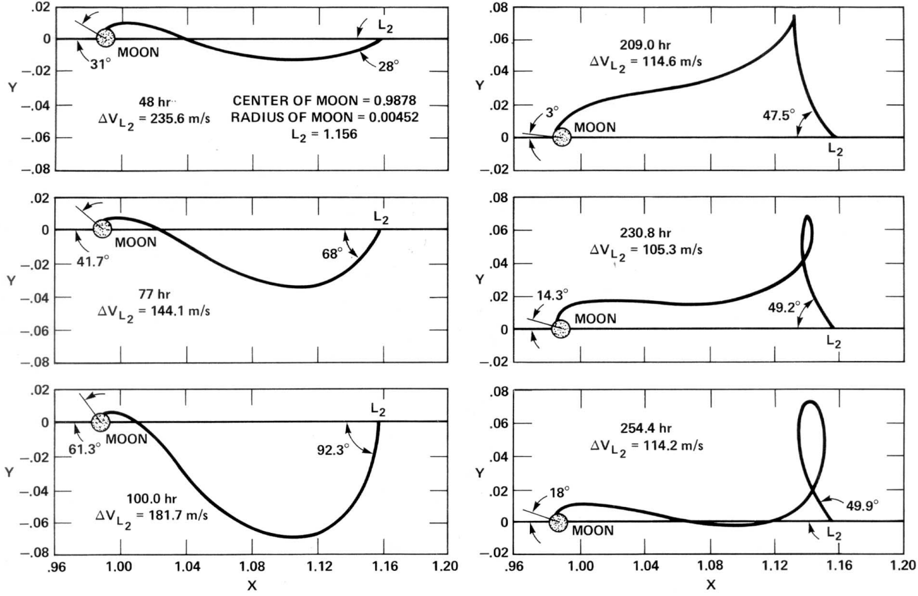
  • Figure 5-30 — Integrated trajectories between the Moon and L2 (after Edelbaum and D;4mario, AIAA Journal, April 1974).
🧵 5/6

5) The transport context: the study’s reference mission used a one-way LEO-to-L5 transfer of 4084 m/s, about 2.47 mass ratio with LH2/LOX at 460 s Isp, or 1.78 if oxygen was available in space.[1]

  • Figure 4-15 — SSME powered modular tug.
🧵 6/6
Space: Space Settlements - A Design Study 1977