What standards govern safety in industrial AR?
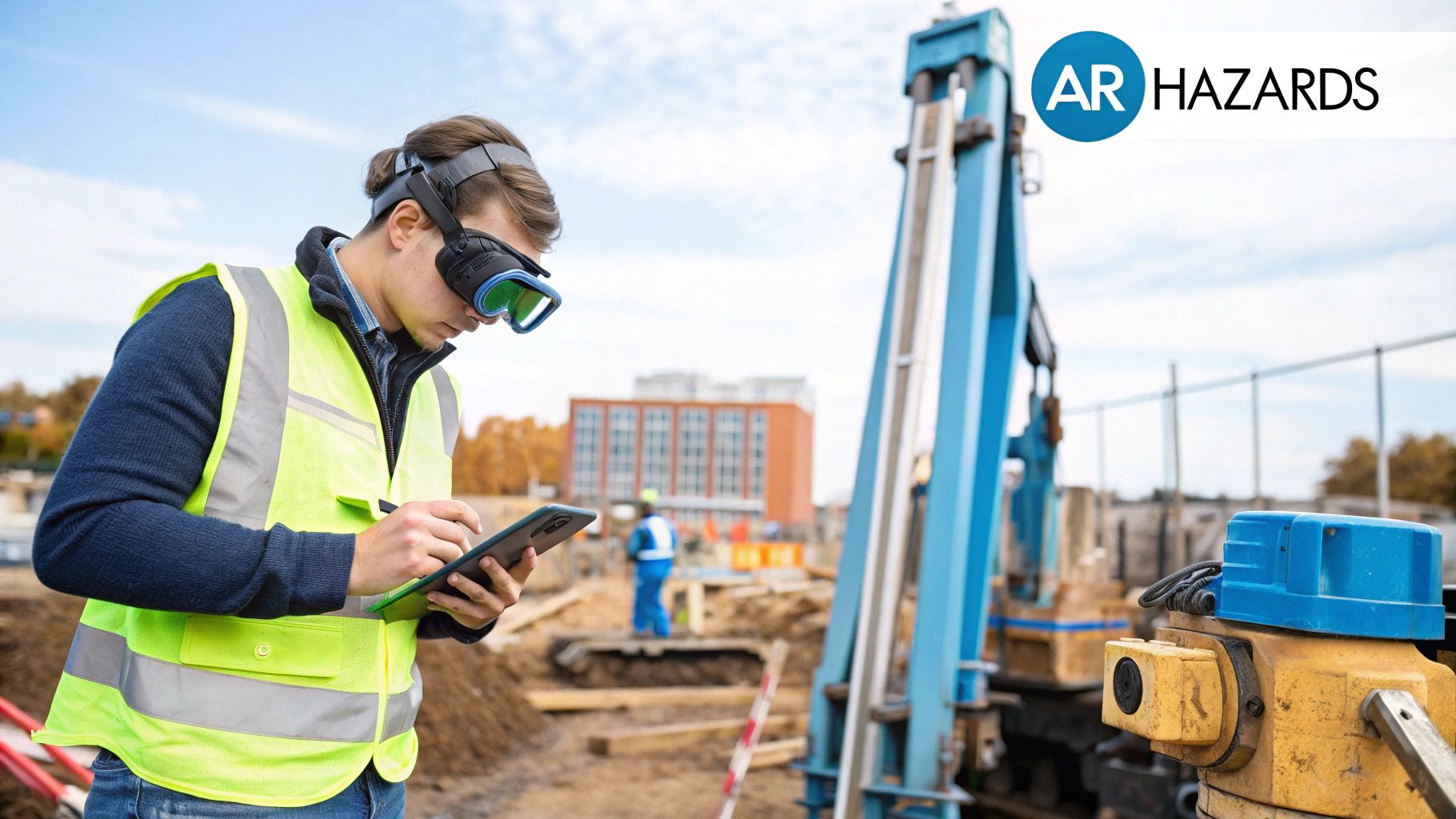
Safety in industrial augmented reality (AR) and manufacturing environments is guided by a combination of established ISO, IEC, and national standards adapted for head-mounted displays and cyber-physical systems.
Eye Safety and Ergonomics
* ISO 9241 Series: Applied to visual display ergonomics, usability, and head-mounted display use to manage visual fatigue and comfort [1].
* ISO 45001: Serves as the occupational health and safety management standard for controlling worker exposure during head-mounted display operations [2].
Machinery and Robot Safety
* ANSI/RIA R15.06 (and EN ISO 10218-2): Governs industrial robot safety requirements, which extend to mixed-reality safety zones and speed-and-separation monitoring on the factory floor [3][4].
* EN ISO 14120 and EN ISO 13857: Detail general requirements for fixed and movable machine guards, safety distances, and preventing hazard zones from being reached by upper and lower limbs [5].
* ISO 7010: Provides international standards for safety pictograms and signs, which are integrated into digital AR workflows for safety communication and training [6].
Data Security and Privacy
* Cryptographic Baselines and Access Control: Deployment frameworks specify cryptographic baselines, secure authentication, and network-layer anomaly detection [7].
* Biometric and Sensor Consent: Standards and design considerations require treating sensitive biometric streams, eye-tracking, hand-tracking, and ambient audio or video as separately consented sensors with user-visible privacy panels [8].
Compliance Steps
To achieve compliant deployment on factory floors, organizations follow structured steps:
1. Risk Assessment and Scoping: Map out operational goals, evaluate cell-scale tracking errors, and perform hazard detections under dual-task conditions to prevent attentional tunnelling [9].
2. Data Minimization: Implement on-device inference where possible and require distinct user consent for eye, hand, and audio tracking streams [10].
3. Ergonomic and Sickness Monitoring: Establish exposure schedules, monitor workers for cybersickness using tools like the Simulator Sickness Questionnaire (SSQ), and align hardware usage with ISO ergonomics standards [11].
4. Content Governance: Establish standard operating procedures, incident reporting, overlay certification, and versioning for digital AR instructions rather than relying on ad-hoc authoring [12][13].
Would you also like to know how cognitive load and attentional tunnelling are evaluated in industrial AR?Answer complete. One follow-up option available.
Create your account to keep this answer and continue from it later.
Let's look at alternatives:
- Modify the query.
- Start a new thread.
- Remove sources (if manually added).