
Ice can be clear. Why is snow white?
The same frozen water can look like a window or a white blanket. The difference is the route light takes through it.[1][2]
A clear piece of ice has relatively few internal obstacles, so much of the light can pass through. Snow is a collection of ice grains with air between them. At those many boundaries, light changes direction again and again; much of it is scattered back toward your eyes.[3][4]
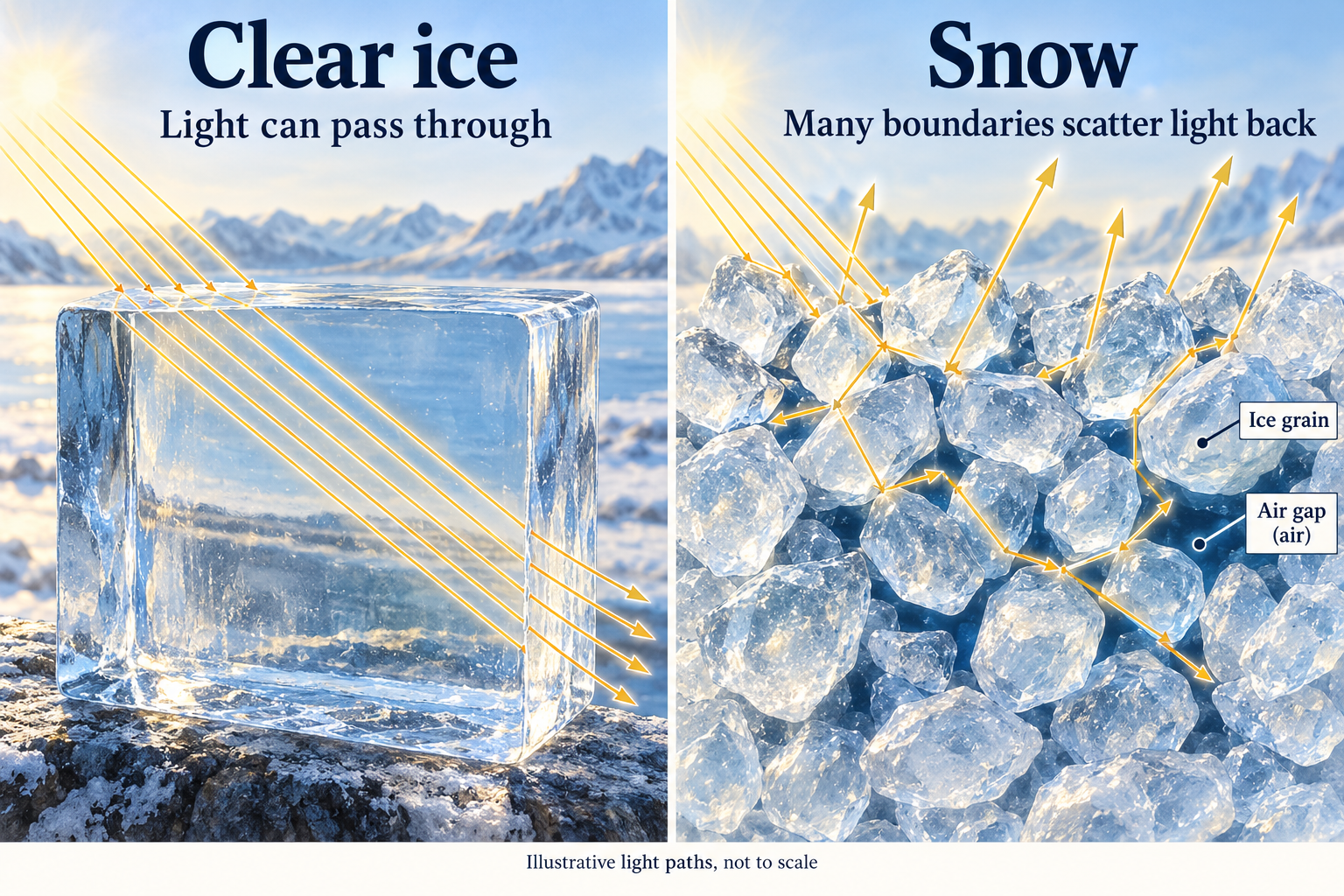
AI-generated explanatory diagram, not a measured ray-tracing simulation. · Source
Clean snow returns visible light without strongly favouring one colour, so the mixture looks white. Ice containing many bubbles or fractures can look cloudy for a similar reason.[5]
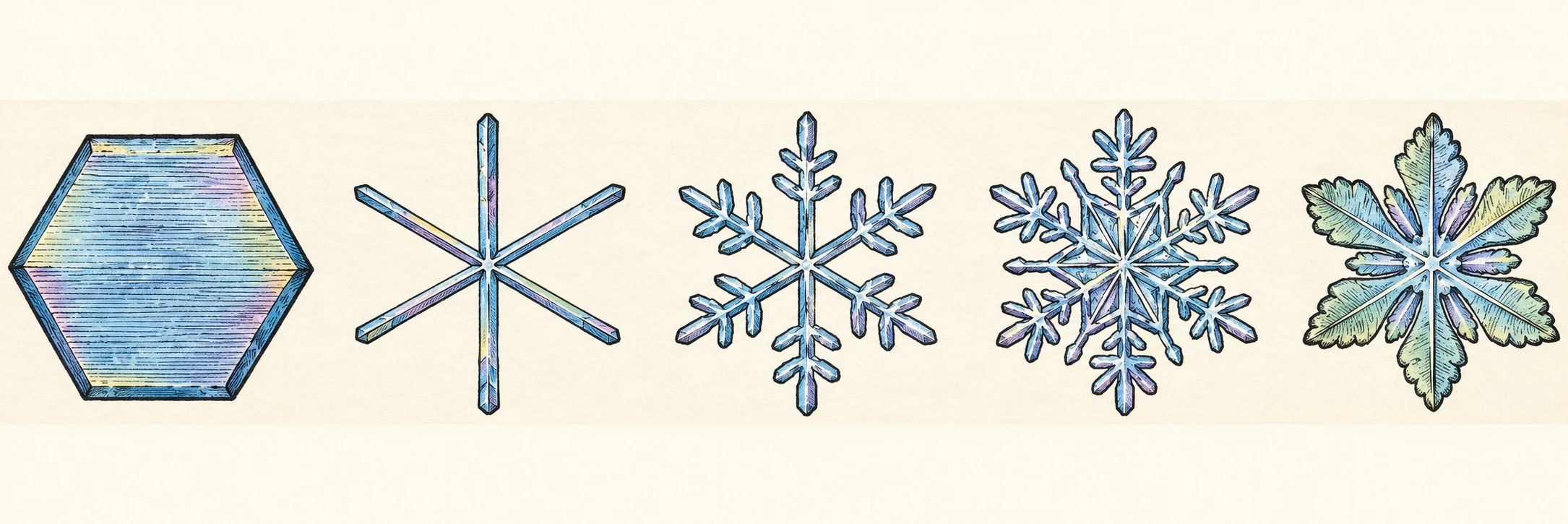
Historical book illustration, AI-assisted colour remaster. · Source
Buckley explored the snow-and-ice puzzle in The Fairy-Land of Science. Her crystal drawings make a good starting point for looking closer, but the modern explanation rests on light scattering at the many ice–air boundaries.[6][7]
Let's look at alternatives:
- Modify the query.
- Start a new thread.
- Remove sources (if manually added).