How does the male stickleback build and guard its nest?. Explain how the nest is built from bottom refuse, then bound with a threadlike secretion, and finally hollowed into a tunnel. Summarize the fathers guarding behavior, including fanning water over eggs and herding straying young back into the nest.
The Architectural Prowess and Paternal Devotion of the Male Stickleback
In the aquatic world, the male stickleback stands out as a remarkable example of dedicated fatherhood and intricate engineering. This small fish undertakes the full responsibility of constructing a complex nest and then tirelessly guarding its offspring, showcasing a level of paternal care that is both fascinating and complex. The male's behaviors, from gathering materials to actively parenting his young, provide a compelling study in animal instinct and adaptation.
This report details the specific processes involved in the male stickleback's nest-building and guardianship. It will explain how the nest is meticulously constructed from bottom refuse, bound together with a unique bodily secretion, and then hollowed into a functional tunnel. Furthermore, it will summarize the father's vigilant guarding behaviors, which include aerating the eggs and diligently herding any straying young back to the safety of the nest.
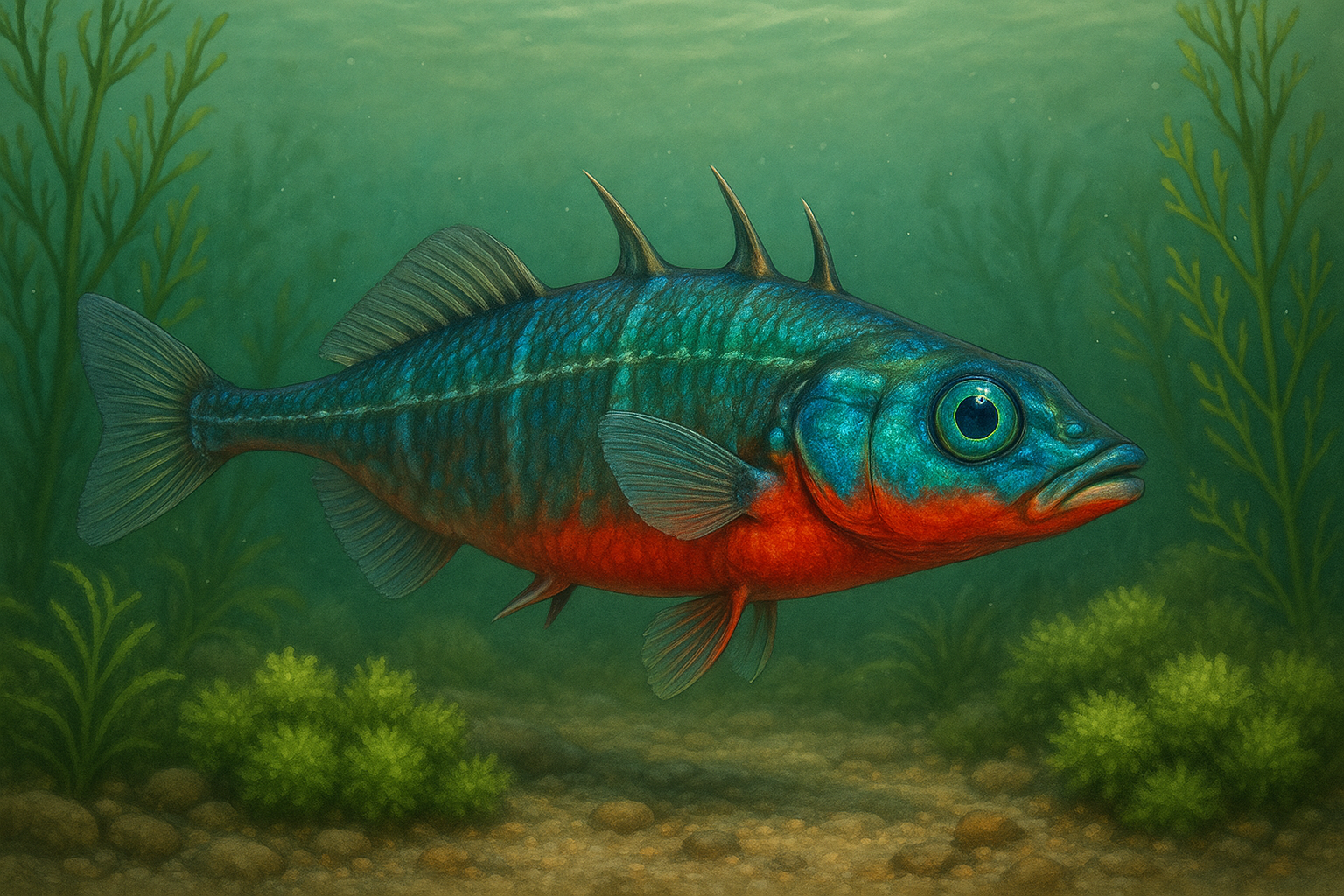
The Male Stickleback in Breeding Colors
An illustration of a male three-spined stickleback, showcasing its vibrant red underside and blue eyes, which are characteristic during the breeding season as it prepares to build its nest.
The Art of Nest Construction
The construction of the stickleback nest is a solo project undertaken entirely by the male. He meticulously selects a location and then begins the multi-stage process of building a safe haven for his future offspring.
Gathering and Assembling Materials
The initial phase of construction involves gathering suitable materials. The male stickleback collects refuse from the bottom of the stream or pond, including items like shreds of weed and other small bits of material[1]. These elements are carefully gathered and formed into a small pile, which serves as the foundation and primary structure of the nest.
A Unique Binding Agent
To ensure the loose materials hold together, the male stickleback employs a remarkable biological tool: a special threadlike secretion[1]. This adhesive substance is produced from a small pore located on the fish's under surface[1]. The male can be observed repeatedly rubbing his body against the sides of the nest every minute or two[1]. This action deposits delicate threads that effectively bind the collection of weeds and refuse into a cohesive and durable structure[1].
Hollowing the Tunnel
Once the nest is securely bound, the final architectural step is to create an internal chamber. The male accomplishes this by force. He dives at the structure, butting and striking it with his body[1]. Ultimately, he pushes his way completely through the nest, a process which hollows it out and creates a tunnel-like opening where the female can later deposit her eggs[1].
Vigilant Paternal Guardianship
After the eggs are laid and fertilized, the male's role transitions from builder to a fierce and dedicated guardian. His focus shifts entirely to protecting the nest and ensuring the survival of the developing embryos and, later, the hatched fry.
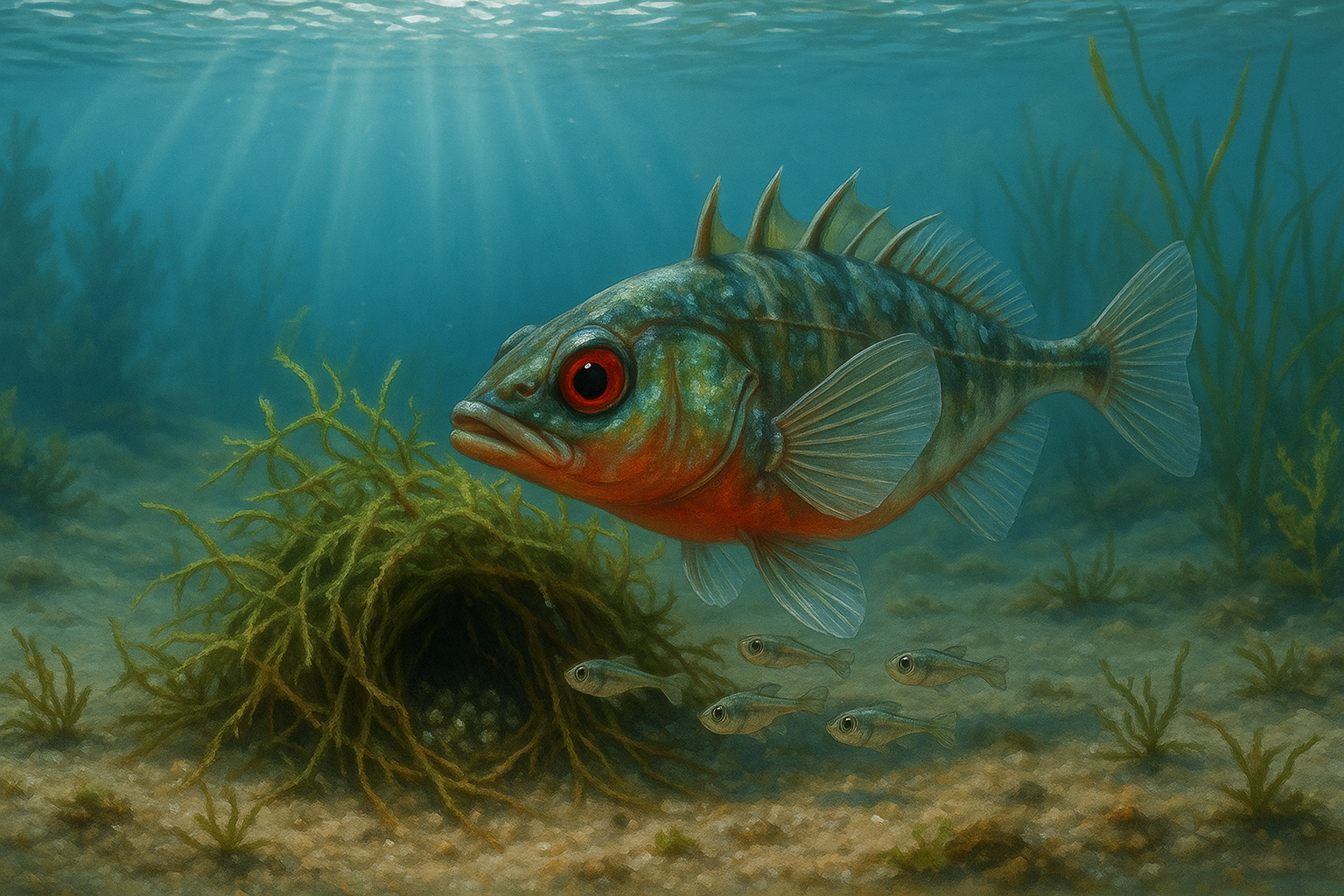
A Stickleback Father's Vigil
A male stickleback is depicted fanning water with his fins over his carefully constructed nest, while a few tiny fry swim nearby, illustrating his dedicated parental care.
Guarding the Eggs
With the eggs secured inside the nest, the male mounts a ferocious guard[1]. He aggressively makes onslaughts upon any and all creatures that venture too close to his precious cargo, ensuring the eggs remain safe from predators until they hatch[1]. In addition to defense, the male performs crucial maintenance. He actively fans water over the eggs, a behavior that serves the dual purpose of keeping them well-oxygenated and preventing the growth of harmful fungus[1].
Caring for the Young
The father's duties do not end once the eggs hatch. As the young sticklebacks emerge, he continues his protective role with unwavering diligence. If any of the young fry stray from the safety of the nest, the male takes an active role in herding them back[1]. His method for this is extraordinary: he will carefully draw a wandering fry into his mouth, swim back to the nest, and then gently shoot it back inside to rejoin its siblings[1].
Stickleback Nesting and Guarding Behavior in Action
These videos provide a real-world look at the fascinating behaviors of the male stickleback, from the intricate process of building its nest to its aggressive defense and diligent care for its eggs and young.
Conclusion
The male stickleback demonstrates a sophisticated and comprehensive suite of paternal behaviors. He is not merely a guard but also a skilled architect, using materials from his environment and a unique secretion from his own body to construct a secure nursery. His subsequent guardianship is tireless, involving aggressive defense, essential egg maintenance through fanning, and the remarkable practice of retrieving stray young with his mouth. This combination of nest-building prowess and devoted parenting makes the male stickleback a profound example of the complexities of animal behavior and the diverse strategies for ensuring reproductive success in nature.
References
Get more accurate answers with Super Pandi, upload files, personalized discovery feed, save searches and contribute to the PandiPedia.
Let's look at alternatives:
- Modify the query.
- Start a new thread.
- Remove sources (if manually added).