How do QR codes still scan correctly even when part of them is damaged?
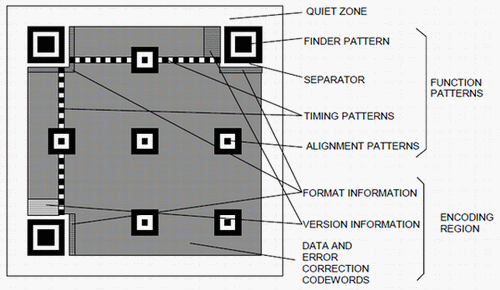
QR codes store data as binary information within a grid of black and white modules[3]. To ensure reliable scanning, they use Reed-Solomon error correction, which adds redundant data to the code[3]. This allows the scanner to reconstruct missing pieces if the code is damaged, smudged, or obscured by up to 30%[2][6]. Finder patterns at the corners help the device locate and orient the code, while alignment markers ensure accuracy even if the surface is skewed[2][6]. Designers often place logos in the center, treating them as intentional damage that the error correction algorithm easily ignores[2].
Get more accurate answers with Super Pandi, upload files, personalized discovery feed, save searches and contribute to the PandiPedia.
Let's look at alternatives:
- Modify the query.
- Start a new thread.
- Remove sources (if manually added).