Transcript
In the quiet hum of a microwave oven, electromagnetic waves at 2.45 gigahertz cause water molecules to rotate rapidly, producing heat while leaving the surrounding air largely untouched. Imagine simple animations showing waves with a 12.2 centimeter wavelength guiding energy into food, where water molecules dance in a vibrant performance that transforms energy into warmth. Witness how food heats unevenly as standing wave patterns create hot spots and cooler areas, prompting you to stir or reposition your dish for a more even meal. After microwaving, allow your meal a brief standing time so that heat slowly spreads by conduction, ensuring every bite is perfectly warmed. And remember, never place metal with sharp edges inside the microwave, as sparks can fly when voltage builds up along them.
Let's look at alternatives:
- Modify the query.
- Start a new thread.
- Remove sources (if manually added).
Norhala vowed to stamp Ruszark flat for her parents' torture.
The Metal Monster's hammer-tipped arm breached Ruszark's walls.
Gigantic metal claws trapped and crushed Ruszark's horsemen.
The Destroying Things smashed buildings like eggshells.
Cherkis was crushed and his body thrown onto his ruined city.
Let's look at alternatives:
- Modify the query.
- Start a new thread.
- Remove sources (if manually added).
Get more accurate answers with Super Pandi, upload files, personalised discovery feed, save searches and contribute to the PandiPedia.
Overview of YouTube's Educational Impact

YouTube has established itself as an influential platform for learning and education, reaching audiences across various age groups and roles in the educational process[1]. The platform not only serves teachers and students but also provides a trusted space for parents to engage with educational content, ensuring that individuals of all ages have access to a wealth of information and skill-building opportunities[1]. This report details how YouTube enhances learning for teachers, students, and parents by providing diverse educational resources, personalized recommendations, and an engaging multimedia environment.
Empowering Educators: Enhancing Teaching and Learning


YouTube plays a significant role in supporting teachers and enhancing the classroom experience. According to the research, 78% of teachers who use YouTube agree that the platform helps students continue to learn outside the classroom, while 90% report incorporating YouTube content into their lessons or assignments[1]. This statistic underscores the important bridge that YouTube creates between formal education and real-world, self-guided learning. One example comes from Eric Cross, a middle school science and technology teacher from California, who stated, "YouTube is one of the most accessible and engaging multimedia platforms on the internet, and it acts as a bridge to build connections with my students," highlighting the platform's capacity to make learning more interactive and relatable[1]. By offering a dynamic mix of high-quality videos, tutorials, and demonstrations, YouTube allows teachers to enhance their instructional methods and provide content that caters to various learning styles.
Expanding Learning Opportunities for Students


Students benefit greatly from the diverse range of educational content available on YouTube. The platform hosts a wide variety of videos that cover topics from academic subjects such as science, math, and history to practical skills like musical instruments and cooking techniques[1]. Many young learners report that YouTube offers them a direct and engaging way to access tutorials, expert insights, and step-by-step guides that help them master new skills. One YouTube viewer, aged 18–24 from Iowa, remarked, "Through YouTube I have access to a wealth of educational content, tutorials and expert insights that have helped me expand my knowledge and skills in both professional and personal areas," emphasizing how the platform facilitates lifelong learning[1]. The availability of such tailored and accessible content makes YouTube an indispensable tool for students who seek to supplement their formal education with additional, self-paced learning opportunities.
Parents Empowering Their Children's Learning Journeys


Parents have also recognized YouTube as a valuable educational resource for their children. The platform provides a trusted environment where young learners can safely explore, learn, and discover new ideas thanks to age-appropriate content and robust parental control features[1]. Research indicates that 66% of parents who use YouTube, or its kid-friendly version YouTube Kids, believe that the platform plays an important role in their children's discovery of the world[1]. Additionally, 74% of parents agree that YouTube helps their children learn, showing that the educational value of the content extends beyond pure entertainment to tangible learning benefits[1]. With such positive feedback, parents are increasingly relying on YouTube to extend learning beyond the classroom and to provide supplemental educational material that caters to a broad range of interests and developmental needs.
Conclusion


Overall, YouTube has transformed the landscape of education by establishing itself as a multifaceted platform that empowers teachers, enriches the learning experiences of students, and gives parents confidence in the quality of educational content available online[1]. The combination of engaging multimedia content, personalized recommendations, and an extensive library covering an array of topics ensures that learning is accessible, engaging, and continuous. With the platform now playing a pivotal role in informal education and the broader ecosystem of lifelong learning, YouTube continues to influence how educational content is delivered and consumed in the modern digital age[1].
Let's look at alternatives:
- Modify the query.
- Start a new thread.
- Remove sources (if manually added).
Aviation accounts for 2-3% of global carbon dioxide emissions.
Electric aviation could reduce emissions by up to 90%.
Current lithium-ion batteries only provide 150-170 Wh/kg energy density.
Electric aircraft could cut up to 1% of aviation emissions by 2050.
By 2050, 38% of the global fleet could adopt alternative propulsion systems.
Let's look at alternatives:
- Modify the query.
- Start a new thread.
- Remove sources (if manually added).
 Curated by Joan


This source is an 1896 publication titled THE WORLD OF WONDERS: A RECORD OF THINGS WONDERFUL IN NATURE, SCIENCE, AND ART[1]. Published by Cassell and Company, Limited, it serves as a compendium of short articles detailing a wide array of marvels intended to inspire awe and admiration[1]. The book's purpose is encapsulated in a quote on its title page: ''What does Philosophy impart to man BUT UNDISCOVERED WONDERS? Let HER SOAR Even to her proudest height... She but extends the scope of wild amaze And Admiration''[1].
The volume covers a vast range of subjects, organized as individual articles listed alphabetically in the table of contents[1]. Many of the articles are accompanied by illustrations, as indicated by an asterisk in the contents list[1].
The topics featured in the book can be broadly categorized:
* Natural Wonders: Detailed descriptions of natural phenomena and locations are provided, with articles on subjects like 'Niagara in Winter,' 'The Wonders of the Alps,' 'The Sahara,' 'The Dead Sea,' and 'Volcanoes Under Water'[1].
* Science and Technology: The book explores scientific marvels and inventions of the era, including the 'Wonders of Light,' 'The Atlantic Telegraph,' 'Calculating Machines,' 'The Steam-Hammer,' and 'The Atmospheric Railway'[1].
* Art and Construction: It highlights significant architectural and artistic achievements such as 'The Alhambra,' 'The Great Pyramid,' the 'Porcelain Tower of Nankin,' and 'The Clock at Strasburg'[1].
* Animal and Plant Life: Numerous articles focus on the curiosities of the natural world, including 'Ant Life,' 'Luminous Insects,' 'The Seeds of Mushrooms and Toadstools,' and 'The Dragon Tree of Orotava'[1].
* Human Feats and History: The collection contains stories about human achievements, historical events, and peculiar individuals, with entries on 'Muscular Exertion,' 'Instances of Longevity,' 'Wonderful Highwaymen,' 'The Man with the Iron Mask,' and the 'Massacre of St. Bartholomew'[1].
* Curiosities and Oddities: The book also includes articles on unusual topics like 'Showers of Toads and Fishes,' 'Minute Writing,' 'The Book-Fish,' and a genealogical puzzle titled 'A Wonder of Relationship'[1].
The writing style is characteristic of the late 19th century, aiming to be both educational and engaging. For example, the article on Niagara Falls begins:
Since the eye of the pale-faced European was first kindled into admiration by the spectacle presented at Niagara, the pen has scarce ever ceased to describe, or at least to attempt to describe, the overwhelming power, the profound grandeur, and the wild beauty that have united to make the Falls of Niagara perhaps the most celebrated scene on the face of the globe[1].
An article on 'Kent's Cavern' details the scientific exploration of a cave near Torquay, which yielded 'vast quantities of animal remains, and other relics of prehistoric times'[1]. The text describes the layers of stalagmite and cave-earth, and the discovery of bones from extinct animals like the elephant, rhinoceros, and hyena, alongside primitive flint tools made by early humans[1]. These findings lead the author to conclude that 'man existed in Britain during the far-off period when the bones of animals were deposited in the lowest stratum of cave-earth'[1].
Let's look at alternatives:
- Modify the query.
- Start a new thread.
- Remove sources (if manually added).
Let's look at alternatives:
- Modify the query.
- Start a new thread.
- Remove sources (if manually added).
Get more accurate answers with Super Pandi, upload files, personalised discovery feed, save searches and contribute to the PandiPedia.
Transcript
In 1762, John Montagu, the 4th Earl of Sandwich, asked for meat between two pieces of bread during a long card game, and his name soon became synonymous with this handy meal. This practice quickly caught on among his peers, spreading throughout England and evolving into the countless sandwich varieties enjoyed today.
Let's look at alternatives:
- Modify the query.
- Start a new thread.
- Remove sources (if manually added).



The light which was kept constantly burning in the top was visible by seamen at a distance equal to about 40 miles
Unknown source[1]

Lighthouse and sea-light are terms which... enable him to judge of his position during the night.
Alan Stevenson[1]

The first lighthouse of modern days... serves as a guide to the shipping.
Alan Stevenson[1]

The want of a light on the Eddystone soon led to a fatal accident.
Alan Stevenson[1]

In the course of his studies, he became imbued with an enthusiasm for the study of Hebrew.
John Lightfoot[1]
Let's look at alternatives:
- Modify the query.
- Start a new thread.
- Remove sources (if manually added).
The Pantheon is the world's largest unreinforced concrete dome, standing for nearly 2,000 years.
Roman concrete's durability is partly due to pozzolanic ash, which includes volcanic materials.
Lime clasts in Roman concrete enable self-healing capabilities when exposed to water.
Hot mixing techniques allowed Roman concrete to cure faster and produce stronger compounds.
Roman concrete can thrive in seawater, creating tobermorite crystals that enhance durability.
Let's look at alternatives:
- Modify the query.
- Start a new thread.
- Remove sources (if manually added).





Overview and Context

Digital wellness in the corporate arena goes beyond traditional physical health programs by addressing the impact of technology on employees' mental and emotional well‐being. Companies increasingly recognize that continuous connectivity can lead to digital burnout, reduced attention spans, and a blurring of work–life boundaries[13]. This has prompted organizations from tech giants to startups to embed digital wellness into their overall employee wellbeing strategy, ensuring that employees receive support not only for physical and mental health but also for managing the demands of digital interactions throughout the day[2].
Digital Wellness Initiatives Across Sectors


Global corporations have taken diverse approaches in deploying digital wellness initiatives. Tech giants like Google, Microsoft, and Salesforce have integrated comprehensive programs that include mindfulness training, free counseling services, and resilience workshops. For instance, Google embeds mental health support with mindfulness sessions and free counseling, leading to enhanced employee engagement and improved well‐being metrics[12]. Microsoft reports that 70% of its employees acknowledge that managerial behavior substantially influences their mental health, reinforcing the necessity for leadership involvement in these initiatives[12].
Consultancies such as Deloitte and Booz Allen have incorporated digital components into traditional wellness models by offering flexible work practices, sabbaticals, and incentives that promote a healthier work schedule. Their initiatives often include structured programs with clearly defined work–life balance policies and scheduled digital detox periods to counteract the always‐on culture[12].
Startups and emerging firms, on the other hand, are capitalizing on innovative digital wellness platforms that leverage personalization and gamification. These platforms provide employees with tailored health monitoring, interactive challenges, and incentive programs to encourage healthier behaviors. Reviews and evaluations of such software highlight features such as real-time health tracking, stress management tools, and social community boards that foster a supportive environment and boost morale[17].
ROI Metrics and Measurement Approaches

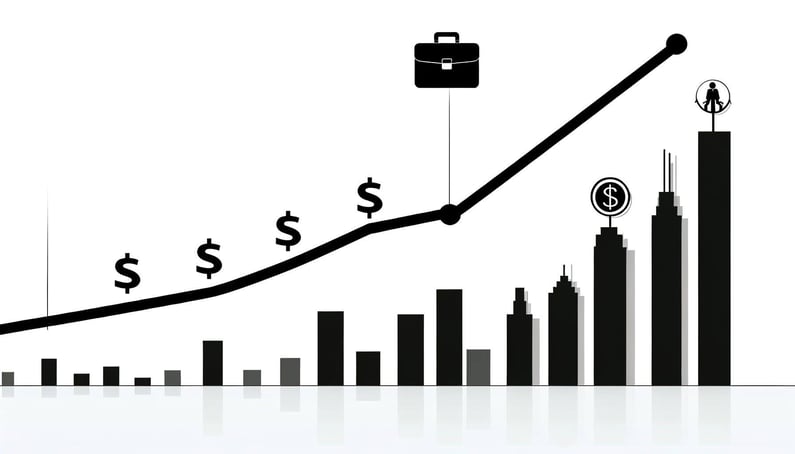

Measuring the return on investment (ROI) of corporate digital wellness programs is crucial for demonstrating their financial and operational benefits. Various sources emphasize the importance of tracking healthcare cost reductions, absenteeism, productivity improvements, and employee retention. For example, traditional corporate wellness programs can yield savings of approximately $3.27 in healthcare costs and $2.73 in reduced absenteeism per dollar invested[1].
A modern approach involves combining both ROI and value on investment (VOI) metrics. VOI accounts for qualitative benefits such as improved employee morale, greater engagement, and enhanced workplace culture, which are not always captured through pure monetary metrics[2]. Detailed ROI assessments often involve pre- and post-implementation comparisons, including metrics like healthcare claims, turnover rates, and productivity levels[11].
Companies also use digital dashboards to track real-time engagement through biometric screening, participation rates (with optimal programs achieving up to 75% utilization), and feedback surveys that help in refining the approach over time[18].
Challenges and Best Practices

Implementing digital wellness initiatives is not without its challenges. One major difficulty lies in selecting appropriate technology that integrates seamlessly with existing HR and payroll systems while ensuring robust data privacy and regulatory compliance (such as GDPR and HIPAA)[3]. Other concerns include maintaining high user engagement and avoiding low participation rates that can undermine the effectiveness of the program[4].
Best practices for overcoming these challenges include starting with employee feedback to tailor initiatives precisely to workforce needs. Organizations are advised to use a blend of in-office events and remote-friendly digital solutions that address both physical and cognitive health aspects[1]. The integration of AI-driven analytics and dynamic baseline measurements helps in continuously monitoring employee engagement and identifying any defective or underperforming touchpoints in the program[2].
Additionally, leaders must actively model balanced digital behaviors, such as setting boundaries for after-hours communication and reducing unnecessary virtual meetings to alleviate digital burnout[13].
Templates and Implementation Strategies
-1-1-1.png "Metrics to Measure Corporate Wellness Success")
Structured templates and strategic implementation plans are integral to successful digital wellness programs. A recommended approach is to begin by defining clear objectives and key performance indicators (KPIs) that align with overall business goals, such as reducing healthcare costs and enhancing employee productivity[4].
Organizations are encouraged to adopt a standardized template that includes regular health risk assessments, periodic engagement surveys, and digital dashboards that consolidate data on biometric measurements, cost savings, and productivity metrics[18]. This template should also incorporate a robust incentive system that uses gamification and rewards to drive participation, as highlighted by effective digital wellness platforms that offer mobile accessibility and real-time analytics[16].
Implementation strategies also include a phased rollout of digital wellness tools, starting with pilot programs to refine the approach based on user feedback. For example, companies can initiate a pilot campaign using tools that track activity levels through wearables, deliver personalized health content via mobile apps, and support team-based challenges that foster social accountability[6].
Furthermore, templates should accommodate periodic reviews and adjustments, ensuring that the program remains dynamic and can address emerging challenges, such as shifts in work patterns or technological innovations. This holistic approach not only reinforces employee well-being but also maximizes the ROI on corporate wellness investments by continually adapting to the evolving needs of the workforce[11].
Let's look at alternatives:
- Modify the query.
- Start a new thread.
- Remove sources (if manually added).






-1.png "fitonhealth.com Favicon")