What are quick workouts for busy schedules?
Let's look at alternatives:
- Modify the query.
- Start a new thread.
- Remove sources (if manually added).

What are the layers of game development?
Let's look at alternatives:
- Modify the query.
- Start a new thread.
- Remove sources (if manually added).
Create your account to shape this feed around what you search for and enjoy.
What is the significance of daily affirmations?
Let's look at alternatives:
- Modify the query.
- Start a new thread.
- Remove sources (if manually added).
How do robot vacuums navigate your home?
Let's look at alternatives:
- Modify the query.
- Start a new thread.
- Remove sources (if manually added).

What are the signs of good mental health?

Signs of good mental health include the ability to think, feel, and react in ways that allow you to live fully and independently. This encompasses feeling positive about yourself, forming satisfying relationships, and possessing the resilience to overcome challenges[3]. Additionally, a person with good mental health can manage a range of emotions, maintain daily routines, and engage in enjoyable activities[3][4].
Moreover, mentally healthy individuals express gratitude, look forward to experiences, and let go of grudges. They appreciate simple pleasures, help others, set personal boundaries, and remain content with their lives without comparison to others[2][1]. Overall, good mental health allows for emotional stability and positive social interactions.
Let's look at alternatives:
- Modify the query.
- Start a new thread.
- Remove sources (if manually added).
Future Trends in Wearable Technology

The wearable technology market is evolving rapidly, influenced by advancements in health monitoring, artificial intelligence, sustainable practices, and cross-device integrations. As we look ahead to 2024 and beyond, several key trends are emerging that will redefine how these devices fit into our daily lives.
Enhanced Health Monitoring Capabilities
One of the most significant trends in wearable technology is the continual improvement in health monitoring features. Devices are expected to advance in tracking metrics such as blood pressure, glucose levels, and stress levels. This transition is largely driven by demands for proactive health management, making wearables more like personal health assistants. For instance, smartwatches are anticipated to include non-invasive blood glucose monitoring, which allows diabetics to manage their condition without invasive procedures[4][7]. Additionally, features aimed at detecting sleep apnea and other health conditions are likely to become standard across various wearable devices, enhancing their utility in everyday health management[5][10].
Integration of Artificial Intelligence
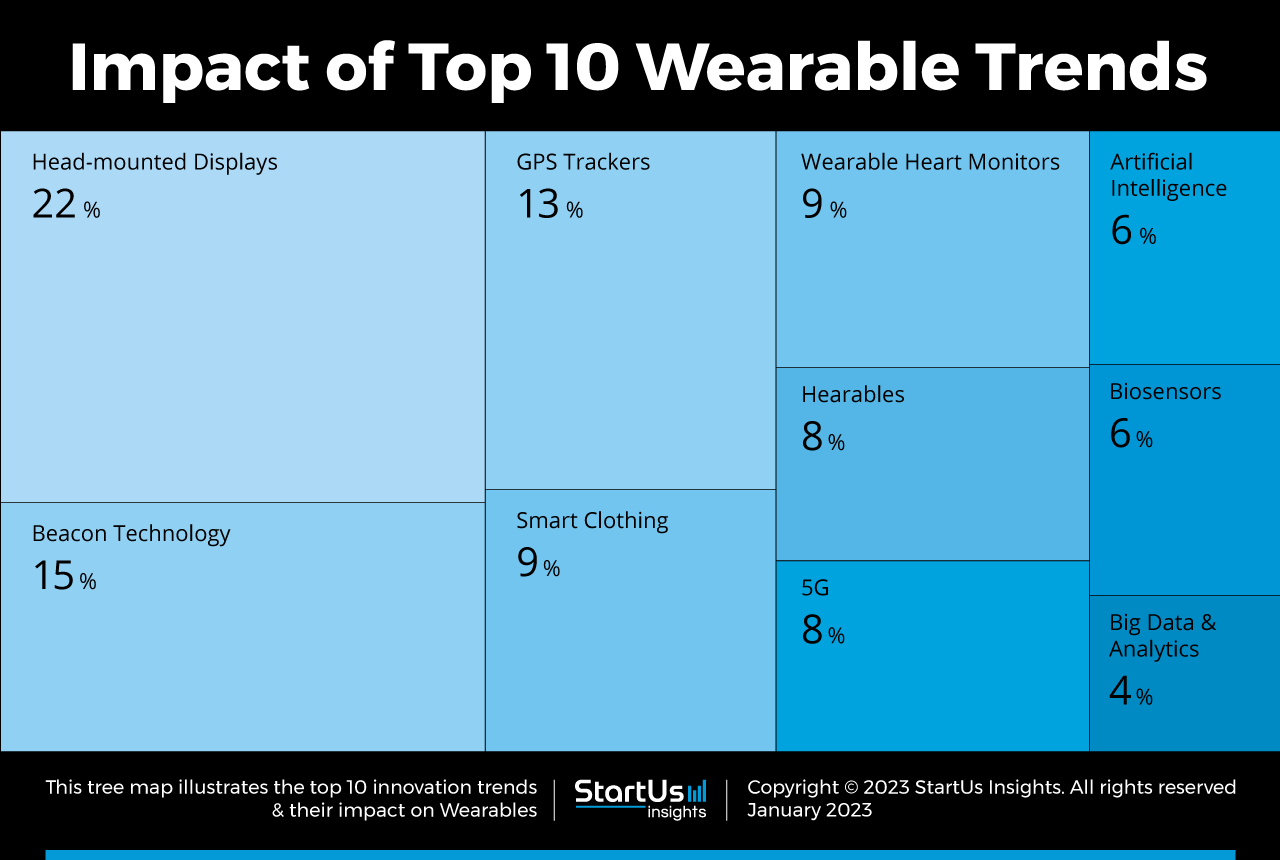
Artificial intelligence (AI) and machine learning are poised to play pivotal roles in the future of wearables. With AI-driven insights, wearables can analyze users' health data to provide personalized recommendations. For example, fitness trackers might adapt workout plans based on historical data from users' activity levels and health metrics[8]. AI capabilities will also enhance user experience by improving device interactivity and enabling voice commands, making devices more intuitive and user-friendly[2][7][11].
Smart Fabrics and Clothing
The trend towards smart clothing is gaining significance, with several companies integrating technology directly into apparel. These smart fabrics can monitor various vital signs and deliver real-time feedback, merging the functionalities of traditional wearables with the comfort and style of everyday clothing. Innovations in this area are expected to incorporate sensors that track health metrics unobtrusively, expanding the market for 'smart fashion' significantly in 2024 and beyond[9][11].
Sustainable Practices and Eco-Friendly Materials
5G Connectivity
The rollout of 5G technology is set to further revolutionize the wearables market by enabling faster data transfer and lower latency, facilitating real-time communication and remote monitoring for health management applications. This connectivity will allow wearables to seamlessly integrate with other smart devices within a user’s ecosystem, enhancing their functionality[2][8][11]. The integration of wearables into smart home systems could allow users to control their environments with greater ease, making technology more accessible and integrated into daily routines.
Expansion in the Pet Wearables Market
Alongside human application, the wearables trend is expanding into the pet market. Devices focused on health tracking for pets are set to become more prevalent, targeting owners who want to monitor their animals' health metrics in real time. This emerging segment showcases the versatility of wearable technology and its potential to cater to new demographics and market needs[5][11].
Growing Importance of Mental Health Tracking
As awareness of mental health issues increases, wearables are likely to incorporate features aimed at tracking mental well-being. Devices may soon offer functionalities such as stress tracking, sleep quality assessment, and even alerts for potential mental health issues, thereby broadening the scope of health metrics that these wearables can monitor[3][4]. This capability aligns with a growing consumer demand for holistic health management tools.
Legal and Regulatory Challenges
With the advancement of wearable technology comes the challenge of regulatory compliance. Companies will face scrutiny regarding data privacy and security as wearables increasingly collect sensitive personal health data. Legal disputes over technology rights and patents, such as those involving major players like Apple and other tech companies, are anticipated to shape the landscape of wearable tech in 2024 and beyond[8][9]. Compliance with regulations, such as FDA approvals for health-monitoring functionalities, will also become critical as wearables broaden their health applications.
Conclusion
The future of wearable technology promises significant advancements in health monitoring, sustainable practices, and smart integrations with daily life, emphasizing the importance of AI and user personalization. As trends continue to evolve, these devices are set to become even more integral to our health management and daily routines, contributing to improved quality of life and enhanced connectivity across various aspects of modern living.
Let's look at alternatives:
- Modify the query.
- Start a new thread.
- Remove sources (if manually added).
Create your account to shape this feed around what you search for and enjoy.
Advancements in Transparency through Explainable AI

Explainable Artificial Intelligence (XAI) has made significant strides in fostering transparency within machine learning models, addressing the essential concern of trustworthiness as AI technologies become increasingly prevalent in various sectors. This report synthesizes insights from multiple studies and articles to illustrate how XAI is advancing the understanding of complex AI systems, particularly emphasizing the importance of transparency.
The Need for XAI

As AI models often operate as 'black boxes,' there is a growing urgency to understand the decision-making processes behind their predictions. Such opacity can hinder the adoption of AI solutions across critical domains such as healthcare, finance, and law. In these fields, stakeholders must comprehend the rationale behind AI outputs to ensure accountability and reliability in automated decisions[4]. By focusing on transparency, XAI seeks to demystify these black boxes, offering insights into the underlying mechanics of AI systems[8].
Building Trust and Accountability
One of the primary functions of XAI is to build user trust in AI systems. Transparent models instill confidence among users, stakeholders, and regulatory bodies by enabling them to understand why a model makes specific predictions[1]. This trust is essential, especially in high-stakes scenarios where decisions directly impact human lives, such as medical diagnoses or credit approvals. A transparent model provides clarity on how input features influence decisions, thus making it easier for users to accept and act upon the model’s recommendations[2][4].

Moreover, XAI is crucial for meeting compliance and regulatory requirements, as organizations often face strict rules regarding transparency and accountability in their decision-making processes. For instance, regulations such as the General Data Protection Regulation (GDPR) necessitate that users have access to explanations regarding how their data is processed by AI systems[1].
Enhancing Interpretability Techniques
XAI introduces several techniques that vastly improve the transparency of machine learning models. For instance, SHAP (SHapley Additive exPlanations) values and permutation importance are methods used to quantify the influence of individual input features on model predictions[4]. These techniques help identify which features are most critical in the decision-making process, revealing intricate details about model behavior that would otherwise remain obscured.
Additionally, Local Interpretable Model-agnostic Explanations (LIME) provide context-specific insights into individual predictions by approximating complex models with simpler, interpretable ones. This allows users to comprehend specific outputs dynamically rather than in a broader, static context[8]. Visualization techniques, such as feature importance plots and dependence graphs, further allow users to grasp how various inputs interact to produce outputs, making the model’s operation more accessible[4].
Addressing Model Bias and Challenges
Understanding the workings of AI systems through XAI also facilitates the detection of biases that may exist within the models or their training data. By scrutinizing feature contributions, data scientists can identify and rectify imbalances or unfairness in how models operate[4]. This aspect of transparency is vital in ensuring that AI systems are not only effective but also equitable, thus reinforcing ethical considerations in AI deployment.
However, XAI is not without its challenges. The crafting of transparent models must balance performance and explainability, which can be a complex endeavor given that greater interpretability may sometimes come at the cost of predictive accuracy[3]. The lack of a universal framework for evaluating explanatory methods further complicates the field, as metrics for assessing explainability can vary significantly based on context[8].
Exploring User Understanding and Acceptance

To promote effective interactions with AI systems, a deeper examination of how users understand XAI is necessary. The Ritual Dialog Framework (RDF) proposes that improving dialogue between AI developers and users is essential for fostering trust in XAI[9]. By ensuring that users can engage meaningfully with AI explanations, designers can create ethical AI systems that meet human needs for understanding and accountability.
This framework emphasizes that the path to achieving transparency in AI is not solely about providing technical explanations; it also involves establishing a common understanding between creators and users. This human-centric approach to XAI highlights the importance of interaction in promoting trust and acceptance.
Conclusion

The advancements made by Explainable AI in enhancing transparency are paramount as AI continues to integrate into critical aspects of our lives. By elucidating the workings behind complex models, XAI fosters trust, accountability, and fairness, while also addressing biases that may arise in automated decision-making processes. Nonetheless, the field is still evolving, necessitating ongoing research into the most effective ways to communicate the rationale of AI systems to stakeholders. As such, the dialogue between AI system creators and users—centering on understanding and ethical responsibility—will remain crucial in the quest for truly transparent AI.
Let's look at alternatives:
- Modify the query.
- Start a new thread.
- Remove sources (if manually added).

How does 4K resolution improve viewing experience?

4K resolution significantly enhances the viewing experience by providing approximately four times the detail of 1080p, with 3840 x 2160 pixels delivering sharper images and richer colors. This higher pixel density allows for larger screens without sacrificing clarity, enabling viewers to sit closer without noticing pixelation[1][2].
Additionally, 4K content boasts improved color accuracy and depth, particularly with HDR (High Dynamic Range) technology, which enhances contrast and allows for more vibrant visuals. This combination creates a more immersive experience, making details pop in both bright and dark scenes[3][4]. As a result, 4K has become the standard for streaming and gaming, further underscoring its value in contemporary media[5][6].
Let's look at alternatives:
- Modify the query.
- Start a new thread.
- Remove sources (if manually added).
The Impact of Smart Home Devices on Energy Savings
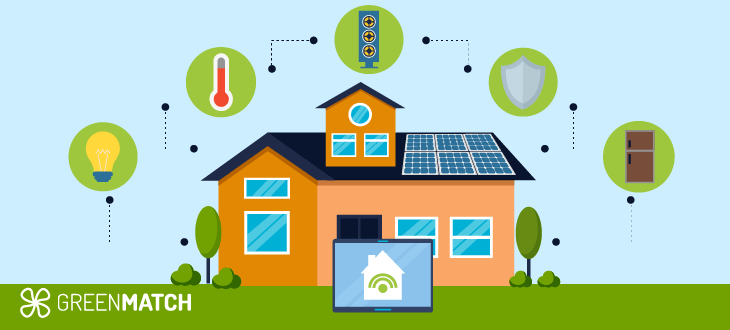
The adoption of smart home devices is reshaping how households manage energy consumption, leading to significant savings and enhanced efficiency. These devices utilize advanced technology to optimize energy use, which can help reduce electricity bills and minimize environmental impact.
Smart Devices and Energy Efficiency

Smart home technologies, such as smart thermostats, lighting systems, and energy-efficient appliances, are designed to improve energy consumption by making homes more responsive to the needs of residents. For instance, smart thermostats can learn from user behavior, automatically adjusting heating and cooling settings according to occupancy patterns and preferences. This feature allows homeowners to save energy without sacrificing comfort, as the system can prevent heating or cooling an empty house. According to reports, the installation of smart thermostats can lead to savings of up to £311 off energy bills annually[7].
In addition to thermostats, smart lighting offers another layer of control and efficiency. These systems can adjust automatically based on the time of day or occupancy—turning off lights in unoccupied rooms or dimming them according to natural light levels. This adaptability not only contributes to lower energy usage but also enhances the overall convenience of home environments[7][8].
Peak Demand Management

Smart home technology also plays a pivotal role in managing energy consumption during peak demand hours. Devices like SmartCharge, developed in research initiatives, intelligently switch between battery power and grid electricity based on real-time energy costs. By managing when energy is drawn from the grid, these systems help reduce strain on electric grids during rush hours, which typically necessitate more expensive energy production methods. In turn, this could lead to reduced costs for both consumers and utility providers[2].
The integration of smart meters facilitates this process further by providing real-time data on energy usage, allowing users to monitor and adjust their consumption patterns to take advantage of lower rates during off-peak periods[8]. This information is instrumental for consumers looking to optimize their energy expenditure, as it encourages shifts in usage to times when electricity is cheaper.
Cutting-Edge Technologies for Savings
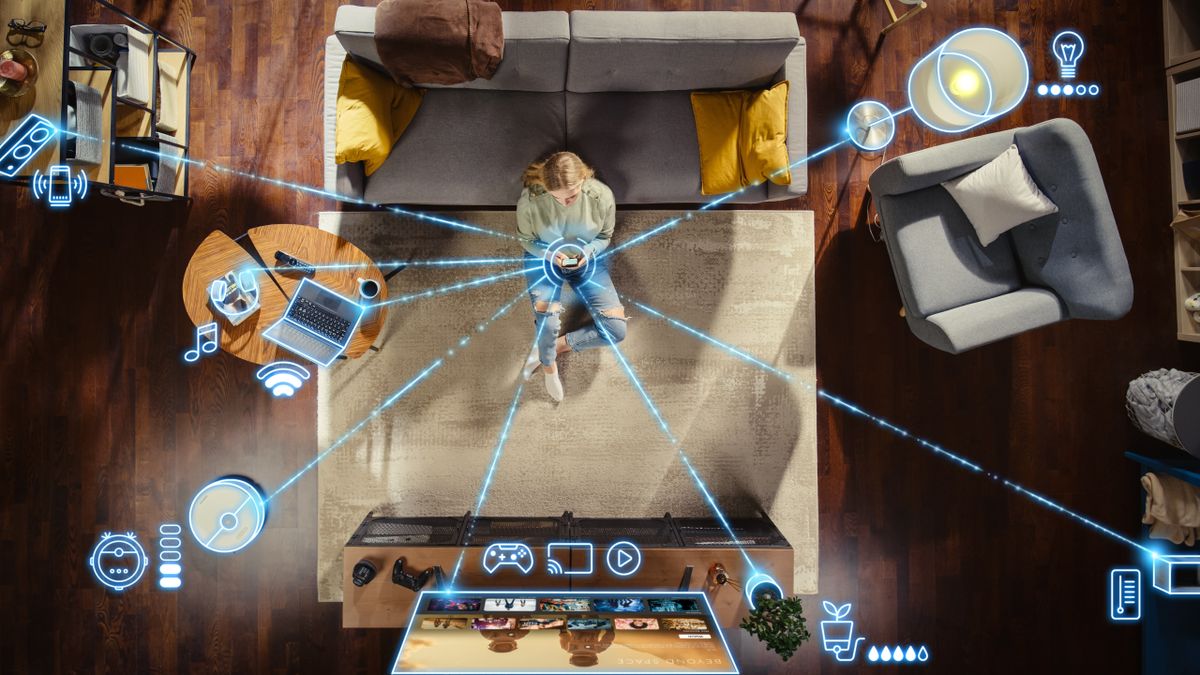
The advancements in smart home technologies contribute not only to energy savings but also to a reduction in carbon footprints. Devices such as smart appliances, which are increasingly available in the market, boast energy efficiency ratings that significantly outpace traditional models. For example, energy-efficient refrigerators and washing machines designed with smart capabilities can adapt their operations based on user patterns and external conditions, optimizing energy use throughout their cycles[5][8].
Furthermore, smart home systems can integrate with renewable energy sources, leveraging solar panels and home batteries to maximize the use of green energy. This capability is crucial in enhancing the overall sustainability of a household, allowing for a more significant reduction in reliance on fossil fuels[3][8].
Future Trends in Smart Home Energy Management
As the market for smart home devices continues to grow, more residents are expected to embrace energy-saving technologies. By the end of 2024, projections indicate substantial increases in smart home adoption, with over 20% of UK households utilizing such technologies to optimize their energy usage[3][8]. This trend is set to rise even further, with forecasts suggesting that by 2027, nearly half of all homes will integrate smart technology for energy management[3][7].
The implementation of standardized protocols, such as Matter, aims to facilitate the compatibility of various smart devices across different ecosystems, making it easier for consumers to build comprehensive smart home solutions that enhance energy efficiency. As interoperability improves, users will benefit from seamless automation and better energy management across all their devices, creating a more integrated and efficient home environment[4][6].
The Role of AI and Automation
Artificial intelligence (AI) is another critical factor driving the evolution of smart home technology. AI-enabled devices can learn from household dynamics, adjusting settings proactively to ensure energy savings. For instance, a smart thermostat equipped with AI can make real-time adjustments based on weather patterns and user habits without requiring constant inputs from homeowners. This level of automation not only simplifies usage but ensures maximum efficiency and potential savings on energy bills[4][7][8].
Conclusion
In summary, smart home devices are revolutionizing energy management within households. By offering advanced functionalities that promote efficiency, automation, and integration with renewable energy sources, these devices not only help reduce costs but also promote sustainable living practices. As technology continues to advance and consumer adoption increases, the future of smart homes promises even greater possibilities for energy savings and environmental benefits. The integration of smart technologies is more than just a convenience; it is a vital step toward achieving a more sustainable and efficient way of living.
Let's look at alternatives:
- Modify the query.
- Start a new thread.
- Remove sources (if manually added).
How do virtual private networks (VPNs) work?

Virtual private networks (VPNs) work by encrypting your internet traffic and routing it through a secure server, which disguises your IP address and makes your online activities private. When you connect to a VPN, your data is sent through an encrypted tunnel, preventing unauthorized access from internet service providers (ISPs) and cybercriminals[1][2][4].
Additionally, VPNs can bypass geographical restrictions by masking your location, allowing you to access region-locked content. They utilize various tunneling protocols, such as OpenVPN and WireGuard, to ensure secure data transmission[3][6]. The encryption ensures that any intercepted data remains unreadable without the proper decryption key[4][6].
Let's look at alternatives:
- Modify the query.
- Start a new thread.
- Remove sources (if manually added).