Discover Pandipedia
A growing directory of useful answers selected by the Pandi community. Search the collection or browse the latest discoveries.
3442 entries available
The Functioning of Thyroid Hormones
Overview of Thyroid Hormone Function
Thyroid hormones, primarily thyroxine (T4) and triiodothyronine (T3), are essential for regulating various bodily functions[5][16][34]. The thyroid gland produces these hormones, which significantly influence metabolism, growth, and overall hormonal balance[5]. The main job of thyroid hormones is to control the speed of your metabolism, which is how your body transforms food into energy[2][6]. A well-functioning thyroid affects the body by maintaining body temperature, heart rate, and the rate at which you burn calories[1].
Hormones Produced by the Thyroid Gland
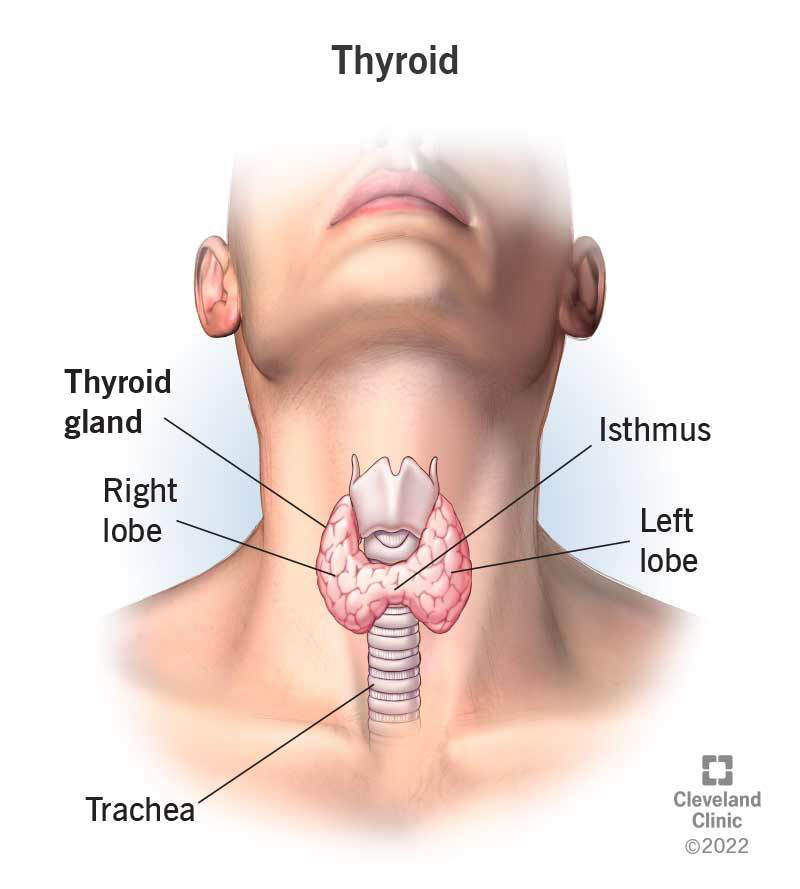
The thyroid gland, located in the anterior neck, produces several key hormones[5]:
- Thyroxine (T4): Also known as tetraiodothyronine, T4 is the primary hormone released by the thyroid[2][5]. It contains four iodine atoms and serves as a precursor to T3[5][6][29]. The thyroid produces most of this hormone, but it has little effect on metabolism[6]. Once released, organs in the body convert it to T3[2].
- Triiodothyronine (T3): Contains three iodine atoms and is more potent than T4[5][6]. It directly influences target tissues and broadly affects metabolic activity[5]. T3 has a much greater effect on your metabolism than T4[6].
- Reverse Triiodothyronine (RT3): The thyroid makes small amounts of RT3, which reverses the effects of T3[6].
- Calcitonin: This hormone helps regulate the amount of calcium in the blood, but it doesn’t impact metabolism like T3 and T4[2].
Production and Regulation of Thyroid Hormones
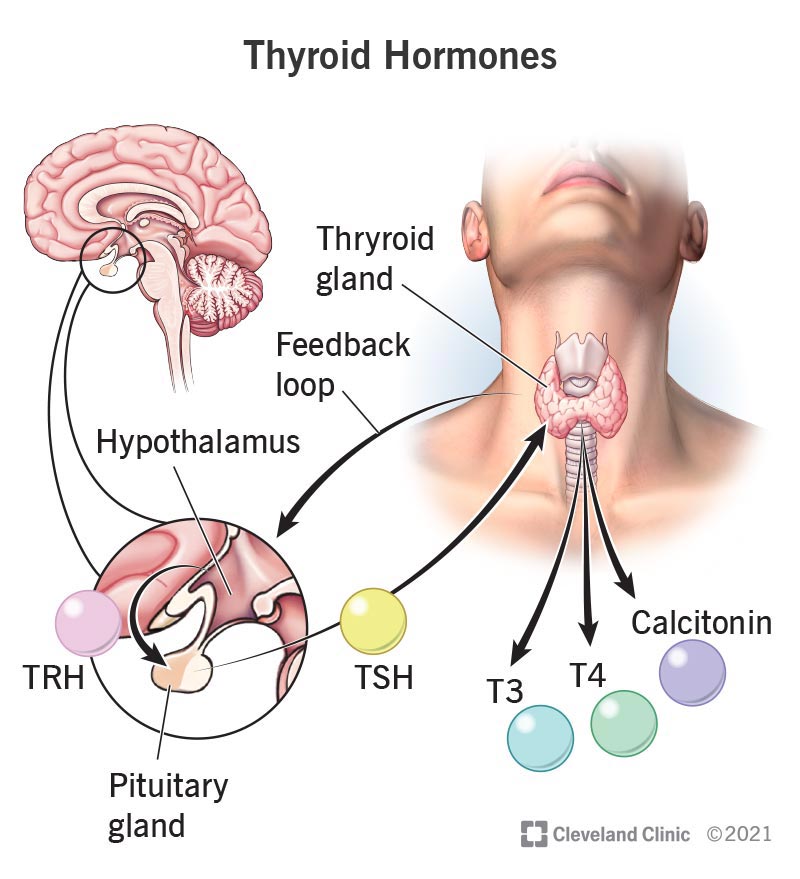
The production and release of T3 and T4 are controlled by a feedback loop involving the hypothalamus, pituitary gland, and thyroid gland[2][5][9]. The hypothalamus releases thyrotropin-releasing hormone (TRH), which signals the pituitary gland to produce thyroid-stimulating hormone (TSH)[2][5]. TSH then triggers the thyroid to produce T4 and T3[2]. Adequate iodine intake is essential for the thyroid to create T4 and T3[2][5]. When T3 and T4 levels increase, they prevent the release of TRH (and thus TSH), and when T3 and T4 levels drop, the feedback loop starts again[2].
The Action of Thyroid Hormones on Cells and Organs
Once released, thyroid hormones affect nearly every cell and organ in the body[2][4][9][14][16]. Thyroxine (T4) enters cells, it is converted to triiodothyronine (T3), which binds to thyroid receptors in the nucleus to regulate the transcription of specific genes[3][9][16]. Thyroid hormone (T3 and T4) affects every cell and all the organs in your body by:
- Regulating the rate at which your body uses calories (energy). This affects weight loss or weight gain and is called the metabolic rate[2].
- Slowing down or speeding up your heart rate[2].
- Influencing the speed at which food moves through your digestive tract[2].
- Controlling the way your muscles contract[2].
- Managing skin and bone maintenance by controlling the rate at which your body replaces dying cells[2].
Impact on Metabolic Rate
Thyroid hormones, particularly T3, increase the basal metabolic rate (BMR), which is the amount of energy the body uses while at rest[4][5][12][16]. They stimulate metabolic activity in almost all tissues of the body, increasing oxygen consumption and heat production[5][16]. T3 facilitates the synthesis of proteins, including enzymes, which boosts the basal metabolic rate[5]. Thyroid hormones stimulate metabolic cycles involving fat, glucose, and protein catabolism and anabolism[3].
Effects on Specific Body Functions
Thyroid hormones influence various physiological processes[4][5][16][34]:
- Growth and Development: Thyroid hormones are essential for normal growth and development, especially in skeletal tissues[5]. Adequate amounts of thyroid hormones are also needed for brain tissue development in children[5].
- Cardiovascular System: Thyroid hormones help regulate blood pressure, heart rate, and the force and vigor of the heart's contraction[4].
- Nervous System: Thyroid hormones are also vital for neurological function[4]. Too much or too little thyroid hormone can cause mood changes, such as depression or anxiety[1].
- Digestive System: Thyroid hormones affect how food moves through your digestive system[4].
- Reproductive System: If your thyroid isn’t working properly, it can cause irregular menstrual periods and issues with fertility[4].
Conditions Related to Abnormal Thyroid Hormone Levels


Abnormal thyroid hormone levels can result from several conditions[2][6][10][11][24]:
- Hyperthyroidism: Occurs when the thyroid gland produces too much thyroid hormone, speeding up metabolism and potentially causing weight loss, rapid heart rate, and nervousness[1][4][24]. Graves’ disease is the most common cause[1][4][11].
- Hypothyroidism: Occurs when the thyroid gland does not produce enough thyroid hormone, slowing down metabolism and potentially causing tiredness, weight gain, and depression[1][4][24]. Hashimoto’s thyroiditis is a common cause[1][4][11][24].
- Goiter: An enlargement of the thyroid gland[4][11]. It can result from iodine deficiency, thyroid nodules, or autoimmune diseases[4][5][11][19].
- Thyroid Nodules: These are lumps or swelling in the thyroid gland, which are often benign[1][4][19][24]. However, they can sometimes be cancerous or cause hyperthyroidism[1][4][19].
- Thyroid Cancer: Cancer that forms in the tissues of the thyroid gland[1][4].
Testing and Treatment
If you experience potential thyroid problem symptoms, a doctor can help you know if you have a thyroid problem[1][6]. A doctor can order blood tests to check the levels of thyroid hormones in your body[1][6]. A doctor might also give you radioactive iodine by mouth or as an injection to measure how much of it your thyroid gland takes up, as taking in a lot of radioactive iodine is a sign that your thyroid is overactive[1]. Treatment options include:
- Medications: Thyroid hormone pills (synthetic thyroxine (T4)) can treat an underactive thyroid[1][4]. Antithyroid medications block the thyroid's ability to make hormones[6].
- Radioiodine therapy: A large dose of radioactive iodine damages your thyroid gland[1].
- Surgery: Surgery can be performed to remove your thyroid gland[1].
Let's look at alternatives:
- Modify the query.
- Start a new thread.
- Remove sources (if manually added).
The Biggest Wave Ever Recorded
Let's look at alternatives:
- Modify the query.
- Start a new thread.
- Remove sources (if manually added).

Create your account to shape this feed around what you search for and enjoy.
Quines són les muntanyes més altes a Catalunya?
Let's look at alternatives:
- Modify the query.
- Start a new thread.
- Remove sources (if manually added).
Dharmaganja: The Treasury of Truth of Ancient India
An Icon of Ancient Scholarship

Dharmaganja was the celebrated library of Nalanda University, renowned in its time as the repository of vast amounts of knowledge. Known as the 'Treasury of Truth,' this library was not merely a collection of texts but a vibrant center for academic and spiritual inquiry. Established as part of one of the world’s first residential universities in India, Dharmaganja served as the beating heart of an intellectual metropolis that attracted scholars from far and wide[1][8].
Architectural Grandeur and Structure

The library was organized into three magnificent multi-storeyed buildings: Ratnasagara (Ocean of Jewels), Ratnodadhi (Sea of Jewels), and Ratnaranjaka (Jewel-adorned). Ratnodadhi, in particular, is noted for its nine-storey structure, designed to house thousands of manuscripts meticulously organized by discipline. This systematic approach to preserving knowledge was ahead of its time, with texts arranged not simply in a chronological order but by subjects such as Buddhist philosophy, astronomy, medicine, grammar, and logic[2][5][9]. The use of innovative preservation methods such as treating palm leaves with turmeric further highlights the sophistication of ancient archival techniques[1].
Repository of Multidisciplinary Wisdom


At its zenith, Dharmaganja held hundreds of thousands of manuscripts, making it the most comprehensive library of its era. The collection included sacred Buddhist scriptures like the Prajñāpāramitā Sutra as well as a wide array of texts covering subjects from logic and literature to mathematics and medicine. It was a hub where intellectual debates and scholarly exchanges flourished, influencing the propagation of Buddhist teachings not only in India but across Asia. Scholars who studied here contributed to fields that shaped the contours of philosophy and science in ancient times[2][6][10].
A Legacy Marked by Tragedy

Despite its monumental significance, Dharmaganja met a tragic fate during the 12th century. Historical accounts record that when invaders, led by Bakhtiyar Khilji, sacked Nalanda, the library was set on fire. The blaze, fed by millions of manuscripts, is said to have burned for months—an event that symbolized the loss of an immense legacy of knowledge. This catastrophic moment not only marked the end of the Mahavihara’s era but also created a void in the historical record of ancient scholarship[3][6][15].
Cultural Impact and Modern Reflections
The enduring influence of Dharmaganja can be seen in the continuing reverence for Nalanda as an ancient center of learning. The scholarly traditions initiated here transcended regional boundaries, drawing students and teachers from China, Korea, Tibet, Persia, and beyond[8][14]. Today, efforts to revive the spirit of Nalanda are evident in modern initiatives such as the establishment of a new Nalanda University, which seeks to recapture the multidisciplinary and inclusive environment that once thrived in the library’s halls. The legacy of Dharmaganja reminds us of the timeless importance of preserving knowledge and the value of intellectual exchange. Its story continues to inspire modern scholarship and lends a sense of heritage to global academic communities[4][11][12].
Conclusion

Dharmaganja stands as a powerful symbol of ancient India’s intellectual prowess and cultural richness. As the central library of Nalanda University, it safeguarded a treasure trove of wisdom that spanned numerous disciplines and catalyzed intellectual growth across continents. Though the physical repository was lost in the flames of conquest, its legacy of curiosity, rigorous scholarship, and inclusive education remains influential. This story is not only a remembrance of what was lost but also a beacon for future generations, urging us to value and protect the unparalleled heritage of human knowledge[1][7][13][15].
Let's look at alternatives:
- Modify the query.
- Start a new thread.
- Remove sources (if manually added).
Nalanda: A Beacon of Ancient Wisdom and Modern Revival in Bihar
Introduction

Nestled in the heart of Bihar near Rajgir and Patna, Nalanda is one of the most celebrated sites of ancient learning and Buddhist heritage. Once known as the world’s first international residential university, this historic center was a place where scholars from Asia converged to pursue knowledge in a variety of disciplines. Renowned as a great Buddhist mahavihara, Nalanda has been revered for its intellectual rigor and cultural impact over centuries[1][4].
Historical Significance


Founded in the 5th century CE by Emperor Kumaragupta I of the Gupta dynasty, Nalanda quickly rose to prominence in ancient Magadha. It served as a major center of higher learning under the patronage of various rulers, flourishing during the Gupta era and later under Harsha and the Pala Empire. Historical accounts indicate that the mahavihara attracted scholars from as far-flung regions as China, Korea, and Central Asia. Xuanzang and Yijing, two famed Chinese pilgrims, spent years studying at Nalanda and carried precious Sanskrit texts and relics back to their homelands, cementing the institution’s reputation as a global hub of scholarly exchange[1][4][7].
Academic and Cultural Legacy

The academic curriculum at Nalanda was as diverse as it was comprehensive. Subjects taught ranged from Buddhist philosophy—a discipline that gave rise to influential schools of thought like Madhyamaka and Yogachara—to subjects such as logic, mathematics, astronomy, medicine, and Sanskrit grammar. The institution was unique in its approach to education, with rigorous debates and discussions forming the cornerstone of its teaching methodology. This emphasis on holistic learning and inquiry allowed students to explore ancient texts and scientific subjects alike. Nalanda’s legacy is also enriched by its association with great scholars such as Nagarjuna, Dharmakirti, and the mathematician Aryabhata, whose contributions laid important foundations for future intellectual achievements[4][9][11].
Architectural Heritage and Ruins


Today, Nalanda’s ruins offer a glimpse into the grandeur of its past. Spread over an area that originally covered several hectares, the site contains remnants of 11 monasteries and multiple brick temples arranged in a methodical layout. The stupas, including the famous Sariputra Stupa built to honor one of the Buddha’s chief disciples, stand as testimony to the architectural excellence of the period. Intricate sculptures, inscriptions, and restored sculptures such as those depicting scenes from the Jataka tales add to the cultural richness of the site. The existence of a vast library, known as Dharmaganja, underscores the institution’s commitment to knowledge and the preservation of precious manuscripts[1][7][9].
Modern Revival and International Impact


After centuries of decline following its destruction by invaders, interest in Nalanda was revived in the 21st century. The Government of India, recognizing its unparalleled legacy, passed an act in 2010 to re-establish a modern center of higher education near the ancient ruins. The new Nalanda University, inaugurated in 2014, has been designed with state-of-the-art sustainable infrastructure while paying tribute to its historical roots. With a sprawling campus that integrates eco-friendly features such as rainwater harvesting and solar power, the modern institution strives to become a global knowledge hub. Its interdisciplinary programs and international collaborations reflect the spirit of the original Nalanda, inviting students and scholars worldwide to engage in meaningful academic and cultural exchanges[6][9][10].
Tourism and Cultural Experience

Visitors to Nalanda not only appreciate its historical and academic significance but also enjoy a rich cultural experience. The site is an important stop on India’s Buddhist tourism circuit and offers a blend of archaeological exploration and local flavor. The Nalanda Archaeological Museum, established in the early 20th century, houses a captivating collection of artefacts such as sculptures, coins, and inscriptions that narrate the university’s illustrious past. Complementing the historical journey is the taste of local Bihari cuisine, which reflects centuries of culinary traditions influenced by Buddhist practices. With well-connected transport options from Patna and Rajgir, the area provides an accessible and immersive experience that brings the ancient heritage of Nalanda to life for modern travelers[2][3][5][8].
Conclusion
Nalanda has long been an emblem of India’s rich educational and cultural heritage—a place where learning was interwoven with philosophy, art, and science. Today, the revival of Nalanda University stands as a testament to the enduring legacy of this ancient institution, bridging the vast expanse of time between its storied past and its promising future. As scholars and tourists alike continue to explore its ruins and modern campus, Nalanda remains a beacon of intellectual exchange and a reminder that knowledge knows no boundaries[1][4][9].
Let's look at alternatives:
- Modify the query.
- Start a new thread.
- Remove sources (if manually added).
The Essentials of Fruit Bottling: A Comprehensive Guide
Introduction to Fruit Bottling

Bottling fruits is an excellent method to preserve seasonal produce for year-round enjoyment. This guide provides detailed instructions on choosing jars, preparing fruits, processing methods, and more, ensuring that your bottling experience is both successful and enjoyable.
Choosing the Right Jars

Selecting proper jars is crucial in the bottling process. Always choose jars designed specifically for preserving. Ensure that lids are in good condition and that they fit tightly. If the lid is not sealed properly, fruits can spoil. According to the guide, 'before buying preserving jars, make sure that they are the right shape and size, as well as free from chips and cracks'[1].
Preparing the Fruit

Preparing the fruit correctly is vital for successful bottling. Fruits should be harvested at their peak ripeness. For instance, soft fruits should be handled with care to prevent bruising and must be processed right after picking. When preparing, it’s critical to wash the fruits thoroughly and cut them into suitable sizes. 'Fruit for bottling should be fully ripe, except gooseberries which are better when picked green'[1].
Processing Methods
There are several methods for processing bottled fruits, including the Water Bath Method, Oven Method, and more. In the Water Bath Method, jars are processed in hot water to ensure effective sealing. 'To use this method, you need a pan deep enough to allow the jars to be completely covered with water'[1]. The Oven Method can also be effective, especially for certain types of fruits, with specific guidelines to follow to ensure safety and efficacy.
Water Bath Method Explained

The Water Bath Method involves tightly packing the fruits in jars and placing them into boiling water. It is essential to ensure that the water is at a rolling boil and that the jars are not touching each other to allow for proper heat circulation. 'Stand the jars in the pan so that they do not touch one another or the sides of the pan'[1]. After processing, jars must be sealed properly to maintain preservation.
Oven Method Details

The Oven Method is another approach wherein jars are heated without external liquid. Especially useful for dry-pack fruits, this method requires careful attention to avoid overheating. 'Wash and drain the jars, then fill them tightly and place them in a preheated oven'[1]. This method engages thermal processing to ensure the fruits are sufficiently preserved.
Sealing and Storing Bottled Fruits
Once processing is complete, it's crucial to ensure that the jars are sealed correctly. Leaving jars to cool on a countertop allows the seals to form correctly. Proper storage is also important: 'The filled jars should be stored in a cool, dark place'[1]. Labeling jars with the date of bottling is recommended for tracking freshness.
Conclusion and Best Practices

Bottling fruits is a rewarding process that requires attention to detail and proper techniques. By following the guidelines laid out in this guide, you can successfully preserve a variety of fruits, capturing their flavor and nutrition for future enjoyment. Always remember that practice leads to mastery, so continue refining your bottling techniques.
Let's look at alternatives:
- Modify the query.
- Start a new thread.
- Remove sources (if manually added).

Create your account to shape this feed around what you search for and enjoy.
The Dynamic Birth of Supercells
Let's look at alternatives:
- Modify the query.
- Start a new thread.
- Remove sources (if manually added).
What is the average book length?
Let's look at alternatives:
- Modify the query.
- Start a new thread.
- Remove sources (if manually added).
Nutritious Packed Meals: 1940s Style
Introduction
The 1940s were a time of resourcefulness in the kitchen, where every ingredient was used wisely to create meals that were both filling and nutritious. Faced with wartime restrictions and limited supplies, families relied on creativity and careful planning to prepare packed meals that could be enjoyed at home or on the go[1][2]. This period is remembered as one where practical cooking met balanced nutrition, setting an example that still resonates today.
Balanced Nutrition in Challenging Times
In an era when resources were scarce, meals had to be both satisfying and nutritionally complete. The focus was on body-building foods such as meat, fish, dairy, and vegetables which provided essential nutrients for growth and strength[1]. Alongside these, energy-rich ingredients like bread and margarine added the necessary calories, ensuring that every meal delivered a mix of protein, carbohydrates, and fats. This balanced approach was evident not only in hot dishes but also in packed meals, where every element was thoughtfully included to sustain energy through long days[1][2].
Innovative Sandwiches and Savory Options

One of the standout innovations of the period was the transformation of simple sandwiches into complete meals. Guidelines from the Ministry of Food recommended using day-old bread, which was easier to slice into one-inch thick pieces without crumbling, paired with a variety of nutritious fillings such as meat, cheese, and eggs[2]. Creative sandwich fillings, including mixtures like canned corned beef with chutney or curried onion spreads, provided both flavor and sustenance. Additionally, salads made with shredded cabbage, potatoes, and watercress were a popular accompaniment, adding both freshness and a boost of vitamins to the packed meals[2].
Pastry Snacks and Creative Fillings

Beyond sandwiches, the ingenuity of 1940s cooks was also reflected in their pastry snacks. Recipes such as Potato Fadge and Potato Pastry combined mashed potatoes with flour to create versatile snacks that could be prepared quickly and adapted for either sweet or savory dishes[1]. Savory fillings for pastries encouraged the use of available meats and vegetables. Sausage meat with grated vegetables or, alternatively, a mix of peas or lentils with herbs, provided a hearty and adaptable option for varied tastes. These inventions not only maximized the use of scarce ingredients but also introduced new textures and flavors to everyday meals[1].
Desserts and Baked Treats
Even desserts were given a creative twist during these times. The resourceful use of staple ingredients led to the development of dishes such as Potato Apple Cakes, where tastily spiced dough filled with apple pieces was baked to perfection. At the same time, baking traditions extended to biscuits and buns, with variations like almond biscuits or jam-flavored treats, offering a sweet note to otherwise practical packed meals[1][2]. These desserts stood as a reminder that even in tough times, there was room for a little indulgence in the kitchen.
Legacy of 1940s Culinary Ingenuity
The culinary practices from the 1940s continue to inspire modern kitchens with their emphasis on nutrition, practical preparation, and the innovative use of limited resources. The balanced approach to body-building foods along with creative recipes for sandwiches, pastry snacks, and even desserts allowed families to thrive during challenging periods[1][2]. This era reminds us that wholesome meals can be both simple and inventive. Today, by drawing on these traditional methods, modern cooks can revive the legacy of creating meals that are resourceful, nutritious, and full of flavor.
Let's look at alternatives:
- Modify the query.
- Start a new thread.
- Remove sources (if manually added).
What are the common reasoning pitfalls?

Common reasoning pitfalls include jumping to conclusions, where individuals make quick judgments without sufficient evidence, often influenced by emotions or cognitive shortcuts[1]. Overgeneralization, another frequent error, involves making broad claims based on limited experiences, which can lead to distorted beliefs[1].
Cognitive biases also play a significant role, such as confirmation bias, where people favor information that supports their preexisting beliefs, while ignoring contradictory evidence[2][4]. Hasty generalization occurs when broad conclusions are drawn too quickly based on inadequate data[3]. Other pitfalls include ad hominem attacks, which focus on the individual rather than the argument, and the straw man fallacy, where one's argument is misrepresented to make it easier to refute[3].
Let's look at alternatives:
- Modify the query.
- Start a new thread.
- Remove sources (if manually added).