Discover Pandipedia
A growing directory of useful answers selected by the Pandi community. Search the collection or browse the latest discoveries.
2272 entries available
Autores Relevantes sobre Inteligência Artificial Centrada no Humano

 Linkedin
 Instagram
 Twitter
 Facebook
 Youtube
Let's look at alternatives:
- Modify the query.
- Start a new thread.
- Remove sources (if manually added).

In Elasticsearch, when using rank vectors, can the embedded vectors be of multiple variable size? Point is that if the multi vectors are of fixed size, then some information might be lost.
Research Question and Short Answer
Objective: In Elasticsearch, when using rank vectors, can the embedded vectors be of multiple variable size? If the vectors are fixed size, might information be lost? Short answer: No. Elasticsearch's rankvector field requires that vectors in the field all have the same number of dimensions and a consistent element type, so you cannot store variable-length vectors in a single rankvector field[2][1].
How rank_vector Works and Its Constraints
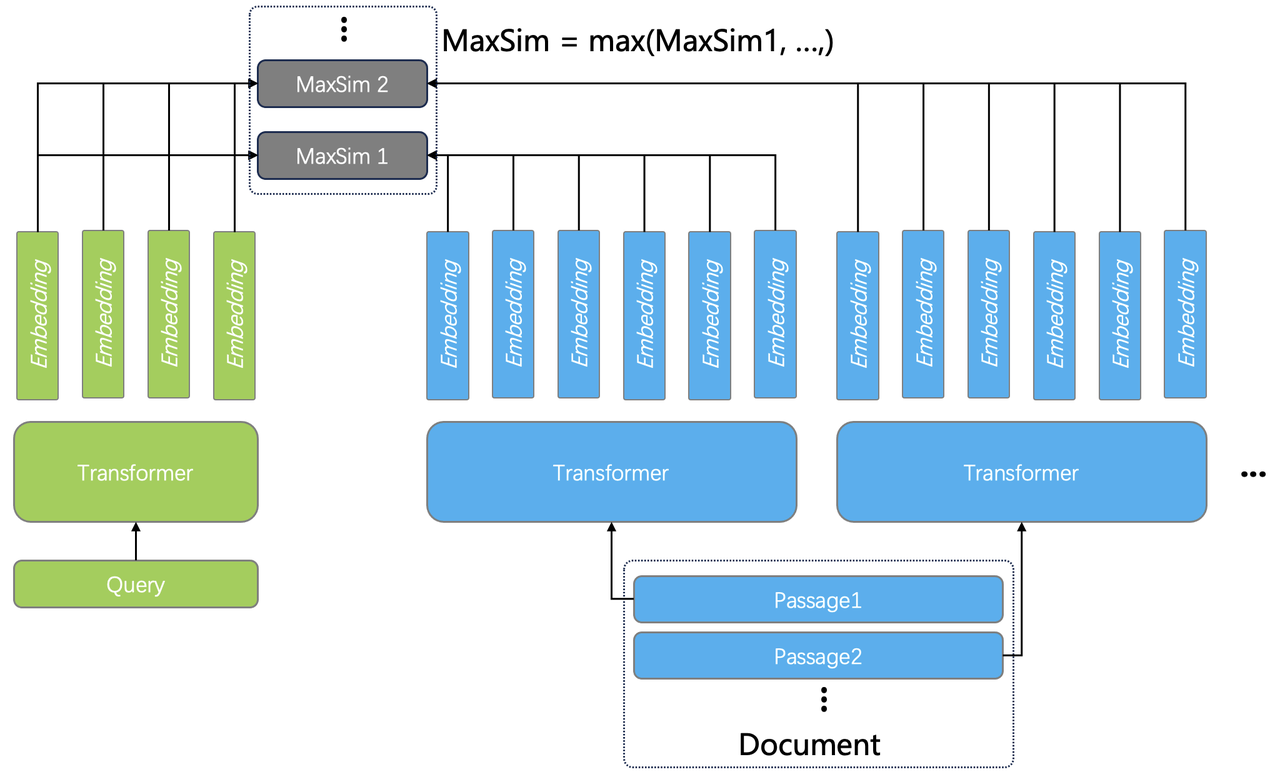
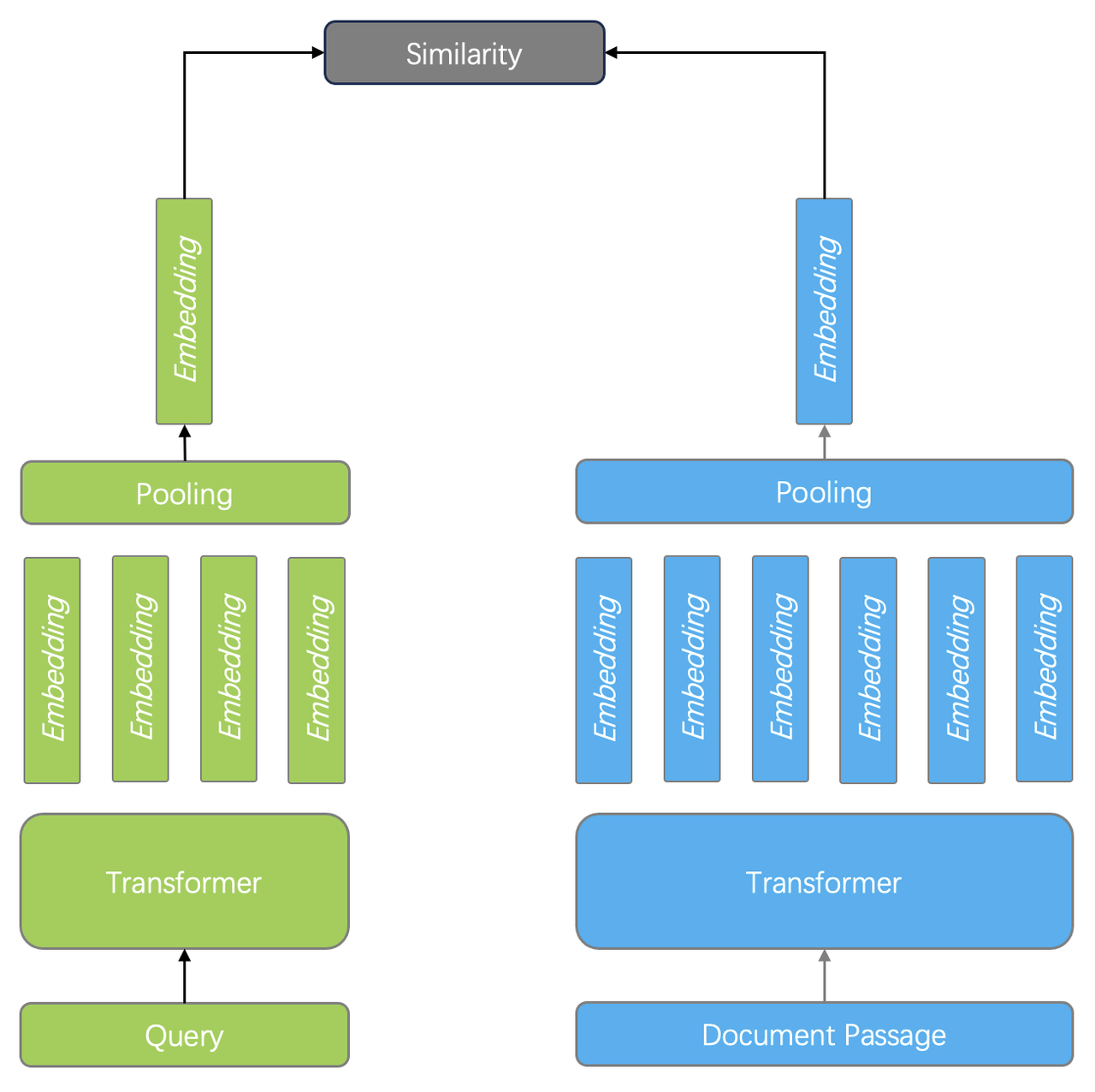
Elasticsearch's rank_vector field type is designed for late‑interaction dense vector scoring and is typically used for second‑order re‑ranking of candidate documents based on similarity between a query vector and vectors stored in the field[1].
Critically, rankvector imposes uniformity: all vectors stored in a given rankvector field must share the same number of dimensions and the same element type[2].
The field can be used with similarity functions intended for late interaction scoring, including maxSim and asymmetric variants like maxSimDotProduct for comparing floating‑point query vectors against bit vectors, but the dimensionality must still match across the vectors being compared[3].
In practice, rank_vector fields are accessed during re‑ranking, letting you refine ordering of a small set of candidates retrieved by an initial query phase while keeping vector scoring consistent and efficient[1].
Dense Vector Fields Also Require Fixed-Length Embeddings
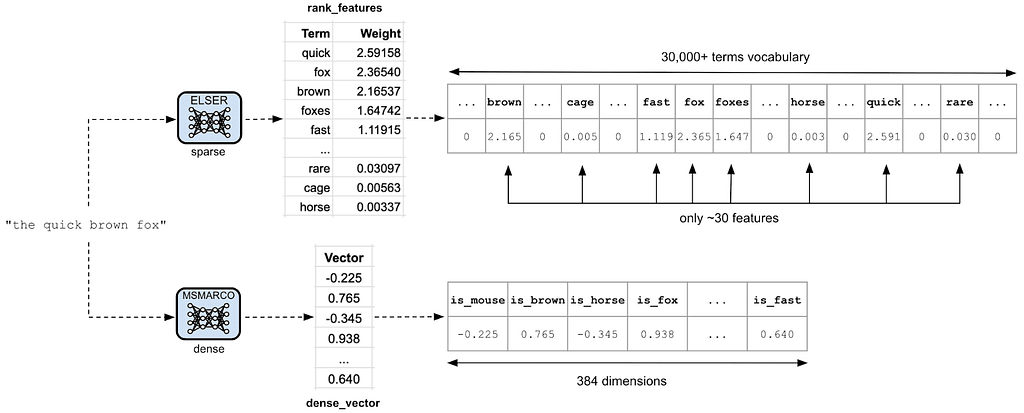
Elasticsearch's dense_vector field type stores an array of numeric values with a fixed dimensionality, which must be consistent for every document stored in that field[11].
When defining a mapping, you specify the number of dimensions for the dense_vector; if not explicitly specified, Elasticsearch infers the dimensionality from the first vector indexed and enforces the same length for all subsequent vectors in that field[8].
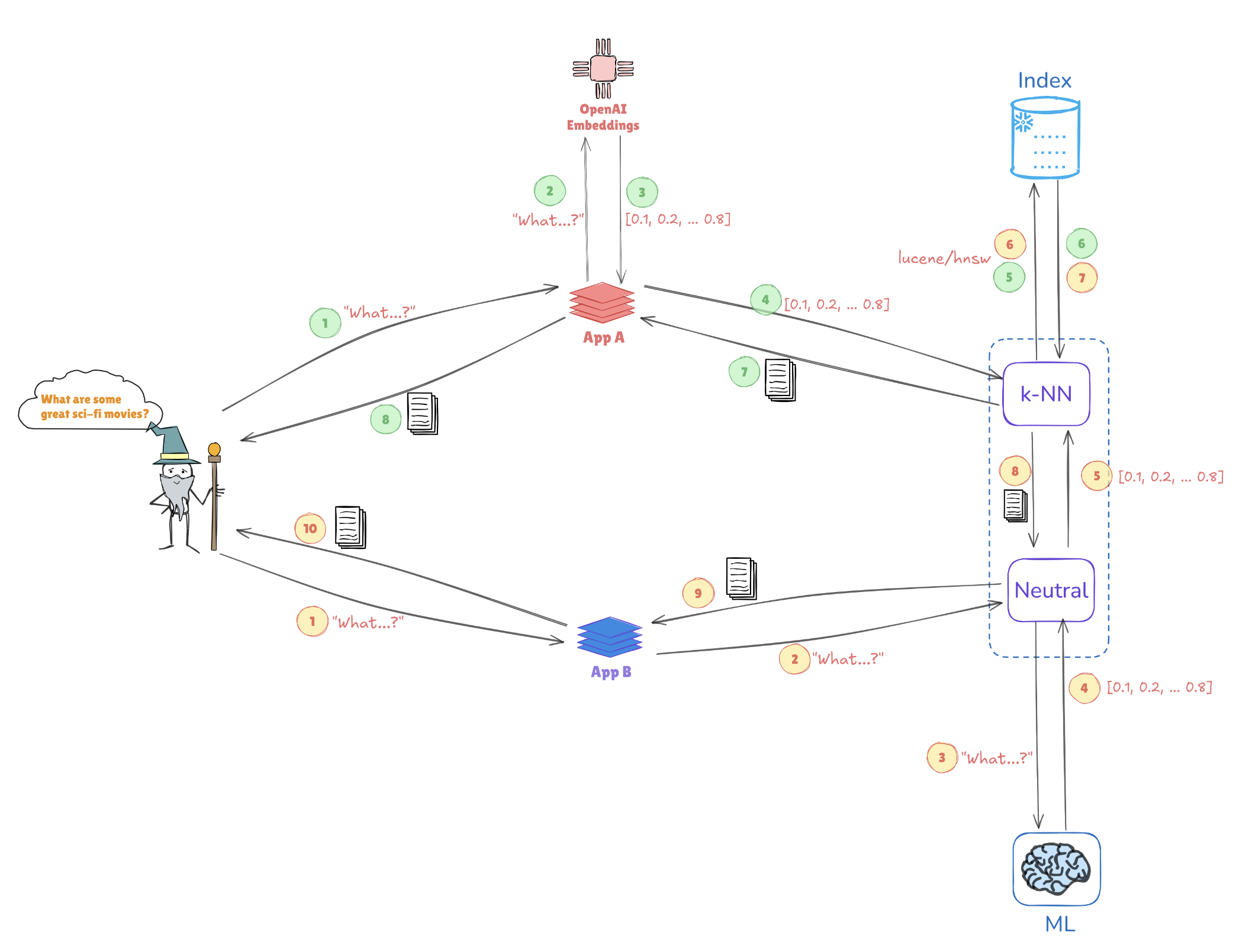
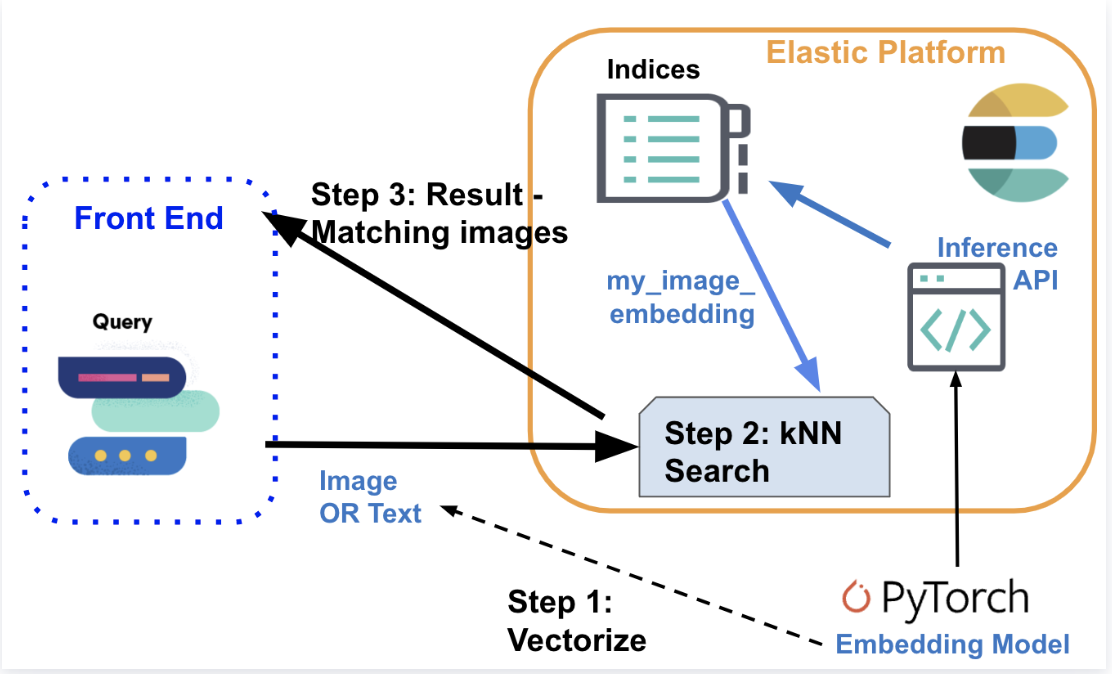
This fixed size allows Elasticsearch to compute similarity metrics (for example, cosine similarity or Euclidean distance) and to support efficient k‑nearest neighbor search by comparing corresponding positions across vectors[11][9].
Implications for Variable-Length Embeddings and What You Can Do
Elasticsearch does not support variable‑length embeddings within a single vector field: both rankvector and densevector require fixed dimensionality across all vectors stored in the same field[1][11].
- Standardize embeddings per field: choose a dimensionality and pad or truncate vectors from your model to that size before indexing. This is the most common approach in production systems.
- Use separate fields for different sizes: if you need to support multiple embedding dimensionalities, create multiple vector fields in the same index (for example, titlevec384 and titlevec768) and decide at query time which field to use.
- Use separate indices per model: if operationally simpler, create distinct indices for each embedding size and query the ones that match your query embedding.
- Late interaction and asymmetric scoring: if your use case benefits from late‑interaction scoring or from comparing float query vectors to compact bit vectors, rank_vector supports these scoring modes, provided the dimensions match across vectors you compare[3].
- Re‑rank a candidate set: retrieve candidates with classical search first, then re‑rank with rank_vector similarity to stay efficient while applying vector scoring consistently[1].
Note that if you worry about information loss from truncation or padding, you can mitigate it by selecting an embedding model with a dimension that balances fidelity and cost, and by using multiple fields or indices to preserve different representations for different content types. These are engineering trade‑offs rather than features of Elasticsearch itself.
Dimension Limits, Indexing, and Practical Constraints
Dense_vector fields have dimensionality constraints that depend on whether the field is indexed for kNN; community and issue tracker discussions note a typical upper bound of 1024 dimensions for indexed vectors, with higher limits (often up to 2048) for unindexed vectors[6][5].
If you try to index a vector whose length exceeds the configured or allowed dimensionality, Elasticsearch will reject the document and return an error, making it important to fix and enforce shape at ingestion time[7].
These limits reinforce why Elasticsearch enforces fixed vector lengths per field: consistent dimensionality is required both for correctness in similarity scoring and for performance characteristics of the underlying vector indices[11].

Recommendations
- If you use rank_vector, decide a single vector width per field and keep it constant across all documents[2].
- For mixed‑dimension needs, create additional fields or indices to house different embedding sizes and query the appropriate one for each request.
- For efficiency, retrieve with standard text queries and re‑rank with rank_vector similarity, which is the pattern Elastic documents for late‑interaction use cases[1].
- When using dense_vector kNN, keep dimension limits in mind and verify that your chosen embedding size stays within Elasticsearch's supported bounds for your version and configuration[6][11].
Conclusion
Elasticsearch does not support variable‑length embeddings within a single rankvector or densevector field; each such field has a fixed dimensionality that all stored vectors must share[2][11].
To accommodate multiple sizes without losing information, adopt a schema that uses multiple fields or indices and apply re‑ranking with rankvector or kNN with densevector as appropriate to your workflow[1].

Let's look at alternatives:
- Modify the query.
- Start a new thread.
- Remove sources (if manually added).
Posture-enhancing home office setups









Let's look at alternatives:
- Modify the query.
- Start a new thread.
- Remove sources (if manually added).
Did you know your watch can spot dehydration?
Transcript
Imagine your watch not only telling time but also keeping an eye on your hydration. Modern wearables use sensors that measure the electrical conductance of your skin, a method known as galvanic skin response. When you are well hydrated, your skin has more water and conducts electricity better. In contrast, when you are dehydrated, the skin becomes less conductive due to reduced water levels. These devices also monitor subtle changes in your body temperature, which can provide further clues about your hydration status. Together, these advanced measurements help predict when you might be becoming dehydrated, allowing you to take action before health issues arise.
Let's look at alternatives:
- Modify the query.
- Start a new thread.
- Remove sources (if manually added).

https://como-tudo-funciona.com.br/

The website 'Como Tudo Funciona' is dedicated to providing simple explanations about science, technology, and everyday curiosities, making complex topics accessible and reliable. It covers a variety of subjects, including natural phenomena, the internet, and historical mysteries, and aims to satisfy readers' curiosity with engaging content[1].
Users can find recent articles on various topics, such as vehicle maintenance and astrology, alongside explanations of cultural events and important dates in Brazil[1].
Let's look at alternatives:
- Modify the query.
- Start a new thread.
- Remove sources (if manually added).
5 milestones in holographic display tech
Let's look at alternatives:
- Modify the query.
- Start a new thread.
- Remove sources (if manually added).
Explanations of Mysterious Phenomena in "The Moon Pool"
Explanations of Mysterious Phenomena in "The Moon Pool"
Introduction
In A. Merritt's "The Moon Pool," characters encounter mysterious phenomena that they attempt to explain through a blend of scientific theories and supernatural beliefs. These explanations often reflect the characters' backgrounds and worldviews, creating a dynamic interplay between reason and the inexplicable.
Dr. Walter T. Goodwin, a botanist, and Dr. David Throckmartin, a fellow scientist, initially seek naturalistic explanations for the strange occurrences. Throckmartin theorizes that the Moon Rock is composed of an element sensitive to moon rays, similar to how selenium reacts to sun rays, with small circles acting as an operating mechanism that requires the full moon's strength to open the slab and summon the Dweller[1]. He also suggests that the sleep phenomenon experienced by his party could be a coincidence caused by gaseous emanations or plants, and the peculiar tinkling music might be vibrations affecting the nervous system[1]. Goodwin expands on this, proposing that the Dweller itself might be a product of an advanced science developed by a surviving ancient race from a sunken Pacific continent, who mastered forms of energy like light[1]. He explains that moonlight, after reflecting off the moon, is altered, potentially carrying energies from an unknown lunar element[1]. These altered rays, combined with the influence of the globes in the Moon Pool Chamber, are the necessary factors for the Dweller's formation[1]. Goodwin also describes the green ray used by Yolara as an agent that stimulates atomic vibration, causing matter to disintegrate into electrons[1], and the invisible cloaks as material that admits or curves light vibrations, rendering the wearer wholly invisible[1]. He notes that the coria (shells) are activated by atomic energy, which creates a partial negation of gravity and a repulsive thrust[1]. The
moss death
Scientific Explanations
fungus is explained as a rapidly developing organism that destroys flesh by microscopic hooks and rootlets[1]. The Yekta of the Crimson Sea is described as a hydroid that secretes a swiftly acting poison, destroying the nervous system and creating an illusion of extended torment[1]. Goodwin also speculates that the Three are highly intelligent beings whose evolution took a different path in the caverns, leading to unique brain structures and values[1]. Dr. Marakinoff, a Russian physicist, contributes scientific explanations as well. He identifies the Moon Pool's liquid as intensely radioactive and unlike any known fluid on Earth, acting like radium with a mysterious added element[1]. He believes the chamber walls confine an atomic manipulation, a conscious arrangement of electrons that emit light indefinitely[1]. Marakinoff also suggests that the moon was hurled from the Pacific region, which would explain the Moon Chamber's dependence on moon-rays and the vast internal spaces[1]. He reveals the existence of "gravity-destroying bombs" that cut off gravity, sending objects into space[1]. The talking globes are explained as mechanisms utilizing wireless telegraphy principles and the interchangeability of light and sound vibrations, creating a "field of force"[1]. He describes the Shining One as a creation from the ether, imbued with a "soul of light" and the "essence of life" from Earth's heart, with seven orbs as channels for sentience[1]. The Dweller's ability to embody both rapture and horror is attributed to its balancing of poles of utter joy and utter woe[1].
Supernatural Beliefs
In contrast to the scientific perspectives, many characters hold strong supernatural beliefs. Thora Halversen, a Swedish nurse, exhibits a "curious sensitivity" to the place's "influences," believing it "smelled" of ghosts and warlocks, and performs an "archaic" gesture to the moon to stop the tinkling sounds[1]. The Ponape natives are deeply superstitious, fearing malignant spirits called "ani" and refusing to go to the ruins during full moon nights[1]. Olaf Huldricksson, a Norse sailor, believes the Dweller is a "sparkling devil" or "moon devil" that took his family, equating it with Loki and praying to Thor and Odin for vengeance[1]. He refers to the underground world as "Trolldom" (witchcraft) and "Helvede" (hell)[1]. Larry O'Keefe, despite his modern background, firmly believes in Irish folklore, including banshees, leprechauns, and phantom harpers[1]. He later attributes the Silent Ones to the Tuatha De Danann, ancient Irish gods[1]. The Murian rulers, Yolara and Lugur, worship the "Shining One" as a deity, believing it grants them power and dominion[1]. Lakla, the handmaiden of the Silent Ones, believes in their ancient wisdom and power, stating that they created the Dweller and possess wondrous healing abilities[1]. Lakla also states that love is stronger than death and the Shining One, suggesting it can weaken the Dweller's evil[1].
Clash of Perspectives
The narrative highlights the clash between these scientific and supernatural viewpoints. Larry O'Keefe, despite his belief in banshees and leprechauns, initially dismisses Olaf's account of the "sparkling devil" as a "collective hallucination" caused by volcanic gas[1]. However, as he witnesses more inexplicable events, his skepticism wanes, and he becomes a staunch ally in the quest, even if he still tries to rationalize the frog-men as trained animals[1]. Goodwin, the scientist, is often irritated by O'Keefe's "superstition" but ultimately accepts his companionship[1]. The Murians themselves are divided, with Yolara and Lugur embracing the Shining One's power for conquest, while Lakla and the Silent Ones represent an older, more benevolent, yet still mysterious, force that seeks to contain the evil unleashed by the Dweller.
Conclusion
The narrative of "The Moon Pool" intricately weaves together scientific inquiry and ancient beliefs. While characters like Goodwin and Marakinoff strive to understand the phenomena through the lens of advanced physics and biology, others, like Olaf and Larry, interpret them through the prism of their cultural and personal mythologies. This duality underscores the profound and unsettling nature of the mysteries encountered, suggesting that some truths may lie beyond the current grasp of either pure science or traditional superstition, or perhaps, that they are two sides of the same coin.
Let's look at alternatives:
- Modify the query.
- Start a new thread.
- Remove sources (if manually added).

what is the aha moment in product development

The 'aha moment' in product development refers to the critical moment when a user first perceives the value of a product and understands why they need it. This pivotal realization, often described as a moment of clarity or insight, transforms an evaluating user into an engaged one. It is vital for retaining customers, as users who do not encounter an aha moment are less likely to continue using the product[1].
Identifying the aha moment involves analyzing user behavior and finding specific actions that correlate with increased engagement and retention[3]. For different products and user segments, the specific actions that signify an aha moment can vary significantly. For example, for Uber, it might be hailing a ride quickly, while for Netflix, it could be watching something enjoyable shortly after signing up[6].
To guide users toward their aha moments, companies must enhance the onboarding process and reduce friction within the user journey. This can include various strategies, such as using interactive walkthroughs and tooltips that direct users to key product features[5].
Ultimately, achieving a rapid aha moment is crucial, as it can lead to user activation, retention, and even prompt users to upgrade to paid subscriptions. Hence, understanding and optimizing for the aha moment is essential for any product aiming for long-term success and user satisfaction[2].
Let's look at alternatives:
- Modify the query.
- Start a new thread.
- Remove sources (if manually added).
Hook: Why game music boosts study focus
Transcript
Welcome to our audio clip. Today we explore why game music boosts study focus. Our brains naturally adjust their rhythm to match steady beats, a process known as brainwave entrainment. Rhythmic sounds help guide our minds into states that are perfect for concentration. Video game soundtracks are carefully chosen to be instrumental and constant, which means they avoid distracting words and instead provide a gentle, continuous pulse. Ambient loops, whether drawn from calming nature sounds or the repetitive scores of popular games, create a soothing background atmosphere. This steady sound pattern has been found to reduce stress and improve memory by stimulating both halves of the brain at the same time. By playing your favorite game music during study, you are inviting your mind to sync with a rhythm that helps keep you alert and focused. Enjoy the melody and let the rhythm enhance your study session.
Let's look at alternatives:
- Modify the query.
- Start a new thread.
- Remove sources (if manually added).
Is it true that Greeks portrait women as the devil?
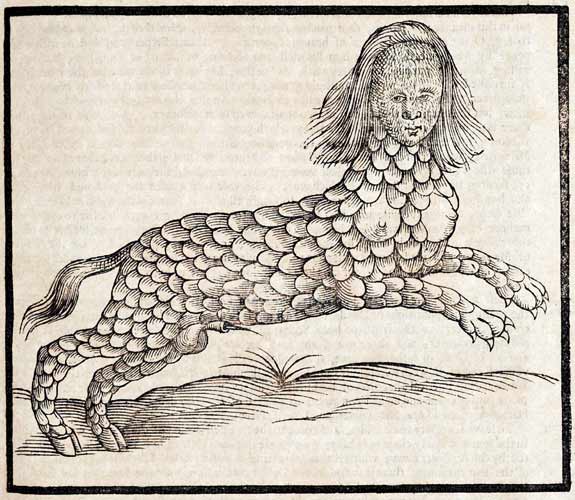
Yes, Greek mythology often portrays women as monstrous figures, embodying male fears about female power and motherhood. Lamia, for example, is depicted as a child-devouring demon whose transformation into a monster follows her grief over losing her children to Hera, suggesting a deep-seated anxiety about women's roles in nurturing and caring for children[1][3].
Additionally, creatures like Gello serve as representations of similar fears, associated with infertility and child mortality[5]. This pattern extends to other figures in mythology, like Medea, who embodies both the nurturing and destructive potential of women, further reinforcing the demonization of powerful female figures in ancient narratives[6].
Let's look at alternatives:
- Modify the query.
- Start a new thread.
- Remove sources (if manually added).