Discover Pandipedia
A growing directory of useful answers selected by the Pandi community. Search the collection or browse the latest discoveries.
2272 entries available

The Psychological Effects of ASMR
The Psychological Effects of ASMR

Understanding ASMR

The Autonomous Sensory Meridian Response (ASMR) is commonly described as a pleasant tingling sensation that begins in the scalp and neck and can spread throughout the body. This sensation is triggered by specific audio-visual stimuli, such as whispering, tapping, and gentle hand movements. Individuals who experience ASMR often report that it leads to feelings of relaxation, calmness, and overall positive affect[2][3].
Emotional and Psychological Responses
ASMR triggers a unique blend of emotional responses, characterized by both activation and relaxation. According to studies, ASMR experiences are associated with increased levels of calmness and excitement following exposure to ASMR videos. Specifically, research showed that ASMR participants reported significantly greater improvements in calmness and excitement compared to those who do not experience ASMR[6][10]. Interestingly, ASMR participants also experience reductions in negative emotions such as stress and sadness while watching ASMR videos, leading to a more favorable emotional state overall[8][10].
Furthermore, ASMR is not merely an entertaining phenomenon; it may serve as a therapeutic tool. A study highlighted that participants who experience ASMR often engage with these videos to manage stress and anxiety, showing significant decreases in both state and trait anxiety after viewing ASMR content. This reduction in anxiety is particularly pronounced in individuals already predisposed to higher levels of these emotional states[4][5][8].
Physiological Effects
In addition to psychological impacts, ASMR elicits measurable physiological responses. Research indicates that watching ASMR videos is linked to lower heart rates and increased skin conductance, which are indicators of relaxation and arousal, respectively[7][10]. These findings align with the idea that ASMR can be beneficial for regulating emotional states and may provide substantial therapeutic effects for individuals suffering from mood disorders, including anxiety and depression[6][9].
Individual Variability and Personality Traits
Notably, not everyone experiences ASMR. Only certain individuals are susceptible to this sensation, and studies have explored the personality traits associated with ASMR sensitivity. Research suggests that people who can experience ASMR often exhibit higher levels of neuroticism. This personality trait is linked to a predisposition to anxiety and negative emotional states[4][5]. ASMR experiences might amplify these emotional responses based on the individual's state of mind leading up to the exposure. For example, while ASMR is primarily associated with relaxation, misinterpretation of ASMR stimuli could lead to fear or disgust, particularly in those with high anxiety levels[9][10].
ASMR as a Therapeutic Intervention
Emerging literature supports the potential of ASMR as a non-pharmacological intervention for anxiety reduction. One study noted that all participants, regardless of their experience with ASMR, reported increased relaxation and improved mood after watching ASMR videos, with the most significant effects seen in individuals who regularly experience ASMR[6]. This suggests that ASMR may have therapeutic implications, particularly for individuals dealing with insomnia or depressive symptoms, potentially aiding sleep and reducing stress levels[8][9].
Furthermore, ASMR has been linked with mindfulness-like qualities, as the focused attention required to experience ASMR resembles mindfulness practices that have been shown to alleviate anxiety[6]. The possibility that ASMR can function similarly to mindfulness meditation could open new avenues for therapeutic application in psychological interventions.
Conclusion
The psychological effects of ASMR are diverse, combining emotional relief, physiological relaxation, and potential therapeutic benefits, particularly for those with anxiety disorders. Experiencers report significant improvements in mood, along with reductions in stress and anxiety levels after engaging with ASMR stimuli. Considering the growing popularity of ASMR videos, further research into this phenomenon could solidify its role as a viable method for improving mental health and emotional well-being, particularly for those high in neuroticism or suffering from anxiety disorders[2][4][6][9][10].
Let's look at alternatives:
- Modify the query.
- Start a new thread.
- Remove sources (if manually added).
Quiz: The fate of Pepper and pets in supernatural fiction
Let's look at alternatives:
- Modify the query.
- Start a new thread.
- Remove sources (if manually added).
A vibrant Frutiger Aero desktop wallpaper, featuring a glossy, transparent globe emerging from a calm, crystal-clear ocean. Modern city skyscrapers are visible on the horizon under a brilliant blue sky with fluffy white clouds and a soft sun flare. Lush green rolling hills lead to the water's edge, with a single elegant tree. Water splashes gently around the globe, and a few colorful fish swim near the surface, rendered in a hyperrealistic, optimistic, and slightly skeuomorphic digital art style.

Let's look at alternatives:
- Modify the query.
- Start a new thread.
- Remove sources (if manually added).
I’m doing some research in continual learning, what is it and what are the latest developments?
Continual Learning: What it is and the latest developments (2024–2025)
Continual learning is an approach to machine learning in which models learn from a stream of data or tasks over time, aiming to acquire new knowledge while retaining previously learned capabilities without retraining from scratch[1][5]. It is increasingly relevant for dynamic, real-world applications such as on-device personalization, robotics, and domains where data distributions shift after deployment[1][3].
This report summarizes core definitions, problem settings, methods, evaluation practices, and practical directions, then highlights notable advances in 2024–2025 in class-incremental learning, online continual learning, and continual adaptation for large foundation models[2][4][16].
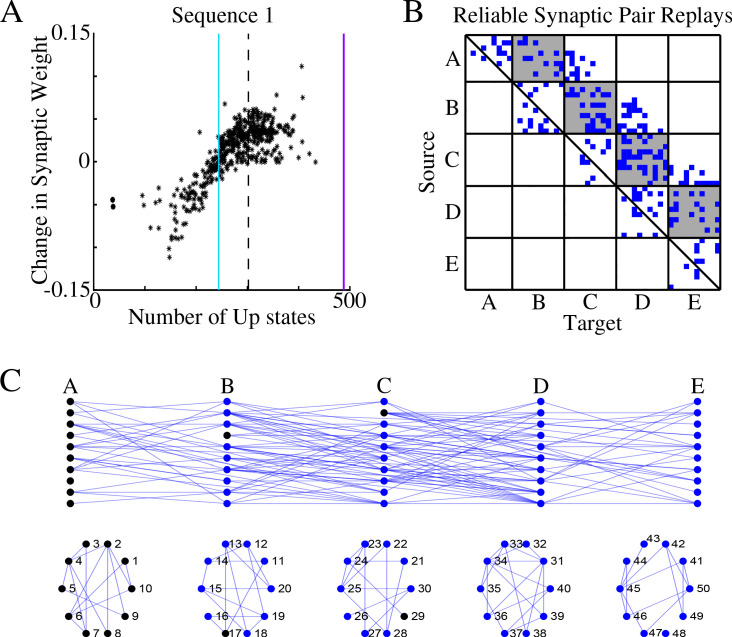
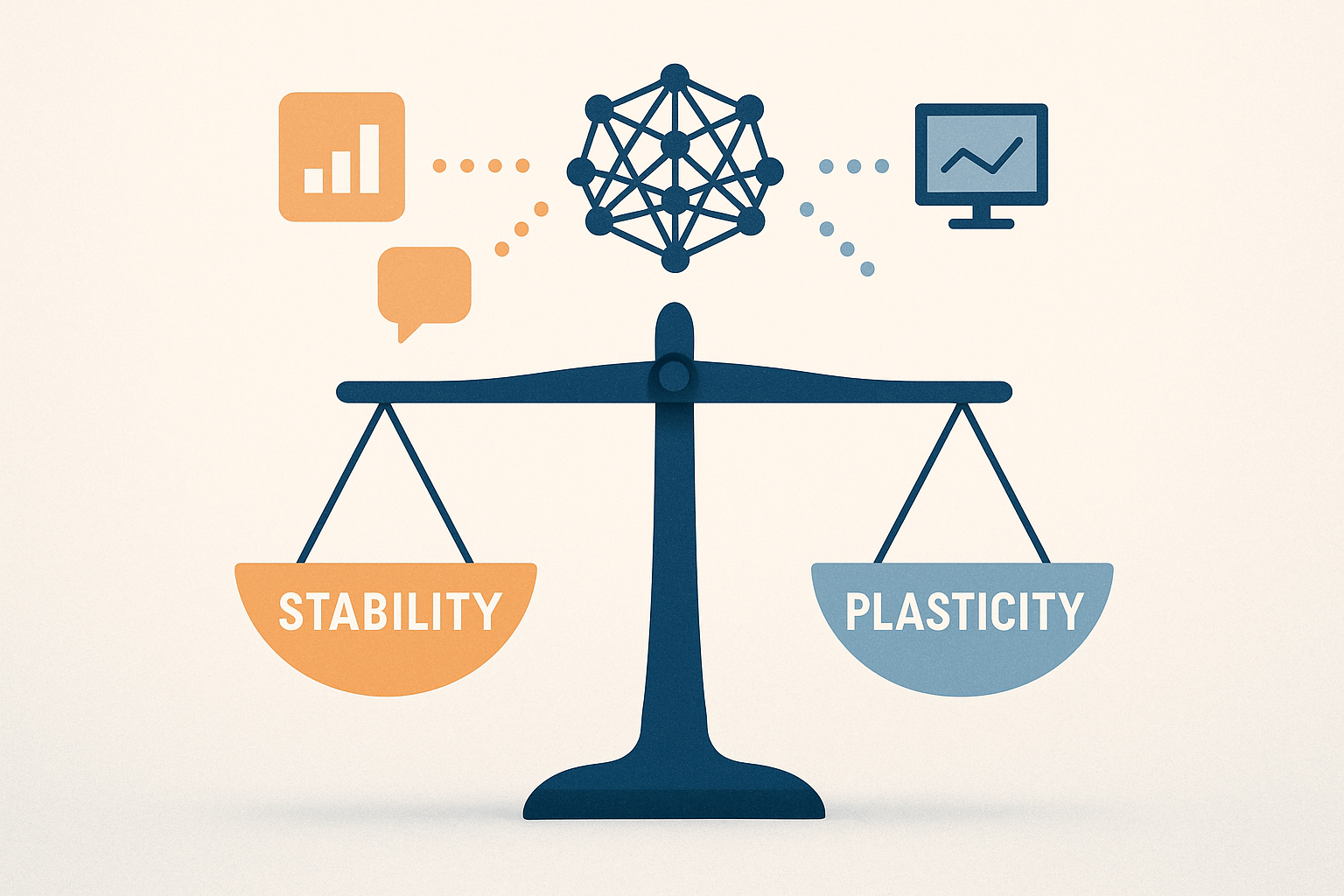
Stability–Plasticity Tradeoff in Continual Learning
Conceptual diagrams that illustrate the tension between learning new information (plasticity) and retaining prior knowledge (stability).


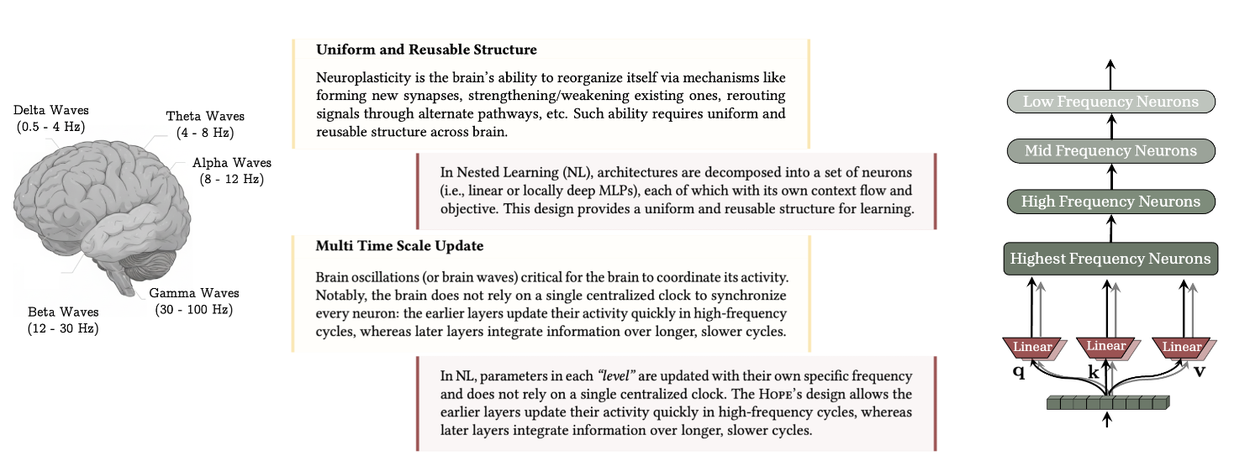
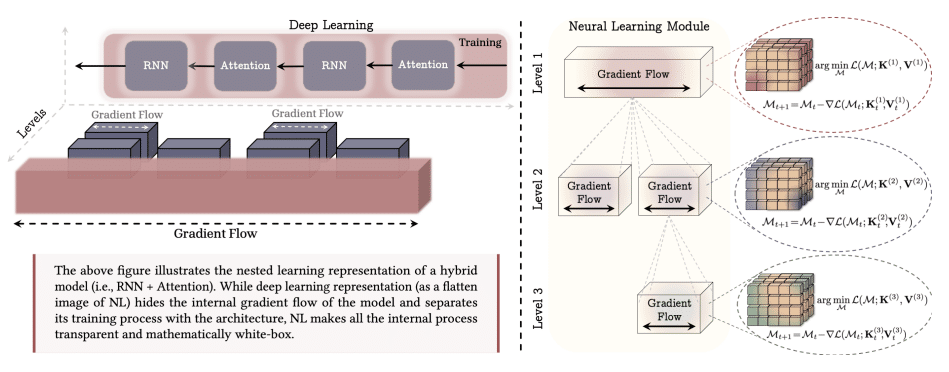
Google Research: Nested Learning concept figure
An overview figure from Google's Nested Learning blog post showing the nested optimization view designed to mitigate forgetting.
What is Continual Learning and Why it Matters
Continual learning (CL) studies algorithms that learn incrementally from a non-stationary stream of data or tasks, which contrasts with conventional training on fixed datasets[1][17]. The core challenge is the stability–plasticity dilemma: the need to acquire new knowledge without erasing previously learned information, a failure mode known as catastrophic forgetting[3][2].
- Task-Incremental Learning (TIL): A task identifier is provided at inference to disambiguate which task the model should solve, often allowing task-specific components or heads[3][5].
- Domain-Incremental Learning (DIL): The task remains the same while the data distribution shifts across time or domains, requiring adaptation to new contexts[3][5].
- Class-Incremental Learning (CIL): The number of categories grows over time without a task ID at test time, often considered the most challenging setting due to open-set discrimination across old and new classes[3][2].
CL is useful in practice because it can reduce full retraining costs, support personalization and on-device updates under privacy or resource constraints, and enable targeted model editing without rebuilding entire pipelines[1][5].
Core Methodologies
Most CL methods can be grouped into three families: replay-based, regularization-based, and architecture-based approaches[3][5][1].
| Approach | Key idea | Typical tools/examples | Pros | Cons |
|---|---|---|---|---|
| Replay-based | Interleave a small buffer of past samples or synthetic data during training on new data | Rehearsal buffers; generative replay | Strong empirical retention | May breach privacy or storage limits |
| Regularization-based | Penalize changes to parameters important for past tasks | Elastic penalties, knowledge distillation | Simple to apply, no raw replay | Weaker in complex shifts |
| Architecture-based | Allocate new capacity or modules while freezing important parts | Adapters, dynamic subnetworks | Parameter isolation protects old skills | Model growth and routing complexity |
Replay is often the strongest baseline but depends on storing or synthesizing prior data, while regularization avoids raw data storage at some cost to performance in harder regimes, and architectural strategies protect old skills by isolating parameters for new tasks[3][5].
Online Continual Learning (OCL): Real-time Adaptation
Online continual learning emphasizes one-pass, real-time data streams and immediate adaptation, which is particularly relevant to robotics, autonomous systems, and speech processing[16]. OCL typically processes non-revisitable data, may face disjoint label spaces across time, and performs single-epoch updates per segment of the stream[16].
Key challenges include catastrophic forgetting under tight compute and memory budgets, and the unreliability of commonly used online accuracy metrics which can be gamed by spurious label correlations[16][19]. A near-future accuracy metric has been proposed to better evaluate rapid adaptation without being misled by stream-local correlations[19].
- Model-centric OCL mirrors the three families: replay-based rehearsal or generative replay, weight regularization and distillation, and capacity-expanding architectures[16][17].
- System-centric OCL shifts learning to orchestration at inference time without gradient updates, using a teacher–student loop and persistent memory to guide future actions adaptively[18].
Benchmarks span image classification, detection and segmentation, multimodal vision-language tasks, and activity recognition, reflecting the breadth of real-world streams studied by OCL[16].
Continual Learning for Foundation Models and LLMs
As large foundation models face model staleness after expensive pretraining, continual learning provides mechanisms to update knowledge, personalize behavior, and maintain alignment without full retrains[2][4].
- Continual Pretraining (CPT): Incrementally refresh general knowledge to handle distribution shifts and add domains or languages without starting from scratch[4][2].
- Continual Fine-tuning or Instruction Tuning: Sequentially add skills or instructions, often using PEFT such as LoRA or adapters to update a small subset of parameters while protecting core abilities[4].
- Continual Alignment: Update value alignment as preferences and norms evolve, maintaining helpful and safe behavior over time[2].
- Compositional and Orchestrated Systems: Combine specialized models or agents and update their coordination for higher-frequency adaptation and better scalability[4].
Latest Developments (2024–2025)
Class-incremental learning (CIL) in 2024 featured several advances to reduce forgetting without storing old exemplars, and to prepare feature spaces for future classes[15][8].
- Prospective Representation Learning (PRL, NeurIPS 2024) compresses base class embeddings and reserves feature space for future classes, then places new prototypes to minimize interference, showing gains on CIFAR-100 and TinyImageNet[8].
- Future-Proofing CIL (FPCIL) uses text-to-image diffusion to synthesize images of future classes, strengthening the feature extractor during the first incremental step and outperforming alternatives that use related real images[14].
- Multi-Teacher Distillation (CVPR 2024) creates diverse teachers through mechanisms like weight permutation and feature perturbation, delivering significant gains with teachers occupying different low-loss regions and orthogonal embeddings[13].
- Federated CIL with LANDER (CVPR 2024) leverages label text embeddings as anchors to guide data-free knowledge transfer and improve sample synthesis and retention under privacy constraints[10].
- Meta-learning for real-world CIL (Scientific Reports 2024) introduces a transformer-based aggregation function and surrogate novel classes for training, reducing the need for retraining when new classes arrive[12].
- First-principles re-examination of CIL reframes problem assumptions and comparison protocols, encouraging fairer accounting of model storage and memory budgets[11][9].
In 2025, reporting indicates rapid growth in CL research for LLMs, with expanded multimodal work, efficiency gains for replay variants, and exploration of hybrid routing and sparse adapters as potential production paths, though full production-grade continual updates in flagship models remain limited so far[6].
Google Research introduced Nested Learning, which casts training as nested optimization problems, aiming to unify model architecture and optimization to mitigate forgetting; a proof-of-concept self-modifying system named Hope demonstrated strong language modeling and reasoning performance with multi-timescale memory updates[7].
Evaluation, Benchmarks, and Open Challenges
Common retrospective metrics include average accuracy, backward transfer or forgetting, and forward transfer, each summarizing retention and plasticity across the task sequence[16][17].
Recent analyses caution that online accuracy can be unreliable for OCL, advocating for near-future accuracy that reduces spurious correlations while preserving relevance to immediate adaptation demands[19].
Surveys also highlight the need for fair comparisons that account for memory budgets, especially the storage of model parameters and exemplars, as well as stronger benchmarks in domains like healthcare and for long-horizon foundation model updates[9][3][2].
Across CL and OCL, research calls for algorithms designed under realistic compute constraints, theoretical advances beyond i.i.d. assumptions, and tighter integration with real-world data acquisition and novelty detection to support autonomous open-world learning[1][17].
Practical Guidance and Takeaways
- If privacy or storage prohibits replay, prefer strong regularization or architectural isolation; if permitted, replay remains a powerful baseline to establish reference performance[3][5].
- On-device and personalized scenarios benefit from lightweight updates, PEFT modules, and careful control of compute budgets to enable frequent refreshes without full retraining[1][4].
- For online agents, consider system-centric adaptation to improve success rates via inference-time orchestration when gradient-based updates are impractical[18].
- Use robust metrics beyond online accuracy, and report memory and compute alongside accuracy and forgetting to enable fair, reproducible comparisons[19][9].
Balancing Stability and Plasticity
An abstract illustration showing a balanced scale between retaining past knowledge and learning new information in a streaming environment.
Talks and Tutorials to Get Started
Search for recent conference tutorials and talks that explain continual learning foundations, class-incremental techniques, and online evaluation practices. These videos often include code walkthroughs and benchmark tips.
Conclusion
Continual learning enables models to adapt over time while preserving prior capabilities, with stable progress along replay, regularization, and architectural tracks, and a growing emphasis on online, real-time constraints[3][16]. In 2024–2025, class-incremental advances, system-centric online strategies, and practical paths for updating large foundation models stand out as key developments[8][18][4]. Looking ahead, improved evaluation, resource-aware methods, and integration with acquisition and alignment workflows will be critical for reliable deployment in dynamic environments[19][1][2].
Let's look at alternatives:
- Modify the query.
- Start a new thread.
- Remove sources (if manually added).
What are the benefits of carpooling?
Transcript
Carpooling offers numerous benefits, including significant cost savings on fuel, parking, and maintenance expenses as participants share costs and responsibilities[1]. It reduces traffic congestion by lowering the number of vehicles on the road, leading to faster commutes and improved air quality[2][3]. Additionally, carpooling fosters social interactions, creating opportunities for friendships and community connections while alleviating stress associated with solo driving[5][11]. Overall, carpooling contributes to both environmental sustainability and personal financial relief[9][10].
Sources
- 15 Benefits of Carpooling to Society and Environment
- 13 Benefits of Carpooling for the Environment: Opportunities
- Carpooling 101: Everything You Need to Know for a Sustainable Ride
- Carpooling: Benefits to Society, Employers, and Individuals
- The Benefits of Carpooling | Transportation Sustainability Research Center
- How Does Carpooling Help Reduce Carbon Emissions? 10 Powerful Ways
- The Environmental and Economic Benefits of Carpooling
- How ride-sharing can improve traffic, save money, and help the environment
- The Benefits Of Carpooling
- Carpooling: What is it and why should we be doing it?
- Carpooling: what it is, benefits, and differences with carsharing
Let's look at alternatives:
- Modify the query.
- Start a new thread.
- Remove sources (if manually added).
The Digital Shift: Modernizing Library Collections for the Future
The Digital Shift: Modernizing Library Collections for the Future
Libraries, the long-standing custodians of human knowledge, are undergoing a profound transformation. In an era where information is increasingly accessed online, the digitization of physical collections has become a critical mission. This process involves more than simply scanning pages; it is a meticulous endeavor to preserve fragile materials, broaden public access, and create new opportunities for research and learning. By converting books, manuscripts, maps, and other artifacts into digital formats, libraries ensure that their invaluable resources remain relevant and accessible to a global audience. This report provides a comprehensive overview of the current methods libraries employ for digitizing their collections, exploring the technologies, workflows, partnerships, and challenges that define this complex landscape.
The Digitization Workflow: From Physical Material to Digital Archive
The journey from a physical library item to a searchable digital file follows a structured and multi-stage workflow. This process is designed to ensure the quality of the digital surrogate, the preservation of the original item, and the long-term accessibility of the resulting data.
The Path from Page to Pixel
An illustrative diagram showing the key stages of a library's digitization workflow, from the selection of a physical book to its final availability in a digital archive.
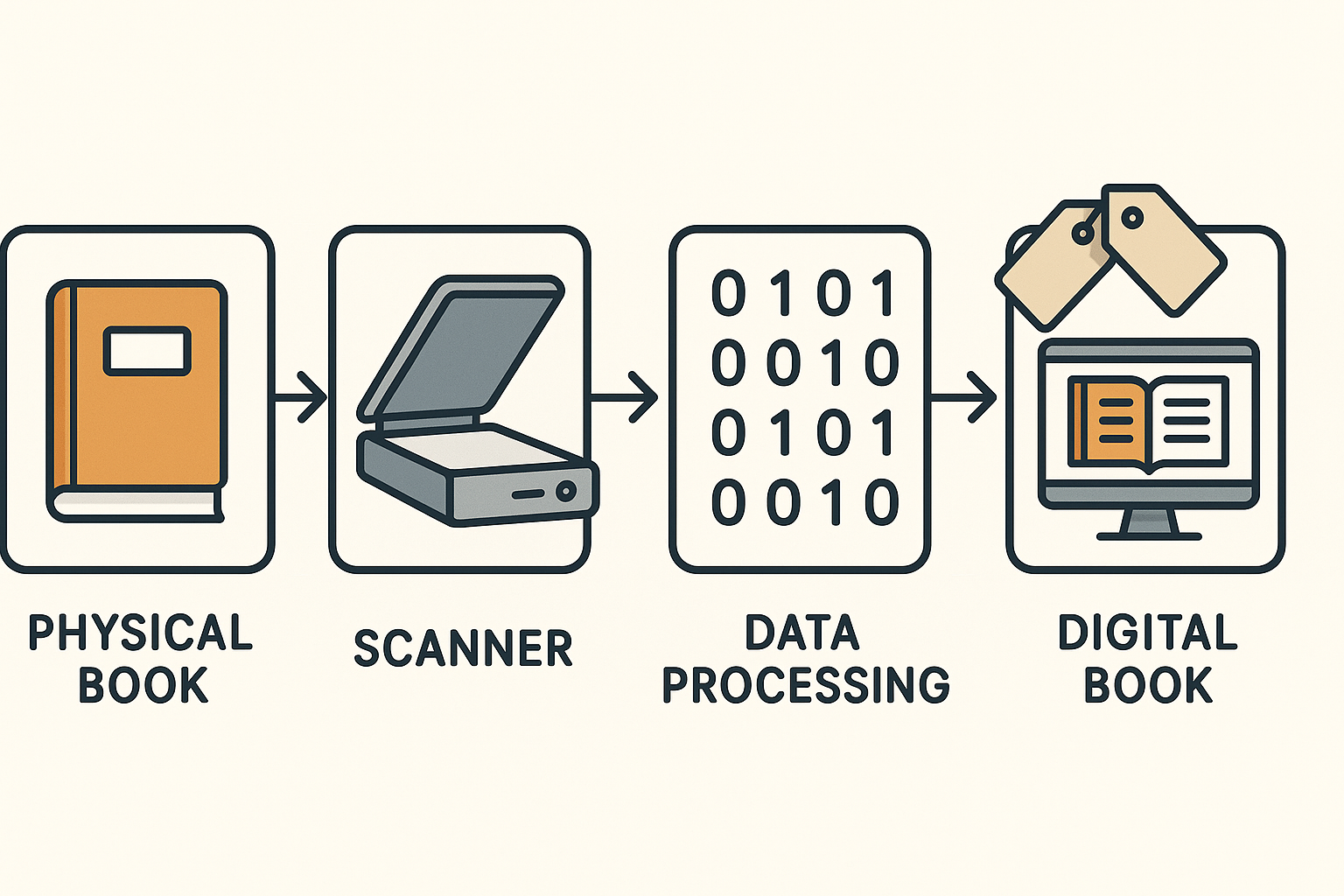
- Planning and Selection: The process begins with a crucial planning phase where institutions define the project's purpose and scope[19][24]. Selection criteria are established to prioritize items based on their condition, rarity, research demand, and copyright status[2][19]. Technical specifications, such as resolution and file naming conventions, are also determined at this stage[24].
- Preparation: Physical materials are carefully prepared for scanning. This may involve removing bindings or paper clips and assessing the item's condition to determine if special handling or conservation is needed before imaging can begin[19][21].
- Scanning and Imaging: Specialized, high-resolution scanning equipment is used to create digital images[3]. Institutions like the Library of Congress follow strict preservation guidelines, using scanners with controlled light and heat exposure and employing book cradles for fragile materials to prevent damage[3]. For large-scale or delicate projects, libraries may contract with specialized document scanning services[4].
- Post-Processing and Quality Assurance: After scanning, Optical Character Recognition (OCR) technology is often applied to convert images into machine-readable, searchable text[19]. This automated step is followed by manual quality assurance checks to correct errors and ensure the digital version is an accurate replica of the original[19].
- Metadata Creation: Rich metadata is assigned to each digital file. This data includes descriptive information like title, author, and date, as well as technical details about the digitization process[19][21]. Robust metadata is essential for indexing the files, making them discoverable through keyword searches within digital asset management systems[5][21].
- Archiving and Preservation: The digital files are securely backed up and archived to prevent data loss or corruption[23]. This involves creating redundant copies and storing them in multiple locations, including cloud-based solutions, as part of a long-term digital preservation strategy[9][23].
- Publication and Access: Finally, the digitized materials are ingested into the library's digital repository or collection platform, making them accessible to the public[22][23]. This not only enhances access for remote users but also helps preserve the original physical items by reducing the need for handling[22].
Core Technologies and Software Platforms
The success of any digitization project hinges on a combination of specialized hardware and sophisticated software. Libraries utilize a wide array of tools to capture high-quality images, manage vast digital collections, and provide user-friendly access.
Specialized Book Scanner in a Library
A high-resolution, overhead planetary scanner used in a library's digitization lab. This type of equipment is designed to safely scan fragile and bound materials without causing damage.
On the hardware side, high-resolution scanners are fundamental. These range from flatbed scanners for documents to specialized book scanners designed to handle fragile and bound volumes with care[13]. Robust storage solutions, such as Network Attached Storage (NAS) and cloud backups, are also essential for managing and preserving the large digital files produced during the process[13]. Digitization service providers often combine conservation-grade handling techniques with high-quality image capture technology to ensure both preservation and production speed[10].
Digital Collection Management Systems
A variety of software platforms are available to help libraries manage, publish, and preserve their digital collections. These systems provide the infrastructure for organizing metadata, hosting files, and delivering content to users. Some common platforms include:
| Platform | Description |
|---|---|
| CONTENTdm | A comprehensive digital collection management system that includes a server, web interface, and hosting services[6]. |
| DSpace | An open-source repository software widely used by academic and research institutions for managing and preserving digital assets[6]. |
| Omeka | A free, open-source content management system specifically designed for creating online digital collections and scholarly exhibits[6]. |
| CollectionBuilder | An open-source tool for generating digital collection websites that are driven by metadata and built with static web technology[6]. |
| LIMB Suite | An integrated software solution that helps manage large-scale digitization projects by supervising workflows, tracking progress with barcodes, and providing real-time reports[7]. |
| KOHA, BiblioteQ, OPALS | Digital library management platforms that provide online access to resources like ebooks, journals, and research papers[8]. |
Emerging trends also show libraries beginning to integrate AI-assisted tools into their digital systems. AI is being used to generate recommendations for users and enhance metadata creation, although it also introduces new needs for updated policy frameworks and cybersecurity measures[12].
Digitization in Action
These videos provide a closer look at the technologies and processes libraries use to digitize their collections, from handling rare books to operating advanced scanning equipment.
Strategic Partnerships and Collaborations
Given the immense scale and cost of digitization, libraries frequently form partnerships to share resources, expertise, and content. These collaborations are essential for achieving large-scale digitization goals that would be unattainable for a single institution.
- Inter-Library Consortia: Academic libraries often collaborate on mass digitization projects[14]. For example, a pilot project led by UC Davis brought together institutions like Cornell and the University of Michigan to select and digitize scholarly content, which was then contributed to the HathiTrust Digital Library, a massive collaborative repository[14].
- Public-Private Partnerships: Government institutions partner with commercial vendors to accelerate digitization. The Library of Congress, for instance, has third-party agreements that allow it to work with commercial partners to scan public domain materials, ensuring both preservation and broad public access[18]. Similarly, the University of Michigan's collaboration with the Google Books Library Project dramatically increased its scanning capacity[16].
- Cultural Heritage Alliances: Libraries, museums, and other cultural organizations form alliances to standardize digitization practices and build shared digital repositories[15]. These consortial efforts help pool technical expertise and enhance the discoverability of collections on a national or international level[17].
These partnerships enable libraries to digitize more efficiently, manage content at scale, and contribute to a growing global digital library that benefits researchers and the public alike[17].
Key Challenges in Library Digitization
Despite its benefits, the process of digitizing library collections is fraught with significant challenges that require careful planning and sustained investment.
- Scale and Complexity: The sheer volume of analog materials in library collections makes conversion a "herculean task"[26]. The process is complex, involving numerous steps from selection and scanning to metadata creation and long-term preservation[26].
- Financial and Resource Constraints: Digitization is expensive. Libraries often face significant budget limitations that affect their ability to acquire necessary digital equipment, hire expert staff, and maintain the required internet infrastructure for access and preservation[27].
- Copyright and Intellectual Property: Navigating copyright law is a major hurdle[27]. Libraries must carefully determine the legal status of materials to avoid infringement, which can be a complex and time-consuming process, especially for modern or unpublished works.
- Digital Format Sustainability: Technology is constantly evolving, which poses a long-term risk to digital files. Libraries must actively manage their digital archives to ensure that files do not become obsolete or inaccessible over time due to changes in file formats or software[25]. This requires ongoing evaluation of what to preserve and the adoption of new tools to support different formats[25].
Standout Examples of Successful Digitization Efforts
Numerous institutions have successfully modernized their collections, setting a high standard for digitization and providing valuable models for others to follow.
- The Library of Congress: As a leader in the field, the Library of Congress has digitized over nine million items from its collections[28][30]. A landmark achievement is the online publication of the complete personal papers of U.S. presidents from George Washington to Calvin Coolidge, making these invaluable historical documents accessible to anyone with an internet connection[28][30].
- University of Michigan and Google: The partnership between the University of Michigan and Google demonstrates the power of collaboration in mass digitization. This program increased the university's scanning rate from about 5,000 volumes per year to as many as 30,000 volumes per week, dramatically accelerating the conversion of its library[29].
- Project Gutenberg and HathiTrust: These large-scale digital library projects are prime examples of successful collaborative efforts[31]. They have made millions of public domain texts available online, establishing a foundation for open-access digital libraries and setting standards for the field[31].
- Preservation-Focused Digitization: Many libraries use digitization as a critical preservation tool. Fragile materials like brittle books and historical newspapers are often microfilmed and then digitized. This dual approach both preserves the original content and significantly increases its accessibility for future generations of researchers[32].
These examples illustrate that successful digitization is not just about technological conversion but also about strategic transformation. Libraries are evolving to create entirely new digital services and enhance their operational agility, ensuring they remain central to knowledge creation and dissemination in the digital age[33].
Conclusion
The digitization of library collections is a multifaceted and essential endeavor in the 21st century. It relies on a well-defined workflow, a combination of specialized hardware and sophisticated software platforms, and strategic partnerships that leverage collective resources. While significant challenges related to cost, copyright, and long-term preservation persist, the successes of pioneering institutions and collaborative projects demonstrate a clear path forward. By transforming physical holdings into accessible digital archives, libraries are not only preserving cultural heritage but also redefining their role in an increasingly connected world, ensuring that knowledge remains open and available for generations to come.
Let's look at alternatives:
- Modify the query.
- Start a new thread.
- Remove sources (if manually added).
Ruins, Relics, and Riches: Lunar archaeology and the golden asteroid
Let's look at alternatives:
- Modify the query.
- Start a new thread.
- Remove sources (if manually added).
Model Context Protocol: A New Standard for Connecting AI with Data and Tools
Model Context Protocol: A New Standard for Connecting AI with Data and Tools
Introduction

Anthropic’s Model Context Protocol (MCP) is an open‐source standard designed to bridge the gap between large language models and the external data sources and tools they require for enhanced real‐world performance. In simple terms, MCP offers a universal way for AI systems to retrieve context, access data, and even execute actions, much like how a USB-C port unifies connectivity for electronic devices[1][2]. This protocol is aimed at solving a longstanding problem: AI models traditionally operate in isolation from live data, forced to rely solely on their training information. MCP fundamentally changes that dynamic by standardizing connections, enabling AI systems to consistently and securely access external environments.
Architecture and Components
At its core, MCP is built upon a client-server architecture. The design divides responsibilities among three key components: MCP Hosts, MCP Clients, and MCP Servers. The Host is the application or environment hosting the AI model. The Client is embedded within the AI application and establishes and maintains a one-to-one connection with one or more MCP Servers. These Servers are lightweight programs that expose specific tools, data sources, or resources – they act as data gateways that provide structured context to the AI according to a standardized protocol[3][4]. Communication is enabled through protocols like JSON-RPC, which facilitate two-way messages over local connections (using protocols such as stdio) or network-based connections (using Server-Sent Events, or SSE)[6][16].
Key Functionalities
MCP standardizes the way AI models interact with external systems by defining a set of rules and interfaces that allow for both data retrieval and action execution. Rather than building unique connectors for every new data source, developers can implement an MCP-compliant server once and then reuse it across multiple AI applications. Tools and resources – from file system operations and web searches to GitHub integration – can be exposed via a single protocol, enabling an AI to dynamically call these tools as required in a secure and consistent manner[7][8]. By handling both read and write operations through defined tool calls, MCP ensures that the AI remains context-aware and capable of influencing its operational environment in real time.
Benefits and Use Cases
The benefits of using MCP are manifold. First, its universal nature eliminates the need for maintaining a patchwork of bespoke integrations, significantly reducing development costs and enhancing scalability. With MCP, AI systems can seamlessly switch between different data sources and tools — whether retrieving real-time business data, performing file operations, or engaging with cloud-based services — all within a unified framework[4][9]. Additionally, its open-source approach encourages community-driven innovation and collaboration, ensuring that the ecosystem expands with pre-built connectors and SDKs in languages like Python, TypeScript, and even Java[10][12]. Practical applications of MCP are already emerging. For instance, enterprises use MCP to integrate data from platforms like Google Drive, Slack, and GitHub, while developers build AI-assisted workflows that are more reliable, context-aware, and easier to maintain[11][17].
Implementation and Ecosystem
The MCP ecosystem is bolstered not only by its robust specification but also by the practical tools provided by Anthropic and the broader community. Pre-built MCP servers have been developed for a variety of services—ranging from databases to web scraping tools—and they can be deployed locally or as containerized applications using Docker. This containerization ensures that the diverse environmental dependencies required by each server are encapsulated, allowing for consistent deployment across different platforms[11][20]. Moreover, MCP clients have been integrated into products such as the Claude Desktop app, which now supports the addition of multiple MCP servers to extend the AI’s capabilities. This growing ecosystem underpins the promise of MCP by fostering interoperability across disparate tools while ensuring that security and permissions are managed carefully at the protocol level[15][18].
Impact on the Future of AI
By providing a standardized method for AI systems to access, manage, and integrate external data, MCP represents a significant evolution in the development of autonomous, context-aware AI. It shifts the focus from relying solely on pre-trained knowledge to enabling dynamic, real-time access to necessary information. This opens the door not only to more accurate and responsive AI assistants but also to a future in which AI agents can independently perform complex multi-step tasks across a variety of domains. The universal, modular design of MCP holds the promise of becoming a foundational layer for next-generation AI integration, much like how established protocols transformed connectivity and data integration in earlier eras[13][19][21].
Conclusion
Anthropic’s Model Context Protocol marks a pivotal step in the evolution of AI by providing a secure, efficient, and standardized way to connect AI models to external data and tools. By adopting a client-server architecture and leveraging open protocols such as JSON-RPC, MCP eliminates the need for custom, one-off integrations and paves the way for more powerful, context-aware AI applications. Its open-source nature and growing ecosystem not only simplify development but also promise to transform the way AI systems interact with the world, ushering in a new era where AI is both smarter and more connected[2][5][14].
Let's look at alternatives:
- Modify the query.
- Start a new thread.
- Remove sources (if manually added).
What are the weirdest Christmas traditions globally?
Transcript
Tió de Nadal
In Catalonia, families beat a hollow log while singing to make it 'defecate' gifts[1][2].
Caganer
Catalan nativity scenes often include a figurine of a person defecating, symbolizing fertility[1][2].
Befana
In Italy, a witch named Befana delivers gifts to children on January 5, leaving treats for the good[1][3].
Krampus
Austria celebrates Krampus, a demon-like figure who punishes naughty children during Christmas[3][8].
Yule Goat
In Sweden, giant straw goats are constructed, often attracting vandalism to burn them down[3][8].
KFC for Christmas
In Japan, it is a tradition to eat Kentucky Fried Chicken for Christmas dinner thanks to a 1970s marketing campaign[1][6][10].
Yule Cat
In Iceland, a giant cat eats children without new clothes during Christmas, promoting gift-giving[4][11].
Roller-skating Mass
Venezuelans roller-skate to church for Christmas Mass in a popular festive tradition[3][5].
Spider Web Decorations
In Ukraine, Christmas trees are decorated with spider webs, symbolizing good fortune from a folk tale[1][4][9].
Shoe Toss
In the Czech Republic, single women throw shoes over their shoulders to predict marriage[2].
La Quema del Diablo
Guatemalans burn piles of trash topped with a devil effigy to cleanse evil spirits[4][5].
Night of the Radishes
In Oaxaca, Mexico, locals carve intricate designs into radishes to celebrate[4][9].
Last-Minute Guests
In Portugal, families set extra places for deceased relatives at Christmas dinner, honoring them[4][9].
Donald Duck Special
Swedes gather around the TV at 3 PM on Christmas Eve to watch a classic Disney special[1][6].
Mummering
In Newfoundland, Canada, people disguise themselves and go from house to house performing[1][4].
Candle Lighting
In Colombia, Little Candles' Day on December 7 marks the beginning of Christmas by lighting candles[4][7].
Christmas Pickle
In Germany, families hide a pickle ornament in the Christmas tree, rewarding the finder[4][10].
Sauna Tradition
In Finland, it’s customary to have sauna gatherings on Christmas Eve to purify before celebrations[1][11].
Kallikantzaros
In Greece, mischievous goblins known as Kallikantzaros come out during the Christmas season causing mayhem[1][10].
Mari Lwyd
In Wales, people dress as a horse and visit homes for food and drink, performing songs[4][8].
Sources
- 13 of the Weirdest Christmas Traditions From Around the World
- 14 Weird Christmas Traditions to Perplex and Delight You
- The world's 12 weirdest Christmas traditions
- 10 Christmas traditions from around the world
- 15 weird and wonderful Christmas traditions from around the world
- 15 weird and wonderful Christmas traditions around the world
- 18 Unusual Christmas Traditions Around The World
- Weirdest Christmas traditions from around the world
- Unusual Christmas traditions from around the world
- 12 Of The Weirdest Christmas Traditions From Around The World
- 10 Of The Strangest Christmas Traditions Around The World
Let's look at alternatives:
- Modify the query.
- Start a new thread.
- Remove sources (if manually added).
The Rise of AI Project Managers: Skills, Certifications, and Career Paths
The Rise of AI Project Managers: Skills, Certifications, and Career Paths
Introduction

Modern project management is evolving rapidly as artificial intelligence becomes integral to streamlining operations and enhancing decision-making. The role of an AI project manager now blends technical fluency with traditional stakeholder management, requiring professionals to oversee complex projects that integrate AI tools and methodologies[1][9].
Role and Responsibilities


AI project managers are responsible for bridging the gap between traditional project management and the emerging capabilities of AI technologies. Their daily responsibilities include coordinating cross-functional teams, defining project scopes, and managing schedules and risks using AI-driven tools. These professionals ensure that AI tools like predictive analytics and machine learning are seamlessly integrated into project workflows, which ultimately enhances project efficiency and decision-making[1][9].
Essential Skills and Competencies

To succeed as an AI project manager, a combination of technical expertise and strong management skills is required. Professionals in this role need a solid grounding in AI fundamentals such as data literacy, natural language processing, and the use of development tools like TensorFlow or PyTorch, alongside proven project management capabilities (including familiarity with PMP, Agile, and risk management practices). Additionally, soft skills such as leadership, communication, and problem-solving are essential to successfully manage teams and stakeholder expectations[1][9].
Certifications and Educational Pathways


Numerous certification programs and educational courses have emerged to equip aspiring AI project managers with the necessary skills. Traditional project management certifications such as the Project Management Professional (PMP)® are increasingly supplemented with specialized courses focused on artificial intelligence. For instance, the Cognitive Project Management for Artificial Intelligence (CPMAI) boot camp is designed to teach data-centric and agile approaches specifically for AI and ML projects[13]. Similarly, the Coursera specialization 'Generative AI for Project Managers' provides hands-on training in generative AI, prompt engineering, and the application of AI tools throughout the project lifecycle[10].
Salary Benchmarks

![Project Manager Salary in USA: Insights & Trends [2025]](https://www.simplilearn.com/ice9/free_resources_article_thumb/project_managersalaryinus.jpg "Project Manager Salary in USA: Insights & Trends [2025]")
Salary data for AI project managers reflects the specialized nature of the role. According to one guide, the Bureau of Labor Statistics reported an average annual salary of $95,370 for project management specialists with top performers earning up to $159,150[5]. In the tech sector, companies like Scale AI report base salaries ranging from $130K to $169K with median total compensation around $170K, and the highest reported package reaching nearly $390K[8]. In addition, other reports indicate that Glassdoor estimates average AI manager salaries near $115,095 per year, with total compensation including bonuses rising to approximately $165,711[9].
Market Trends and Future Outlook

AI adoption in project management is expected to grow significantly in the coming years. Current trends indicate that 72% of project managers foresee major changes to their roles as AI tools automate routine tasks and enhance strategic decision-making[3]. Some studies predict that companies will increase investments in AI by as much as 32%, and that by 2030, up to 80% of project management tasks may be automated[3]. In parallel, industry experts emphasize that integrating AI effectively into project management not only boosts efficiency but also provides a competitive edge for organizations that adopt these tools early on[12].
Conclusion
The role of AI project managers represents a transformative shift in project management, combining technical expertise with effective leadership and communication skills. As organizations continue to integrate advanced AI tools to optimize project outcomes, the demand for professionals who can navigate both technological and managerial challenges is set to increase. With established certifications and diverse educational pathways available, along with attractive salary benchmarks and a promising market outlook, the career path of an AI project manager offers significant opportunities for growth and innovation. Professionals who continuously update their skills and adapt to evolving technologies will be well-positioned to lead their organizations into the future[1][13].
Let's look at alternatives:
- Modify the query.
- Start a new thread.
- Remove sources (if manually added).