Culture
Examines cultural norms, values, rituals, and the arts from societies around the world.

The difference between 'Japan' and 'Nippon' lies in their usage and origin. 'Japan' is the Anglicized name for the country, derived from Marco Polo's reference to 'Cipangu,' likely from the Malaysian word 'Jih-pun,' meaning 'origin of the sun'[3]. In contrast, the Japanese names 'Nihon' and 'Nippon' (日本) are both used by Japanese speakers, with 'Nihon' being the more common form in everyday conversation, while 'Nippon' is often used in formal or official contexts, such as sports events and nationalistic expressions[2][5] .
Historically, 'Nihon' emerged around 700-800 AD and translates to 'the origin of the sun,' indicating Japan's position to the east of the Asian continent[4][3]. 'Nippon' is typically associated with a more formal tone and national pride, while 'Nihon' carries a more casual connotation, especially among younger generations[3][1]. Both terms are accepted and understood, but context often dictates which is used: 'Nippon' is favored in official documents and sports, while 'Nihon' is prevalent in daily life and casual discussions[1][4].
Let's look at alternatives:
- Modify the query.
- Start a new thread.
- Remove sources (if manually added).
 Curated by Joan










Let's look at alternatives:
- Modify the query.
- Start a new thread.
- Remove sources (if manually added).



Get more accurate answers with Super Pandi, upload files, personalised discovery feed, save searches and contribute to the PandiPedia.

Yung Filly's creative influence stems significantly from his upbringing and personal experiences. He credits his mother for instilling confidence in him, stating, 'My mum definitely shaped me with the lessons she taught me,' and attributes his drive to overcome challenges and succeed to her support and hard work[2][3].
Additionally, Filly admires Jamal Edwards, whose work inspired him to start creating content on YouTube. He describes himself as a 'go-getter,' emphasizing his proactive approach to building a career: 'I was actively thinking of ways that I could become successful'[2][1]. This blend of personal motivation and external inspiration shapes his diverse creative endeavors across YouTube, music, and television.
Let's look at alternatives:
- Modify the query.
- Start a new thread.
- Remove sources (if manually added).




- Women's Freedom🚴 Myth busted: women on bikes ditched corsets to claim public space and self-reliance. Today, independent travel shapes our work and style. How do you ride free?

Let's look at alternatives:
- Modify the query.
- Start a new thread.
- Remove sources (if manually added).


The Christmas tree, a central symbol of the holiday season, has a rich and varied history that reflects cultural and religious traditions spanning centuries. Its exact origins are often debated, with numerous claims and legends suggesting different roots.
Early Usage of Evergreens
The practice of using evergreens in winter celebrations can be traced back to ancient civilizations. Evergreens were symbolic of life amidst winter's cold and were utilized in various pagan rituals, notably during the Roman festival of Saturnalia, which honored the god Saturn. During this time, greenery was hung in homes in hopes of good fortune and protection from evil, a practice seen in various cultures, including those of ancient Egypt and Scandinavia[1][10].
Christian Connections

The transition from pagan to Christian traditions is exemplified by the tale of Saint Boniface in the 8th century. According to legend, while evangelizing in Germany, he encountered pagans who worshipped a sacred oak tree. To demonstrate the power of Christianity, he cut down the oak, and a fir tree grew in its place, symbolizing eternal life and the Holy Trinity due to its triangular shape. This story, while compelling, lacks definitive historical evidence but is often cited as a precursor to the Christmas tree tradition[3][6].
The First Christmas Trees
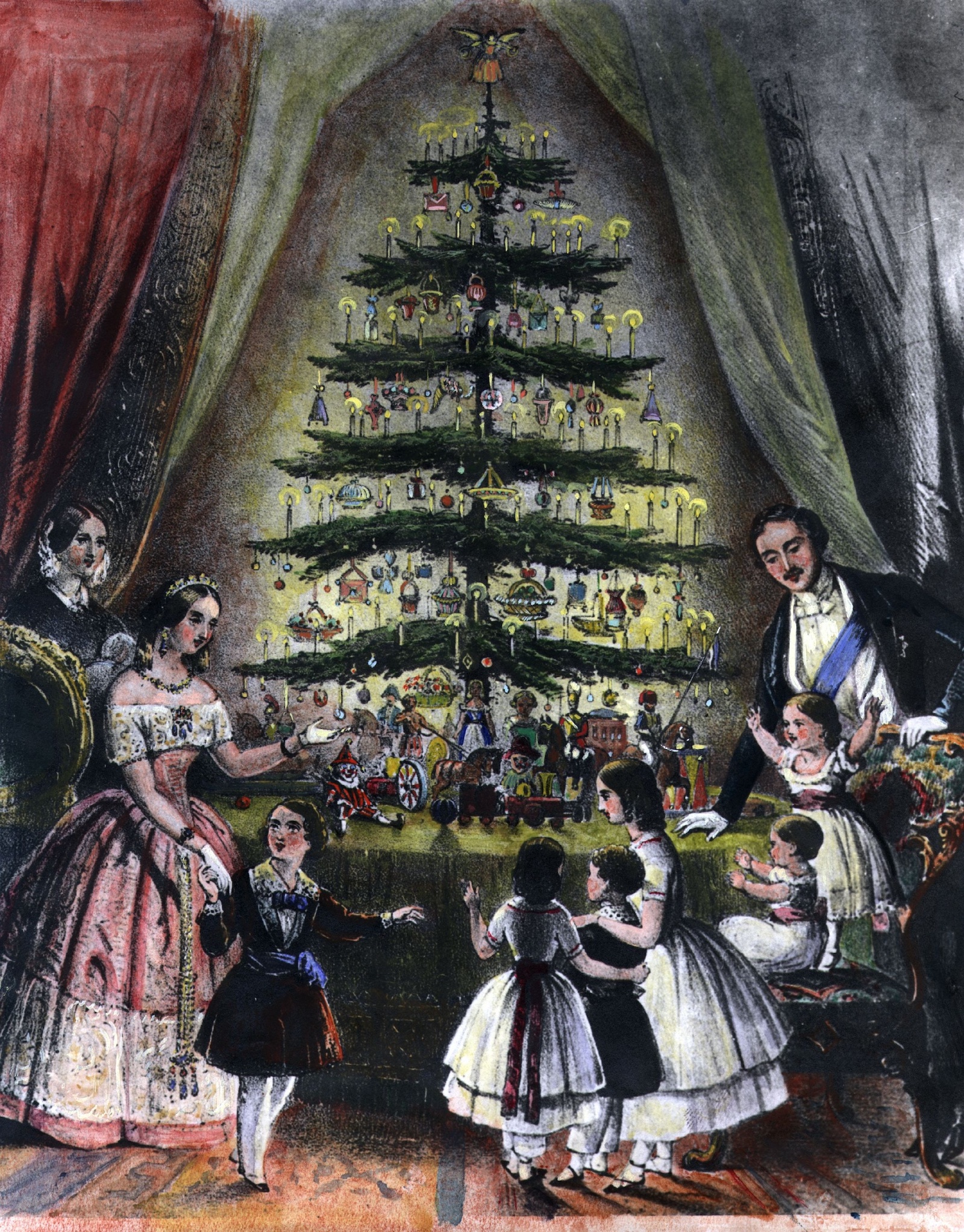
The first documented use of a decorated Christmas tree occurred in 1419 in Freiburg, Germany, where a guild reportedly decorated a tree with apples and sweets[11]. By the 16th century, evidence of decorated trees became more common. Records indicate that by 1605, trees were adorned with roses, apples, and other embellishments in Strasbourg, Alsace[3][5][10]. This period marks the emergence of what we recognize as the modern Christmas tree.
Contrary to popular belief that Martin Luther was the first to adorn a tree with candles, the specific origins of tree decoration are more complex. Luther is credited with inspiring this practice during a winter stroll illuminated by starlight in the 16th century, leading him to recreate the scene with a candle-lit tree for his family[2][10].
Influence of Royalty

The introduction of the Christmas tree to England is often attributed to Queen Charlotte, the German wife of King George III, who set up a Christmas tree in Windsor in December 1800. She decorated it with fruit and candles during a Christmas gathering, creating a festive spectacle for children[2][9]. However, it was her grandson, Prince Albert, along with Queen Victoria, who popularized the Christmas tree in the UK during the mid-19th century. In 1848, an illustration depicting the royal family around a decorated tree appeared in the Illustrated London News, which sparked widespread fascination and imitation across British society[6][9][10].
The Tradition Spreads to America

German immigrants played a vital role in introducing the Christmas tree tradition to the United States. The first recorded Christmas tree in America was reportedly in 1777 in Windsor Locks, Connecticut, set up by a Hessian soldier during the Revolutionary War[3][11]. However, Christmas trees were initially met with skepticism, particularly from Puritan communities that viewed them as pagan symbols. By the mid-19th century, the tradition gained acceptance, bolstered by publications like Godey’s Lady's Book, which featured images of Victorian families celebrating around ornate trees[4][5].
The Modern Christmas Tree

With the emergence of electric lights in the 19th century, the decoration of Christmas trees transformed dramatically. The first electrically illuminated tree is attributed to Edward H. Johnson in New York City in 1882[4][9]. As more households embraced the decorations, the Christmas tree evolved into a prominent symbol of the holiday, adorned with a variety of ornaments, from homemade decorations to the elaborately crafted glass baubles that became popular in the late 19th century[5][8].
Today, the Christmas tree stands as a global icon, celebrated in homes across many cultures. While real trees remain a favorite, artificial versions have gained significant popularity, especially in regions where fresh trees are hard to procure. The debate around the environmental impact of both real and artificial trees continues, reflecting wider concerns about sustainability and cultural heritage[4][10].
Conclusion
The exact origins of the Christmas tree tradition may remain shrouded in mystery, with various cultures and stories intertwining to create the festive symbol we know today. From its pagan roots to its establishment as a cherished household adornment during Christmas, the Christmas tree has undergone significant transformations, influenced by religious practices, royal endorsements, and emerging technologies. Ultimately, its enduring presence signifies the universal themes of joy, hope, and renewal as families come together to celebrate the holiday season.
Let's look at alternatives:
- Modify the query.
- Start a new thread.
- Remove sources (if manually added).
 Curated by Joan







Towns have twin towns or sister cities primarily to promote cultural and commercial ties, foster international friendship, and enhance peace and understanding. The concept originated after World War II as a means of reconciliation among communities that had suffered from conflict. Town twinning encourages collaboration on various projects, trade, and tourism, facilitating cultural exchanges that enrich the participating communities[1][3].
Twin town relationships also serve practical purposes, allowing municipalities to share best practices and identify successful strategies for issues like urban planning and social services[2][4]. These partnerships can boost local economies and strengthen community bonds through shared events and activities[2][4].
Let's look at alternatives:
- Modify the query.
- Start a new thread.
- Remove sources (if manually added).


Get more accurate answers with Super Pandi, upload files, personalised discovery feed, save searches and contribute to the PandiPedia.
The Role of Fashion Throughout History
Fashion is a multifaceted phenomenon that extends beyond mere clothing; it is a powerful reflection of identity, culture, and social dynamics. Over the centuries, fashion has served as a tool for individual expression, a marker of social status, and a medium for political activism, illustrating its significance throughout history.
Cultural and Social Identity
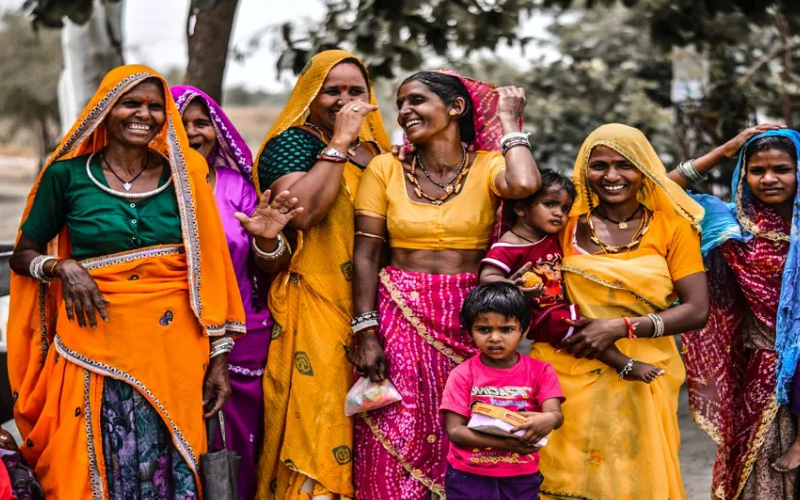
From ancient civilizations to modern times, clothing has been integral to expressing cultural identity and societal values. Ancient Egyptians, for instance, wore specific garments that indicated their social status and roles within society. Nobility adorned themselves in elaborate linen while commoners donned simpler attire, showcasing fashion as a visual language indicating power and identity[2][10]. Similarly, in ancient Greece, draped garments emphasized ease and functionality, reflecting the societal value placed on movement and freedom[9].
In regions like Asia and Africa, traditional garments such as the kimono in Japan or the vibrant kente cloth in Ghana carry deep cultural significance. Each piece tells a story that encompasses the wearer's heritage, values, and societal belonging, reinforcing individual and collective identities[6][8]. Traditional clothing, therefore, acts as a bridge between personal identity and cultural heritage, highlighting pride in communal history.
Fashion as a Tool for Political Expression

Fashion has also played a pivotal role in various social movements, from the suffragettes in the early 20th century who used clothing to advocate for women's rights to civil rights activists who employed fashion to assert dignity and unity. The suffragettes famously wore white, purple, and green to symbolize their fight for equality, making their fashion choices a form of protest against societal norms[1][3]. Similarly, during the Civil Rights Movement, figures like Rosa Parks chose to present themselves in tailored and respectable attire to counter stereotypes and showcase the dignity of African Americans[5][9].
In the 1960s, fashion became a form of rebellion and identity for younger generations, especially during the counterculture movement. The mini-skirt epitomized a break from traditional expectations, symbolizing liberation and women's newfound autonomy[1][3]. This use of fashion as a medium of political expression has persisted into contemporary movements, where individuals and groups continue to use clothing to communicate their causes and beliefs.
Economic and Environmental Impact
The Industrial Revolution marked a significant change in the fashion landscape, shifting from handmade garments to mass production. This period democratized fashion, making clothing more accessible across different social classes. However, it also brought challenges, notably in terms of labor exploitation and environmental sustainability[2][10]. Today, there is a growing awareness of the ethical implications faced by the fashion industry, with movements advocating for sustainable practices gaining traction in response to the environmental crises caused by fast fashion[8][9].
The fashion industry has faced criticisms for its environmental costs and the socio-economic ramifications of cultural appropriation. As globalization allowed for cultural exchanges, fashion has sometimes mirrored power imbalances, leading to accusations of insensitivity and exploitation[7][9].
Contemporary Fashion as a Cultural Force
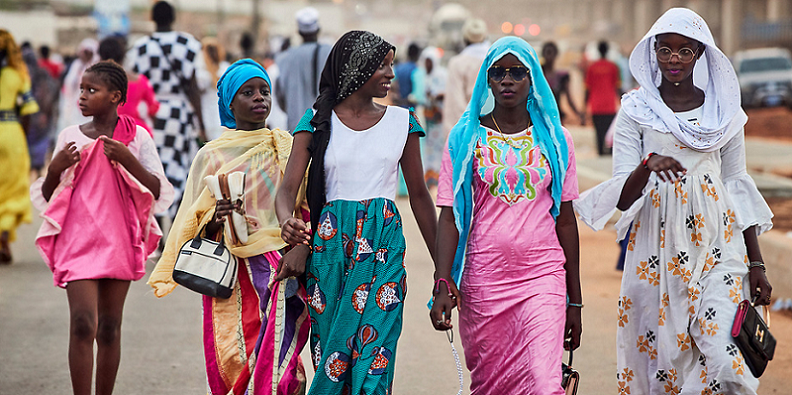
In modern times, fashion remains a vibrant medium for expressing individual and communal identities while also navigating complex social issues. The rise of social media platforms has amplified this dynamic, making fashion a global conversation where trends emerge and evolve rapidly[8][10]. Fashion now serves as a canvas for youth culture, allowing for the experimentation of styles that transcend geographical boundaries.
The impacts of movements like Black Lives Matter and climate activism are evident in fashion choices today, where individuals and brands align with progressive values through their clothing[4][8]. This contemporary intersection of fashion with sociopolitical activism underscores its continued relevance as a means for social change.
Conclusion
Fashion throughout history has proven to be more than just a superficial aspect of society; it is an intricate tapestry that weaves together culture, identity, and the complexities of human expression. Whether as a marker of status in ancient civilizations or as a vehicle for political statement in modern movements, the significance of fashion continues to evolve, reflecting the changing narratives of society. Understanding its role allows deeper insights into the cultural and social dynamics that shape human experiences across time.
Let's look at alternatives:
- Modify the query.
- Start a new thread.
- Remove sources (if manually added).





Let's look at alternatives:
- Modify the query.
- Start a new thread.
- Remove sources (if manually added).


Cottagecore celebrates a return to nature and traditional crafts.
Cottagecore homes feature vintage furniture and floral patterns.
The aesthetic emphasizes soft, muted colors inspired by nature.
Key elements include rustic textures, earthy tones, and handmade decor.
Cottagecore promotes slow living and nurturing ties to the environment.
Let's look at alternatives:
- Modify the query.
- Start a new thread.
- Remove sources (if manually added).



Transcript
Imagine stepping into a virtual world where every digital character you create whispers secrets about your personality. In fact, research shows that your online avatar is not just a random picture but a revealing mirror of your inner traits. When you choose a lively smile and open eyes, you might be signaling warmth and approachability. Some people decide to hide behind sunglasses or hats, suggesting they prefer to keep a guarded side to themselves. In online environments, whether playing a game or meeting colleagues, your digital self can boldly convey whether you are friendly, creative, or professional. In professional settings, people tend to choose realistic and lifelike images to look trustworthy and competent, while in leisure settings, abstract or fantastical avatars often express individuality and playfulness. Your avatar is more than a substitute for a photograph; it is a carefully crafted visual identity that sends subtle messages about who you really are. So next time you customize your digital self, think about the hidden traits you are expressing to the world.
Let's look at alternatives:
- Modify the query.
- Start a new thread.
- Remove sources (if manually added).
 Curated by Joan


