
An aphid can carry two generations inside her
A colony of aphids can grow without a mating event for every new generation. During their asexual phase, female pea aphids give birth to live daughters from unfertilised eggs—a process called parthenogenesis.[1]
The surprise is inside the mother. Her developing daughter embryos can already contain embryos of their own. That puts a mother, developing daughters and the beginnings of granddaughters together in one body: telescoping generations.[2]
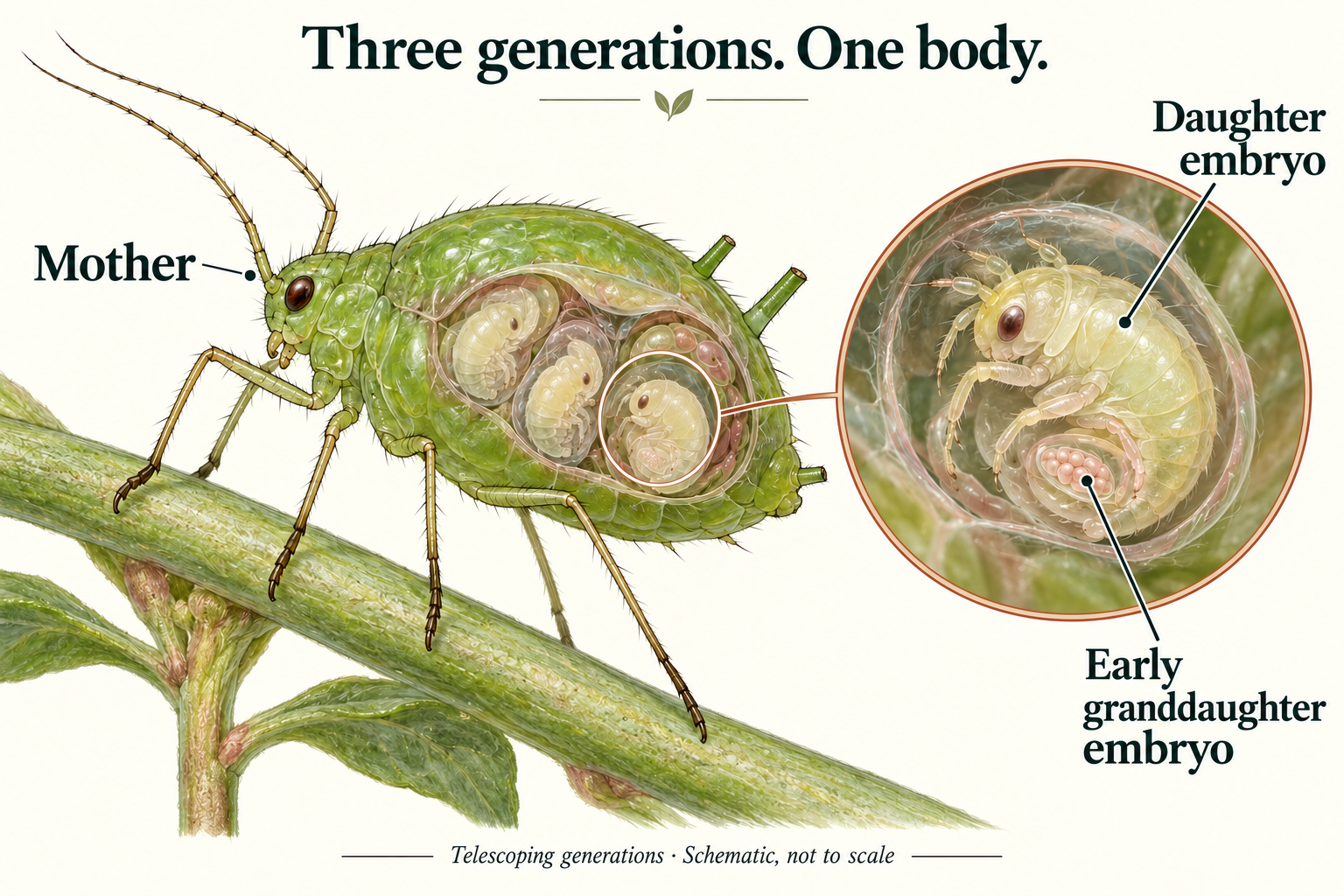
AI-generated explanatory illustration, not a photograph. Schematic details are not to scale. · Source
Overlapping development helps colonies grow quickly when a suitable plant becomes available. The next generation may already be developing before its mother has even been born.[3]
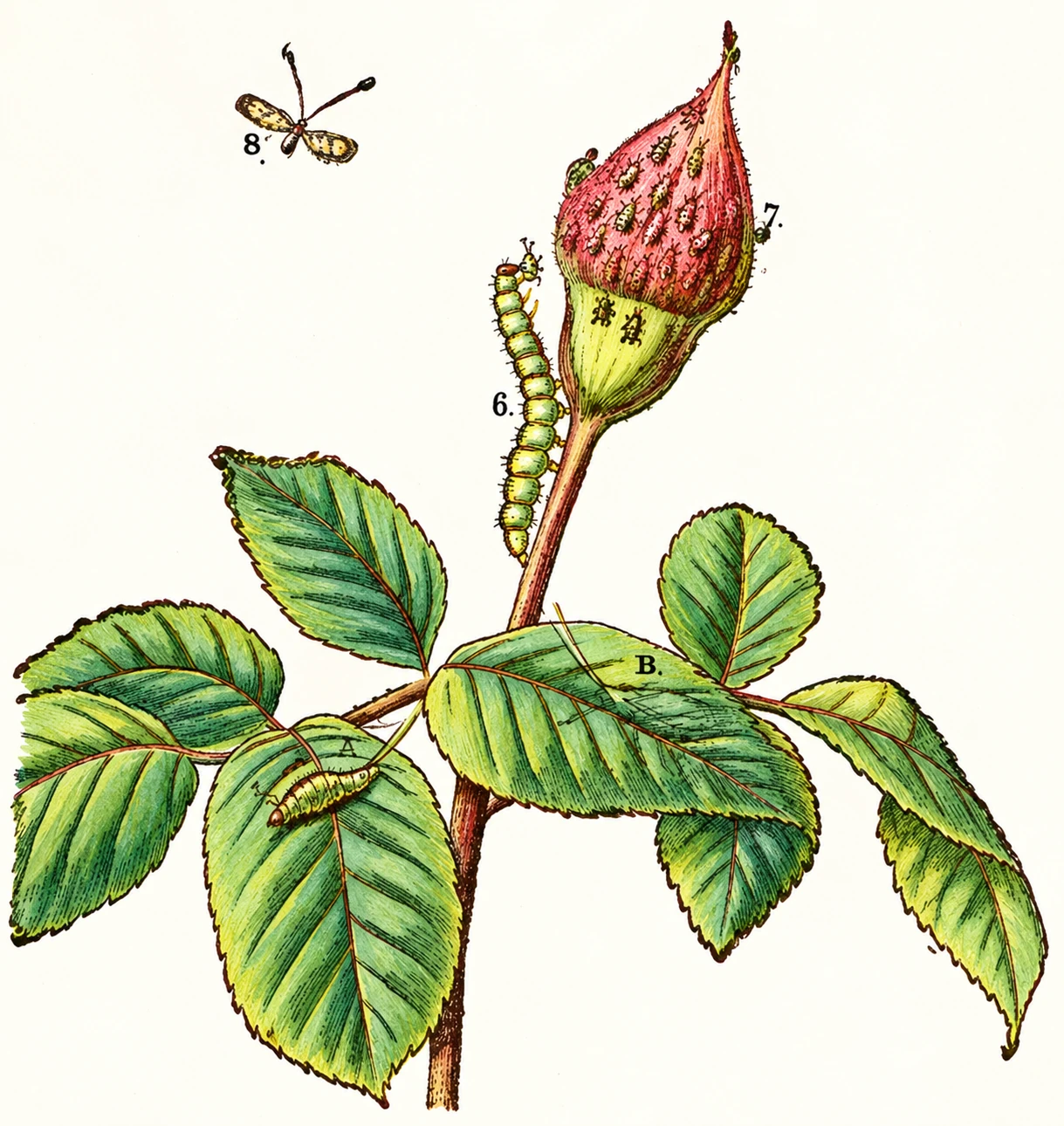
Historical book illustration, AI-assisted colour remaster. Colours are interpretive. · Source
The pattern depends on species and conditions. In many temperate aphids, autumn brings a sexual generation and eggs that survive winter; some populations continue asexual reproduction instead.[4][5]
Buckley noticed the rapid appearance of live young in Life and Her Children. Her comparison with budding is historical language; today we describe the process as live-bearing parthenogenesis.[6][7]
Let's look at alternatives:
- Modify the query.
- Start a new thread.
- Remove sources (if manually added).