Entrada de Pandipedia
Why unemployment can hide labour-market change
01
Why unemployment can hide labour-market change
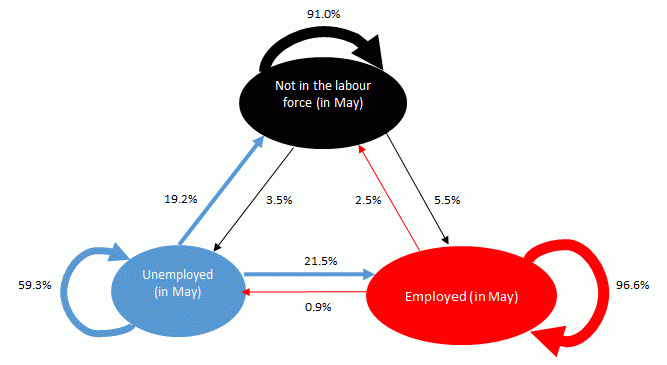
A stock is a snapshot. A flow is movement over time. Unemployment can stay flat while entries and exits rise, masking a changing labour market.
02
Why unemployment can hide labour-market change
Italy shows the trap: employment fell by 14,000 quarter on quarter in 2016, yet rose by 239,000 year on year. Stocks can move on different clocks.

03
Why unemployment can hide labour-market change
Flows add detail: Italy saw more moves from unemployment into work in 2016, but only modestly more moves from inactivity into work.
04
Why unemployment can hide labour-market change
In 2017, fixed-term jobs drove much of employment growth, while conversion to permanent work fell from 24.3% to 16.5%.
05
Why unemployment can hide labour-market change
The India panel page returned reCAPTCHA, so its evidence cannot be verified here. The takeaway remains: read transitions, not just the unemployment stock.

Lo sentimos, Pandi no pudo encontrar una respuesta.
Veamos alternativas:
- Modifica la consulta.
- Inicia un nuevo hilo.
- Eliminar fuentes (si se han agregado manualmente).
Sigue explorando
Explora temas relacionados
Why Headline Unemployment Rates Can Miss Labour-Market SlackHow do full-time-equivalent rates change the picture of UK labour-market slack?. Structure the report around the FTEER and FTEUR definitions, then compare them with conventional UK employment and unemployment rates. Include a table of gender, age, qualification, regional, and local economic findings, followed by a limitations section on the 37.5-hour benchmark, desired-hours assumptions, sampling error, and non-causal correlations.Pandemic Inflation: What Labour-Force Participation RevealedLast Table in Ibiza — Ibiza, 1994Why employment rates can hide women’s disadvantageIn which year did the ILO first discuss technological unemployment?What is skills-based hiring and why is it gaining momentum?How Is Educational Mismatch Measured in Iceland?