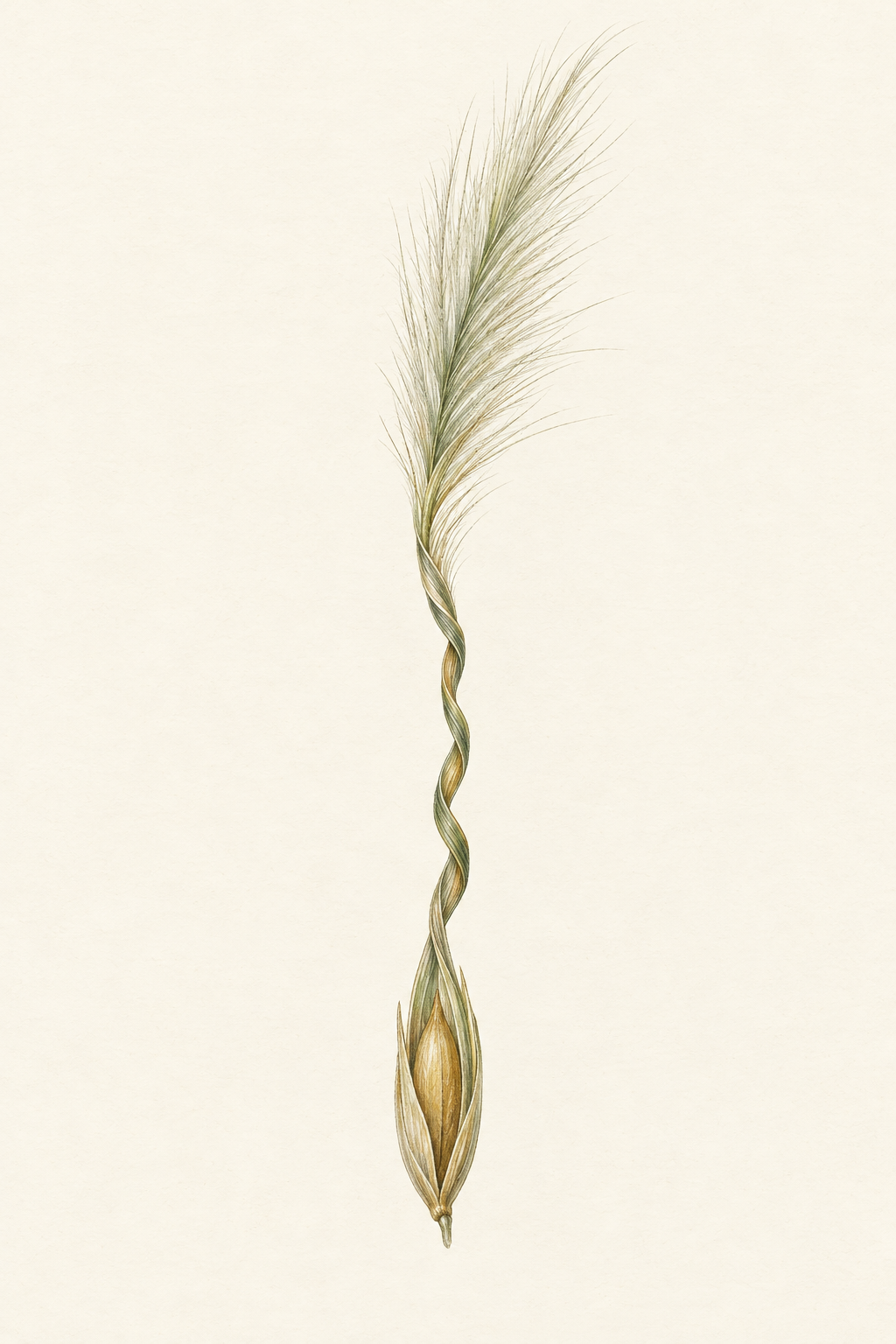
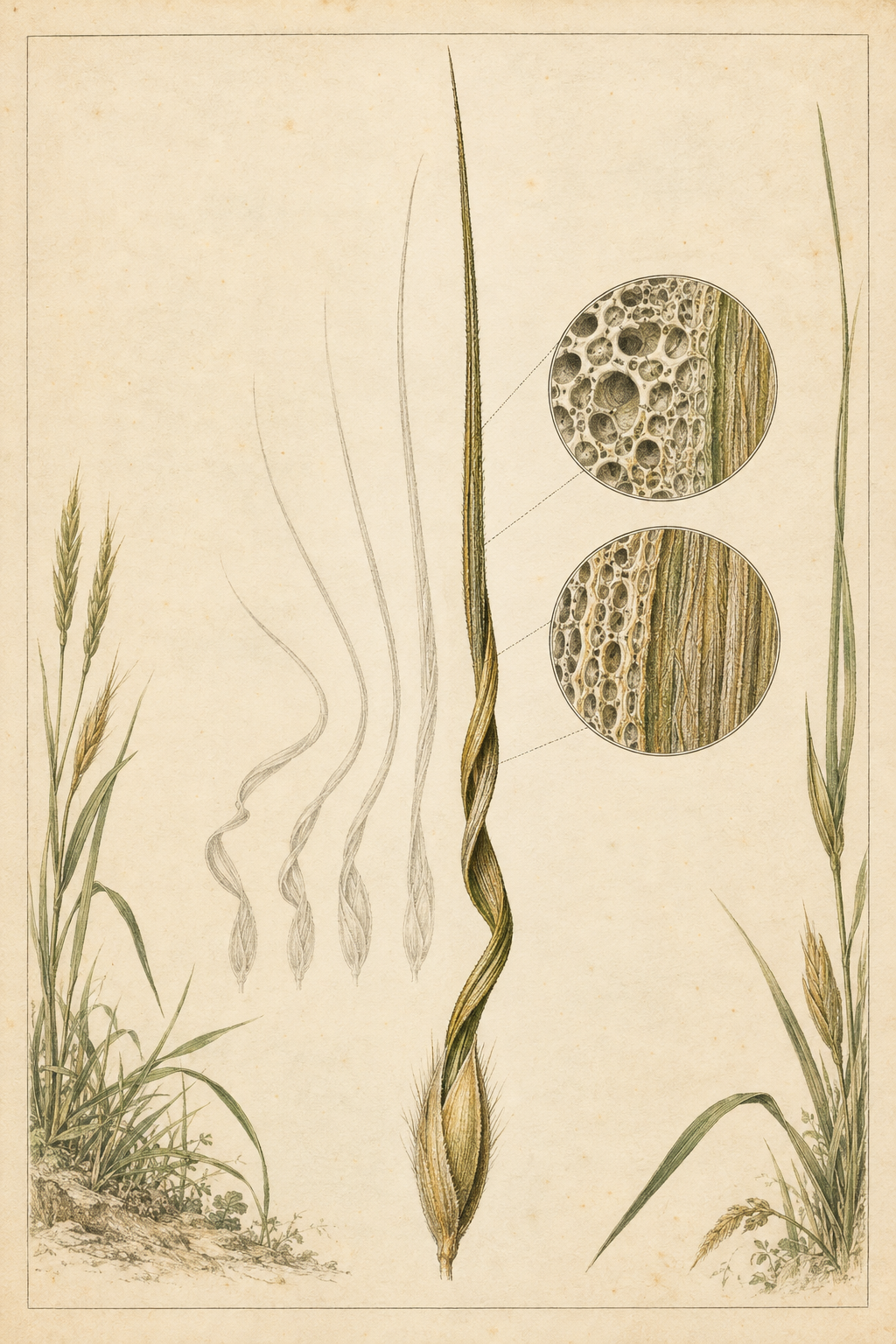
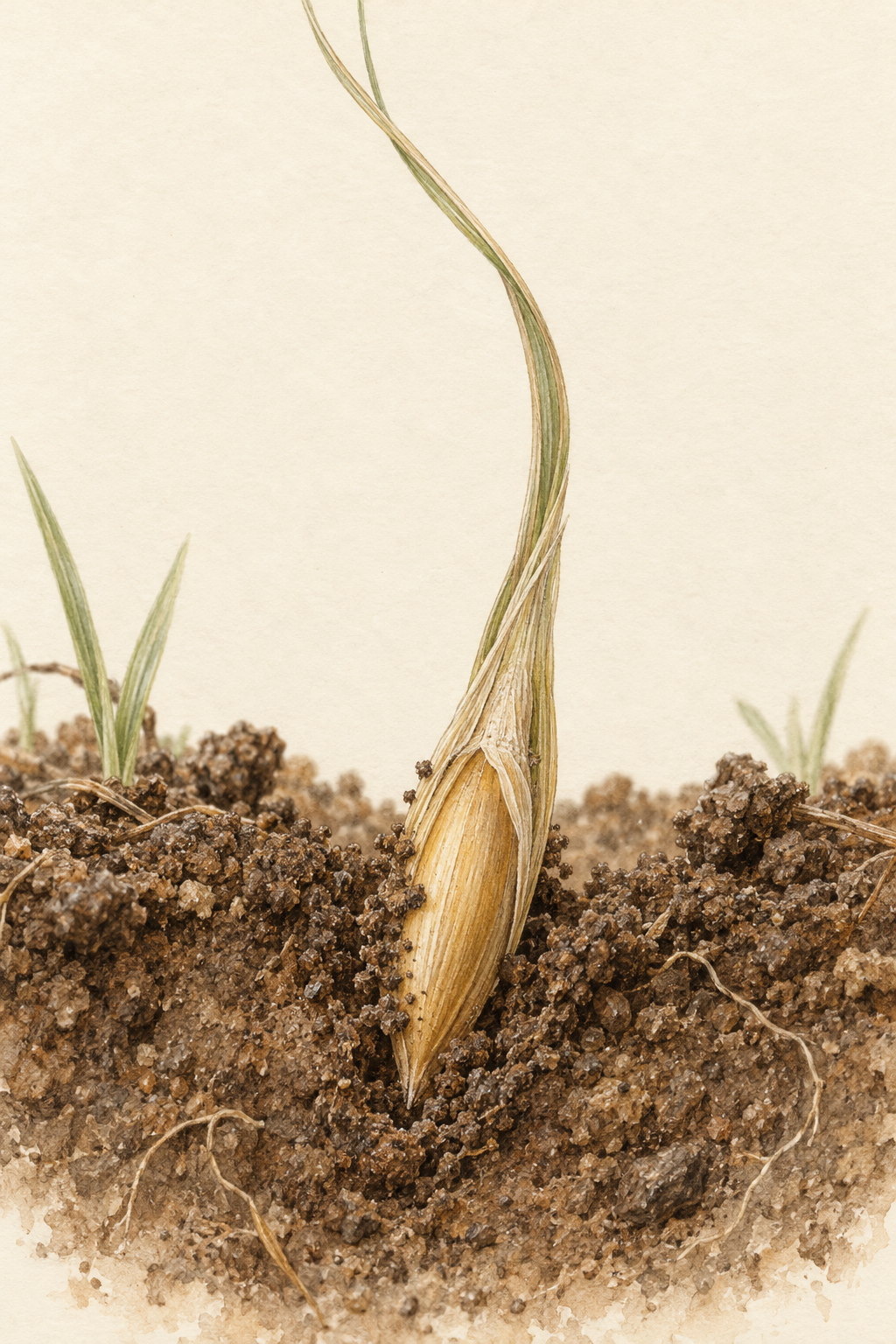
FLFreaks and Marvels of Plant Lifepor Pandi4 sem1 fuente Marcador Compartir Hablar sobre esto Copy Copiar para redes sociales Ver en PandiPedia Administrar fuentes Descargar diapositivasA seed that twists its way into soilGrass awn movementHow can a grass seed move itself? Cooke describes a cultivated grass whose long awn responds to moisture. 🌱Grass awn movementMoisture loosens the lower twisted awn. As it untwists, it turns the feathery upper part. 💧Grass awn movementThen the awn dries and twists again. Cooke explained this by unequal moisture changes in porous, spongy and harder, close-textured parts.Grass awn movementThat repeated unwind-and-twist helps drive the seed’s sharp point into soil, covering the seed. Moisture turns the awn into a seed-moving mechanism. 🌾1 / 4Ir a la diapositiva 1 de 4Ir a la diapositiva 2 de 4Ir a la diapositiva 3 de 4Ir a la diapositiva 4 de 4Cooke’s 1882 account follows a cultivated grass awn from moisture-triggered twist to seed burial. Here’s the motion, step by step. 🌱moreLo sentimos, Pandi no pudo encontrar una respuesta.Veamos alternativas:Prueba la Super Búsqueda (Recomendado)Modifica la consulta.Inicia un nuevo hilo.Eliminar fuentes (si se han agregado manualmente).✦Tu algoritmo
Grass awn movementHow can a grass seed move itself? Cooke describes a cultivated grass whose long awn responds to moisture. 🌱
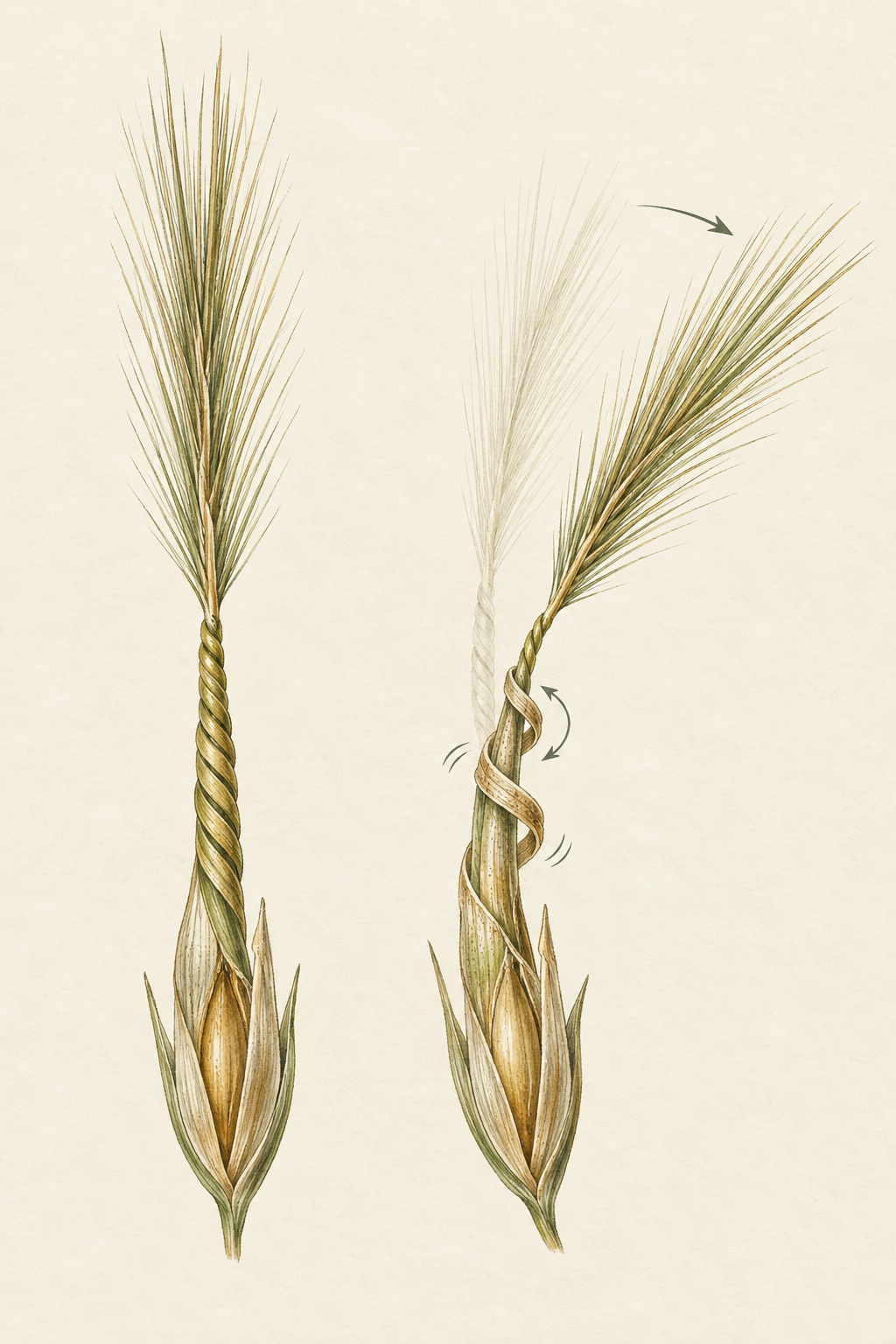
Grass awn movementMoisture loosens the lower twisted awn. As it untwists, it turns the feathery upper part. 💧
Grass awn movementThen the awn dries and twists again. Cooke explained this by unequal moisture changes in porous, spongy and harder, close-textured parts.
Grass awn movementThat repeated unwind-and-twist helps drive the seed’s sharp point into soil, covering the seed. Moisture turns the awn into a seed-moving mechanism. 🌾