Descubre Pandipedia
Un directorio creciente de respuestas útiles seleccionadas por la comunidad de Pandi. Busca en la colección o explora los últimos descubrimientos.
2286 entradas disponibles

How does blue light affect circadian rhythm?

Blue light suppresses the body's secretion of melatonin, a hormone that regulates circadian rhythms and induces sleep[1]. While all forms of visible light can affect circadian timing, short-wavelength blue light has the most powerful impact[2]. Research shows that evening exposure to blue light can suppress melatonin for about twice as long as green light of comparable brightness and shift circadian rhythms by twice as much, effectively tricking the brain into thinking it is still daytime[3][4] This disruption leads to difficulties falling asleep, reduced sleep quality, and decreased deep sleep[5][6]
Mitigation strategies focus on managing light exposure timing and filtering:
- Timing and Reduction: The most effective approach is turning off screens and reducing bright LED or fluorescent lighting two to three hours before bedtime[7][8]
- Software Filters and Dark Mode: Applications, dark mode settings, and night-mode features adjust screen color temperatures or lower luminance, though studies note that software filters alone provide modest reductions in ipRGC-stimulating light and work best when paired with reduced overall brightness[9][10]
- Eyewear: Amber-tinted or specialized blue-blocking glasses can block short-wavelength light and help prevent evening melatonin suppression when using electronic devices[11][12]
- Daytime Habits: Exposing yourself to bright natural light during the day strengthens your circadian rhythm and makes the evening transition more effective[13][14][15]
Veamos alternativas:
- Modifica la consulta.
- Inicia un nuevo hilo.
- Eliminar fuentes (si se han agregado manualmente).
Decarbonizing heavy industry: green steel and cement
Decarbonizing heavy industry: green steel and cement
Steel and cement are difficult to decarbonize because their emissions come not only from energy use but also from how iron and cement ingredients are made. This brief compares emerging production routes, what pilot and scale-up evidence is available, the cost picture, and policy tools that can help early projects reach commercial scale.
Bottom line: Hydrogen-based direct reduced iron (H₂-DRI) has progressed from pilots toward planned industrial demonstrations, while molten oxide electrolysis (MOE) has a company-reported industrial-cell milestone but limited public detail on output. For cement, the evidence is stronger for reducing clinker use or emissions than for proven clinker-free alternatives: performance and deployment information on alkali-activated binders and geopolymers remains sparse.
Steel: hydrogen reduction and electrolysis
In H₂-DRI, hydrogen is used to reduce iron ore to sponge iron, which can then be made into steel in an electric-arc furnace (EAF). HYBRIT’s Luleå pilot began operating in 2020 and produced about 100 tonnes of hydrogen-reduced sponge iron. HYBRIT also reports that its 2018–2024 pilot programme tested the production chain through crude-steel production in an EAF, reporting 0.0 tonnes CO₂e per tonne for Scope 1 and 2 in the pilot; that figure is the company’s reported result, not independently verified in the available evidence.[1][2][3][4]
The next step is industrial scale, but planned capacity should not be confused with operating capacity. HYBRIT describes a planned Gällivare demonstration using 100% hydrogen, a 500 MW electrolyser and a design output of about 1.2 million tonnes of crude steel per year. Its hydrogen-storage pilot offers supporting evidence on a key system cost: HYBRIT reports practical savings of 26–31% from storage and estimates 25–40% savings for future commercial plants, while further testing is planned through 2026.[5][6][7][8][9][10]
Molten oxide electrolysis is a different steelmaking route that uses electrolysis rather than hydrogen reduction. Boston Metal says it commissioned an operational, multi-inert-anode industrial MOE cell at its Woburn facility in 2025 and produced “tonnage steel”; it does not report the output tonnage or cell capacity. A separate demonstration plant is planned, but the source gives no specific capacity or commissioning date.[11][12][13][14]
The IEA’s 2025 assessment places hydrogen-based steelmaking closer to early commercial deployment, but does not provide a formal technology-readiness level. It estimates early commercial plants using 100% hydrogen blends could cost 50–140% more than conventional blast-furnace/basic-oxygen-furnace (BF-BOF) plants, depending on region. The IEA also reports about 10 Mt of near-zero-emissions iron capacity for 2030, while warning that much announced capacity still lacks a clear timeline for operating fully near-zero-emissions.[15][16][17][18]
Cement: clinker reduction versus clinker-free binders
Ordinary Portland cement relies on clinker, the kiln-made intermediate that contributes substantially to process emissions. The available evidence calls for care with labels: belite calcium sulphoaluminate (BCSA) is an alternative clinker, not a clinker-free chemistry. The IEA reports 20–30% lower process emissions than ordinary Portland cement clinker and places BCSA at TRL 7, but reports production limited to small batches rather than commercial production.[19][20][21]
BCSA scale-up is constrained by limited standards coverage, the need for more cost-competitive formulations, and uncertainty about long-term durability and verified strength development. Blended cements can also cut clinker use by substituting materials such as calcined clay, limestone, volcanic ash, rice-husk ash or silica fume. The IEA estimates alternative constituents may account for roughly 15–35% by mass, potentially up to 50%, but availability, transport costs, prescriptive standards and market acceptance can limit adoption.[22][23][24][25]
For genuinely clinker-free binders, the retrieved evidence is much thinner. CDP identifies alkali-activated cements as an example of alternative binding systems that avoid the process emissions inherent in Portland clinker production, but its reporting guidance describes possible development stages rather than confirming specific commercial deployments. A 2025 study reports 165.3 MPa compressive strength and 7.7 MPa tensile strength for one alkali-activated ultra-high-performance concrete formulation containing 40% slag powder and 28% fly ash as cement replacements; this is a particular laboratory result, not proof of field performance or commercial scale. The available sources do not establish comparable deployment evidence for geopolymers.[26][27][28][29]
A separate cost benchmark illustrates the commercial hurdle but should not be treated as a cost estimate for every cement chemistry: the IEA estimates early commercial near-zero-emissions cement plants using carbon capture and storage (CCS) have production costs 75–150% above conventional plants, with regional variation. The estimate uses regional averages and 2024 energy inputs, excludes policy support such as carbon pricing or subsidies, and does not account for regional differences in capital and non-energy operating costs.[30][31][32][33]
The available evidence does not provide a like-for-like cost curve comparing hydrogen steel, MOE steel, clinker-free binders and conventional production. For steel, energy prices, technology costs, raw-material availability and regional policy affect route economics; the IEA notes H₂-DRI can be competitive where renewable electricity is cheap. Scrap-based steelmaking uses around one-eighth the energy of production from iron ore, but scrap availability and quality are not quantified in the supplied material.[34][35][36]
Comparison: readiness, costs and evidence gaps
The comparison below separates reported cost estimates from pilot or development evidence. The figures use different baselines and technologies, so they are not a direct ranking of the least-cost decarbonization options.
| Route | Evidence and maturity | Cost evidence or key constraint |
|---|---|---|
| Hydrogen DRI steel | HYBRIT reports pilot production and a planned 100% hydrogen demonstration; the IEA describes early commercial movement.[37][38][39] | IEA estimate: early commercial plants using 100% hydrogen blends cost 50–140% more than BF-BOF, depending on region.[40] |
| MOE steel | Boston Metal reports a 2025 industrial-cell commissioning run that produced tonnage steel; output capacity is not specified.[41][42] | No comparable cost estimate is provided in the available evidence. |
| Near-zero cement with CCS | IEA cost estimate covers early commercial plants, not all low-carbon cement routes.[43] | IEA estimate: 75–150% above conventional cement production, with regional variation and stated exclusions.[44][45] |
| Clinker-free binders | Evidence includes a specific laboratory alkali-activated concrete result; field deployment and commercial scale are not established in the supplied sources.[46][47] | No reliable comparative cost curve or quantified scale-up cost is provided. |
Policy levers and practical implications
The IEA identifies a combination of demand creation, risk-sharing and common rules as important because first-of-a-kind projects face high costs and risks, while thin margins and international competition make it difficult for producers to absorb a green premium.[48][49]
- Green public procurement: Public purchasing and aggregated commitments can create early demand for lower-emissions steel, cement and concrete. The IEA cites the Industrial Deep Decarbonisation Initiative’s procurement guidelines as one example.[50]
- Carbon contracts for difference (CCfDs): These can help bridge the cost gap by supporting a more predictable return for near-zero production. The IEA identifies CCfDs alongside procurement, mandates and quotas, and cites Germany’s scheme as an example; the supplied evidence does not quantify its impact.[51][52]
- Carbon pricing and targeted finance: The IEA cost estimate for near-zero cement excludes policy support such as carbon pricing or subsidies. It also recommends targeted finance and risk mitigation for demonstrations and early commercial projects.[53][54]
- Standards and regulation: Clear, interoperable emissions standards can support procurement and market policies. For cement specifically, standards coverage and acceptance are also direct constraints on adoption of alternative binders.[55][56]
Takeaway: The near-term opportunity is to scale routes with substantial pilot evidence while building demand and reducing first-mover risk. For steel, H₂-DRI has the more detailed pilot chain in the available material, while MOE has a promising company-reported industrial-cell milestone but little public cost or capacity information. For cement, clinker reduction and CCS have more developed evidence than clinker-free alternatives; claims about clinker-free performance or commercial readiness should therefore be treated cautiously until supported by comparable durability, standards and field-deployment data.[57][58][59][60][61]
Veamos alternativas:
- Modifica la consulta.
- Inicia un nuevo hilo.
- Eliminar fuentes (si se han agregado manualmente).
Loudon’s Icebergs: Five Observations from 1848
Veamos alternativas:
- Modifica la consulta.
- Inicia un nuevo hilo.
- Eliminar fuentes (si se han agregado manualmente).
What is a circular economy and how can households participate?. Explains the core principles of designing out waste, keeping products in use, and regenerating nature. Offers practical, everyday actions families can adopt.
A circular economy is an approach to making and using goods that reduces waste and keeps materials useful for as long as possible. Instead of the “take, make, throw away” pattern, it focuses on three principles:
- Design out waste and pollution: choose durable, repairable products and avoid unnecessary packaging.
- Keep products and materials in use: maintain, reuse, share, repair, refurbish, and recycle them.
- Regenerate nature: support practices that restore natural systems, such as composting food scraps and choosing sustainably produced goods.
Households can put these ideas into practice by:
- Buying only what they need; choosing durable, refillable, second-hand, or minimally packaged items.
- Borrowing or sharing occasional-use items, such as tools or party supplies.
- Repairing clothes and appliances, and donating or reselling usable goods.
- Planning meals, storing food well, and composting suitable scraps to reduce food waste.
- Reusing containers and bags, then sorting recycling according to local rules.
Recycling helps, but it is usually better to avoid waste or keep an item in use first. A useful starting point is to pick one everyday category—such as food, clothing, or household goods—and make one change that sticks.
Would you also like to see practical circular-economy ideas for reducing household food waste?
Would you also like to see practical circular-economy ideas for reducing household food waste?Respuesta completa. Hay una opción de seguimiento disponible.
Veamos alternativas:
- Modifica la consulta.
- Inicia un nuevo hilo.
- Eliminar fuentes (si se han agregado manualmente).
Ethical concerns around brain-computer interfaces
Ethical concerns around brain-computer interfaces
A brain-computer interface (BCI) records brain activity and translates it into commands or other outputs; some systems can also stimulate the nervous system. Their ethical stakes therefore include both what neural data may reveal and how a device may affect its user. The main concerns are meaningful consent, privacy and cybersecurity, unequal access, and rules that have not kept pace with different types of neurotechnology.
Consent, autonomy, and privacy
Consent can be difficult when users cannot readily understand what a device records or what later analysis might infer from it. Neural signals may be used to infer attention, emotions, reactions, or intentions, including information beyond the original purpose a person agreed to. For long-term or adaptive systems, researchers recommend consent practices suited to changing systems, clear reporting of data safeguards, and involving patients in research design.[1][2][3]
The privacy concern extends beyond disclosure of raw recordings: analysis may enable intimate profiling for advertising, education, workplace monitoring, or other decisions. Users may also lose control if neural data or inferences are shared or used for purposes they did not agree to, putting mental privacy and cognitive autonomy at risk.[4][5][6][7]
Security and potential harm
Neural data can be exposed through insecure devices or systems, intercepted during wireless transmission, or accessed through weak authentication and access controls. A breach could reveal sensitive cognitive patterns. For systems that can act on the nervous system, tampering or malicious inputs may also trigger unintended actions, raising health and safety concerns for people using therapeutic implants.[8][9][10][11]
Researchers have proposed safeguards such as minimizing collected data, encryption, access logging, secure software updates, and independent testing. These are proposed measures, not uniform requirements across all BCI products.[12][13][14][15]
Socioeconomic divides
If BCIs for treatment or cognitive enhancement are expensive, access may be concentrated among wealthier people and regions. In competitive settings such as schools or workplaces, unequal access could widen existing educational and economic gaps; people may also feel pressured to use enhancement technology to keep up. Researchers debate fair access and who should pay, while noting that universal access commitments could strain underfunded health systems if they ignore differences in resources between countries.[16][17][18][19][20][21]
Policy gaps and current guidance
Current oversight is fragmented. Medical BCIs may be regulated as medical devices, but enhancement and consumer neurotechnology may not fit those pathways. In the United States, HIPAA protections depend on neural data being handled by covered health-care entities or their business associates, and medical-device cybersecurity guidance does not cover products classified as consumer electronics. State neural-data protections are emerging, but their definitions and approaches differ.[22][23][24][25]
There are relevant guidelines and initiatives, but they do not amount to one comprehensive ethics code for every BCI use. FDA guidance addresses testing and clinical studies of implanted BCIs in a specific medical context. The OECD and UNESCO have issued neurotechnology ethics guidance or recommendations, while a review of closed-loop neurotechnology calls for tailored consent, transparent reporting of data safeguards and AI use, patient participation, and training for researchers, clinicians, and review boards.[26][27][28][29][30][31][32]
The central takeaway is that BCI governance needs to address the whole lifecycle: meaningful consent, limits on data collection and reuse, strong security for both information and device functions, and fair access. Existing laws and guidance cover parts of that challenge, but protections remain uneven across clinical, consumer, and enhancement uses.[33][34][35][36]
Veamos alternativas:
- Modifica la consulta.
- Inicia un nuevo hilo.
- Eliminar fuentes (si se han agregado manualmente).
How many seconds of delay does multitasking after a notification add on average?
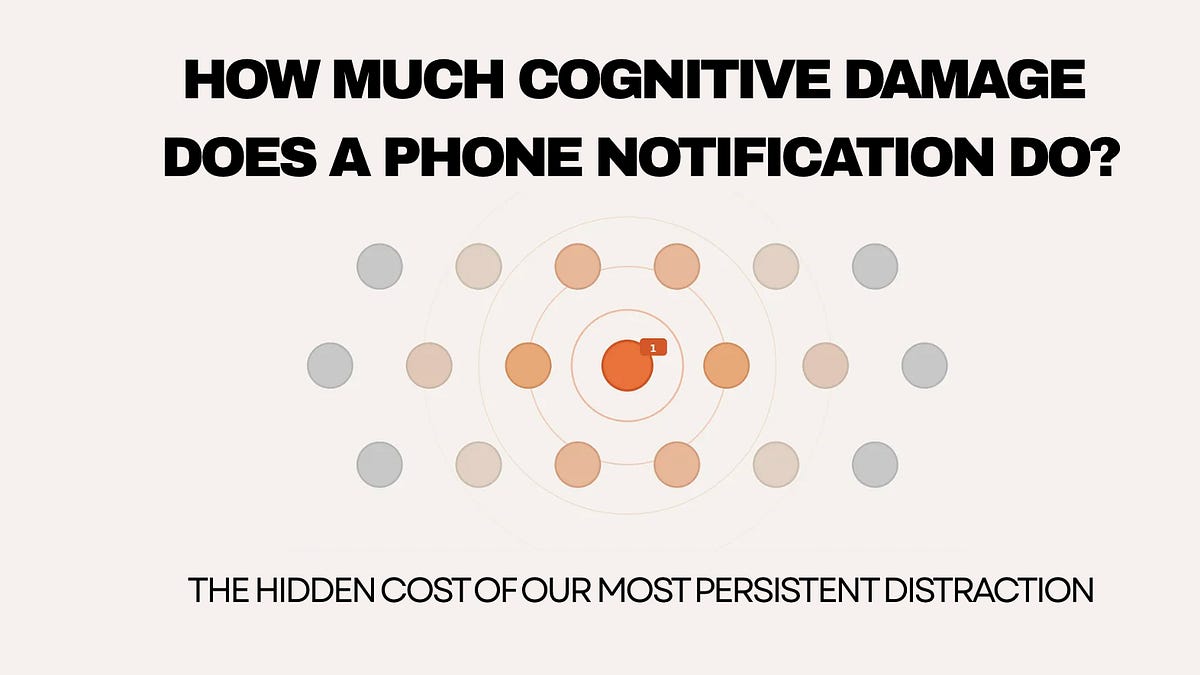
Multitasking after a notification adds an average of 23 minutes and 15 seconds of delay to regain full deep focus[1][2]. This time cost measures the mental recovery required after an interruption rather than the brief duration of the notification itself[3].
In addition to this refocusing time, a single smartphone notification causes a transient cognitive slowing lasting approximately seven seconds[4]. When these interruptions happen repeatedly throughout the day, the cumulative effect leaves individuals in a perpetually fragmented state of attention[5].
Would you also like to know what mechanisms drive the seven-second processing delay after a notification?Respuesta completa. Hay una opción de seguimiento disponible.
Veamos alternativas:
- Modifica la consulta.
- Inicia un nuevo hilo.
- Eliminar fuentes (si se han agregado manualmente).
Why are indie social-deduction games thriving on streaming platforms?. Explain the appeal of audience interaction and low hardware requirements in two short paragraphs. Reference surprise hits like Among Us.
Social-deduction games are made for streaming: bluffing, accusations, and sudden betrayals create unpredictable moments that viewers can follow and react to. Audience chat can speculate alongside players, vote in polls, or suggest who seems suspicious, making the stream feel participatory even when viewers aren’t in the game. Among Us showed how a modest indie title could become a surprise hit through streamers’ lively group play and audience-friendly drama.
They’re also easy for many people to join: simple rules, modest system requirements, and availability on phones or inexpensive computers lower the barrier for both players and streamers. That broad access makes it easier to gather a group—and turns a game’s social chemistry, rather than high-end graphics or hardware, into the main attraction. Would you also like to know how Among Us became a streaming hit?Would you also like to know how Among Us became a streaming hit?Respuesta completa. Hay una opción de seguimiento disponible.
Veamos alternativas:
- Modifica la consulta.
- Inicia un nuevo hilo.
- Eliminar fuentes (si se han agregado manualmente).
Which country opened the first commercial solar-to-hydrogen plant?
Veamos alternativas:
- Modifica la consulta.
- Inicia un nuevo hilo.
- Eliminar fuentes (si se han agregado manualmente).
Adaptive AI copilots vs. text-only chatbots
Adaptive AI copilots vs. text-only chatbots
An AI copilot helps with work by using relevant information from the user’s tools and task, while a text-only chatbot mainly responds to what the user types. The key difference is context: a copilot may draw on connected apps, work history, live operational data, or sensor inputs, then adapt its response or take a task-related action. The sources describe these capabilities, but do not establish that every copilot uses sensors or that one product combines all these signals.[1][2]
| Dimension | Text-only chatbot | Adaptive copilot |
|---|---|---|
| Input | Primarily the user’s typed prompt. | May also use connected-app, work-history, operational, or sensor context.[3][4] |
| Relationship to the task | Responds to the request as stated. | Can relate signals to the broader task and adjust its help accordingly.[5] |
| Actions | Typically provides conversational responses. | May work within an app or operational workflow, such as suggesting edits or responding to disruptions.[6][7] |
Examples across work and daily tasks
- Logistics: PTV Mira answers natural-language questions using logistics data and optimization. More broadly, logistics AI agents can use operational data to adjust inventory, reroute shipments, respond to disruptions, or coordinate warehouse robots.[8][9]
- Design: Microsoft 365 Copilot’s Designer agent is an example of a copilot integrated into the apps where people work. It can use broader work context and assist on a document or canvas, including suggesting or making edits; this example is app- and work-context-aware, not described as sensor-based.[10][11]
- Personal productivity: Agents can use email, calendar, tasks, and work patterns to help prioritize messages, propose or adjust schedules, and connect action items across apps. One described approach learns when a person tends to focus and adjusts task plans accordingly.[12][13]
Takeaway
A chatbot is mainly prompt-driven; a copilot can be context-driven and connected to the work itself. More context can make assistance better fitted to a situation, but “copilot” does not automatically mean sensor-equipped: the examples range from operational data and connected apps to work-pattern context.[14][15][16]
Veamos alternativas:
- Modifica la consulta.
- Inicia un nuevo hilo.
- Eliminar fuentes (si se han agregado manualmente).
Smart Homes for Healthy Aging: Support Without Sacrificing Autonomy
Smart Homes for Healthy Aging: Support Without Sacrificing Autonomy
A smart home for healthy aging uses sensors and connected assistants to help someone live safely and independently at home. Fall alerts, medication prompts, and energy controls can be useful, but their value depends on reliable operation, manageable costs, and the older adult’s control over what is monitored and shared.
The evidence summarized here describes promising tools, but it does not establish that they consistently improve health outcomes or save money in older adults’ homes. The practical question is therefore not simply what technology can do, but whether it meets a person’s needs with acceptable privacy, expense, and effort.
Fall detection and medication reminders
Fall detection can use wearable motion sensors, room-based contactless sensors, or cameras. A wearable accelerometer can send movement data to an in-home gateway for machine-learning analysis; infrared or laser sensors can monitor room activity without continuous camera observation; and camera systems can use computer vision to flag suspected falls. These are different approaches, not proof that any particular system works reliably in everyday homes. One vendor’s reported 99.5% accuracy is a product claim, not independent validation.[1][2]
A fall alert only helps if someone can respond. The available findings describe these systems as supplements to care, and note limited clinical evidence for quality-of-life benefits, particularly for frail older adults. False alarms, missed events, connectivity problems, and privacy concerns also matter; systems may need individual configuration, and the supplied evidence does not provide independent real-world performance figures across sensor types.[3][4][5]
Medication support can include timed voice prompts, phone alarms, apps, or pill organizers with alarms. Some apps also record doses or allow caregiver monitoring, but the sources describe these functions rather than demonstrating that reminders alone improve health outcomes. A practical plan should account for device or Wi-Fi failure and for challenges such as vision, memory, dexterity, or complicated medication schedules.[6][7][8][9]
Energy use and household costs
Smart-home systems may reduce energy use, but the evidence provided does not establish verified net bill savings for older adults aging in place. A utility provider gives a general consumer estimate that smart thermostats can lower monthly bills by 10–12%; this estimate is not evidence of verified savings in older adults’ homes.[10]
The relevant household calculation must include equipment, installation, and maintenance, not only possible reductions in utility bills. Smart devices may also help prevent costs such as leak damage, but the supplied source gives no typical device prices, payback period, or verified savings for older adults. Expense and technology challenges can be barriers to adoption even when people see potential benefits for safety and independence.[11][12][13]
Privacy, consent, and autonomy by design
Monitoring can support security and independence, but sensors in intimate spaces may feel intrusive, and users may worry about dependence on technology or who can access their data. A privacy-conscious design should collect only what is needed, explain what is collected and shared, protect the information, and limit access to people who need it. Less intrusive sensing should be preferred when it can meet the same need; cameras should be used only when necessary.[14][15][16][17][18][19]
- Make consent informed and ongoing: explain benefits, risks, data use, and safeguards in accessible language, and revisit choices as circumstances change.[20][21]
- Preserve control: let the older adult adjust settings, turn functions off, and decide whether and when information is shared with family or caregivers.[22][23]
- Co-design with older adults: involve them in decisions about features and adoption, use understandable interfaces, and provide helpful explanations when errors occur.[24][25][26]
- Keep AI assistance within suitable limits: the cited research reports that older adults suggested restricting AI assistants to low-risk health questions.[27]
These principles make technology a tool for the resident’s choices rather than a substitute decision-maker. They also address practical adoption barriers: perceived intrusiveness, usability, reliability, and uncertainty about how monitoring data will be used can undermine trust.[28][29][30]
Key takeaway
Smart-home sensors and AI assistants can provide fall alerts, medication cues, and potential energy management, but the evidence is not enough to assume dependable clinical benefits or net savings for older adults. A sound approach is to choose technology for a clearly identified need, maintain a human response plan, account for full costs and failure modes, and keep consent, privacy, and control in the resident’s hands.[31][32][33][34][35]
Veamos alternativas:
- Modifica la consulta.
- Inicia un nuevo hilo.
- Eliminar fuentes (si se han agregado manualmente).