Descubre Pandipedia
Un directorio creciente de respuestas útiles seleccionadas por la comunidad de Pandi. Busca en la colección o explora los últimos descubrimientos.
Directorio de PandipediaThe bear that found the hidden snare
In “Sagacious Bruin,” the anthology reports that a bear detected the whalers’ trap more than once. When they hid the rope beneath snow, it scraped the snow away, pushed the rope aside and escaped again.

Veamos alternativas:
- Modifica la consulta.
- Inicia un nuevo hilo.
- Eliminar fuentes (si se han agregado manualmente).

How star and cross tiles make a repeating pattern



Leer el texto de las diapositivas
- Two shapes. One tile pattern.
Stars and crosses fit together. Star tile. Cross tile. Photograph: The Metropolitan Museum of Art.
- Trace one cross
Its four arms fit between the star tiles. Photograph: The Metropolitan Museum of Art.
- Old tiles. Newer repairs.
The Met dates the panel to 1260–70. The plain crosses are 20th-century replacements. Photograph: The Metropolitan Museum of Art.
Veamos alternativas:
- Modifica la consulta.
- Inicia un nuevo hilo.
- Eliminar fuentes (si se han agregado manualmente).
The ISS started as one piece
Transcripción
The first module
Zarya launched in nineteen ninety-eight with its own power and propulsion.[4]
Unity arrives
The space shuttle Endeavour carried the second module, Unity, into orbit.[5]
Two pieces join
On December sixth, the crew joined Unity, at the upper right, to Zarya.[6]
The station grows
That’s the first pair in the inset, shown at the same scale as the station in twenty twenty-one.[7]
Veamos alternativas:
- Modifica la consulta.
- Inicia un nuevo hilo.
- Eliminar fuentes (si se han agregado manualmente).

Can you read the Las Vegas Grand Prix timetable?
Respuestas y explicaciones
- At 16:30 on Thursday 19 November, what are the Formula 1 drivers due to do?
Start first practice[2]
The programme puts first Formula 1 practice at 16:30 on Thursday and Formula 1 qualifying at 20:00 on Friday. [3] - The Thursday schedule says “Qualifying Session” at 21:30. Which series is that for?
F1 Academy[4]
That line belongs to F1 Academy. Formula 1 qualifying has its own Friday slot. Check the series column and the session name together. [5] - The Grand Prix is scheduled for 20:00 on Saturday in Las Vegas. When is that in London?
Sunday 04:00[6]
Veamos alternativas:
- Modifica la consulta.
- Inicia un nuevo hilo.
- Eliminar fuentes (si se han agregado manualmente).
A Mars expedition based at Deimos
S. Fred Singer’s PH-D proposal was a study concept, not a flown mission. The source places its presentation at the 1981 Case for Mars conference; the conference had been planned starting in 1980[1][2].
Rather than land a crew on Mars, Singer proposed using Deimos as a base of operations. Six to eight astronauts would spend two to six months in the Martian system, remotely controlling 10 to 20 rovers on Mars’s surface. A robotic sample-return lander would collect a “grab sample”; no astronaut would descend to the planet[3].
Would you also like to know how the PH-D proposal planned to return a Mars sample without landing astronauts?Respuesta completa. Hay una opción de seguimiento disponible.
Veamos alternativas:
- Modifica la consulta.
- Inicia un nuevo hilo.
- Eliminar fuentes (si se han agregado manualmente).
Salvadoran troops in Haiti: under what authority, and who pays?
The Salvadoran troops in Haiti sit under two different authorities, and El Salvador says it pays most of the bill itself. A small contingent serves in the UN-authorised Gang Suppression Force (GSF). The UN says the great majority of the more than 2,000 soldiers sent since late October are not part of it[1]. They operate under a bilateral arrangement with Haiti that neither government has published[2][3]. President Nayib Bukele says El Salvador covers about 90% of the cost, and no cost figure has been released[4].
Last updated 21 November 2026. Spanish and French quotes are our translations.
| Question | What the documents show |
|---|---|
| Under what authority? | Two layers. A Salvadoran contingent serves in the UN-authorised Gang Suppression Force (GSF). The 2,000-plus troops sent since late October mostly sit outside it, under a bilateral agreement whose text has not been published |
| Who pays? | El Salvador says it pays about 90% from its own budget. It has published no cost. The UN trust fund ($226m pledged) has no Salvadoran entry and serves only the GSF |
| Who helps? | The United States, Colombia and the Dominican Republic helped move troops and equipment |
What we know
- It began as a medical-evacuation contingent. El Salvador ratified a status agreement for the Kenya-led mission in October 2024[5], and 70 soldiers arrived on 4 February 2025, bringing the total to 78[6]. The foreign ministry told legislators the first contingent was "for medical evacuation operations" (our translation)[7].
- The surge followed an ambush. On 18 October 2026 four Salvadoran soldiers of the GSF went missing after their armoured vehicle was attacked near Croix-des-Bouquets. On 28 October the foreign ministry announced a deployment of more than 2,000 soldiers to find them[8].
- The UN draws a line. On 2 November its spokesperson said the great majority of the new Salvadoran troops "are not part of the Gang Suppression Force". So they fall outside the mandate and reporting of the UN Support Office (our translation)[9]. AFP describes the deployment as "separate from the GSF"[10].
- Haiti says it is in charge. Prime Minister Alix Didier Fils-Aimé said all actions are carried out under his government's direction, with Haitian police, the army, the GSF and Salvadoran forces working to a common strategy[11].
The paper trail, document by document
Each row is a document we read, or a report of one where the text itself is not online. Salvadoran decrees are described from the national press, because the Legislative Assembly and Diario Oficial pages did not load for us.
| Document and date | What it authorises or commits | What it leaves out |
|---|---|---|
| Status agreement, signed at the OAS in Washington 3 Oct 2024[12]; ratified by El Salvador's Assembly 30 Oct 2024 (57 of 60 votes)[13] | Immunities, tax exemption, free movement and weapons rules for the Kenya-led mission's personnel; Haiti must secure the release of any captured personnel[14] | The preamble and 10 articles were not read out or published during the vote[15] |
| Decree 181, Legislative Assembly, 20 Dec 2024[16] | Salvadoran forces join the mission for medical evacuations, from Haiti or a third country; the president must report periodically to the Assembly[17] | The bill exempted related defence purchases from the procurement law[18]; no cost figure |
| Resolution 2793, UN Security Council, 30 Sep 2025 | Chapter VII authority for the GSF: 5,500 uniformed personnel; personnel costs "borne by voluntary contributions"; a UN Support Office (UNSOH) for logistics[19] | Contingents are paid through voluntary pledges, not the UN budget |
| Extension, Legislative Assembly, 1 Oct 2025[20] | One more year, to 2 Oct 2026, still for medical evacuations[21] | No change of role |
| Transitional law for the GSF, approved 29 Sep 2026; in force 2 Oct 2026[22] | Twelve months to Oct 2027, extendable; aircraft and "civil and military personnel according to the needs of the mission" (our translation); no longer limited to evacuations[23] | Covers participation in the GSF. A lawyer notes it does not set out the extra deployment announced after 18 October[24] |
| Resolution 2829, UN Security Council, 29 Sep 2026 | GSF mandate to 31 Mar 2027; notes a Haiti–GSF status agreement signed 27 Jul 2026[25] | Applies to the GSF and its personnel only |
| Bilateral agreement(s) with Haiti, date not given | Vice President Ulloa says El Salvador "had to sign bilateral agreements" for the operation (our translation)[26] | He said the text will not be released "until diplomatic conditions allow" (our translation)[27] |
| Cooperation agreement, Haiti's Council of Ministers, 17 Nov 2026 | Approved "to strengthen bilateral relations", according to the prime minister's office[28] | Approved about four weeks after the troops arrived; text, obligations and duration not released[29] |
Under what authority: the chain
For the Salvadorans inside the GSF, the chain is complete on paper. The Security Council authorised the force under Chapter VII[30] and extended it to 31 March 2027[31]. Haiti signed a status agreement with the GSF in July 2026[32]. El Salvador's Assembly authorised participation in the GSF until October 2027[33].
For the surge troops, the published chain stops short. The Salvadoran law in force is written for participation in the GSF[34], and the UN says most of the new troops are not in it[35]. The government points instead to bilateral agreements with Haiti and to backing from the Assembly[36]. The one Haitian decision on record, the 17 November cabinet approval, came about four weeks after the troops landed[37]. Until the texts are published, nobody outside the two governments can check what they cover.
Who pays
El Salvador, by its own account. On 29 October Bukele wrote: "we are covering 90% of the costs" with "our own small budget" (our translation)[38]. Vice President Félix Ulloa said "nobody has given us money" for the deployment (our translation)[39]. Neither gave a cost. A Salvadoran lawyer has asked the government to say how much the operation costs and where the money comes from[40].
Others help with transport. A US military official confirmed that Southern Command provided C-130 aircraft to help move the troops[41]. Bukele reposted a picture of a Colombian Air Force C-130H carrying Salvadoran troops[42]. The Dominican Republic let Salvadoran helicopters refuel on its territory and offered transit, medical evacuation and supplies, but no soldiers[43]. Earlier, in 2025, the US State Department gave El Salvador two UH-1N helicopters for its role in the mission[44].
The UN money does not reach the surge. The GSF's personnel costs are paid from voluntary contributions through a UN trust fund[45]. Its logistics come from the UN Support Office, which serves the GSF[46], and the UN says the surge troops are outside that office's mandate[47]. The trust fund's public ledger lists 15 donors, $225.7 million pledged and $194.7 million received. El Salvador is not among them[48].
| Donor | Pledged ($m) | Received ($m) |
|---|---|---|
| Canada | 84.0 | 85.2 |
| Germany | 46.1 | 45.7 |
| Qatar | 30.0 | 10.0 |
| Dominican Republic | 20.0 | 10.0 |
| US | 15.0 | 15.0 |
| France | 13.9 | 12.1 |
| All 15 donors | 225.7 | 194.7 |
Whether the trust fund reimburses El Salvador for its GSF contingent is not shown in the public ledger, which lists money in, not payments out[49].
What is still unknown
- The text of the bilateral agreement(s), including when they were signed[50][51].
- Who commands the surge troops. The GSF has a force commander chosen through the countries that back it[52]. Haiti's government says it directs operations[53]. Reporting in late October said it was still unclear who would command the new contingent and for how long[54].
- Rules of engagement and legal status for troops outside the GSF. The 2024 and 2026 protections cover the mission and its personnel[55][56]. Amnesty International has asked both governments to publish the rules on the use of force and say who the troops answer to[57].
- The cost and the budget line, and whether the president's periodic reports to the Assembly cover the surge[58][59].
- How many troops. Official figures say "more than 2,000"[60]. For comparison, the whole GSF had 1,563 personnel in mid-October, according to the Council on Foreign Relations[61].
What would settle it
- Publication of the bilateral agreement and of Haiti's 17 November cabinet decision.
- El Salvador's finance ministry records of any budget transfers to the defence ministry for Haiti.
- A GSF or UN statement on how many Salvadorans serve in the GSF and whether they are reimbursed.
How this page was made
We read the two Security Council resolutions and the UN trust fund dataset at source. We counted the fund's pledges with a script over the published data. For Salvadoran and Haitian decisions we read Spanish, French and English reporting that quotes the decrees and official statements. El Salvador's Assembly, Diario Oficial and foreign ministry pages, a UN press page and some wire stories did not load, so claims that rest only on them were left out. Named officials appear only through their own statements or official documents.
Veamos alternativas:
- Modifica la consulta.
- Inicia un nuevo hilo.
- Eliminar fuentes (si se han agregado manualmente).
Korean War historians on military readiness and the Incheon landing
Veamos alternativas:
- Modifica la consulta.
- Inicia un nuevo hilo.
- Eliminar fuentes (si se han agregado manualmente).
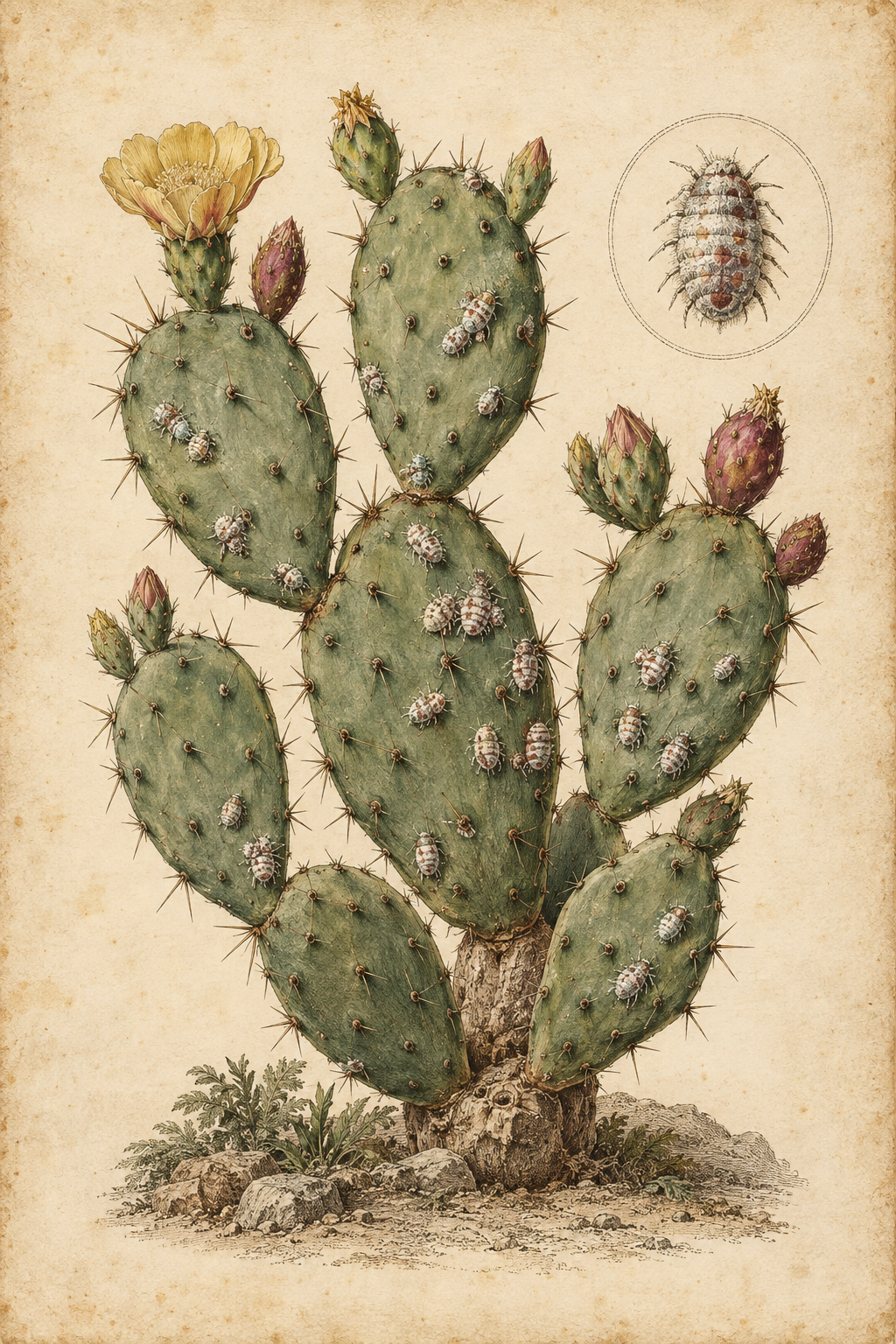
From cactus insect to prized dye



Veamos alternativas:
- Modifica la consulta.
- Inicia un nuevo hilo.
- Eliminar fuentes (si se han agregado manualmente).
How to read the result on an Indian PUC test
Veamos alternativas:
- Modifica la consulta.
- Inicia un nuevo hilo.
- Eliminar fuentes (si se han agregado manualmente).
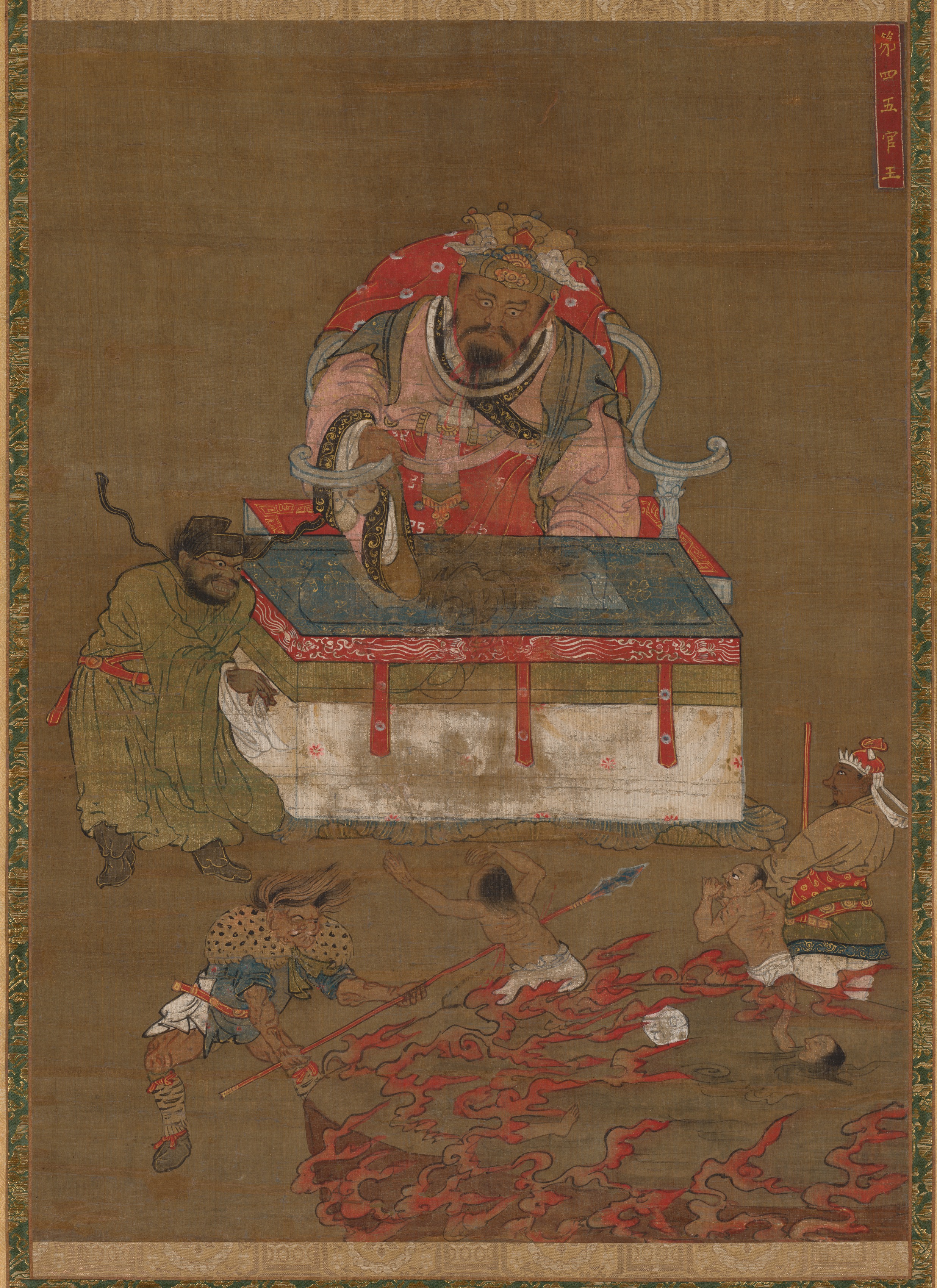
Where to look in Goryeo Korea’s Fourth King of Hell
Veamos alternativas:
- Modifica la consulta.
- Inicia un nuevo hilo.
- Eliminar fuentes (si se han agregado manualmente).