Descubre Pandipedia
Un directorio creciente de respuestas útiles seleccionadas por la comunidad de Pandi. Busca en la colección o explora los últimos descubrimientos.
2322 entradas disponibles

Three ethical artificial intelligence metrics managers can track
Transcripción
Here is a quick manager guide to ethical artificial intelligence metrics. For fairness, track false positive and false negative rates by demographic group, then compare the worst and best groups with a gap or ratio. Add bias test coverage across the full lifecycle, including tests that change protected attributes. Tip: review fairness together with accuracy, because one number alone does not tell the whole story. For transparency, measure documentation completeness, traceability, explainability coverage, freshness, and whether users can find clear system descriptions, limits, contact details, and redress paths. Tip: keep records current after each model, data, or policy change. For safety, watch incident rate and severity, adversarial testing coverage, production monitoring coverage, time to detect and repair, and whether corrective actions restore safe function. Tip: set thresholds and limits for each measure in your specific use case, document what you measure and why, and review the scorecard in human and organizational context, not as isolated numbers.
Veamos alternativas:
- Modifica la consulta.
- Inicia un nuevo hilo.
- Eliminar fuentes (si se han agregado manualmente).
Clinical trials on bioidentical hormones. Query to access registered studies evaluating safety and efficacy.
ClinicalTrials.gov sources for bioidentical hormone studies
I found a small set of directly relevant ClinicalTrials.gov records plus official registry help pages for searching by intervention, condition, recruitment status, or study ID[1][2]. The initial search also surfaced unrelated records, so each registry entry should be confirmed by opening the study page itself[3][4].
ClinicalTrials.gov study records
Direct registry records for the named studies and closely related bioidentical hormone trials. Open each record to verify intervention, status, phase, population, and any posted results.

Official ClinicalTrials.gov search and API guidance
Official help pages for finding studies, using search results, constructing complex queries, checking results, and reading study records, plus the ClinicalTrials.gov FHIR data access page.
Context reviews for safety and efficacy interpretation
Peer-reviewed reviews that help interpret hormone safety and efficacy context, especially compounded bioidentical menopausal hormone therapy and micronized progesterone, but they do not replace individual trial registrations.

Veamos alternativas:
- Modifica la consulta.
- Inicia un nuevo hilo.
- Eliminar fuentes (si se han agregado manualmente).
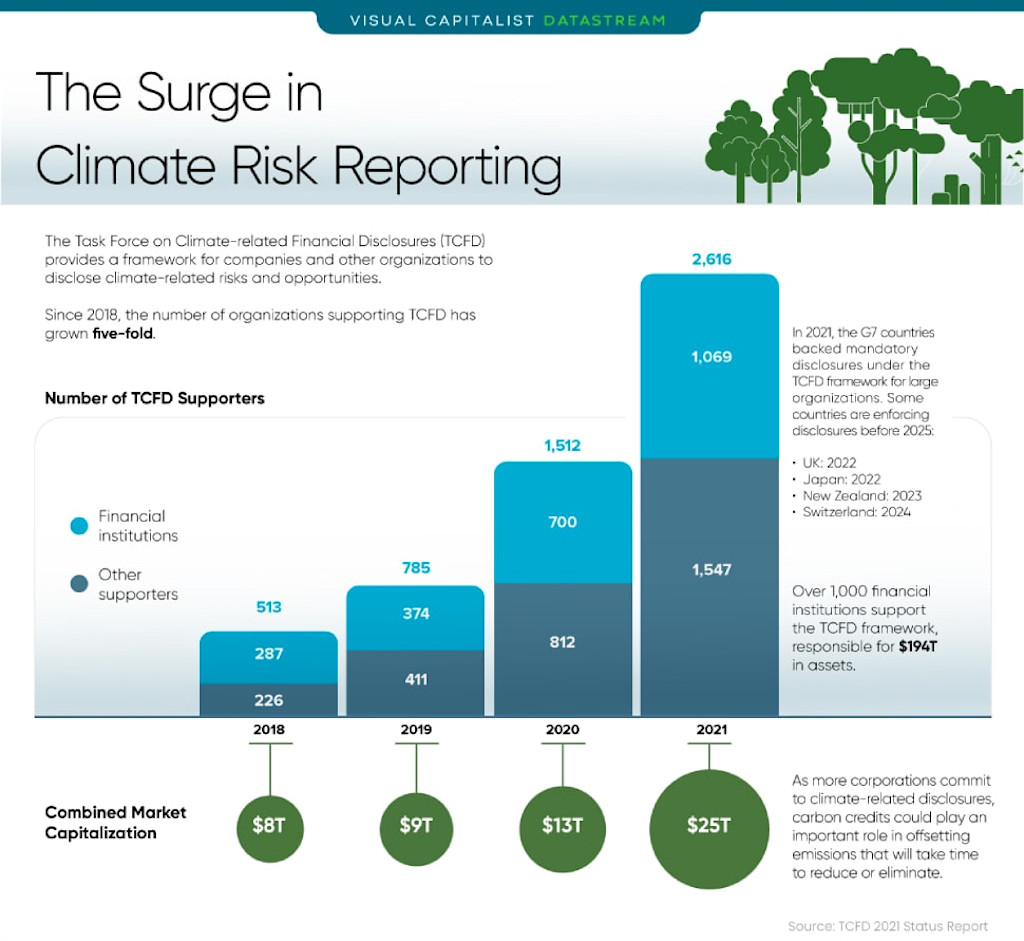
TCFD in 2024: broad adoption, thin depth
In fiscal 2023, 82% of companies disclosed at least one TCFD-recommended item, but only about 2% to 3% disclosed all 11. Broad uptake, then, did not mean comprehensive climate reporting. The recommendations cover how climate change affects governance, strategy, risk management, and metrics and targets. The figures show a sharp gap between reporting something and providing the full picture.


Veamos alternativas:
- Modifica la consulta.
- Inicia un nuevo hilo.
- Eliminar fuentes (si se han agregado manualmente).
Five UK infrastructure red flags to check fast
Veamos alternativas:
- Modifica la consulta.
- Inicia un nuevo hilo.
- Eliminar fuentes (si se han agregado manualmente).
ClinicalTrials.gov results: useful evidence or reporting trap?. Synthesize what the results database adds to journal publications, then assess major interpretation risks including self reporting, missing fields, inconsistent entries, imprecise outcome definitions, incomplete participant result reporting, and incomplete registry coverage. Include a compact table separating what reviewers can extract, what they should verify, and what should be treated cautiously.
ClinicalTrials.gov as evidence for semaglutide vs tirzepatide weight loss
ClinicalTrials.gov is best treated as a complement to journal publications, not a replacement. For semaglutide and tirzepatide weight-loss comparisons, it can add protocol-level details and posted summary results, but it does not by itself provide a complete or fully validated comparative evidence base[1][2][3].
The registry is useful because each trial record has a unique NCT identifier, structured registration fields, a History of Changes, and a separate results database that can include participant flow, baseline characteristics, outcome measures, analyses, adverse events, and restrictive agreements. That makes it valuable for checking what was planned versus what was reported, and for spotting missing or shifted outcome information[4][5].
What reviewers can extract, verify, and treat cautiously
This compact view separates the registry value from its main interpretation risks when comparing the two drugs.
| What reviewers can extract | What they should verify | What should be treated cautiously |
|---|---|---|
| Protocol basics: purpose, recruitment status, design, eligibility criteria, locations, and other registration details[6] | Whether the posted record matches the journal paper's final design, population, and endpoint definitions[7][8] | Any inference that the registry record alone settles comparative efficacy between semaglutide and tirzepatide[9] |
| Summary results: participant flow, baseline characteristics, outcome measures, statistical analyses, and adverse events[10] | Whether the analysis population is consistent across fields and whether the outcome definition is sufficiently specific[11][12] | Imprecise outcome labels or internally inconsistent entries that can blur true between-trial comparability[13][14] |
| Change history and reporting constraints, including sponsor-investigator agreements that may restrict dissemination[15][16] | Whether missing fields are due to nonreporting, delayed updates, or later corrections[17] | Assuming the public record is complete, current, or independently verified in all details[18] |
Major interpretation risks for this comparison
- Self-reported data. Results are entered by sponsors or investigators through a web system, so the registry reflects submitted data rather than an independent reanalysis[19].
- Missing fields. The source explicitly warns that some records lack information, which limits direct comparison and can leave key design or outcome details unresolved[20].
- Inconsistent entries. Records can contain imprecise or internally inconsistent information, including analysis populations that do not line up cleanly across fields[21][22].
- Imprecise outcome definitions. A registry outcome label may be too broad for a rigorous semaglutide-versus-tirzepatide comparison unless the protocol or paper clarifies the exact measure and time point[23][24].
- Incomplete participant-level reporting. The results database is summary-level, not participant-level, so it cannot replace detailed journal reporting or independent data access[25][26].
- Incomplete registry coverage. Not all trials are registered anywhere, and ClinicalTrials.gov is likely most complete for U.S.-based or multinational drug and device trials, so the registry may miss relevant studies or non-U.S. records[27].
Practical implication: use ClinicalTrials.gov to identify trial existence, planned design, and posted summary results, then verify the final outcome definitions, analysis populations, and any discrepancies against the journal article or other source of record before making comparative claims[28][29].
Bottom line
For semaglutide versus tirzepatide weight-loss evidence, ClinicalTrials.gov adds transparent protocol and summary-results information that journals may not fully expose, but it is not a standalone basis for causal comparison. The safest reading is: extract the registry facts, verify them against publication-level detail, and treat missing, inconsistent, self-reported, or incompletely covered records as evidence gaps rather than as neutral findings[30][31][32][33].
Veamos alternativas:
- Modifica la consulta.
- Inicia un nuevo hilo.
- Eliminar fuentes (si se han agregado manualmente).
LAUNDRY BEAR’s Zimbra chain, from phish to exfil
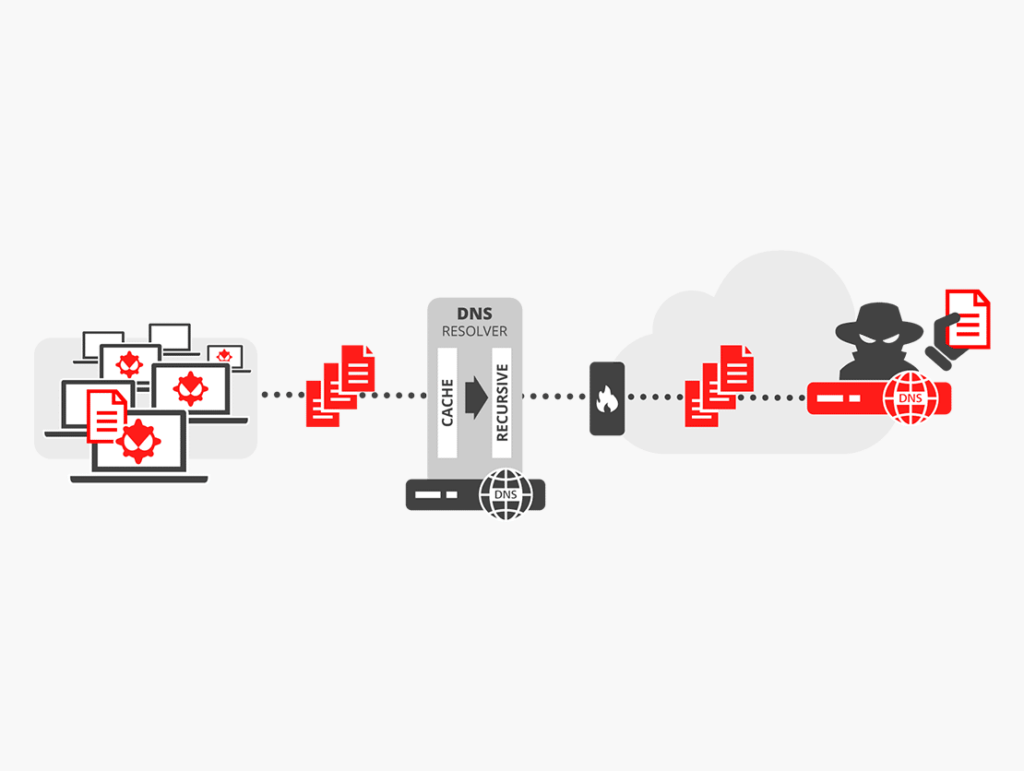
CISA says LAUNDRY BEAR used CVE-2025-66376 in a Zimbra phishing email: viewing it could run JavaScript and start mailbox theft. Hidden in an SVG, the payload passed through Base64/XOR layers and 12 stages. The script sought saved passwords and 2FA scratch codes, enabled IMAP, and created a “ZimbraWeb” Application Passcode. It collected 90 days of mail and sent data over DNS and HTTPS. CISA advised patching to ZCS 10.1.13 or 10.0.18 and avoiding Classic webmail until patched.

Veamos alternativas:
- Modifica la consulta.
- Inicia un nuevo hilo.
- Eliminar fuentes (si se han agregado manualmente).
Why Miranda Exceptions Still Matter
Transcripción
Miranda exceptions matter because the exclusionary rule does not always erase every piece of evidence tied to an unwarned statement. In practice, tangible evidence like drugs or stolen items may still be usable, and a later properly warned confession may also be admitted. An unwarned statement can sometimes be used to impeach a defendant, and a witness found through that statement may still testify. That is why these exceptions matter operationally: they can preserve key proof for the prosecution and create a real incentive for police to keep seeking evidence even when Miranda warnings are not given. This is only an outline level summary, so anyone briefing a case or making policy decisions should verify the doctrine against primary authority first.
Veamos alternativas:
- Modifica la consulta.
- Inicia un nuevo hilo.
- Eliminar fuentes (si se han agregado manualmente).
What NIST said was ready now, and what still needs foundational work
In July 2024, NIST drew a line between AI governance topics ready for standardization and areas needing more foundational work. It identified risk-based management, security, privacy, provenance and incident response among topics with strong foundations. But interpretability, explainability and human-AI configuration were not yet ready for standardization. This distinction is about readiness for standards, not a claim that every area on the ready-now list is fully settled.





Veamos alternativas:
- Modifica la consulta.
- Inicia un nuevo hilo.
- Eliminar fuentes (si se han agregado manualmente).
This Shrimp Makes a Fake Gunshot
Transcripción
At first glance, it just looks like a small shrimp with one oversized claw.
But that claw snaps shut so fast it blasts out a jet of water, and the collapsing cavitation bubble makes the crack and faint flash.
That shockwave can stun prey, and the same snap also helps the shrimp defend itself from predators.
In reef life, that same claw supports hunting, burrows, and goby partnerships.
Veamos alternativas:
- Modifica la consulta.
- Inicia un nuevo hilo.
- Eliminar fuentes (si se han agregado manualmente).
Flowers can bloom inside melting ice.
Flowers can bloom inside melting ice. As ice absorbs light, tiny pockets of meltwater can spread into six-petalled shapes called Tyndall flowers. A small vapour cavity forms as melting makes the water take up less space. A snowflake's disappearing act.


Veamos alternativas:
- Modifica la consulta.
- Inicia un nuevo hilo.
- Eliminar fuentes (si se han agregado manualmente).