Descubre Pandipedia
Un directorio creciente de respuestas útiles seleccionadas por la comunidad de Pandi. Busca en la colección o explora los últimos descubrimientos.
2337 entradas disponibles

WHO guidelines on gaming disorder
WHO guidelines on gaming disorder
This curated set answers which official WHO documents define gaming disorder, place it in ICD-11, and provide the detailed clinical diagnostic guidance needed to assess it.[1][2][3]
Official definition and diagnostic features
These WHO pages explain the condition in plain language, including impaired control over gaming, gaming taking priority over other activities, continued or increased gaming despite negative consequences, and resulting significant impairment.[[cite:4]][[cite:5]][[cite:6]][[cite:7]]
Gaming disorder
ICD-11 classification
Use the official ICD-11 browser to locate the classification entry for gaming disorder and its placement within WHO's international disease classification system.[[cite:10]][[cite:11]]

ICD-11
Detailed clinical diagnostic manual
The ICD-11 Clinical Descriptions and Diagnostic Requirements manual is the most relevant WHO source for fuller clinical guidance beyond the brief public definitions. The publication page is the preferred link; the duplicate direct file is omitted.
WHO classification and policy context
These official WHO documents explain the decision to include gaming disorder in ICD-11 and provide background on the classification and its use.
Inclusion of “gaming disorder” in ICD-11
Veamos alternativas:
- Modifica la consulta.
- Inicia un nuevo hilo.
- Eliminar fuentes (si se han agregado manualmente).
Which chemical element is primarily used in perovskite solar cells?
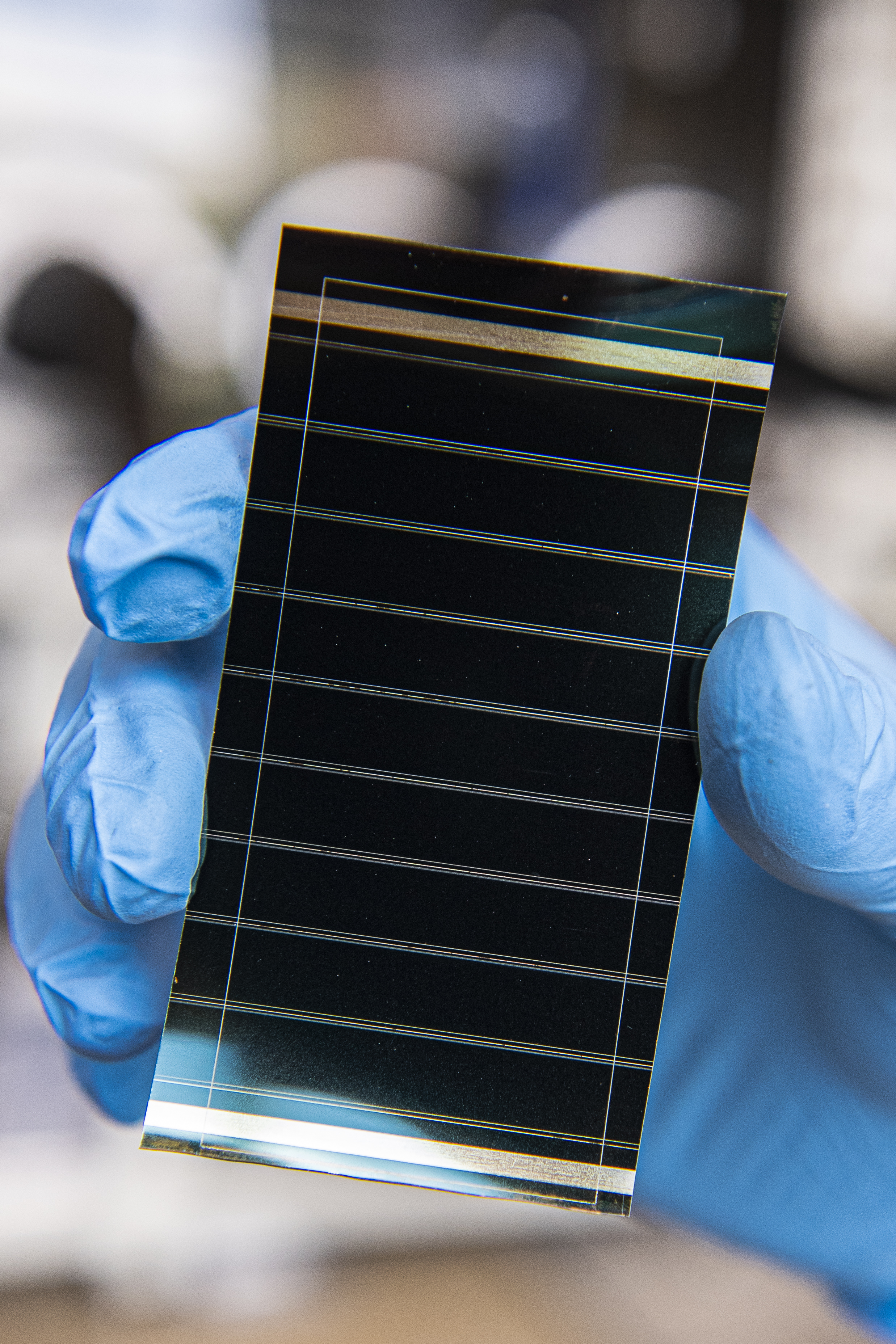
The chemical element primarily used as the key metal enabling high-efficiency perovskite solar cells is lead ([4][9]). Most efficient perovskite solar cells utilize metal-halide perovskites where lead acts as the main inorganic cation in the crystal structure's active layer [1][2]. While researchers explore alternative compositions to address environmental concerns, lead-based perovskite devices consistently achieve superior electronic performance and power conversion efficiencies compared to other alternatives [3].
Would you also like to know what power conversion efficiencies lead-based perovskite solar cells have reached?Respuesta completa. Hay una opción de seguimiento disponible.
Veamos alternativas:
- Modifica la consulta.
- Inicia un nuevo hilo.
- Eliminar fuentes (si se han agregado manualmente).
Pandemic Inflation: What Labour-Force Participation Revealed
Veamos alternativas:
- Modifica la consulta.
- Inicia un nuevo hilo.
- Eliminar fuentes (si se han agregado manualmente).
When Artificial Intelligence Designs the Next Space Material
Transcripción
Picture a rocket crossing the darkness of space, built from materials that did not exist in any catalogue. MatterGen begins with a question: what should a material do? Stronger, stiffer, magnetic, or electronically precise. Then, instead of screening only known compounds, it generates candidate inorganic crystal structures from those desired properties. It assembles possible atom types, positions, and repeating crystal lattices, exploring chemical space beyond existing databases. The result can include multiple structures within a chemical system, some potentially resembling alloys or solid solutions with different compositions. But this is a launchpad, not a launch vehicle. A computer-generated crystal is not a flight-ready aerospace alloy. Candidates still need to be synthesized, tested, characterized, and evaluated for durability and manufacturability, followed by rigorous engineering qualification. Even a measured property near its target is only an early proof of concept. MatterGen offers a new way to imagine materials from the properties we want, rather than the materials we already know. The future of space hardware may begin not in a furnace, but in a prompt.
Veamos alternativas:
- Modifica la consulta.
- Inicia un nuevo hilo.
- Eliminar fuentes (si se han agregado manualmente).

Leadership in Motion: CEOs and Authors on Thriving Through Change

The world is changing very fast. Big will not beat small anymore. It will be the fast beating the slow.Rupert Murdoch, business leade…[1]




Veamos alternativas:
- Modifica la consulta.
- Inicia un nuevo hilo.
- Eliminar fuentes (si se han agregado manualmente).
Approximately how many calories can VR boxing burn per hour for an average
Veamos alternativas:
- Modifica la consulta.
- Inicia un nuevo hilo.
- Eliminar fuentes (si se han agregado manualmente).
Corporate sustainability pledges for data center energy use
Corporate sustainability pledges for data center energy use
Curated source-discovery results include recent official sustainability pages, company reports, and selected context sources for major technology companies and colocation providers. Results were identified through search and were not independently URL-read in this pass, so verify current pledge wording, reporting year, scope, and assurance status in the linked materials.
Technology companies: Google
Official Google Cloud materials on carbon-free energy by region, carbon-aware data-center operations, and sustainability measurement.


Technology companies: Amazon and AWS
Official Amazon and AWS materials covering energy transition, sustainable cloud computing, carbon-free energy procurement, and data-center environmental information.

Energy Transition | Amazon Web Services



Technology companies: Microsoft
Official Microsoft sustainability pages, environmental reports, data fact sheets, datacenter materials, and updates on carbon-free energy and renewable-energy goals.

Colocation and data-center providers: Equinix
Official Equinix sustainability strategy, environmental initiatives, sustainability reporting, and IT sustainability materials. Equinix is the only colocation provider represented by official company sources in the retrieved results.
Independent context on commitments and data-center electricity
Selected reporting and public-sector context useful for assessing how corporate climate targets relate to rapidly rising data-center electricity demand and implementation challenges.
Veamos alternativas:
- Modifica la consulta.
- Inicia un nuevo hilo.
- Eliminar fuentes (si se han agregado manualmente).
How can SMEs start building a quantum-literate workforce on a budget?
Small and medium enterprises can begin building a quantum-literate workforce on a budget by leveraging a growing selection of free online courses provided by tech institutions, universities, and platforms like Coursera, MIT, and IBM [1][2]. These resources introduce fundamental quantum information, algorithms, and cryptography without requiring advanced degrees in physics [3][4].
To bridge theory and business application affordably, companies can adopt several practical pathways:
- Low-Cost Experimentation via Quantum-as-a-Service (QaaS): Enterprises can utilize QaaS platforms linked to cloud providers like Amazon Web Services or IBM to allow non-quantum experts to experiment at a low cost and build practical familiarity [5].
- Internal Training and Leadership Bridges: Organizations can establish targeted internal training programs designed to connect business managers directly with quantum concepts or researchers, helping teams understand how the technology applies to commercial sectors like optimization and logistics [6].
- Public-Private Collaboration and Hackathons: Industry leaders and policymakers encourage co-developed specialized curricula and hands-on training programmes, such as hackathons and regional quantum hubs, to foster a quantum-aware organizational culture [7].
Would you also like to know which online quantum computing courses are best suited for business managers?Respuesta completa. Hay una opción de seguimiento disponible.
Veamos alternativas:
- Modifica la consulta.
- Inicia un nuevo hilo.
- Eliminar fuentes (si se han agregado manualmente).
Designing Games for Neurodivergent Players
Designing Games for Neurodivergent Players
Accessible design for neurodivergent players should treat sensory comfort, information presentation, input, and pacing as configurable parts of the core experience. The strongest practical guidance in the available evidence is to offer independent settings, communicate important information through multiple channels, reduce uncontrolled intensity, and test with disabled players throughout development.[1][2]
The recommendations below combine official accessibility guidance, practitioner case studies, and one small autism-focused intervention study. They are design principles rather than a universal neurodivergent profile: needs and abilities can differ substantially among autistic children, and the same settings will not suit every player.[3][4]
1. Control sensory load instead of assuming one comfortable presentation
Sensory load is not limited to brightness or volume. Repeated flashing, rapid contrast changes, high-frequency or forceful audio, shimmering backgrounds, and ambiguous feedback can all increase demands for some players. Microsoft recommends controlling flashing lights, repeated patterns, high-contrast grids, rapid brightness or contrast changes, fast cuts, and flashes involving red; it also recommends a Flashing On/Off setting that is Off by default and automated photosensitivity testing.[5]
- Flashing and visual effects: Remove repeated flashes where possible, or blend affected screen elements without changing gameplay. The NES Classic re-releases provide a concrete example of removing repeated flashes and using a fail-safe when colors flash.[6]
- Audio intensity: Offer an alternate soundtrack or audio profile from the Options menu. In the Velumortis example, the sensory-processing-friendly version uses fewer instruments, avoids very high notes where possible, avoids high-velocity notes, keeps high-frequency sounds sparse and flowing, and preserves space for low-frequency sounds.[7][8]
- Visual shimmer: Provide display modes that reduce distracting artifacts. The NES Classic's 4:3 CRT filter is reported as reducing shimmering background pixels, alongside standard 4:3 and Pixel Perfect modes.[9]
- Predictable feedback: Make events interpretable before they become urgent. In The Vale, cues such as armor rustling, an enemy scream, or a nearby bear's stomp signal what is happening and help players anticipate attacks.[10]
- Layered communication: Do not make color, sound, or motion the only route to important information. Pair text with images, symbols with colors, and shapes or patterns with color-coded objects.[11]
A useful implementation pattern is to separate settings by channel rather than offering one global “accessibility mode”: flashing, soundtrack intensity, effect volume, caption detail, visual filters, and interface contrast should be independently configurable. This is a design inference from Microsoft's recommendation that features be independently configurable, supported by the case studies' separate soundtrack and display choices.[12][13][14]
2. Offer UI and input options that reduce memory, vision, and motor demands
Players benefit when the game does not require a single way to read, remember, or operate it. Microsoft recommends multiple input devices, fully mappable controls, and remapping within the game itself.[15] Xbox documents controller remapping, adaptive-controller connections to switches and joysticks, shared control through Controller Assist, and mouse and keyboard support in select games and apps.[16][17][18][19]
- Remappable input: Let players change every important action, not only a small preset of buttons. Include alternatives to simultaneous presses, holds, or repeated inputs when the game permits it. Deep remapping is documented in Battlefield 6, while Assassin's Creed Black Flag Resynced adds more intuitive control customization and input options.[20][21]
- Hold and toggle choices: A hold-to-toggle option can reduce the need to sustain physical input. Battlefield 6 documents hold-to-toggle options across many actions.[22]
- Readable information: Use adjustable or sufficiently large text, strong contrast, outlines or shadows, and an optional dark background overlay. Microsoft also recommends short captions, speaker or sound-source identification, and player control over whether captions appear.[23]
- Audio-independent play: Display dialogue, game audio, and sound effects as on-screen text so important information is not dependent on hearing. Allow players to choose how much sound information is captioned based on importance.[24]
- Narrated interfaces: Narrate menu options and repeat how to open, navigate, and close menus. The Vale uses voice-over menu narration and regular reminders to support interface learning without relying on vision.[25]
- Color and orientation support: Use color-vision presets plus freely selectable color options where needed, and test with a color-blind simulator. Black Flag Resynced modifies important color-coded effects, including attacks and intuition highlights.[26][27]
The design implication is to expose the information model, not merely enlarge the HUD. Let players choose which elements are persistent, customize icons and crosshairs, and receive equivalent information through text, symbols, narration, and sound. Black Flag Resynced documents deeper HUD customization and a persistent customizable camera dot, while Battlefield 6 documents customizable HUD elements and icons.[28][29]
3. Build flexible pacing and forgiving progression
Flexible pacing means allowing players to adjust challenge, retry difficult sequences, and reduce precision or time pressure without removing the game's meaningful goals. Microsoft's guidance recommends wider difficulty choices, simplified inputs, rewind and replay, and fewer or weaker enemies so players can progress after repeated attempts.[30]
- Difficulty profiles: Provide several difficulty levels that alter demands rather than simply multiplying punishment. Battlefield 6 documents multiple campaign difficulty levels, and The Vale offers normal and hard settings.[31][32]
- Lower precision requirements: Make actions such as aiming, docking, looting, or navigation forgiving when precision is not the intended learning goal. In Black Flag Resynced, sea activities such as docking and looting require less precision and visual perception.[33]
- Flexible mission demands: Permit alternative approaches or reduce the rigidity of chase and stealth sequences. Ubisoft describes the stalk and chase missions in Black Flag Resynced as more flexible.[34]
- Optional environmental pressure: Let players reduce particularly demanding systems without ending the entire challenge. In Black Flag Resynced, in-game items or settings can turn off oxygen limits and shark attacks during underwater sections.[35]
- Natural breaks: Build pauses between levels and other low-pressure transition points. Microsoft recommends breaks between levels to encourage pauses during extended play.[36]
These sources support flexible difficulty, retries, reduced precision, and lower-pressure transitions. They do not directly verify a universal pause-anywhere feature or a slow-motion setting for neurodivergent players. Those may be sensible design experiments, but they should be described as product decisions to validate with players, not as established recommendations from this evidence.
4. Case studies: what concrete games demonstrate
| Case | Documented practice | Transferable lesson |
|---|---|---|
| Assassin's Creed Black Flag Resynced[37] | Custom HUD and camera dot; clearer and faster narration; remapping; color-blind options; less precision in sea activities; more flexible stalk and chase missions; reduced underwater pressure.[38][39][40][41][42][43] | Accessibility can target several demands independently: orientation, reading, input, color, precision, and time pressure. |
| Battlefield 6[44] | Custom HUD and icons, large subtitles, color profiles, menu narration, deep remapping, hold-to-toggle, tinnitus sound-effect controls, difficulty levels, tutorials, and text-to-speech or speech-to-text chat.[45][46][47][48][49][50][51][52][53] | Offer granular controls across UI, input, audio, onboarding, difficulty, and communication instead of a single binary mode. |
| The Vale[54] | Audio cues communicate enemy actions, menus are narrated, and instructions are repeated.[55][56] | Audio can reduce uncertainty when it is specific, consistent, and paired with learnable interface guidance. |
| Velumortis[57] | Selectable soundtrack versions were planned, with a lower-intensity composition designed around fewer instruments, sparse high frequencies, and lower note velocity.[58][59][60] | Sound comfort can be designed at the composition level, not only through a master-volume slider. |
| Somatosensory game study | A six-week evaluation involved 26 children with mild or moderate autism, with 13 assigned to the game group and 13 to a picture-book control group. The game group improved in concentration, spatial ability, physical coordination, and activity enhancement during the evaluation.[61][62] | Interaction, feedback, icon design, color matching, and aesthetic interface choices are plausible design variables, but the study does not establish specific sound, brightness, visual-clutter, or motion sensitivities.[63][64][65] |
5. A practical implementation workflow
Treat accessibility as a recurring design and testing activity, not a final checklist. Microsoft recommends designing for accessibility from the start, reviewing it throughout development, and testing with players with disabilities.[66]
- Map demands: Inventory flashing, audio intensity, visual density, timing, precision, memory, reading, motor actions, and communication requirements in each major gameplay loop.
- Expose independent controls: Convert the highest-impact demands into separate settings for effects, captions, color, HUD, input, difficulty, and communication. This follows the recommendation that features be independently configurable.[67]
- Provide equivalent signals: For every critical event, ask whether the player can understand it through at least two channels, such as text plus symbol, or specific audio plus visual cue. Do not rely on color alone.[68]
- Test failure recovery: Check whether a player can retry, reduce precision, change controls, or lower difficulty without losing unreasonable progress. These are directly aligned with Microsoft's forgiveness recommendations.[69]
- Test with varied players: Include neurodivergent and disabled players with different sensory, communication, motor, and attention needs. Do not infer a universal autism profile from the small intervention study, whose authors call for more comprehensive preliminary research.[70][71][72]
For acceptance testing, document not only whether a setting exists, but whether it works in context: Does turning off flashing preserve meaning? Does a caption identify the relevant sound? Does remapping remove an awkward simultaneous input? Can a player understand an enemy's next action before it becomes unavoidable? These are practical evaluation questions derived from the documented design patterns, rather than claims that the cited studies have already tested every feature.
Conclusion and evidence limits
The most defensible approach is configurable, multimodal, and forgiving: reduce uncontrolled sensory intensity, make UI and input independently adjustable, communicate events predictably through more than one channel, and allow players to tailor difficulty and pressure. The case studies show that these principles can be implemented in mainstream action games and audio-led designs, while the autism-focused study offers limited evidence that an interactive game can support selected developmental outcomes.[73][74][75][76]
- Individual differences among neurodivergent players are substantial, so settings should be optional and tested rather than prescribed.[77][78]
- The autism intervention evidence is small: 26 children, mild or moderate autism, six weeks, and a picture-book comparison group. Its outcomes should not be generalized to all autistic or neurodivergent players.[79][80]
- The Battlefield 6 documentation is limited to the US English version on PlayStation 5 and Xbox Series X|S consoles.[81]
- The available sources do not directly verify universal pause-anywhere, slow-motion, or broad motion-reduction settings. Avoid presenting those features as established evidence-based requirements.
Veamos alternativas:
- Modifica la consulta.
- Inicia un nuevo hilo.
- Eliminar fuentes (si se han agregado manualmente).
What does the acronym NISQ stand for?. Answer: Noisy Intermediate-Scale Quantum.
NISQ stands for Noisy Intermediate-Scale Quantum. It describes current quantum computers with a limited number of imperfect, error-prone qubits—before fully fault-tolerant quantum computing becomes practical.
Would you also like to know how NISQ differs from fault-tolerant quantum computing?Respuesta completa. Hay una opción de seguimiento disponible.
Veamos alternativas:
- Modifica la consulta.
- Inicia un nuevo hilo.
- Eliminar fuentes (si se han agregado manualmente).