Descobreix Pandipedia
Un directori creixent de respostes útils seleccionades per la comunitat de Pandi. Cerca a la col·lecció o explora els darrers descobriments.
2312 entrades disponibles

Neural rendering in 5 quick hits
Veiem alternatives:
- Modifica la consulta.
- Inicia un nou fil.
- Elimina les fonts (si s'han afegit manualment).
A credible transition plan is more than disclosure
A credible climate transition plan is more than a statement of intent: it sets out time-bound actions to shift a business’s assets, operations and strategy toward a 1.5°C path. It should include near-term science-based targets, long-term targets to reach net zero by 2050 at the latest, and quantifiable indicators that are regularly tracked.
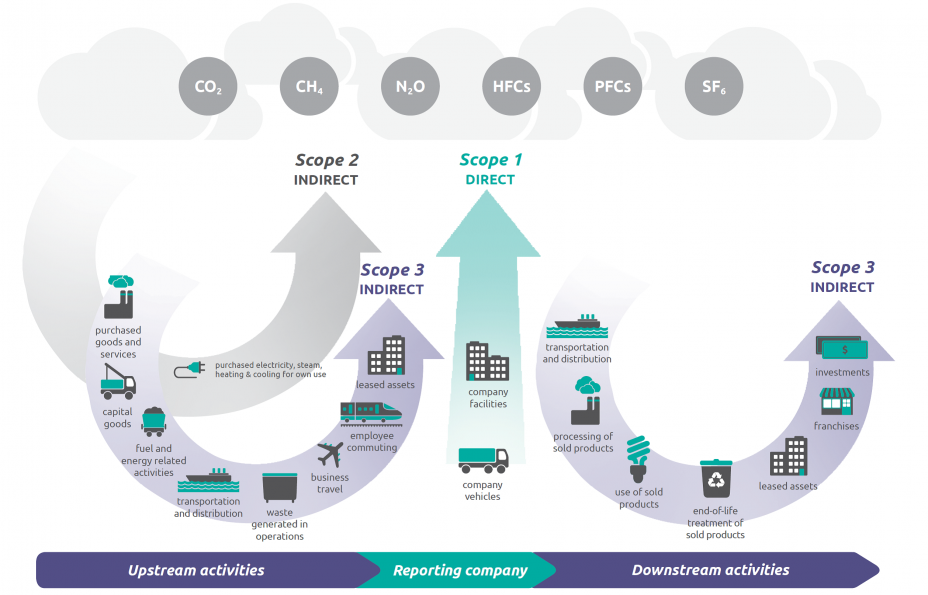
Veiem alternatives:
- Modifica la consulta.
- Inicia un nou fil.
- Elimina les fonts (si s'han afegit manualment).
Can procurement awards reveal red flags?
Veiem alternatives:
- Modifica la consulta.
- Inicia un nou fil.
- Elimina les fonts (si s'han afegit manualment).
Long-acting growth hormone in children: what remains uncertain?. Synthesize the consensus and related evidence around which pediatric patients may benefit from long-acting growth hormone and why adherence matters. Separate practical considerations from evidence gaps, especially long-term efficacy, safety, real-world follow-up, and concerns about weekly exposure profiles.
Long-acting growth hormone in children: current consensus and where it fits
The current consensus is that long-acting growth hormone (LAGH) is a meaningful once-weekly alternative to daily recombinant human growth hormone for children with growth hormone deficiency, with phase 3 trials showing non-inferior efficacy and similar short-term safety, while guidelines and best-practice use are still evolving.[1][2]
The main clinical message from the attached sources is not that weekly therapy is universally better, but that it may be most useful when the main barrier to success is adherence to daily injections. The sources repeatedly emphasize patient selection as critical.[3]
- Most likely to benefit: children at risk of poor adherence to daily injections, including those with needle phobia or behavioral difficulties, very young children and adolescents, children receiving multidrug therapy, and families facing practical barriers such as separated households, frequent travel, or structured activities that disrupt daily routines.[4]
- Why adherence matters: daily injection burden, pain, storage needs, and travel inconvenience are linked to poor compliance, so a weekly option may improve persistence and quality of life when these barriers are the main obstacle.[5]
- Practical note: LAGH should be selected carefully rather than used as a default, because the sources frame it as a tool for specific patients, not a blanket replacement for daily therapy.[6]
Evidence-supported benefits and practical considerations
The attached sources support a pragmatic view: LAGH can reduce treatment burden and may improve real-world adherence, which is clinically important because growth hormone therapy depends on sustained use over time.[7]
- Potential practical advantages: fewer injections, less day-to-day disruption, and possibly better acceptance in children and families who struggle with daily treatment.[8]
- Clinical caution points: altered pharmacodynamics, lack of pulsatile secretion, and possible antibody formation should be kept in mind when counseling families and choosing a product.[9]
- Formulation-specific issue: lipoatrophy at the injection site is a concern, especially with PEGylated formulations.[10]
- Indications caution: these therapies are not yet approved for other conditions traditionally treated with daily rhGH, such as Turner or Noonan syndrome, so use should stay aligned with current approvals and evidence.[11]
Evidence gaps and unresolved safety questions
The biggest limitations are long-term rather than short-term. The sources agree that trial data are encouraging, but they also stress that more research and real-world follow-up are still needed to define long-term efficacy, broader safety, and durability of benefit after the trial setting.[12][13]
A central concern is the weekly exposure profile itself. Weekly dosing creates a non-physiological growth hormone pattern because it lacks pulsatile secretion and produces weekly rather than daily peaks, and the long-term implications of that altered exposure remain uncertain.[14][15]
- Short-term trial safety looks similar to daily therapy, but the evidence base is still maturing.[16]
- Long-term safety remains less certain, especially for effects that may only appear after prolonged exposure or broader post-trial use.[17][18]
- Real-world registry and post-marketing follow-up are needed to understand persistence, selection patterns, and outcomes outside tightly controlled trials.[19][20]
Bottom line
In children with growth hormone deficiency, LAGH is best viewed as a targeted adherence solution for selected patients who are unlikely to do well with daily injections, rather than a universally preferred option. The evidence supports short-term efficacy and acceptable safety, but long-term efficacy, long-term safety, real-world follow-up, and the implications of weekly non-physiological exposure remain important evidence gaps.[21][22][23][24]
Veiem alternatives:
- Modifica la consulta.
- Inicia un nou fil.
- Elimina les fonts (si s'han afegit manualment).
Five battery-recycling numbers that stand out
Veiem alternatives:
- Modifica la consulta.
- Inicia un nou fil.
- Elimina les fonts (si s'han afegit manualment).
Entrepreneurs and astronauts on commercial spaceflight's future

We're here to make space more accessible to all at all.Richard Branson, July 11, 2021…[1]




Veiem alternatives:
- Modifica la consulta.
- Inicia un nou fil.
- Elimina les fonts (si s'han afegit manualment).
Classify Identity and Cloud Intrusion Patterns
Veiem alternatives:
- Modifica la consulta.
- Inicia un nou fil.
- Elimina les fonts (si s'han afegit manualment).
A deep dive into neurosymbolic AI and its promise for explainability. Traces the fusion of neural networks and symbolic reasoning, reviews current research, and outlines practical applications. Discusses hurdles and next steps.
Neurosymbolic AI and explainability: what the sourced literature shows
The supplied scholarly sources support a fairly consistent picture of neurosymbolic AI: it is best understood as an effort to combine neural learning with symbolic reasoning, usually through neural-symbolic integration or hybrid neural-symbolic models, rather than as a single settled architecture family[1][2]. The sources also suggest why the field matters for explainability, because they link symbolic structure, attention, rules, and domain knowledge to more transparent behavior, but they stop short of showing a fully faithful or broadly general solution[3][4].
This report stays close to what the research memories actually establish. Where the searches did not recover citable evidence, especially for the original foundational papers behind specific systems or for many application domains, I say so explicitly instead of filling the gaps with unsupported detail.
1. How the field is framed in the sourced research
The strongest framing result in the supplied sources is that neurosymbolic AI is presented as an integration problem. One scholarly source describes neural-symbolic integration as marrying symbolic AI techniques, such as logical reasoning, with neural-network learning capabilities, while also noting a computational-cost tension[5]. A second source connects hybrid neural-symbolic models to dual-process theories and computational cognitive architectures[6]. A third broadens the picture by arguing that cognition is not binary, because information at different abstraction levels can contain both symbolic and subsymbolic aspects, with attention mechanisms playing a central role[7].
Importantly, the supplied text does not explicitly support a clean taxonomy of separate symbolic-to-neural and neural-to-symbolic classes by name. So the safest synthesis is that the literature here treats neurosymbolic AI as a family of hybrid design choices organized around how neural and symbolic components are coupled[8][9][10].
| Theme | What the supplied sources establish | What they do not establish |
|---|---|---|
| Core framing | Neural-symbolic integration combines symbolic reasoning with neural learning, and hybrid models are linked to cognitive architectures[11][12]. | They do not provide a fully settled or universal architecture taxonomy[13]. |
| Representation | Symbolic and subsymbolic information can coexist at multiple abstraction levels, with attention highlighted as important[14]. | They do not prove that attention alone solves the integration problem[15]. |
| Cost | Integration is repeatedly described as costly or difficult to scale[16][17]. | They do not provide a general cost model valid across tasks and deployments[18]. |
2. Explainability promise, and the limits that remain
Recent work in the supplied sources is optimistic about explainability. One paper argues that grounding language models in domain knowledge, rules, evaluators, retrieval, and process knowledge can improve consistency, reliability, user-level explainability, and safety[19]. In the same line of work, the explainability mechanism is described with knowledge concept to word attention maps and expert verification[20].
A healthcare case study reports that Logical Neural Networks integrate domain rules with learnable weights and thresholds, and that the learned parameters can provide direct insight into feature contributions while keeping predictive performance competitive[21]. A separate reasoning chapter reports that Logical Boltzmann Machines can represent propositional logic and, in its empirical comparison, perform better on five of seven datasets than purely symbolic, purely neural, and other neurosymbolic baselines[22].
The main caution is faithfulness. The sources explicitly warn that post-hoc explanations may be coincidental and may not reflect the model's actual decision process[23]. So the literature here supports explainability aids and human-interpretable structure, but not a guarantee that the explanation is a faithful account of internal reasoning[24][25].
- Interpretability mechanisms named in the sources include attention maps, expert verification, retrieval augmentation, process-knowledge guidance, and explicit logical weights and thresholds[26][27].
- The evidence is strongest when symbolic structure is built into the model, not merely attached afterward[28][29].
- Faithfulness remains an open problem because explanations can still be post hoc[30].
3. Practical applications: where the evidence is strongest
The application evidence in the supplied sources is real, but narrower than a full survey of every neurosymbolic use case. The clearest demonstrations are in healthcare and benchmarked reasoning tasks. In a healthcare-oriented review, the authors highlight compound-protein interaction modeling, inhibitor prediction, bioactivity classification, and explainable Med-VQA for oncology as future directions for neurosymbolic systems[31][32][33].
For a concrete medical example, the diagnosis-prediction paper argues that neuro-symbolic integration can support explainable prediction through rule-based structure plus learnable parameters[34]. For more general reasoning, the Logical Boltzmann Machines chapter reports better learning performance on five of seven datasets, though its own evaluation remains small in scale[35][36].
The visual question answering evidence is similarly promising but bounded. One arXiv paper on neuro-symbolic ASP for VQA shows that unrestricted non-determinism becomes a performance bottleneck, and that restricting the search space improves runtime substantially with only modest accuracy loss[37][38]. That result is useful because it links a neurosymbolic design choice to a concrete tradeoff between efficiency and accuracy.
| Area | What the sourced literature shows | Scope caveat |
|---|---|---|
| Healthcare | Neurosymbolic methods are proposed for diagnosis prediction, compound-protein interaction modeling, inhibitor prediction, bioactivity classification, and explainable Med-VQA[39][40][41][42]. | The memories provide a mix of case study and review guidance, not a large benchmark suite[43][44]. |
| Visual question answering | Restricting search space in a neuro-symbolic ASP pipeline improves runtime substantially with only modest accuracy loss[45][46]. | The evidence is one system-level result, not a broad cross-dataset comparison[47]. |
| General reasoning | Logical Boltzmann Machines report better learning on five of seven datasets[48]. | The evaluation is preliminary and limited in scale[49]. |
4. Hurdles and next steps
Across the surveys in the supplied sources, the same bottlenecks recur. They include representation mismatch between neural and symbolic parts, scalability and compute cost, the lack of standardized benchmarks and evaluation protocols, deployment difficulty, and incomplete support for explainability, robustness, and uncertainty handling[50][51][52].
- Integration remains ad hoc in many systems, and knowledge synchronization is described as inefficient and often offline[53][54].
- Symbolic workloads can dominate runtime, and the systems survey notes that neurosymbolic workloads are more heterogeneous and memory intensive than current DNN workloads[55][56].
- Benchmarking is weak, with calls for NSAI-specific datasets and representative evaluation frameworks[57][58].
- In healthcare, the review adds concerns about adversarial robustness, common-sense reasoning, and the need for deeper domain expertise[59][60][61].
The recommended next steps are consistent across reviews. They call for tighter integration layers, elastic two-way learning, explainability designed in from the start, better compilers and runtimes, richer datasets, and stronger evaluation standards[62][63][64][65]. In healthcare, the proposed direction is to combine language models, symbolic reasoning, and domain knowledge in more transparent systems[66].
A useful way to read the field right now is that neurosymbolic AI is not yet a finished solution to explainability. It is a promising toolkit for making reasoning more inspectable, but the sourced literature still presents it as a partially solved integration problem rather than a mature, universally faithful approach[67][68].
Conclusion
The sourced literature supports a clear bottom line: neurosymbolic AI is attractive because it can combine neural perception or pattern recognition with symbolic structure, which often makes systems more interpretable and sometimes more consistent[69][70]. But the same sources also show that faithfulness, scalability, benchmark quality, and deployment remain major obstacles[71][72][73].
So the promise for explainability is real, but conditional. The next stage of research needs to move from isolated demonstrations and helpful explanations toward architectures whose explanations are both useful to humans and faithful to model behavior at scale[74][75].
Veiem alternatives:
- Modifica la consulta.
- Inicia un nou fil.
- Elimina les fonts (si s'han afegit manualment).
Assurance-Ready Sustainability Disclosures: Practical Readiness Quiz
Veiem alternatives:
- Modifica la consulta.
- Inicia un nou fil.
- Elimina les fonts (si s'han afegit manualment).
UK procurement bid intelligence signals
Veiem alternatives:
- Modifica la consulta.
- Inicia un nou fil.
- Elimina les fonts (si s'han afegit manualment).