Smith & Mills: a contemporary Art Deco reference
Smith & Mills: a contemporary Art Deco reference
Smith & Mills at Rockefeller Center, New York, was reported as recently completed in Dezeen’s 22 April 2024 coverage; the article does not give an exact completion date. Woods Bagot designed the interior with Neighborhood Projects. It is a useful example of revival-era design because it turns a site-specific historical cue into a newly composed restaurant interior, rather than being an interwar original.[1][2][3]
Smith & Mills, Rockefeller Center
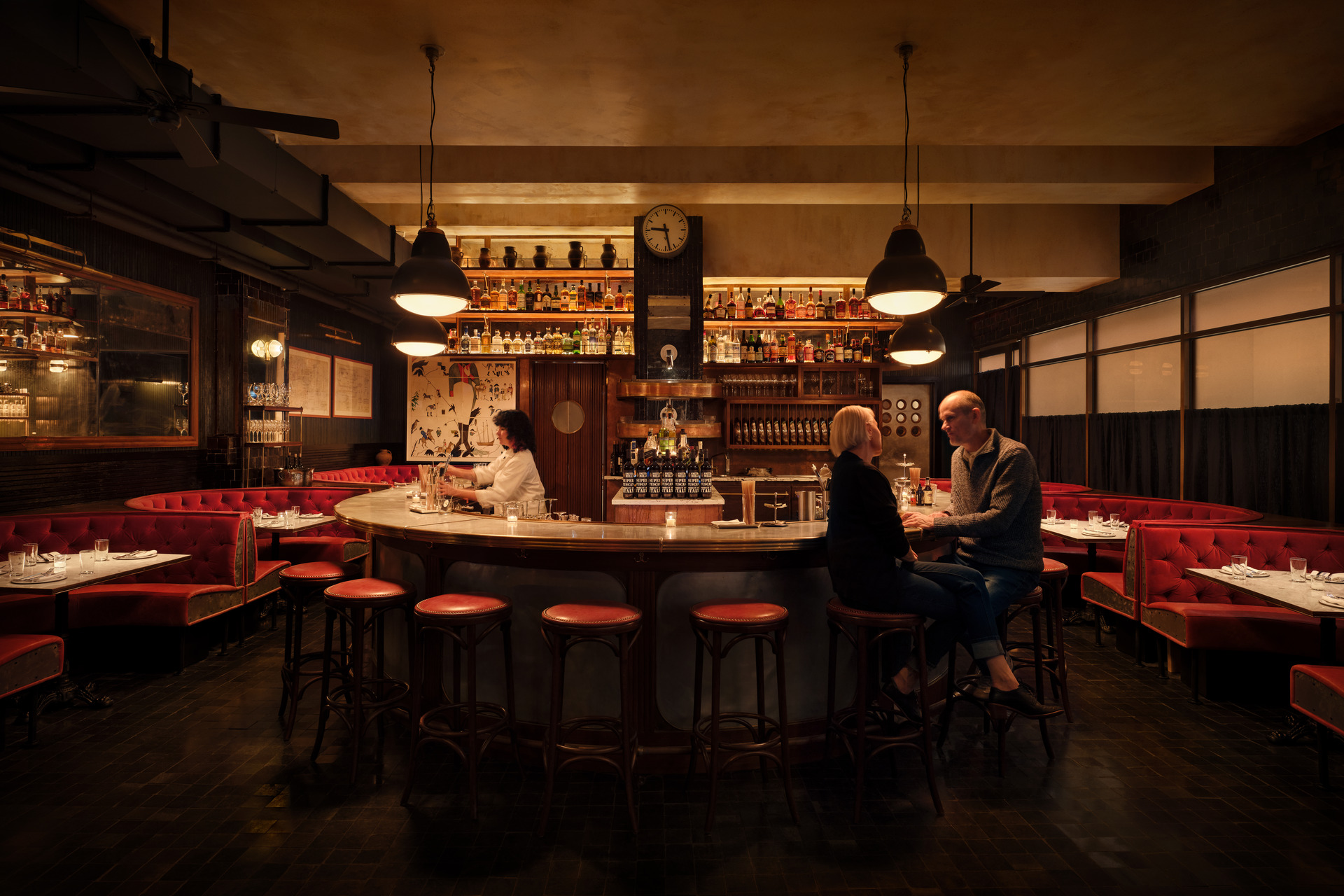
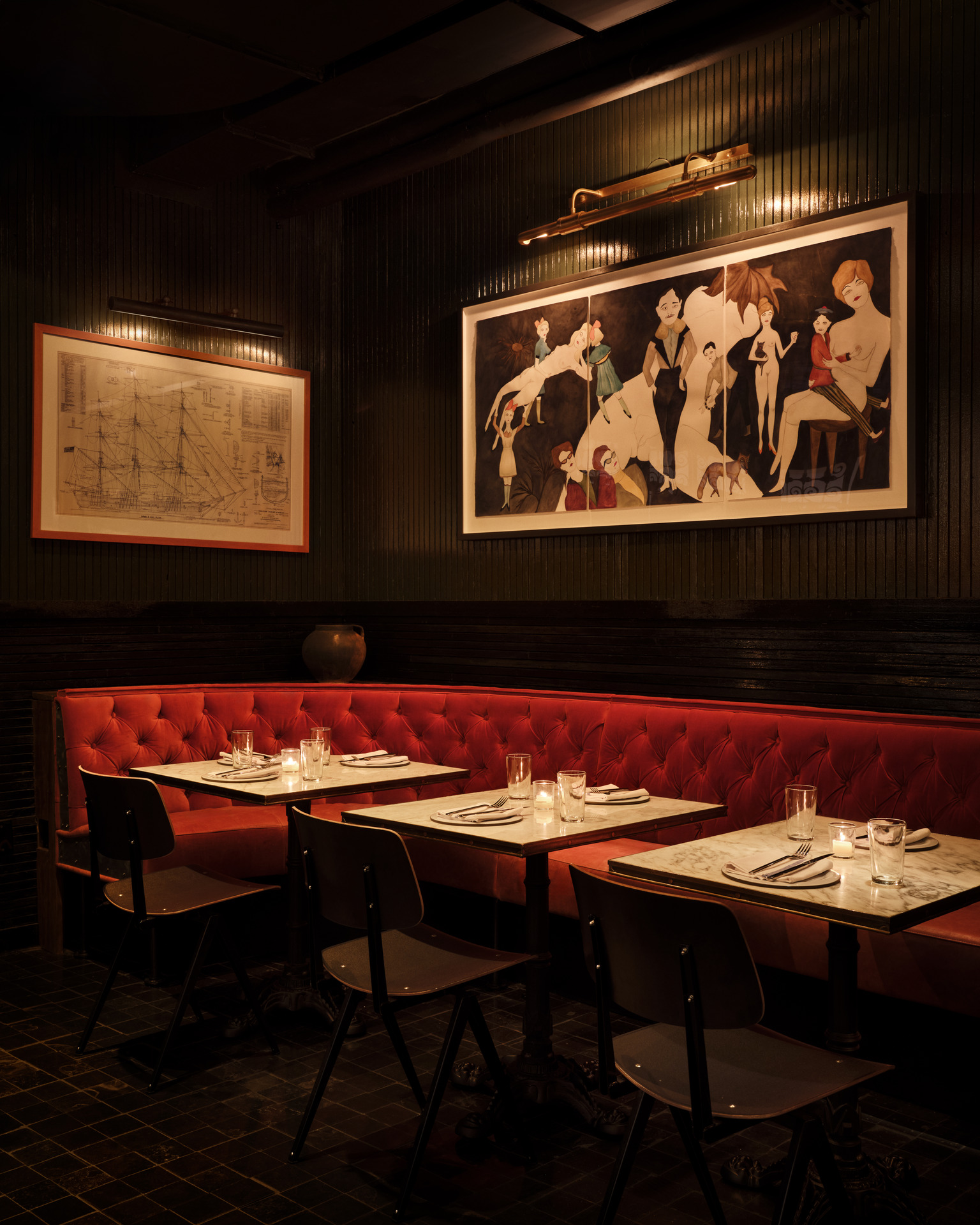
The restaurant interior designed by Woods Bagot at Rockefeller Center in New York.

Historical cue and contemporary redesign
Historical reference: A snug hallway is clad in vintage elevator-cab panels. The panels, along with antique-style mirrors, provide the project’s explicit vintage cues; the Rockefeller Center setting is the stated reason for its Art Deco reference.[4][5][6]
Present-day redesign: The tile-and-mirror-clad columns divide the restaurant, while an oval zinc-and-walnut bar gives the room a new focal form. These are reported design features, not identified by the article as period reproductions; reading them as contemporary interventions separates the project’s new spatial composition from its borrowed vintage details.[7][8]
The material palette includes wrought iron, zellige tile, reclaimed wood, a zinc-and-walnut bar, black stone, oxblood velvet, marble and brass.[9][10][11]
Revival-period context
The project predates the 2025 centenary of the 1925 Paris exposition that gave Art Deco its name. Coverage of the centenary places current Deco-inspired interiors within a renewed interest in 1920s glamour, durable materials and designs seen as an alternative to disposable trends. Smith & Mills is therefore best understood as an earlier, 2024 example in the revival period, not as a work from the interwar era.[12][13][14]
Let's look at alternatives:
- Modify the query.
- Start a new thread.
- Remove sources (if manually added).