100

When volcanoes build islands, then erase them
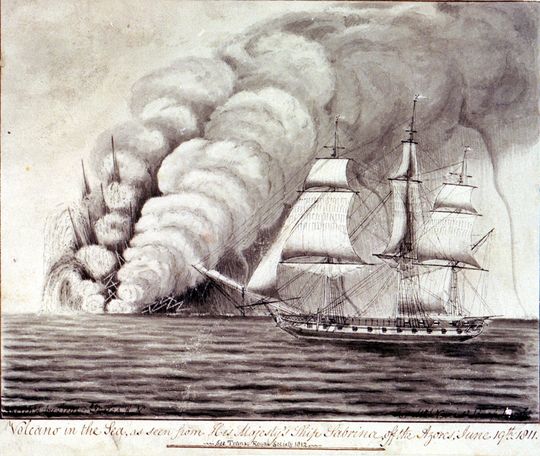
What if an island could rise from the sea, form a boiling crater, and vanish within months? Near St. Michael’s, smoke, explosions, stones, boiling water, and black sand announced exactly that. [1]

  • sabrina eruption azores
🧵 1/6

The new island soon stood complete: a central mountain, a basin of boiling water, and a hot stream flowing to the sea. Then it gradually subsided, disappearing by mid-October, though a dangerous shoal remained. [2]

  • featured sabrina island
🧵 2/6

Sicily offered another warning in July 1831. An eruption raised an island from the submerged Nerita sand-bank, with two cones, boiling lakes, and a summit about 120 feet above sea level. It vanished by the following October. [3]

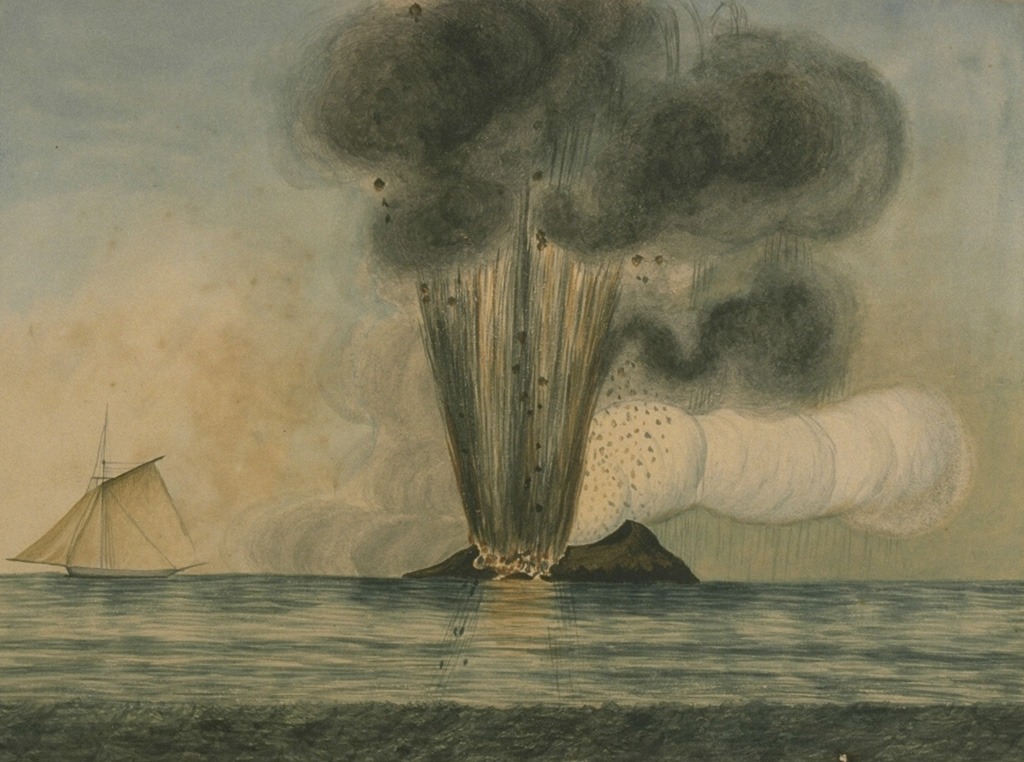
  • An eruption at Graham Island (Giulia Ferdinandeo) in the Sicilian Sea in 1831. A new island was formed that was promptly claimed by Italy, France, Britain, and Spain. The island quickly eroded to beneath the sea surface after the eruption ended. Graham Island (also known as Ferdinandeo Bank) is part of the Campi Flegrei del Mar di Sicilia (Phlegraean Fields of the Sicily Sea), a group of submarine volcanoes constructed within a depression about 1,000 m deep, SW of Sicily. From the collection of
🧵 3/6

The book’s Monte Nuovo passage needs caution: the supplied excerpt describes lava, nearly 20 destroyed villages, and 9,000 deaths, but does not clearly name Monte Nuovo as the formation. The text leaves that identification unresolved. [4]

  • view monte nuovo
🧵 4/6

Sumbawa shows the opposite scale of instability. On 5 April 1815, eruption, ash, hurricanes, and sudden sea rise devastated the island; at Tambora, water permanently covered a town to a depth of 18 feet where dry land had stood. [5]

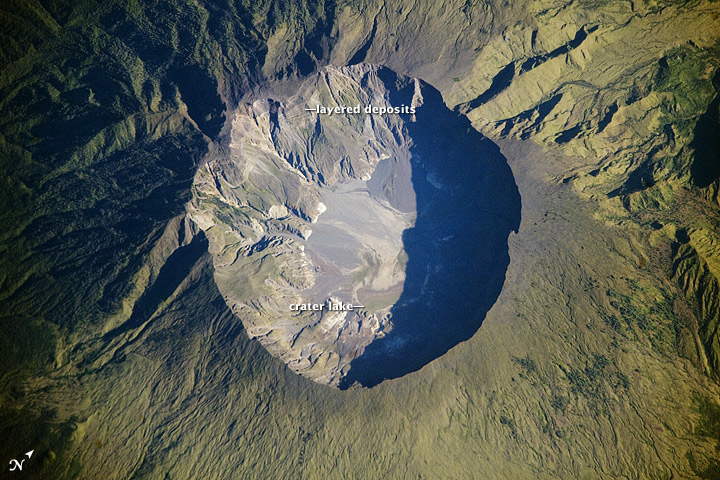
  • Mount Tambora, which produced one of the largest eruptions in recorded history on April 10, 1815, as seen in an image taken by an astronaut.
🧵 5/6

Across these episodes, land is never fixed in the book’s volcanic world: it can rise as an island, shrink into a shoal, disappear beneath waves, or be permanently drowned. Fire does not merely reshape scenery. It changes what counts as land. [6][7][8]

🧵 6/6