
The Great Stone of Sardis: The Floor Nobody Could See

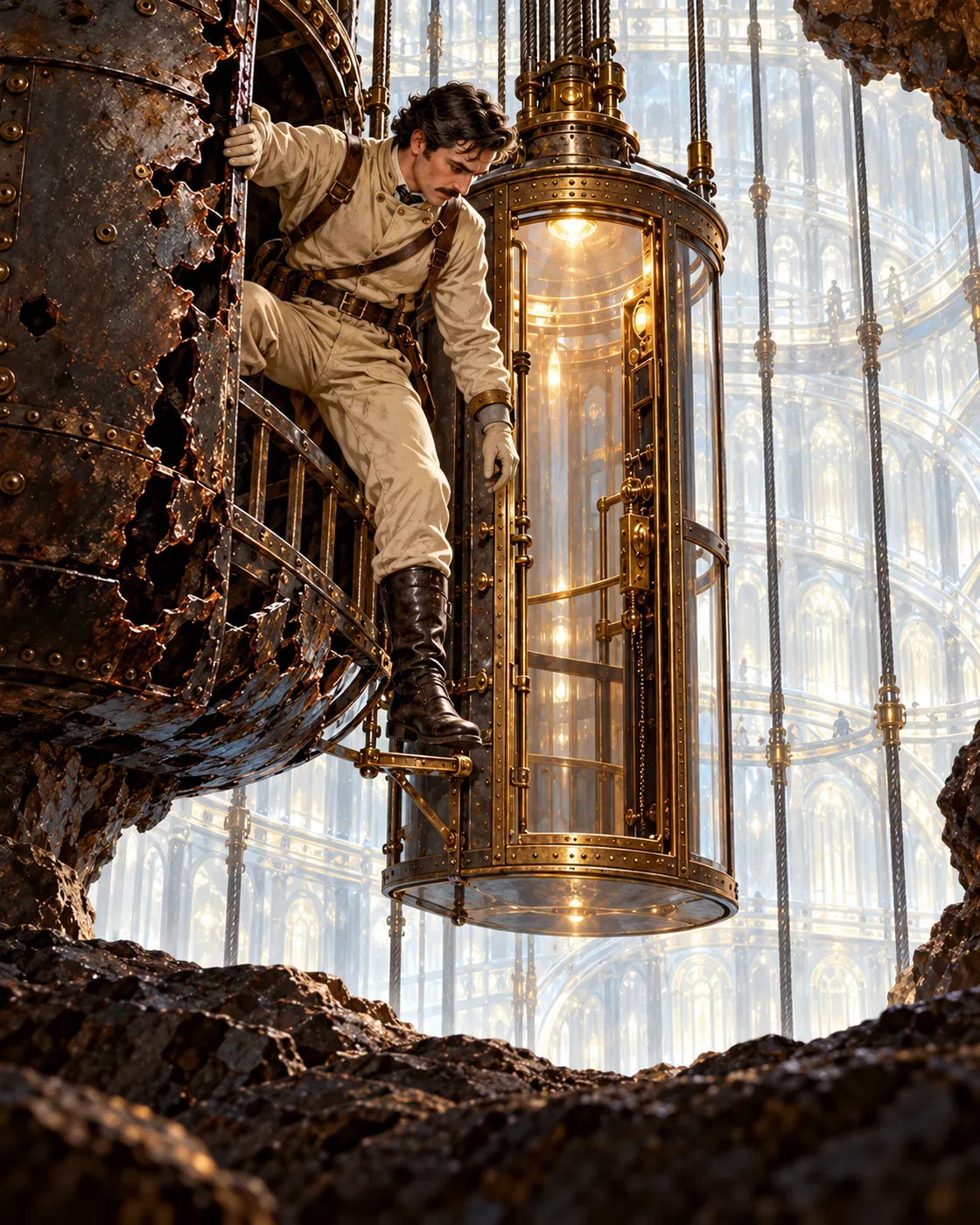
Fourteen miles beneath the surface, Roland Clewe clung to his boring machine and lowered one boot. He could see nothing beneath it. His foot met solid ground.
He had sent a boring machine deep into the Earth. Now a narrow shaft led to something his instruments could not explain. He decided to follow it himself.
Margaret, the woman he loved, could scarcely bear the plan. She went away before the descent. Clewe entered the car with a telephone connecting him to the surface.
Down the wire came Bryce’s voice, talking about the flowerbeds Margaret wanted changed. It was an absurdly ordinary subject. Clewe listened as the numbers on the depth gauge climbed.
The car emerged into light. Below it, the boring machine appeared to hang in empty space. Clewe climbed toward it, holding tight.
His boots met a surface his eyes could not find. He moved one foot, then another. He was walking on something as solid as stone and as invisible as air.
A slight slope made him think he was slipping. He clutched the machine again. The bright emptiness gave him no distance, no edge, no comfort.
Then the telephone rang. Bryce told him it was time to come up. This time, the inventor did not argue.
The car rose. He began forming an explanation: a vast transparent crystal, perhaps an unimaginable mass of diamond. The thought followed him toward daylight.
At the surface, arms went around him. Margaret was there. Bryce had sent for her as soon as the descent began.
“All those messages?” he asked. “Nearly all,” she said. The flowerbeds. The ordinary things. She had been there, finding ways to keep him company.
Later, Margaret asked what he had found. He began with a theory about comets. She stopped him. First, she wanted to know what was at the bottom of the hole.
Let's look at alternatives:
- Modify the query.
- Start a new thread.
- Remove sources (if manually added).