Summarize the key points and insights from the sources
Beyond Earth: A Chronicle of Deep Space Exploration
The exploration of deep space stands as one of humanity's most profound achievements. The document "Beyond Earth: A Chronicle of Deep Space Exploration, 1958-2016," authored by Asif A. Siddiqi for NASA, serves as a meticulous record of this journey[1]. As an updated and revised edition of a 2002 monograph, it chronicles all robotic deep space missions attempted by humans from the dawn of the space age through the end of 2016[1]. This report provides a comprehensive summary of the key points, historical milestones, and statistical insights detailed in the source.
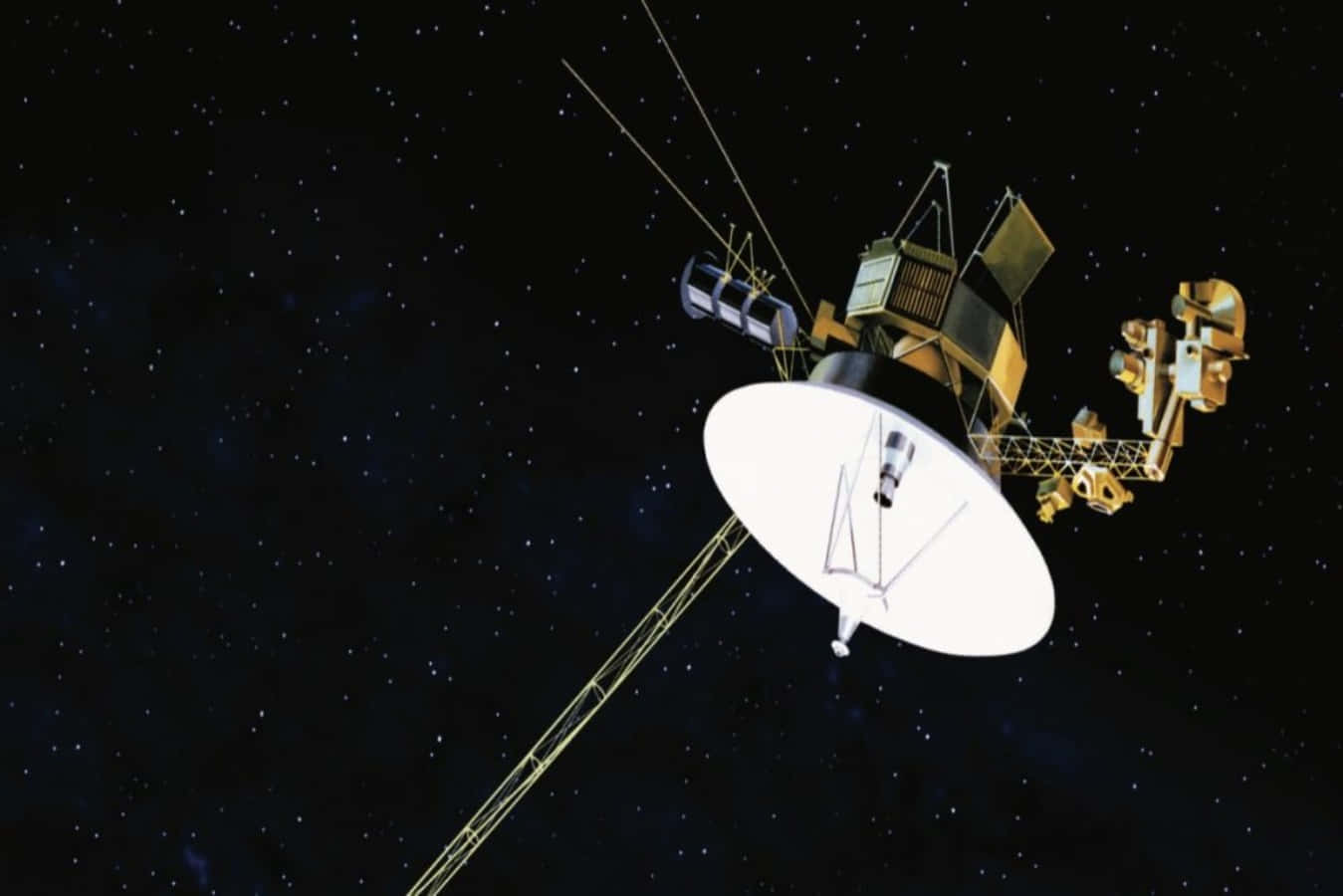
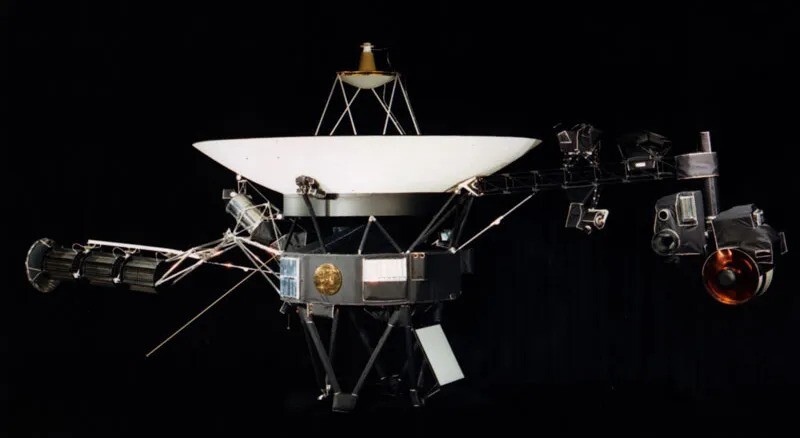
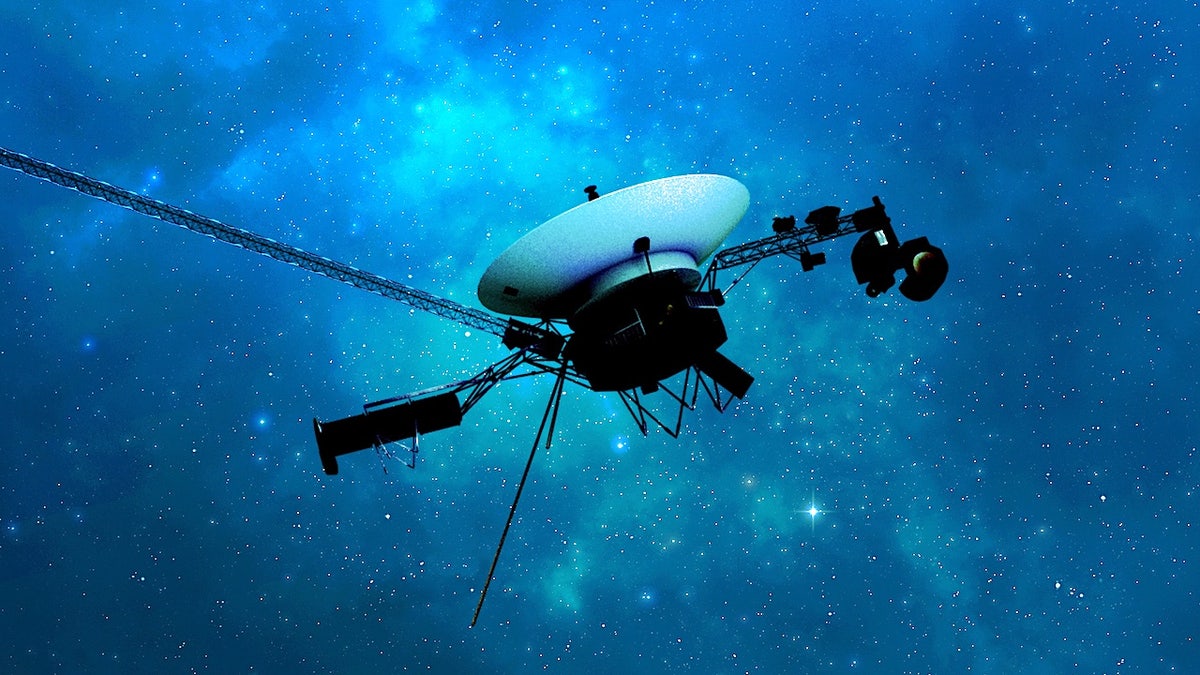
Voyager Spacecraft
An illustration or model of the iconic Voyager spacecraft, representing humanity's early and enduring efforts to explore the outer solar system.
Scope and Methodology
The chronicle is designed to be a definitive record of the tools that humans have sent into the heavens beyond Earth, encompassing both triumphant successes and catastrophic failures[1]. The author establishes strict criteria for a mission's inclusion in the book. Specifically, the text covers probes sent to encounter targets like planets, the Moon, asteroids, comets, and dwarf planets[1]. It also includes probes deliberately placed into solar orbit or halo orbits around libration points, as well as test probes launched to at least lunar distance to simulate deep space trajectories[1].
Rather than focusing on scientific discoveries or mission planning, the narrative centers on dynamic mission events[1]. Readers will find detailed accounts of course corrections, orbital insertions, reentries, landings, and equipment deployments[1]. To maintain historical accuracy, the author relied exclusively on primary sources. For United States missions, this meant utilizing original NASA press kits and official reports[1]. For Soviet and Russian missions, the research was grounded in Russian language sources, including official histories and journals, explicitly avoiding secondary history books or unofficial amateur websites to prevent the propagation of errors[1].
The Evolution of Space Exploration
In the preface, Dr. Thomas H. Zurbuchen provides valuable insights into the evolution of the field over the past six decades. He highlights the staggering technological progress that has occurred since the early days of spaceflight[1]. Early missions relied on computers that took up entire rooms, whereas modern spacecraft utilize sublime technologies capable of transmitting full color, high resolution images from the edge of the solar system[1]. The text contrasts early achievements, such as Mariner IV and the Voyager missions which operated on 1970s technology, with contemporary marvels like the Juno spacecraft and the Curiosity rover[1].
Cassini-Huygens Spacecraft
The Cassini-Huygens spacecraft, a symbol of international collaboration in deep space exploration.
Furthermore, the document outlines a significant geopolitical shift in how space exploration is conducted. The early era was defined by the competitive Space Race, where being "first" carried heavy geopolitical consequences[1]. Today, the paradigm has shifted toward international partnerships, allowing nations to achieve more together than they could individually[1]. A prime example of this collaborative spirit is the Cassini-Huygens project, a highly successful joint endeavor between NASA and the European Space Agency[1].
Milestones and Firsts
A major component of the chronicle is its documentation of significant "Firsts in the History of Deep Space Exploration." These milestones highlight the rapid progression of capabilities. The absolute first attempt to launch a probe into deep space was the United States' Able 1, also known as Pioneer 0, on 17 August 1958[1]. The Soviet Union achieved the first probe to reach escape velocity with Luna 1 on 2 January 1959, and shortly after, Luna 2 became the first spacecraft to impact another celestial body when it struck the Moon on 14 September 1959[1]. The first successful planetary mission was accomplished by the United States with Mariner II, which flew past Venus on 14 December 1962[1].
Luna Lander
A historical Soviet Luna lander, representing early milestones in lunar surface exploration.
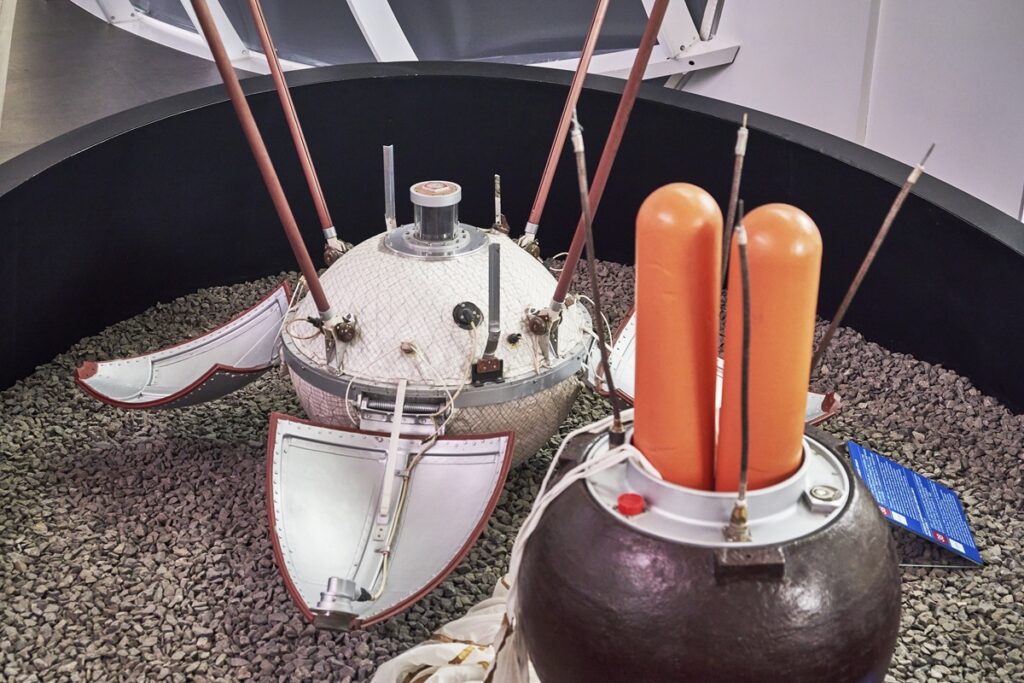

The Soviet Union dominated early lunar and Venusian surface exploration. Luna 9 made the first survivable landing on a celestial body on 3 February 1966, and Luna 10 became the first spacecraft to orbit the Moon later that year[1]. The USSR also achieved the first transmission from the surface of another planet with Venera 7 on Venus in 1970, the first robotic sample return with Luna 16, and deployed the first wheeled vehicle, Lunokhod 1, on the Moon[1].
The United States led the exploration of the outer solar system and Mars. Mariner 4 was the first successful mission to Mars in 1965, and Viking 1 made the first successful soft landing on the Martian surface in 1976[1]. The US also achieved the first flybys of Jupiter with Pioneer 10, Saturn with Pioneer 11, Uranus and Neptune with Voyager 2, and Pluto with New Horizons[1].
Other notable firsts involving smaller celestial bodies include:
- First spacecraft to fly past a comet: USA ISEE-3 passing Comet Giacobini-Zinner on 11 September 1985[1].
- First spacecraft to fly past an asteroid: USA Galileo passing 951 Gaspra on 26 October 1991[1].
- First spacecraft to orbit an asteroid: USA NEAR Shoemaker orbiting 433 Eros on 14 February 2000[1].
- First spacecraft to land on an asteroid: USA NEAR Shoemaker landing on 433 Eros on 12 February 2001[1].
- First spacecraft to orbit a dwarf planet: USA Dawn orbiting 1 Ceres on 7 March 2015[1].
Mission Statistics and Success Rates
The document provides detailed tables outlining the total mission attempts and success rates for the Moon, Mars, and Venus by various nations and agencies. The data reveals the immense difficulty of deep space exploration, particularly in the early decades, and highlights the high failure rates that accompanied early innovation[1].
| Target | Nation / Agency | Total Attempts | Successes | Partial Successes | Failures |
|---|---|---|---|---|---|
| Moon | USA | 40 | 19 | 2 | 19 |
| Moon | USSR/Russia | 64 | 16 | 5 | 43 |
| Moon | China | 4 | 4 | 0 | 0 |
| Mars | USA | 22 | 16 | 1 | 5 |
| Mars | USSR/Russia | 21 | 2 | 3 | 16 |
| Venus | USA | 7 | 5 | 0 | 2 |
| Venus | USSR/Russia | 30 | 10 | 0 | 20 |
In addition to the major powers, other nations and agencies have made significant contributions. For the Moon, Japan achieved 3 successes out of 3 attempts, while the ESA, India, and Asiasat each had 1 successful attempt[1]. For Mars, the ESA had 1 successful independent attempt and 1 joint success/partial success with Russia, while India achieved success on its first attempt, and Japan had 1 partial success[1]. For Venus, the ESA achieved 1 success, and Japan had 1 success alongside 2 failures[1].
Conclusion
Ultimately, the chronicle serves as a testament to human ambition and resilience. Asif A. Siddiqi emphasizes that the robotic spacecraft sent into the cosmos represent a permanent legacy of our species, destined to exist for millions of years even if Earth itself were to vanish[1]. The book celebrates the extraordinary individuals who dared to wonder what lies beyond our planet, while also acknowledging the steep price of innovation, which is sometimes paid by the courageous[1]. Whether a probe failed mere meters from the launch pad or successfully reached the outer limits of the solar system, each mission represents a vital step in humanity's ongoing quest to understand the universe[1].
Create your account to keep this answer and continue from it later.
Let's look at alternatives:
- Modify the query.
- Start a new thread.
- Remove sources (if manually added).