
Frutiger Aero: A Journey Through Its Origins and Visual Characteristics
Frutiger Aero: Origins, Naming, Influences, and Cultural Context
This research report synthesizes published descriptions of the Frutiger Aero style and provides a cohesive account of its origins, naming, core visual traits, influences, applications, and cultural impact, along with open questions for further study. It is structured to clarify the timeline of the style, summarize its defining characteristics, and situate its rise and revival in a broader design and media context.
Origins and Early Development
Frutiger Aero emerged in the early 2000s as interface designers began exploiting the richer graphical capabilities that new hardware and software made possible, which enabled more complex rendering, transparency, and visual depth in user interfaces[1]. Its visual language coalesced around features showcased in early builds of Microsoft Windows Vista, particularly the Windows Aero interface, which emphasized glassy translucency, smooth gradients, and a three-dimensional feel to make interactions more engaging and legible[2]. Designers and commentators cite 2005 as a pivotal moment when the look started to be recognized as a coherent aesthetic rather than a loose set of interface effects[2].
Before it had a settled name, many observers informally grouped the look within the broader "Web 2.0 gloss" wave associated with skeuomorphic shine, reflections, and dimensional polish that became ubiquitous in mid‑2000s interfaces and branding[4]. The specific term "Frutiger Aero" was coined in 2017 by Sofi Lee at the Consumer Aesthetics Research Institute to capture and standardize a trend that fused digital user interface tropes with nature‑centric imagery, such as blue skies, water surfaces, and tropical motifs[4].
Naming and Influences
The 'Frutiger' part of the name references Swiss type designer Adrian Frutiger, whose humanist typefaces and design approach foregrounded clarity and accessibility, connecting the style to a human‑centered visual identity even if his typefaces served more as namesake and influence than a literal design blueprint for the aesthetic[3]. This humanist association helps explain why the style is often discussed in terms of legibility and user friendliness, even when its surfaces are glossy and visually rich[3].
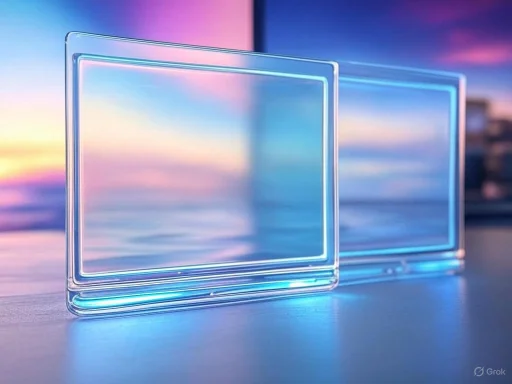
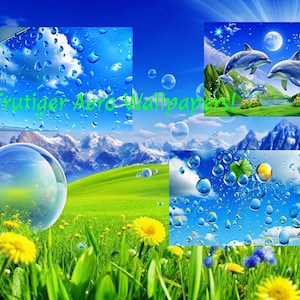
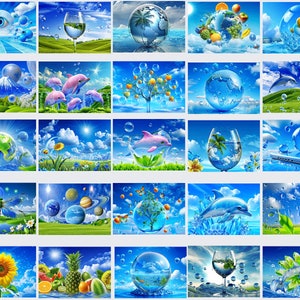
Core visual traits attributed to Frutiger Aero include glass‑like translucency, reflections, soft gradients, rounded highlights, and a three‑dimensional tactility intended to make digital elements feel intuitively graspable and visually inviting[1][2]. In parallel, the style notably integrates imagery and palettes from natural environments, with recurring skies, water, and tropical cues that temper high‑tech iconography with an optimistic organic sensibility[4].


Applications, Diffusion, and Cultural Context
As the look matured, it spread across operating systems and device interfaces, appeared in video game console branding and dashboards, and informed advertising that sought to visualize a friendly, high‑tech future[5]. Commentators associate the style with the mid‑2000s sense of technological optimism, where the promise of new platforms and connected services was frequently visualized through bright, clean, and nature‑infused compositions that conveyed renewal and ease[5]. In subsequent years, the aesthetic saw a revival on social media, where communities recirculated screenshots, promotional imagery, and interface elements from the period, reframing the look as an object of nostalgia and cultural memory[5].
Several sources emphasize that this trajectory from functional UI design to a recognizable, named aesthetic reflects both technological change and a retrospective effort to classify cultural styles from the 2000s era[1][4]. The consolidation of the term in 2017 helped researchers and enthusiasts more precisely track the diffusion of the look across platforms and media, distinguishing it from adjacent trends that used gloss and depth but lacked the same explicit nature‑technology synthesis[4].
Relationship to Adjacent Aesthetics
Frutiger Aero is frequently discussed alongside the broader 'Web 2.0 gloss' phenomenon, yet it is characterized not just by sheen and dimensionality but also by a distinctive pairing of transparent, glass‑like UI materials with serene, often aquatic or sky‑oriented imagery[4]. Technical enablers played a role, as contemporary hardware and software made translucency, gradients, and real‑time compositing feasible for mainstream interfaces, setting the stage for the style's widespread uptake[1]. Sources suggest that what makes Frutiger Aero legible as a discrete style is this synthesis of high‑tech visual language and optimistic natural motifs, rather than gloss effects alone[4].


Legacy, Significance, and Revival
As a named phenomenon, Frutiger Aero provides a lens for understanding how mid‑2000s interface design communicated intuitiveness and optimism through material metaphors of glass and water, as well as through humanist associations tied to the Frutiger namesake[1][3]. The subsequent nostalgic revival indicates that its imagery and materiality became cultural signifiers of an era's hopes about digital life, and that these signifiers continue to resonate in retrospective curation and reinterpretation[5]. By classifying and naming the trend, later researchers and communities have enabled more systematic analysis of its spread across operating systems, consumer electronics, and advertising, and clarified its distinctions from adjacent 2000s design movements[4].
- Open question: How did specific UI toolkits and compositor pipelines in the mid‑2000s constrain or expand Frutiger Aero's visual possibilities?
- Open question: Which regional markets and brands were most instrumental in popularizing nature‑infused variants of the style?
- Open question: How do users describe their affective response to Frutiger Aero interfaces compared with contemporaneous styles?
Key Milestones Timeline
| Year | Milestone |
|---|---|
| Early 2000s | Style emerges as designers leverage new hardware/software for translucency, gradients, and depth in UIs[1]. |
| 2005 | Look recognized more clearly as a coherent aesthetic during Windows Vista/Aero development cycles[2]. |
| 2017 | Term 'Frutiger Aero' coined by Sofi Lee (Consumer Aesthetics Research Institute), codifying the style's nature‑tech synthesis[4]. |
| Late 2010s–2020s | Nostalgic revival on social media recontextualizes the aesthetic across platforms and fan archives[5]. |

Consolidated Citations
Let's look at alternatives:
- Modify the query.
- Start a new thread.
- Remove sources (if manually added).