Who is José Elías Navarro?

José Elías Navarro[1] is a Catalan businessman with strong ties to Futbol Club Barcelona[1]. He is the founder and majority shareholder of the energy company Audax Renovables, and has investments in telecommunications, renewable energy, infrastructure, medicine, and food. He became known for endorsing Joan Laporta's candidacy for the presidency of FC Barcelona in 2021, and later became the sole shareholder of the frozen food chain La Sirena in order to start a new business line focused on healthy food. Today, he is a prominent figure in the business world.
Let's look at alternatives:
- Modify the query.
- Start a new thread.
- Remove sources (if manually added).

Why did Dario Amodei start Anthropic?

Dario Amodei started Anthropic with a team of former senior members of OpenAI[1] in 2021 due to directional differences[1], specifically regarding OpenAI's ventures with Microsoft in 2019[1]. He left OpenAI in 2020[2] due to disagreements about safety and the company's direction, and wanted to focus on safe AI research within a dedicated organization[2]. Anthropic was founded with a collective vision emphasizing AI safety and aims not just for commercial success, but also to set a positive standard in AI[2]. He believes in prioritizing safe AI development[2] and sees the responsibility of leading AI companies[3] in finding ways to democratize control over[3] central systems as their capabilities increase. The organization is entirely dedicated to scaling AI safely while keeping humans at the center by creating steerable, interpretable, and reliable AI systems[4], focusing on both current and future AI safety issues.
Let's look at alternatives:
- Modify the query.
- Start a new thread.
- Remove sources (if manually added).
Create your account to shape this feed around what you search for and enjoy.
What is the Maginot Line?

The Maginot Line was a[1] fortified border built by France in the 1930s[6] along its border with Germany[1], consisting of underground fortifications, gun turrets, tank traps, and extensive subterranean military bases[2]. It was intended to prevent invasion and force Germany to go around it, but ultimately failed during World War II[1] when the German forces bypassed it through the Ardennes Forest and invaded France. Despite its technological sophistication, the Maginot Line did not cover the French-Belgian frontier, which allowed the Germans to outflank it, rendering it useless. Today, the Maginot Line is a metaphor for expensive efforts that offer a false sense of security[6].
| wikipedia_url | https://en.wikipedia.org/wiki/Maginot_Line |
Let's look at alternatives:
- Modify the query.
- Start a new thread.
- Remove sources (if manually added).
What is the Carnial Pluvial event?
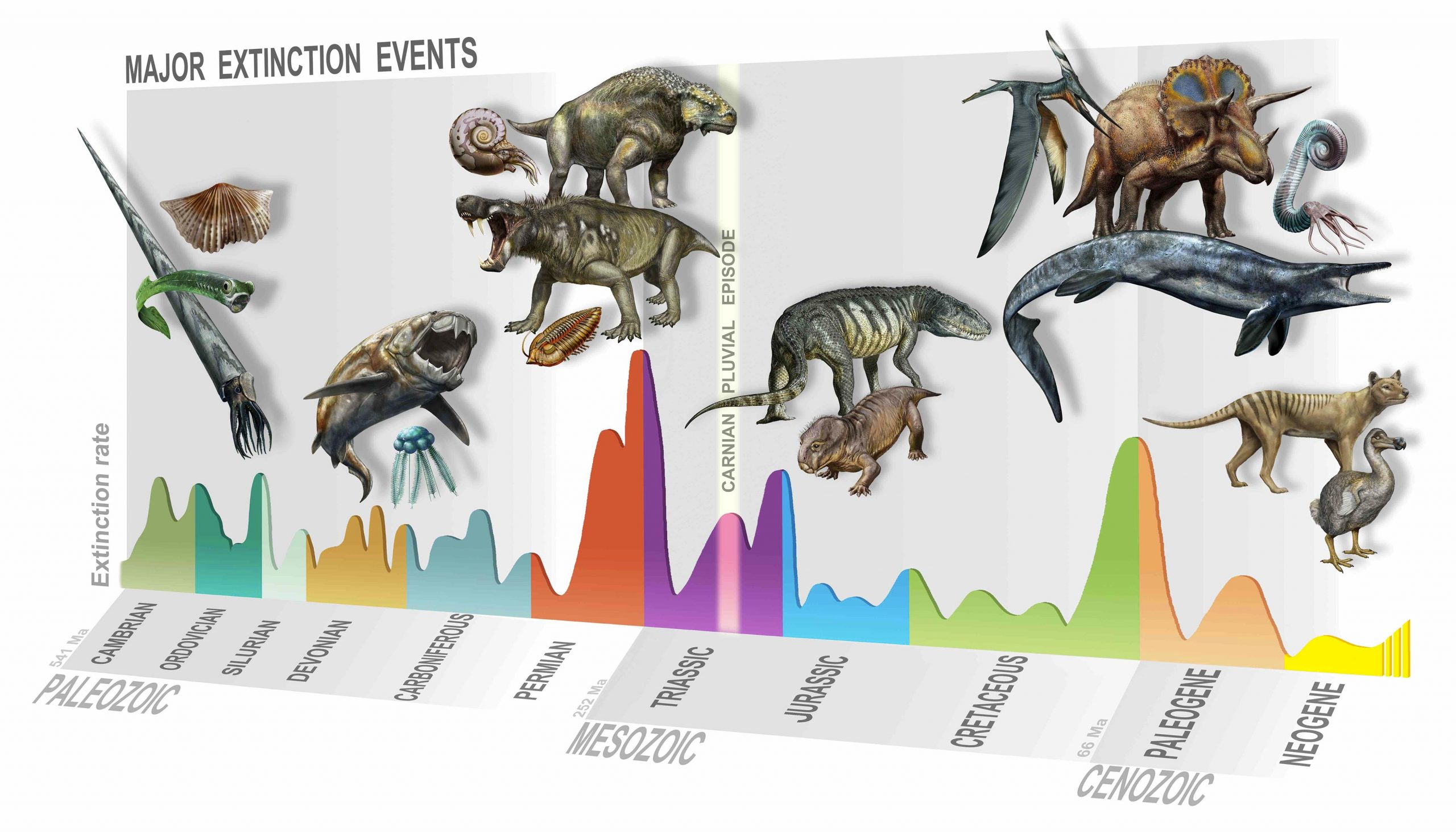
The Carnian Pluvial Event[2] (CPE) was a major global environmental event that occurred 233 million years ago[1] during the late Carnian stage of the Late Triassic period[3]. It was triggered by massive volcanic eruptions in[1] western Canada, leading to spikes in global warming and increased rainfall. This event introduced markedly more humid conditions across the globe[3], interrupting the otherwise arid climate[3] of the Late Triassic period and causing disruptions to geochemical cycles[3], particularly the carbon cycle. The CPE had a significant impact on the evolution of life, leading to extinctions among various plant and animal groups and setting the stage for the rise of dinosaurs and the appearance of modern groups of plants and animals[1]. It was associated with significant climate and ecological changes, including global warming, widespread ocean anoxia[2], and dry-humid-dry climate changes on land[2]. The event lasted for perhaps 1-2 million years and saw the evolution and diversification of many[3] important taxa, including some of the earliest dinosaurs, lepidosaurs, and mammaliaforms, as well as the first appearance of coccoliths and dinoflagellates among microplankton in the marine realm. Overall, the CPE was a period of significant geological and biological change.
Let's look at alternatives:
- Modify the query.
- Start a new thread.
- Remove sources (if manually added).
Who Is Brion Bishop?

Brion Bishop, also known as Bryan Bishop, is a well-known professional with a diverse background. He has experience in the bollywood boutique industry and is an instructor at Renzo Gracie Prague BJJ & Fight academy[1]. Additionally, he is an American radio personality[2], best known for his career on The Adam Carolla Show podcast[2]. Bishop has also been a contestant on Comedy Central[2]'s Beat the Geeks and Who Wants to Be a Millionaire, where he won $100,000. He has battled and continues to battle an inoperable brain tumor[2], which he wrote about in his New York Times[2] best-selling book 'Shrinkage: Manhood, Marriage, and the Tumor That Tried to Kill Me[2]'. He co-hosts The Film Vault and The Bryan and Gina Show[2] and is known for sharing motivational and inspirational content related to hustle, wealth creation, and personal growth. He is married with a daughter and continues to fight cancer while undergoing regular MRIs and treatment[2].
Let's look at alternatives:
- Modify the query.
- Start a new thread.
- Remove sources (if manually added).
What is the DMV?

The DMV, or Department of Motor Vehicles[2], is a government agency that collects personal information from[1] individuals when they apply for a driver's license or identification card. This information is protected by state and federal laws[2], including the Information Practices Act of 1977[1] and the Driver's Privacy Protection Act[1]. The DMV is responsible for administering motor vehicle registration and driver licensing[2], issuing driver's licenses, vehicle registrations, and identification numbers for vehicles. It also enforces state and federal laws regarding motor vehicles[2], records liens on vehicles, provides identification cards and conducts written and hands-on driving tests[2]. Additionally, the DMV shares information with other government entities and authorized businesses for specific purposes outlined by law.
Let's look at alternatives:
- Modify the query.
- Start a new thread.
- Remove sources (if manually added).

Create your account to shape this feed around what you search for and enjoy.
Claude 3 context length

The Claude 3 model[2] initially offers a 200,000 token context length, but it is capable of accepting inputs exceeding 1 million tokens[2]. Anthropic may make this[3] extended context length available to select customers who[2] require enhanced processing power[2]. This aligns Claude 3 with the capabilities of Google[4]’s latest GenAI model[4], Gemini 1.5 Pro[4], and Anthropic is committed to delivering regular updates[4] to enhance the model’s performance and capabilities.
Let's look at alternatives:
- Modify the query.
- Start a new thread.
- Remove sources (if manually added).
What is sea fret?

Sea fret, also known as coastal fog or haar, is a peculiar phenomenon that occurs on the east coast of the UK[4], particularly in places like Northumberland, Scotland, Scarborough, and along the eastern coast of[4] England. It is caused by warm, moist air passing over the cold surface of the North Sea[4], leading to the condensation of moisture and the formation of fog. This fog can reduce visibility and disorient people, making it potentially dangerous, especially for activities like shipping and oil platforms[4]. Sea fret typically occurs in the spring and summer months when[1] the sea stays relatively cold[1], and can be blown over the coast and inland areas by light winds. It can persist for several days[2] if winds continue blowing east[2] or if land temperatures aren't high enough. The sudden nature of this weather can cause danger due to reduced visibility, and it is typically burned away by sunshine. Overall, sea fret is a cold sea fog[3] that significantly impacts the east coast of the UK, with variations of the term in Scots and northern English[3] such as har, hare, harl, harr, and hoar. Its origin is related to Middle Dutch haren[3], referring to a cold, sharp wind.
Let's look at alternatives:
- Modify the query.
- Start a new thread.
- Remove sources (if manually added).
In LLMs, is it true that long prompts require more encoding time than decoding?

Yes, in LLMs, it is true that long prompts require more encoding time than decoding. This is because the encoder is designed to learn embeddings for various predictive modeling tasks[1], while the decoder is designed to generate new texts[1] based on the encoded information. Therefore, the process of encoding long inputs can be more time-consuming than decoding them.
Let's look at alternatives:
- Modify the query.
- Start a new thread.
- Remove sources (if manually added).
what takes longer in LLMs, to encode tokens or to decode them and why
In LLMs, it generally takes longer to decode tokens than to encode them. The encoder part is designed to learn embeddings[1] for predictive tasks like classification, while the decoder generates new texts, which is a more complex and time-consuming task. The decoder utilizes autoregressive decoding, which slows down the process as it generates output tokens one at a time[1]. Additionally, the decoder's iterative nature contributes to the longer decoding time compared to the encoding process.
Let's look at alternatives:
- Modify the query.
- Start a new thread.
- Remove sources (if manually added).