Découvrir Pandipedia
Un répertoire grandissant de réponses utiles sélectionnées par la communauté Pandi. Cherchez dans la collection ou parcourez les dernières découvertes.
2312 entrées disponibles

How corporate learning ecosystems are evolving into lifelong employability platforms.. Analyzes LMS evolution, data-driven skill mapping, and partnership with MOOCs. Presents case studies of firms turning training into revenue streams.
Corporate learning is becoming a lifelong employability platform
The shift is from a traditional LMS that mainly delivers courses and compliance training to a broader system that connects learning, skills intelligence, internal mobility, and external credentials. The strongest evidence suggests this is an evolving category rather than a uniform market state, with vendors such as Cornerstone and Workday explicitly positioning skills data and mobility as the next layer above the LMS[1][2].
In parallel, Coursera and Udemy show how learning platforms can extend beyond training delivery into partnerships, credential pathways, and enterprise monetization. The evidence is useful but mostly vendor-reported, so the safest conclusion is that the ecosystem is maturing unevenly, not that every LMS provider has already become a full employability platform[3][4][5].
From LMS to employability platform: what changes
| Dimension | Traditional LMS | Modern learning ecosystem |
|---|---|---|
| Primary job | Course delivery and compliance tracking[6] | Skills-based workforce readiness, career paths, and internal mobility[7][8] |
| Data used | Training completion and content consumption | Skills, performance data, career interests, project work, certifications, and employee profiles[9][10] |
| Decision layer | Administrative reporting | AI-driven recommendations for learning, projects, jobs, flex teams, and growth opportunities[11][12] |
| Business outcome | Training completion | Readiness, retention, mobility, and faster time to productivity[13][14] |
| External reach | Mostly internal learners | Customers, partners, extended workforces, and credential ecosystems[15][16] |
Cornerstone’s materials are especially explicit that the LMS is no longer just a content repository. It describes mobile, offline, integrated, and in-the-flow-of-work learning as part of a broader experience layer that also supports talent marketplaces, coaching, and measurable business outcomes[17][18][19].
How data-driven skills mapping powers internal mobility
The key operating change is that organizations increasingly build a shared skills language across learning, recruiting, talent management, analytics, and workforce planning. Workday says Skills Cloud infers relationships between skills and links learning, recruiting, projects, and analytics, while Cornerstone says AI analyzes skills, performance data, and career interests to build personalized paths and readiness signals[20][21].
| Step | What the platform does | Evidence |
|---|---|---|
| 1. Ingest workforce signals | AI builds dynamic skill profiles from project work, reviews, courses, certifications, profiles, and related workforce data[22][23] | |
| 2. Infer gaps and adjacencies | Skills engines map gaps, identify hidden talent, and normalize skills across systems[24][25] | |
| 3. Recommend action | Platforms recommend learning, role-readiness academies, development plans, projects, jobs, and flex teams[26][27] | |
| 4. Measure mobility | Organizations track readiness, internal movement, and skill improvement rather than only course completion[28][29] |
Workday’s customer evidence shows why this matters operationally: Jabil says better visibility into skills and career interests helped promote internal mobility and identify future upskilling needs[30]. Cornerstone makes the same basic argument from another angle, saying development plans now connect reviews, goals, learning, skills, and internal mobility into one workflow[31][32].
MOOC partnership models and reported outcomes
Coursera’s partnerships show three recurring models: public workforce development, institution-led credential pipelines, and employer-linked scholarship or talent pipelines. In each case, the platform is used to move people from training into credentials, jobs, degree pathways, or employer access, rather than stopping at course completion[33][34].
| Partnership model | Example | Reported outcome |
|---|---|---|
| State and local workforce systems | Coursera with Illinois, Maine, and other public partners[35] | More than 1.2 million enrollments, 3.4 million learning hours, and support for more than 60,000 open jobs in Illinois[36] |
| University plus workforce system | Louisiana Tech, the University of Louisiana System, and Louisiana Workforce Commission[37] | Expanded access to certificates for students, faculty, staff, and underemployed workers, with college and career pathways[38] |
| Public library network | California State Library and Pacific Library Partnership[39] | Free statewide job training, digital skills, credentials, and support for workforce re-entry[40] |
| Scholarship and employer pipeline | The American Dream Academy with Milken Center for Advancing the American Dream[41] | Industry-recognized credentials, degree pathways, employer access, alumni networking, and pipelines to 150+ employers[42] |
| Credit-bearing credential stack | Coursera partner catalog with Professional Certificates and credit recommendations[43] | Movement from microcredentials into degrees and careers[44] |
The main caution is that these outcomes are reported by the vendor and partners rather than independently audited in the cited materials. Even so, the pattern is consistent: MOOCs are being used as distribution and credential infrastructure for workforce systems, not just as standalone courses[45][46][47].
Case studies: when training becomes a revenue stream
| Company | How revenue is generated | What the sources disclose | What is not disclosed |
|---|---|---|---|
| Coursera | Enterprise subscriptions, direct sales, and paid access to courses, Specializations, Professional Certificates, degrees, and Skills Tracks[48][49][50] | Coursera says paid enterprise customers buy through direct sales, and its combined platform reaches 18,000 enterprise customers worldwide[51][52][53] | Exact product-level revenue shares and a full revenue breakdown are not disclosed[54][55] |
| Udemy | Udemy Business subscriptions, add-on credential collections, partner sales channels, and referral commissions[56][57][58] | Udemy’s Enterprise Plan includes dashboards, skill insights, and course-performance data, and Q2 2025 enterprise revenue was $129.3 million[59][60] | Exact product-level revenue shares are not disclosed in the cited materials[61][62] |
Coursera’s monetization story is especially clear because its investor materials explicitly describe direct enterprise sales plus a broad catalog of credentials built with university and industry partners[63][64]. Udemy shows a similar but slightly different model: enterprise subscriptions are supplemented by separate credential collections such as Google Certificates, analytics add-ons, and partner/referral channels that help companies prove skills and embed learning in HR workflows[65][66][67][68].
Limits and takeaway
The evidence supports a strong thesis: corporate learning ecosystems are evolving into lifelong employability platforms that blend LMS functions, skills intelligence, mobility workflows, and external credentials. The limitation is that much of the outcome evidence is vendor-reported, and the sources do not fully disclose exact product-level revenue shares, so the best reading is directional rather than exhaustive[69][70][71].
Bottom line: the winning platforms are no longer judged only by content volume or completion rates. They are increasingly judged by whether they can map skills, move people into roles, connect to partner ecosystems, and create new revenue through enterprise learning and credential pathways[72][73][74][75].
Examinons les alternatives :
- Modifier la requête.
- Démarrer une nouvelle conversation.
- Supprimer des sources (si elles ont été ajoutées manuellement).
Renewable Energy Pioneers: Solar, Wind, and Bioenergy
Examinons les alternatives :
- Modifier la requête.
- Démarrer une nouvelle conversation.
- Supprimer des sources (si elles ont été ajoutées manuellement).

open datasets of esports match stats. Point researchers to APIs and CSV archives.
Open esports match stats sources
I curated a short reading list split into APIs and downloadable CSV or JSON archives, with an emphasis on esports match, team, player, and map-level data. Some entries may require registration or separate license checks, so verify access terms on the source page.
APIs and documented data portals
Best matches for open or openly documented esports APIs and official data portals, including GRID, Riot, Liquipedia, Valorant, and Dota 2 related sources.
CSV and JSON archives, Kaggle datasets, and GitHub repos
Downloadable archives and repositories that appear useful for offline analysis, especially League of Legends, Counter-Strike 2, Valorant, and Dota 2 match data.

Examinons les alternatives :
- Modifier la requête.
- Démarrer une nouvelle conversation.
- Supprimer des sources (si elles ont été ajoutées manuellement).
Mini robots racing mazes and stacking cups
Examinons les alternatives :
- Modifier la requête.
- Démarrer une nouvelle conversation.
- Supprimer des sources (si elles ont été ajoutées manuellement).
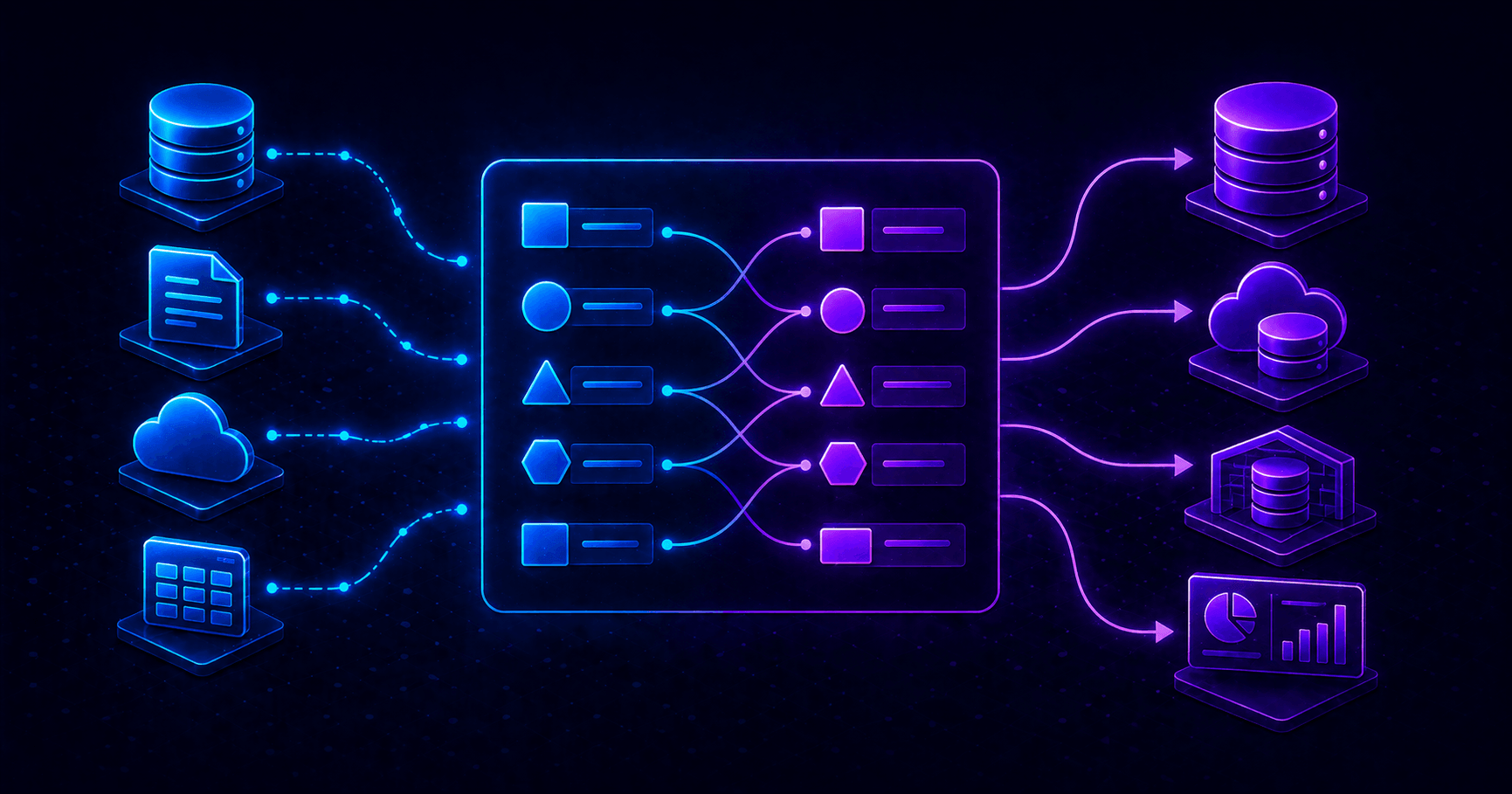
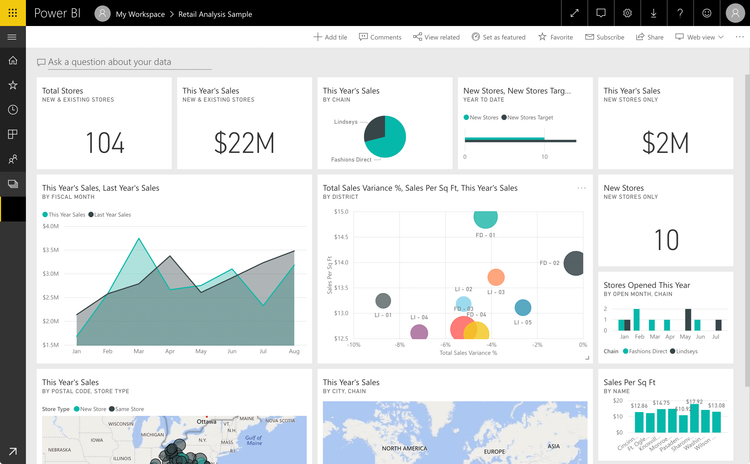
Behind market intelligence is a normalization engine
WO2015183098A1 describes a market-intelligence pipeline that gathers information from business sources, extracts entities and maps them to standardized IDs, placing data from different sources into a common structure. That normalization lets users compare and summarize information across sources, and analyze differences, statistics and trends. In the patent, NLP and machine learning support extraction and mapping; they are not described as the end product.
Examinons les alternatives :
- Modifier la requête.
- Démarrer une nouvelle conversation.
- Supprimer des sources (si elles ont été ajoutées manuellement).
Five tape tricks that still power sampling
Examinons les alternatives :
- Modifier la requête.
- Démarrer une nouvelle conversation.
- Supprimer des sources (si elles ont été ajoutées manuellement).
AI tools in systematic reviews: what they can and cannot reliably do
Examinons les alternatives :
- Modifier la requête.
- Démarrer une nouvelle conversation.
- Supprimer des sources (si elles ont été ajoutées manuellement).
Deepfakes in geopolitical propaganda: case studies and countermeasures. Presents documented incidents of state-sponsored deepfake use, analyzes strategic objectives, and reviews detection and diplomatic responses. Offers policy recommendations.
Deepfakes in Geopolitical Propaganda: Policy Memo
This memo reviews documented state-linked deepfake and synthetic-media incidents, distinguishes confirmed from suspected attribution, and summarizes countermeasures and government responses. The overall pattern is consistent: synthetic media is used to disorient audiences quickly, seed doubt, and amplify existing geopolitical narratives rather than to persuade through credibility[1][2][3][4].
Executive Summary
- Confirmed attribution is strongest in Microsoft's Taiwan case, where AI-generated fake audio and TV anchors were tied to Storm-1376, also known as Spamouflage/Dragonbridge, and in Microsoft's 2024 reporting on Russia-linked election influence operations tied to Storm-1516 and Storm-1679[5][6][7][8].
- The March 2022 Zelenskyy surrender deepfake and the September 2023 Slovak fake audio are documented disinformation incidents, but the supplied sources do not identify a verified creator for either case[9][10].
- Across the cases, the intended effects were panic, disorientation, vote-related confusion, and trust erosion, not necessarily a single decisive electoral swing[11][12][13][14].
- The strongest countermeasures are layered: detection and liveness checks, provenance and watermarking, risk-based authentication, platform transparency and removals, and public resilience through literacy and pre-bunking[15][16][17][18].
Case-Study Evidence
The table below separates confirmed attribution from contextual or suspected attribution and highlights the strategic objective and observed effect in each documented case.
| Case | Attribution status | Date / context | Distribution and tactic | Strategic objective | Observed effect / limits |
|---|---|---|---|---|---|
| Ukraine: 2022 Zelenskyy surrender deepfake | Contextual or suspected Russia-linked disinformation; Reuters says the verified source was not identified[19]. | March 2022, during the opening phase of Russia's full-scale war information campaign[20][21]. | It first appeared on a hacked Ukrainian TV ticker, then spread through Telegram and VK, and later to Facebook, Instagram, and Twitter[22][23]. | To suggest Kyiv had surrendered, provoke panic, and disorient Ukrainian defenders and emergency services[24][25]. | The video was widely ridiculed and quickly rebutted by Ukrainian authorities; the supplied sources do not show it changed the war's outcome[26][27]. |
| Slovakia: 2023 fake audio impersonating Michal Šimečka | No verified creator identified in the supplied sources[28]. | 25 September 2023, on the anonymous Instagram account octopus_zeldon_c, then Telegram, Facebook, and WhatsApp, just days before the parliamentary election[29][30]. | AI-generated audio was reposted across Instagram, Telegram, Facebook, and WhatsApp; AP says it spread widely on social media just before the vote[31][32]. | To mislead voters by falsely claiming vote rigging and higher beer prices, and to sow doubt and confusion around the election[33][34][35]. | AP describes a likely influence effect through confusion and trust erosion, but the supplied sources do not establish that it determined the election result[36][37]. |
| Taiwan: January 2024 AI-generated audio and fake TV anchors | Confirmed by Microsoft as Storm-1376, also known as Spamouflage and Dragonbridge, a CCP-affiliated actor[38]. | January 2024 presidential election; Microsoft said this was the first time it had seen a nation-state actor use AI content to try to influence a foreign election[39]. | Suspected AI-generated fake audio, AI-generated memes, and AI-generated TV news anchors; YouTube removed the fake audio before it reached a wider audience[40][41]. | To influence the election, promote China-aligned narratives, endorse another candidate, and amplify divisive content[42][43]. | Microsoft said there was little evidence the wider AI-content effort swayed opinion, and the fake audio was removed quickly[44][45]. |
| United States: 2024 Russia-linked synthetic-media election influence | Confirmed by Microsoft as Storm-1516 and Storm-1679, previously reported as Kremlin-aligned groups[46]. | Late August and September 2024, targeting the Harris-Walz campaign[47][48]. | Two inauthentic videos, one depicting an attack by alleged Harris supporters and another fabricating a hit-and-run claim, were laundered through Telegram, X, and a newly created local-news-style website[49]. | To discredit opponents, spread Kremlin-preferred narratives, degrade trust, and intensify political discord[50][51]. | Each video generated millions of views; one X post exceeded 100,000 views in four hours[52]. |
Strategic Objectives and Tactics
The documented incidents share a common playbook: they exploit speed, emotional salience, and uncertainty. In Ukraine, the aim was to induce panic and suggest surrender; in Slovakia, the goal was to confuse voters at the last moment; in Taiwan and the U.S. cases, actors used AI-generated media to amplify divisive narratives and degrade trust in opponents and institutions[53][54][55][56].
- Timing matters: attackers used the first days of the war, campaign silence periods, and election day itself to limit verification windows[57][58][59].
- Cross-platform laundering matters: content moved from hacked broadcast infrastructure or anonymous accounts into Telegram, VK, X, Facebook, Instagram, WhatsApp, and local-news-style websites[60][61][62].
- Narrative framing matters: the clips were designed to look like surrender announcements, election-rigging confessions, or authentic voter-facing political messages, making them more damaging than generic memes[63][64][65].
- State actors use synthetic media differently: Microsoft describes Russia leaning on staged and fabricated video, China on AI-generated imagery and short-form content, and Iran mainly on cyber-enabled influence, with less specific deepfake evidence in the supplied text[66][67].
Countermeasure Framework
1. Detection, liveness, and biometric hardening
Authoritative guidance recommends morph-detection algorithms, ISO/IEC 30107-3-based checks, and liveness detection so manipulated images, face morphs, and presentation attacks are caught before they reach identity systems[68][69].
2. Provenance and traceability
- Require watermarking of AI-generated content to make synthetic media visible to users[70].
- Use cryptographic watermarking for submitted images in registration and identity proofing processes[71].
- Adopt stronger traceable-mark standards and collaborate with AI providers and deployers to authenticate content provenance[72][73].
3. Risk-based authentication
For high-risk transactions or registration, guidance recommends in-person verification instead of relying only on remote digital processes, and multi-modal biometrics such as fingerprints plus face recognition to reduce single-factor spoofing risk[74][75].
4. Platform governance and public resilience
- Restrict deepfakes in especially sensitive contexts such as election administration, and require platforms to report how they counter prohibited manipulative practices[76][77].
- Invest in media, digital, and information literacy so citizens can better recognize manipulation tactics[78].
- Use pre-bunking campaigns to prepare audiences for likely synthetic-disinformation themes before they spread widely[79].
Diplomatic, Legal, and Regulatory Responses
| Response type | Examples | Why it matters |
|---|---|---|
| Pre-emptive intelligence sharing | Before major events, the US and UK have shared intelligence to expose planned false-flag operations and pre-bunk foreign disinformation; the EU's Rapid Alert System supports real-time member-state sharing[80][81]. | Shortens the time between detection and public exposure, which is critical when synthetic media is meant to spread faster than rebuttals[82][83]. |
| Exposure and debunking networks | EUvsDisinfo, the East StratCom Task Force, and NATO StratCom Center of Excellence research, expose, and debunk state-sponsored disinformation[84][85]. | Creates trusted institutional channels for rapid rebuttal and narrative correction[86][87]. |
| Transparency and AI regulation | The EU AI Act adds transparency obligations for AI systems, including deepfake generation; the Digital Services Act requires platform transparency and reporting; Germany's NetzDG compels fast removal of clearly illegal content[88][89][90]. | Raises compliance costs for malicious operators and gives regulators visibility into platform response behavior[91][92]. |
| Foreign-influence transparency | FARA in the US, FITS in Australia, FIRS in the UK, and the European Commission's proposal for harmonized third-country interest-representation transparency requirements[93][94]. | Targets covert foreign political influence that can accompany or amplify deepfake operations[95][96]. |
| Specialized national agencies | France's VIGINUM, Sweden's Psychological Defence Agency, the UK's CETaS and Government Information Cell, and the US State Department's Global Engagement Center[97][98][99][100][101]. | Builds standing capacity for monitoring, analysis, and cross-government response[102][103][104]. |
Recommendations, Confidence, and Limitations
- Adopt a layered election-integrity playbook that pairs provenance labeling, rapid takedown channels, and official pre-bunking with contingency plans for hacked broadcast systems and anonymous account laundering[105][106][107].
- Mandate risk-based identity verification for sensitive services, with in-person fallback and multi-modal biometrics where deepfake impersonation would create high harm[108][109].
- Require platforms to publish clear synthetic-media policies and incident reporting, especially for election-related content and other high-risk contexts[110][111][112].
- Invest in cross-border coordination so intelligence, attribution, and rebuttal can move faster than the next campaign cycle[113][114][115].
Confidence is high for the existence and nature of the documented incidents and the policy measures cited above, because they come from Reuters, BBC, AP, DW, Microsoft, OECD, and related official or quasi-official sources[116][117][118][119][120][121]. The main limitation is attribution: some cases are firmly linked to named state-aligned actors, while others are clearly disinformation incidents but lack a verified creator in the supplied material. Also, none of the supplied sources proves that any deepfake on its own determined an election outcome[122][123][124].
Examinons les alternatives :
- Modifier la requête.
- Démarrer une nouvelle conversation.
- Supprimer des sources (si elles ont été ajoutées manuellement).
Waste-to-Runway Looks





Examinons les alternatives :
- Modifier la requête.
- Démarrer une nouvelle conversation.
- Supprimer des sources (si elles ont été ajoutées manuellement).
De risking biotech supply chains lessons from semiconductor manufacturing. Compare just in time pitfalls, diversification tactics, and quality standards between chips and biologics. Offer actionable steps for biotech firms to buffer shocks.
Executive summary
Semiconductor disruptions exposed brittle supply chains shaped by manufacturing risk, customer-demand volatility, and long production cycles, while the biologics analog is a push toward more continuous flow that removes freeze and thaw steps and reduces hold times, handoffs, and redundant filtration[1][2][3][4].
The practical lesson for biotech is not to copy chip-style just-in-time minimization. It is to use risk-tiered buffers, alternate sourcing, and better supplier visibility, then lock those choices inside pharma quality controls that emphasize process validation, quality risk management, monitoring, CAPA, and change management[5][6][7][8][9][10][11][12][13].
Chip vs biologics: where the resilience lessons differ
The table below separates direct evidence from the analytical takeaway. The semiconductor sources are strongest on supply-chain tactics, while the biologics sources are strongest on regulatory and quality-control constraints[14][15][16][17].
| Theme | Semiconductors | Biologics | Biotech takeaway | Evidence strength |
|---|---|---|---|---|
| Just-in-time pitfalls | Supply chains are exposed by manufacturing risk, demand volatility, and long production cycles, and one source notes that lack of long-term supply contracts can worsen disruption risk[18][19][20]. | Biologics evidence points the other way: continuous manufacturing is used to remove freeze and thaw steps and cut hold times, handoffs, and redundant filtration[21][22][23]. | Use JIT only for low-risk, fast-replenish items; buffer critical inputs and unstable intermediates where shelf life, cold chain, or quality risk makes delay costly[24][25]. | Direct on chips, direct on biologics, analytical on the comparison. |
| Diversification tactics | Evidence supports geographic diversification, multi-sourcing, capacity reservation, safety stock, supplier visibility, and domestic-capacity support[26][27][28][29][30][31][32]. | For biotech, the most transferable tactics are multi-sourcing, reserved capacity, and visibility. The least transferable is semiconductor-style fab expansion, because biotech faces different equipment, regulatory, and product-stability constraints[33][34][35][36]. | Focus on sourcing and planning controls first, not plant expansion. Where possible, prequalify alternates before the shock arrives[37][38][39]. | Direct on tactics; transferability is inferred. |
| Quality and change control | The supplied sources do not provide equivalent semiconductor standards such as ISO 9001, IATF 16949, or SEMI, so the chip comparison here is not a full standards audit[40][41]. | Biologics quality is framed around FDA cGMP under 21 CFR 210 and 211, lifecycle process validation, quality risk management, and continued process verification[42][43][44][45][46][47][48][49]. | Biotech cannot freely swap suppliers, sites, or processes during a shock. Alternate materials and process changes need qualification, comparability, documentation, and regulatory review as applicable[50][51][52]. | Strong on biologics controls; semiconductor quality standards are under-specified in the source set. |
Bottom line: chips teach biotech how to reduce fragility in the network, but biologics quality rules determine how fast and how far those adaptations can go. The winning pattern is resilient sourcing plus pre-approved change pathways[53][54][55].
Prioritized actions for biotech firms
- Tier inputs by patient and product criticality, then map sub-tier and geographic concentration so the highest-risk materials are visible first[56][57][58].
- Qualify at least one alternate source or site for critical inputs where feasible, and pair that with technical agreements and notification clauses[59][60][61].
- Reserve manufacturing and fill-finish capacity for priority products, using explicit slotting rules rather than ad hoc favors[62][63].
- Hold risk-based, expiry-aware safety stock for critical materials, single-use components, and spare parts, while keeping cold-chain and stability constraints in view[64][65].
- Build supplier early-warning dashboards that combine order behavior, partner information, and internal demand signals, then set escalation triggers and scenario-based reorder points[66][67].
- Pre-negotiate change protocols and comparability packages so that alternate materials or process changes can move through the quality system faster when a disruption hits[68][69][70][71].
- Run disruption drills and post-event reviews so procurement, manufacturing, quality, and regulatory teams practice the same playbook before the next shock[72][73].
Track a small KPI set: share of critical inputs with qualified alternates, days of safety stock by criticality class, time from supplier alert to decision, capacity reserved versus required, and share of product families covered by approved change protocols. Those metrics align with the sourcing, visibility, and change-management themes in the evidence[74][75][76][77][78].
Source provenance and confidence
Confidence is highest on the biologics quality-control side and moderate on the chip-to-biotech transfer logic. The semiconductor evidence is drawn mainly from SEC filings and patents on sourcing, capacity reservation, inventory buffering, and supply-chain visibility, while the biologics evidence comes from ICH and eCFR-linked quality requirements plus a process-validation disclosure[79][80][81][82][83].
One caveat: the supplied text does not fully document semiconductor quality-system standards, so any statement about chip manufacturing quality frameworks should be treated as an inference rather than a direct standards citation[84][85].
Assumptions and methodology
Examinons les alternatives :
- Modifier la requête.
- Démarrer une nouvelle conversation.
- Supprimer des sources (si elles ont été ajoutées manuellement).